


William IV Pedestal Cupboards
William IV pedestal cupboards bring solid presence and warm timber tones to a room, offering practical enclosed storage with a distinct period character.
William IV Pedestal Cupboards
William IV pedestal cupboards are sturdy single-door storage pieces originating from the nineteenth century, designed to stand beside beds or function as standalone cabinets. When you search for william iv pedestal cupboards, you encounter low timber units built with cylindrical, hexagonal, or rectangular forms.
Most examples found here date from the 1830s and 1840s, spanning the William IV and early Victorian periods. They appear both as single items and as matched pairs.
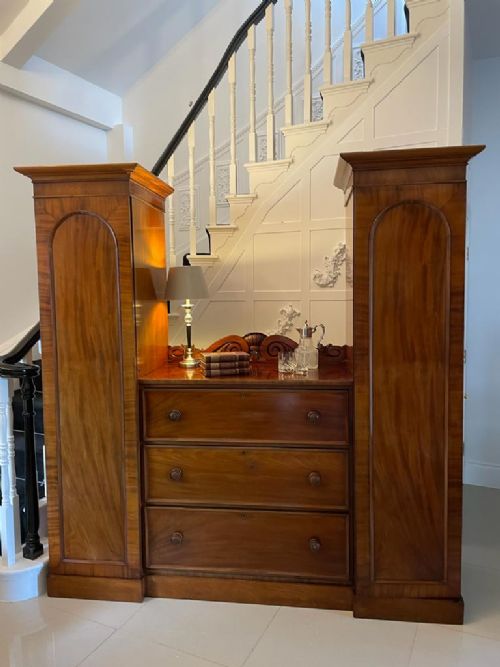
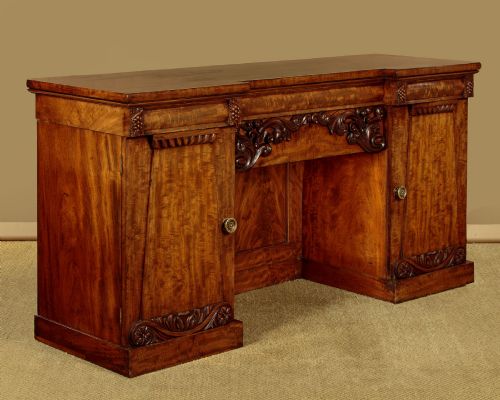
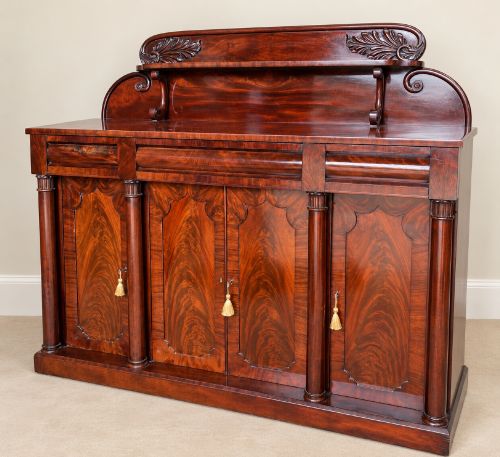
Makers of the era produced these cabinets primarily in mahogany and rosewood, often employing flame veneer to create striking grain patterns on the single door and carcase.
Materials and Construction
Cabinet makers built the carcase using solid pine as a secondary timber, applying rich mahogany or rosewood veneers to the exterior surfaces. Flame mahogany veneer provides the distinctive rolling figure seen on many doors.
Detailing often includes brass mounts and handles, while selected interiors incorporate fabric linings or simple shelving behind the single door. Carcases take various geometric forms, including hexagonal and cylindrical shapes.
Listings span the nineteenth century, featuring 1800, 1830, 1840, and 1850 markers alongside mahogany, rosewood, brass, and fabric elements.
Judging Quality
Quality rests primarily in the selection of the timber veneer and the crispness of the cabinet's geometric form. Finely figured flame mahogany indicates a superior choice of material by the maker.
The integration of secondary timbers and the precision of the joinery distinguish a standard utility piece from a finer cabinet reflecting the design standards associated with workshops like Gillows.
Gillows of Lancaster
The William IV Pedestal Cupboards Glossary
- Flame mahogany veneer
- A decorative wood slicing displaying a distinctive feather-like or flame pattern. Cabinet makers applied this to the primary surfaces of doors to catch the light.
- Pedestal cupboard
- A standalone vertical storage unit featuring a single door enclosing internal space. These pieces sit on a plinth or base rather than tall legs.
- Secondary timber
- The internal or unseen wood used in construction, such as pine. It provides structural stability behind the primary show-woods.
William IV Pedestal Cupboards: Frequently Asked Questions
What rooms suit a pedestal cupboard?
These compact cabinets fit naturally beside a bed or function as small side pieces in a hallway or drawing room. Their enclosed storage keeps everyday items hidden while adding period presence.
Because they do not take up much floor space, they adapt well to both traditional and contemporary interiors where surface area is limited.
How do I spot a true William IV piece?
Look for robust proportions, dark dense timbers like mahogany or rosewood, and characteristic design details from the 1830s. Geometric forms such as hexagonal bodies help confirm the era.
Construction methods utilising solid pine secondary carcases and hand-applied veneers also point directly to nineteenth-century cabinet making practices.
Are these cabinets sold in pairs?
Many nineteenth-century pedestal cupboards survive as matched pairs originally intended for flanking a bed or a fireplace. Single cabinets also appear frequently.
Pairs command particular interest from buyers seeking symmetry on either side of a large piece of furniture or a bed.
What timber varieties are most common?
Mahogany forms the foundation of most pieces in this category, often enhanced by highly figured flame mahogany veneers. Rosewood also appears in select refined examples.
Secondary woods like pine remain hidden inside the carcase, providing the structural strength needed to support the dense exterior hardwoods.