

19th Century Mahogany Cupboard
When you examine a 19th century mahogany cupboard, you meet practical timber storage shaped by Regency and Victorian joinery.
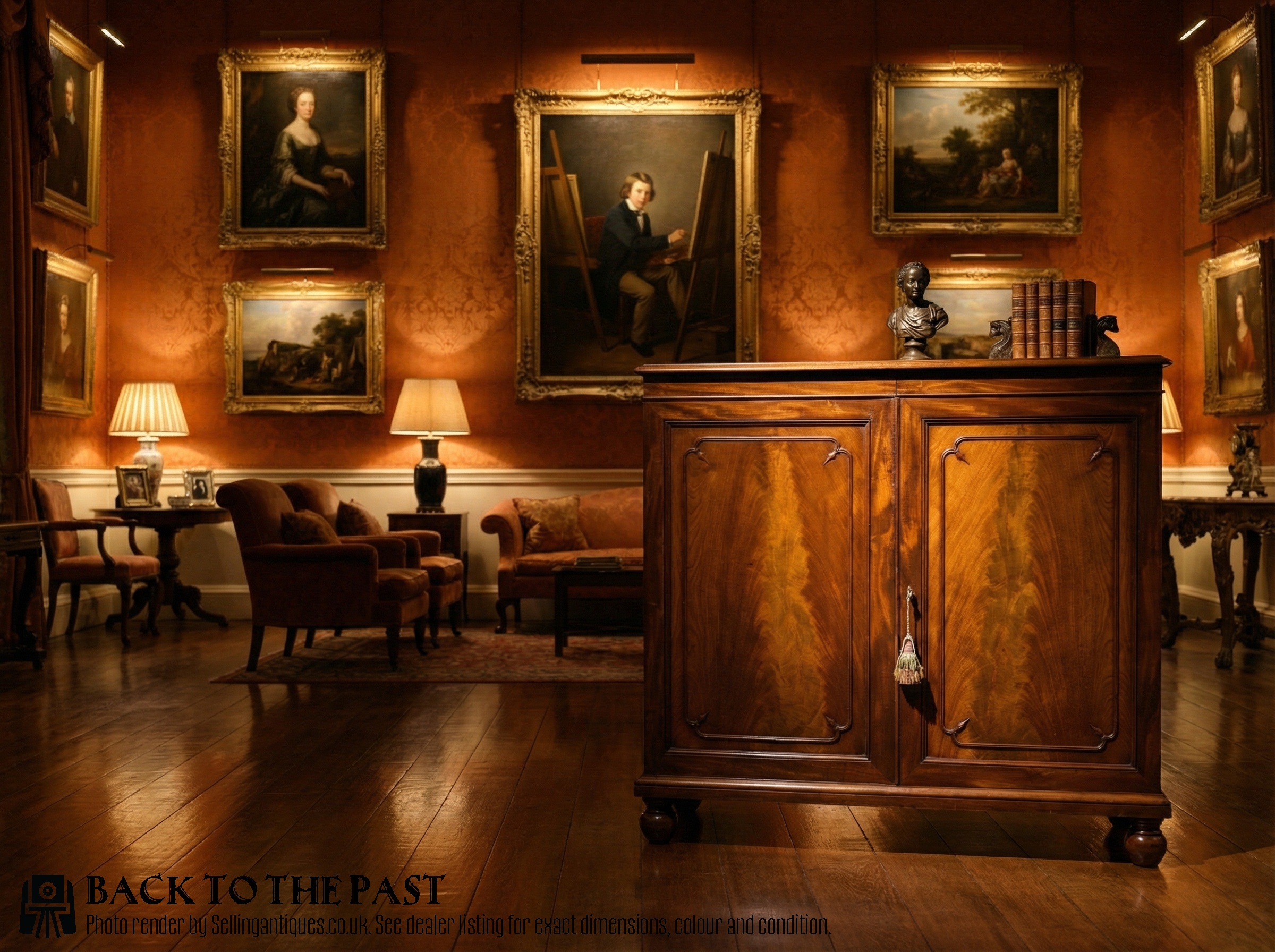
19th Century Mahogany Cupboard
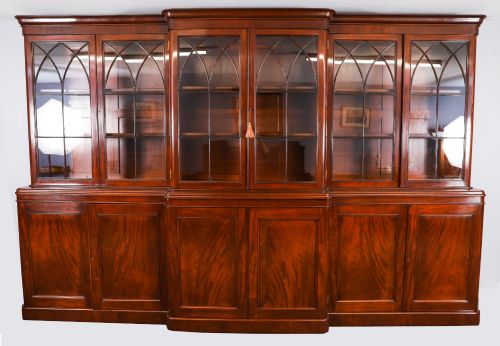
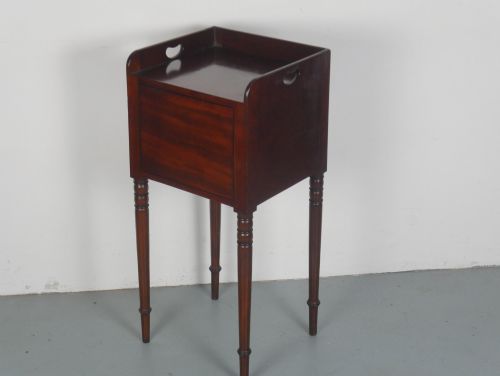
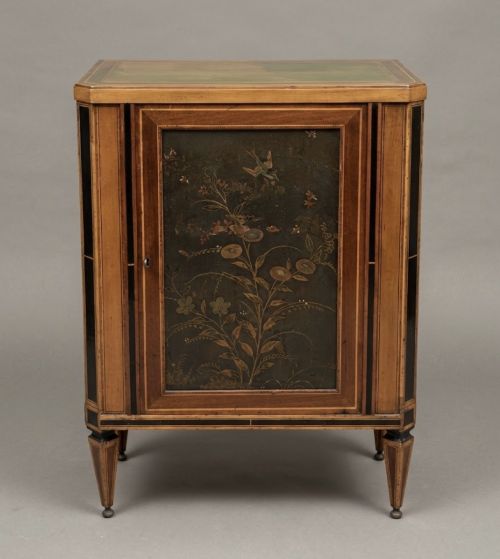
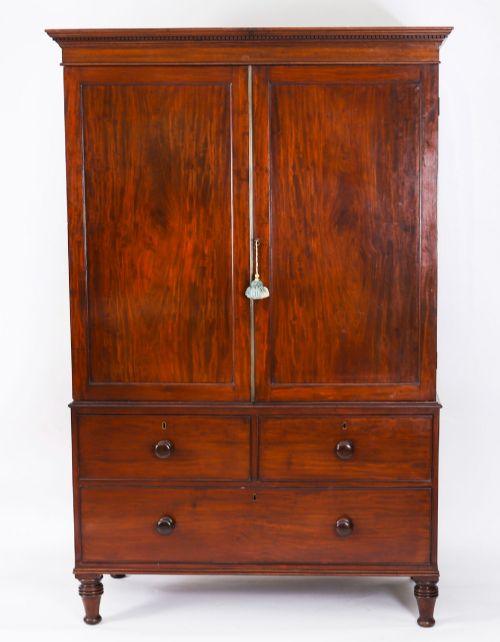
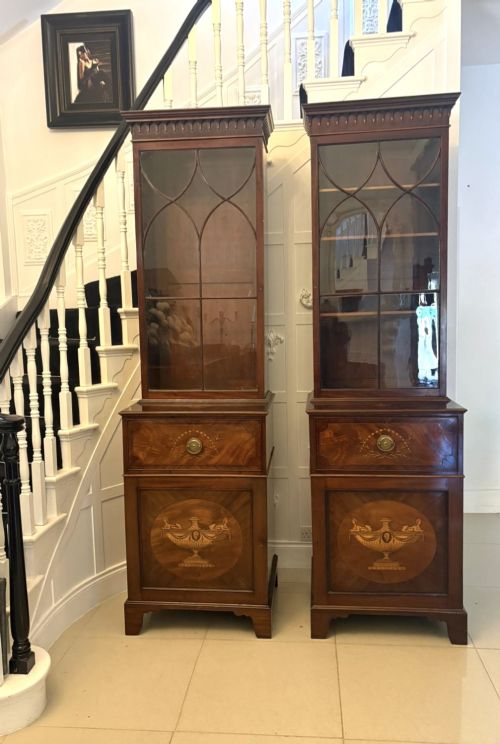
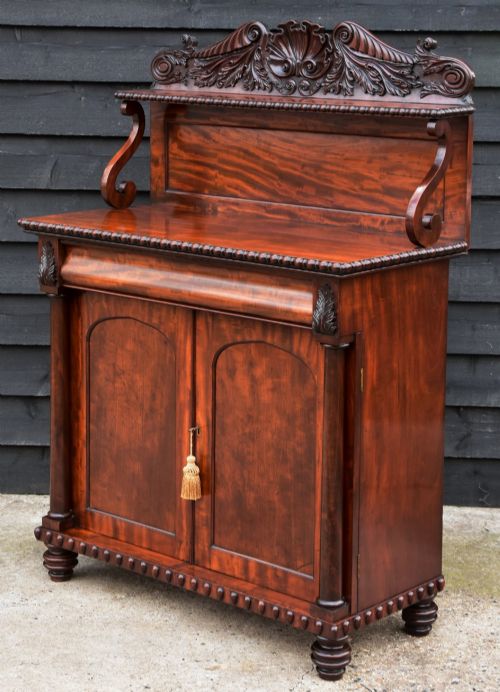
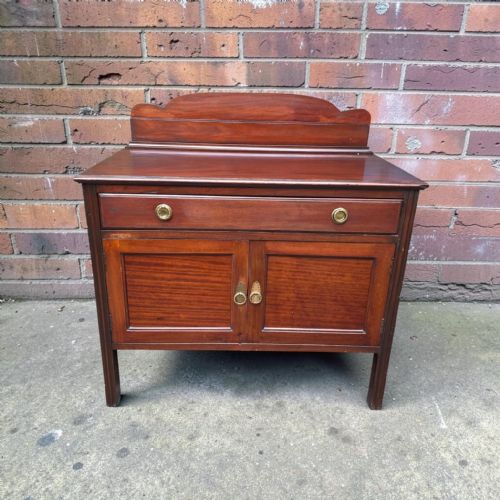
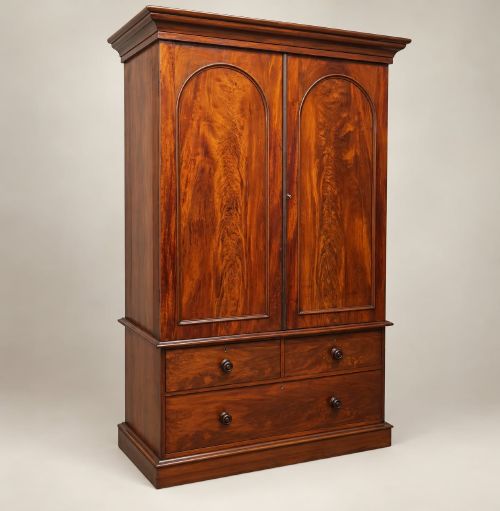
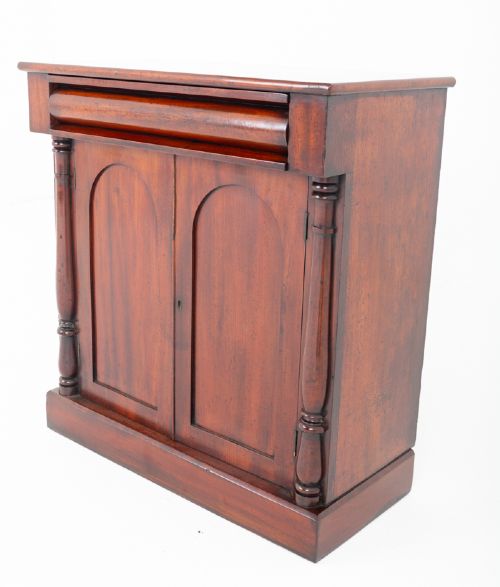
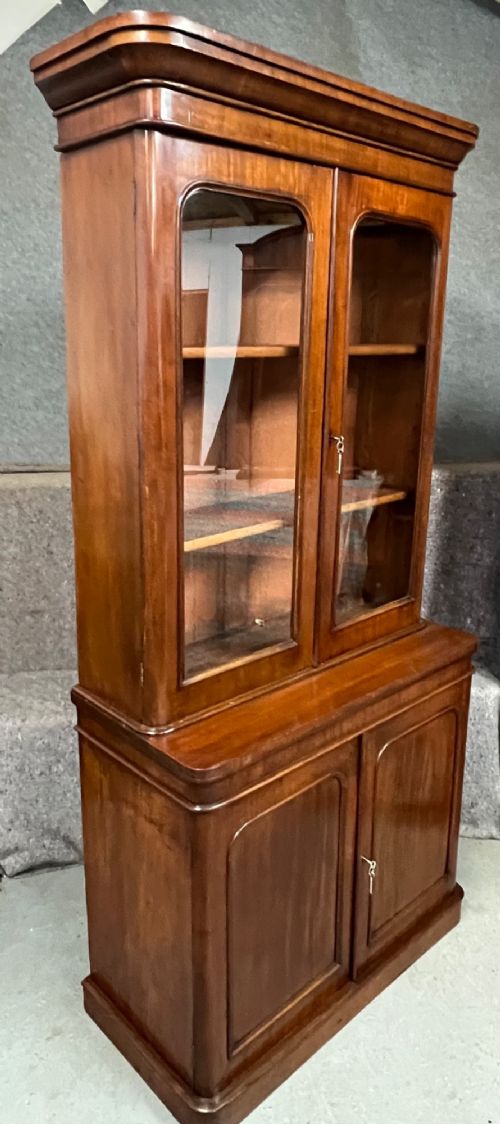
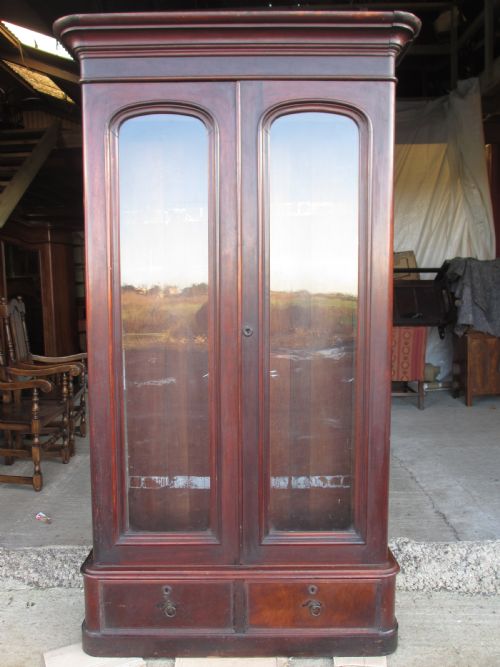
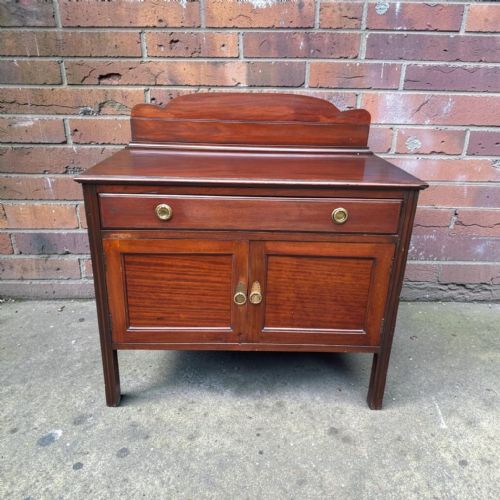
A 19th century mahogany cupboard encompasses a wide assortment of timber storage furniture designed for domestic interiors during the Victorian, Regency, and Georgian eras. Buyers encounter various forms on this page, ranging from compact bedside pot cupboards and corner units to large breakfront bookcases, linen presses, and multi-door wardrobes.
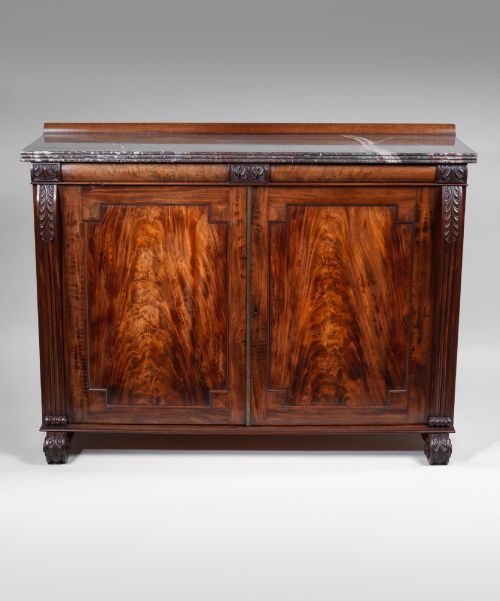
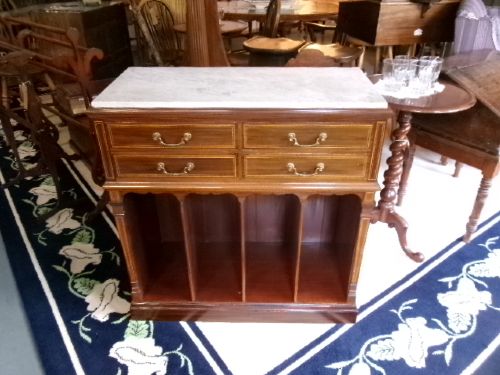
The material palette centres on solid mahogany and rich mahogany veneers, often enhanced with brass hardware, marble tops, and glass panels for display pieces. Styles shift from clean Regency lines through heavier William IV proportions to ornate Victorian carvings and Dutch Baroque revivals.
Smaller formats like bedside tables and wall-hanging cabinets offer functional storage for tight spaces, while extensive library bookcases and sideboards dominate larger rooms. Each piece reflects the evolving domestic requirements of nineteenth-century households for organised storage and display.
How they were made
Cabinet makers utilised solid mahogany and applied flame mahogany veneers over secondary framing timbers to achieve striking figure patterns on door panels and drawer fronts. Surfaces were finished with polished oils or shellac, bringing out the deep reddish-brown tones inherent to the wood.
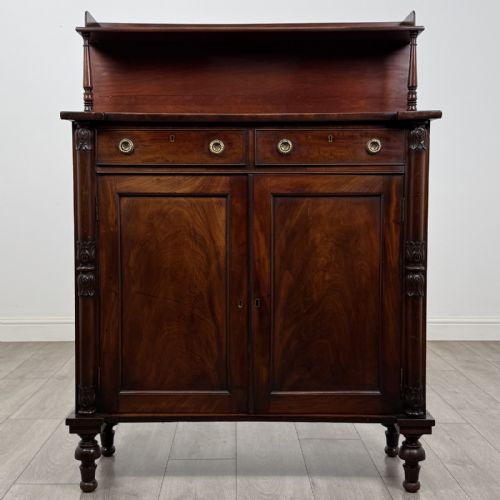
Construction methods relied on traditional joinery techniques, including dovetail joints for drawer construction and mortise and tenon joints for structural frames. Brass handles, escutcheons, and hinges were fitted securely, while glass doors in bookcases utilised wooden glazing bars to hold individual panes in place.
19th Century Mahogany Cupboard Retail Price Guide 2026
Typical asking prices for 19th century mahogany cupboard among the pieces listed under this phrase on Sellingantiques today, from the lower quarter to the upper quarter. They describe what is for sale here now, not the wider market.
Listings feature nineteen-century pieces incorporating marble, fabric, and brass alongside solid and veneered mahogany.
What varies in quality
The selection of timber grain significantly dictates the visual appeal of a cabinet, with symmetrical flame veneers and highly figured mahogany commanding greater attention than plain stock. Careful matching of veneer sheets across large surfaces shows the skill of the original workshop.
Structural integrity depends on the precision of the joinery and the survival of original elements such as backboards, internal shelving, and brass hardware. Pieces that retain their fitted interior partitions, original locks, and stable carcases demonstrate superior preservation and craftsmanship.
Jas Shoolbred
The 19th Century Mahogany Cupboard Glossary
- Flame mahogany
- A veneer cut from the fork of the mahogany tree where the branch meets the trunk, producing a distinctive flickering flame pattern.
- Chiffonier
- A low sideboard or cabinet featuring enclosed shelving below, frequently topped with a raised back or small shelf unit.
- Compactum
- A large, multi-section wardrobe designed for comprehensive clothing storage with internal hanging space, drawers, and sliding trays.
- Pedestal cupboard
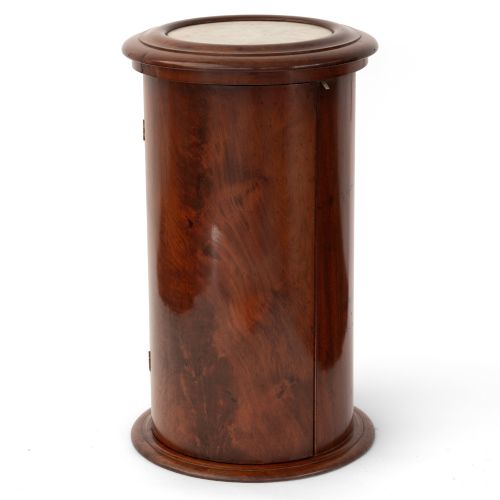
- A small, single-door freestanding cabinet, often cylindrical or square, traditionally utilised beside a bed for night storage.
- Glazed display bookcase
- A tall storage cabinet featuring glass-fronted upper doors intended for the exhibition of books and decorative objects.
19th Century Mahogany Cupboard: Frequently Asked Questions
What rooms suit a mahogany cupboard?
These cabinets adapt easily to bedrooms, living rooms, and hallways depending on their original function and overall scale. Compact bedside versions fit neatly beside sleeping quarters, while larger bookcases and sideboards anchor living spaces.
The rich timber tones coordinate well with both traditional and contemporary interiors. Placing them out of direct sunlight helps protect the polished mahogany surfaces from fading over time.
How do I identify a Regency piece?
Regency items generally display cleaner, more restrained architectural lines influenced by classical antiquity. Look for balanced proportions, minimal surface carving, and subtle brass mounts rather than heavy ornamentation.
Craftsmen working in this period often prioritised the natural grain of figured mahogany over applied decoration. This restrained aesthetic distinguishes early nineteenth-century work from later Victorian exuberance.
What is a pot cupboard?
A pot cupboard is a small bedside cabinet historically designed to house a chamber pot inside an enclosed compartment. These compact pieces typically feature a single door and occasionally a small drawer or marble top.
Today, buyers utilise these versatile bedside chests as convenient nightstands or small lamp tables. Their enclosed storage remains practical for modern bedroom accessories.
How should I care for mahogany?
Maintaining mahogany requires simple dusting with a soft, dry cloth to prevent grit accumulation on the polished finish. Avoid using silicone-based polishes or placing timber furniture near direct heat sources.
Occasional application of quality beeswax helps nourish the wood and preserve the depth of the polish. Keeping room humidity stable protects the structural integrity of the veneer and carcase.