



William IV Bedside Tables
These William IV bedside tables offer sturdy timber construction and classical proportions that bring quiet character to any bedroom.
William IV Bedside Tables
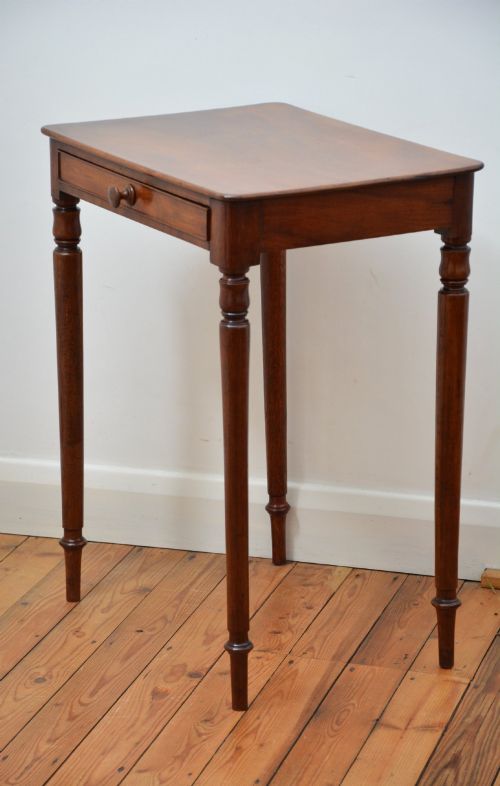
William IV bedside tables primarily take the form of pedestals, cabinets, and cupboards designed to sit beside a bed. The selection here spans the nineteenth century, with pieces dated across the 1830s and 1850s alongside items attributed more broadly to the nineteenth century.
Forms include single cupboards, cylindrical stands, and matched pairs featuring classical architectural elements. Side tables and occasional pieces also appear amongst the inventory, alongside adaptations such as table lamps and washstands.
Most examples originate from English workshops, showing the robust architectural lines typical of the period. Buyers frequently encounter mahogany and flame mahogany veneers as the primary timber choices across these listings.
Materials and construction
Makers relied heavily on solid mahogany and flame mahogany veneer, chosen for rich grain patterns and deep natural colour. Secondary timbers such as pine appear in concealed structural areas.
Joinery techniques focus on stability, pairing heavy pedestals with recessed panels and occasionally incorporating brass fittings. Surfaces receive careful finishing to highlight the natural figure of the wood, whilst paint or faux marble finishes provide alternative textures.
Some nineteenth-century bedside cabinets spent their early years hiding chamber pots before retiring to gentlemanly duty as lamp stands.
Assessing quality and craftsmanship
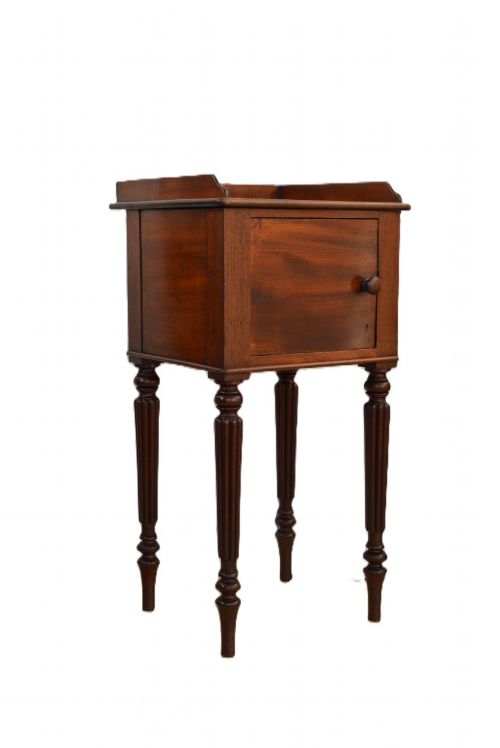
The choice of timber creates a clear distinction, with figured flame mahogany veneer demanding greater skill in selection and bookmatching than plain stock. Cabinets showing sophisticated architectural mouldings or turned reeded legs represent finer craftsmanship.
Structural integrity depends on the precision of the joinery and the survival of original brass hardware. Matched pairs and items retaining their original functional interiors carry distinct advantages over altered or heavily restored examples.
Gillows
The William IV Bedside Tables Glossary
- Flame mahogany
- A veneer cut from timber where the grain creates a flickering, flame-like pattern. This decorative cut was favoured for prominent door panels and drawer fronts.
- Pedestal cabinet
- A standalone cupboard built on a columnar or plinth base, often fitted with a single door enclosing interior shelving. These form the bulk of bedside storage from the period.
- Reeded legs
- Cylindrical supports carved with parallel convex mouldings running vertically. This decorative turning style frequently appears on tables and cabinets of the era.
- Pot cupboard
- A specialised bedside cabinet originally designed to house a chamber pot. Many survive today adapted simply as general storage or lamp tables.
William IV Bedside Tables: Frequently Asked Questions
What is a William IV bedside table?
These are nineteenth-century timber cabinets and pedestals designed to sit beside a bed for storage. They typically feature solid mahogany or flame mahogany veneer with classical architectural proportions.
Most examples date from the 1830s and 1840s, offering robust construction and enclosed cupboard space rather than open shelving.
How do I tell a William IV table from a Regency one?
William IV pieces generally display heavier, more robust proportions than earlier Regency furniture. They lean towards bolder architectural details and classical forms.
Turned reeded legs and deep flame mahogany veneers are common indicators of this slightly later nineteenth-century aesthetic.
Were these always used as bedside tables?
Many of these pieces began life as pot cupboards or pedestal stands rather than dedicated bedside tables. Their compact footprints made them versatile for various rooms.
Over time, changing domestic habits led to their widespread use as bedside storage and lamp tables.
How do I care for mahogany bedside cabinets?
Protect the timber by keeping cabinets away from direct heat sources and strong sunlight that can dry out the veneer. Regular dusting with a dry cloth maintains the finish.
Avoid excessive moisture and apply natural wax sparingly to nourish the wood grain when needed.