







Sheraton Style Bedside Tables
Sheraton style bedside tables bring refined classical lines to the bedroom, combining slender proportions with delicate inlay work.
Sheraton Style Bedside Tables
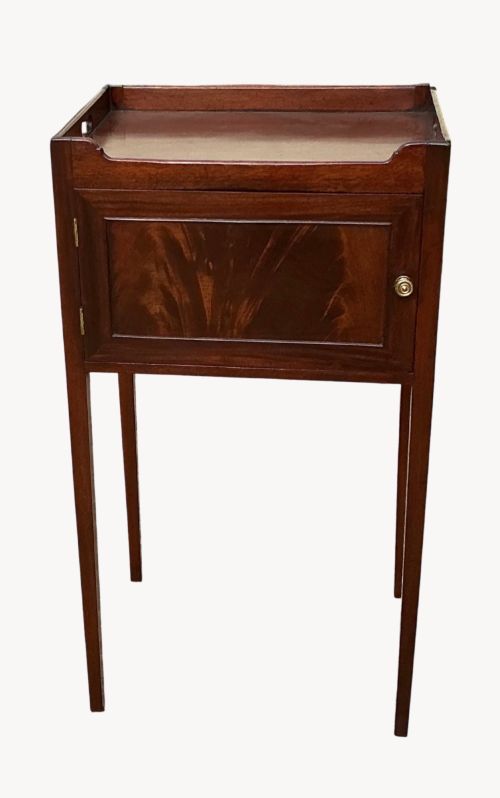
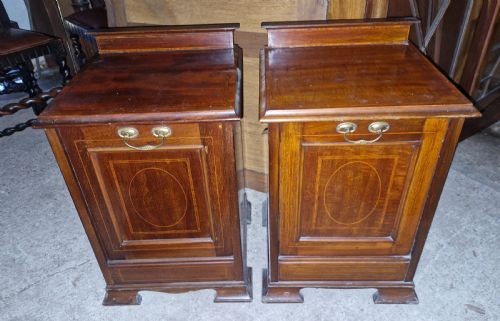
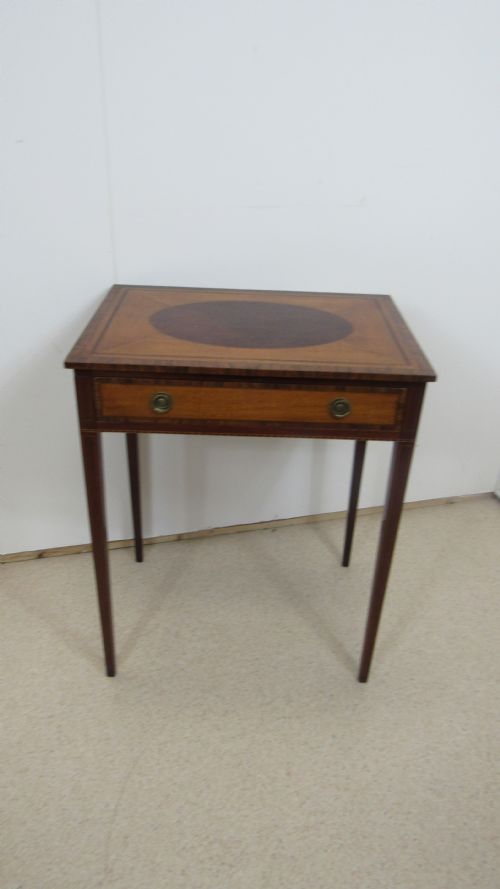
When you search for Sheraton style bedside tables, you are looking at pieces that echo the graceful geometry and classical restraint popularised in the eighteenth century. The examples met on this page range from compact Edwardian satinwood cabinets to earlier mahogany cupboards and side tables.
The form typically takes the shape of a bedside cabinet or small chest with inlaid timber details, often featuring satinwood or mahogany. These pieces span the nineteenth and early twentieth centuries, including Victorian interpretations and Sheraton Revival pieces from the Edwardian era.
Many of these tables incorporate subtle architectural elements such as bow fronts or tapered legs. They serve as practical bedroom storage while maintaining the light, balanced aesthetic characteristic of the style.
Materials and construction
The construction relies heavily on rich cabinet timbers like mahogany and satinwood, selected for their grain and warmth. Craftsmen shaped these woods into smooth surfaces ready to receive detailed decorative work.
Surface ornamentation is achieved through contrasting timber inlays, boxwood lines, and ebony stringing. Marquetry inlay and hand-painted detailing frequently appear, adding visual depth to the casework.
Some versatile pieces doubled as shoe cabinets, hiding practical footwear behind genteel mahogany doors.
Assessing quality and finish
Quality rests primarily on the crispness of the timber inlay and the selection of figured veneers. Finer pieces demonstrate precise fitting around intricate marquetry and smooth operation of drawers and cupboard doors.
The integration of secondary timbers and the retention of original brass hardware contribute significantly to the standing of a piece. Finer proportions and cleaner lines distinguish the better examples from simpler utility furniture.
Gillows
The Sheraton Style Bedside Tables Glossary
- Satinwood
- A lustrous, yellowish timber often used for veneers and inlay work on fine cabinet furniture. It provides a bright, contrasting surface against darker woods like mahogany.
- Marquetry Inlay
- The art of applying small pieces of veneer to form decorative patterns and pictures on a wooden surface. This technique requires considerable skill to ensure seamless joints.
- Bowfront
- A convex, curved front on a cabinet or chest of drawers that softens the rectangular profile of the furniture. It is a common feature in refined neoclassical design.
- Stringing
- Thin lines of contrasting wood inlaid into the surface of furniture to create borders and geometric panels. It defines the edges of drawers and tabletops.
- Sheraton Revival
- A late nineteenth and early twentieth century movement that reinterpreted the light, neoclassical designs of the original eighteenth-century master. It embraces satinwood, painted details, and classical symmetry.
Sheraton Style Bedside Tables: Frequently Asked Questions
Are these tables sturdy enough for daily use?
These cabinets and side tables were built using traditional joinery and solid cabinet timbers, making them robust enough for contemporary bedrooms.
Their compact construction allows them to support lamps and bedside books without difficulty.
How do I identify a Sheraton Revival piece?
Sheraton Revival pieces generally date from the Edwardian period or the late nineteenth century, reflecting earlier eighteenth-century proportions.
Look for characteristic satinwood veneers, delicate stringing, and tapered legs that imitate the classical aesthetic.
What is the difference between a cabinet and a side table?
Bedside cabinets enclose storage behind a small door, keeping items hidden away from view.
Side tables offer open surfaces or drawers rather than a cupboard compartment, providing a lighter visual presence.
How should I care for satinwood and mahogany?
Protect the polished wood surfaces by keeping them away from direct sunlight and excessive moisture.
Regular dusting with a soft, dry cloth helps maintain the natural lustre of the timber and inlay work.