



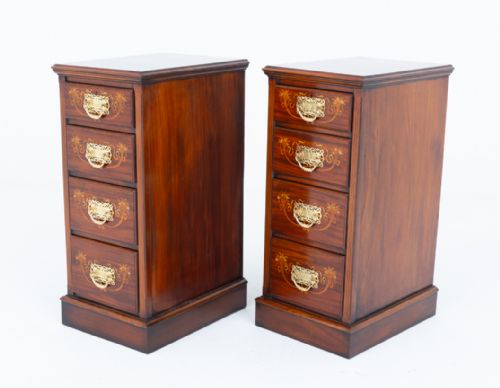
Edwardian Inlaid Nightstand
An edwardian inlaid nightstand brings refined marquetry and compact bedside storage to a bedroom through traditional cabinetmaking.
Edwardian Inlaid Nightstand
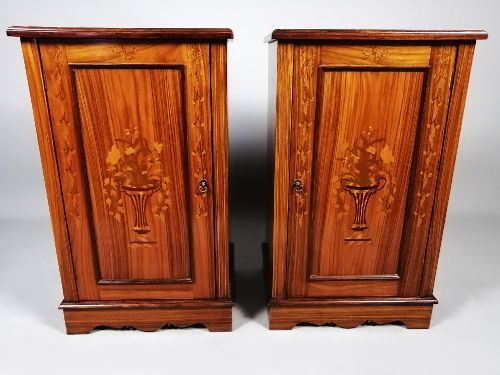
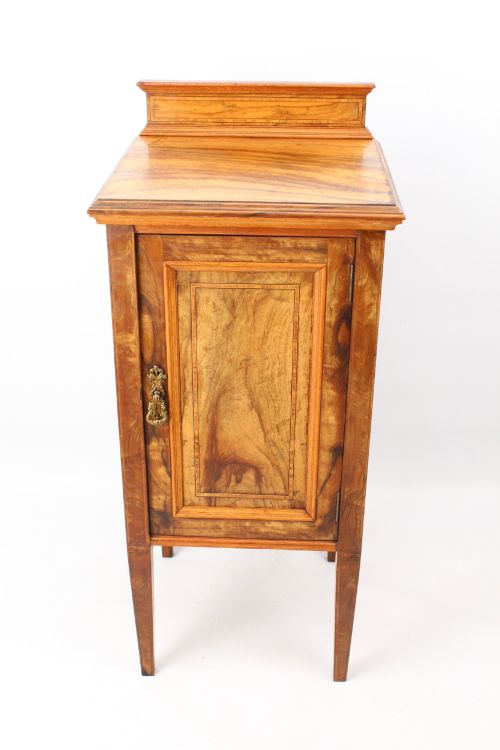
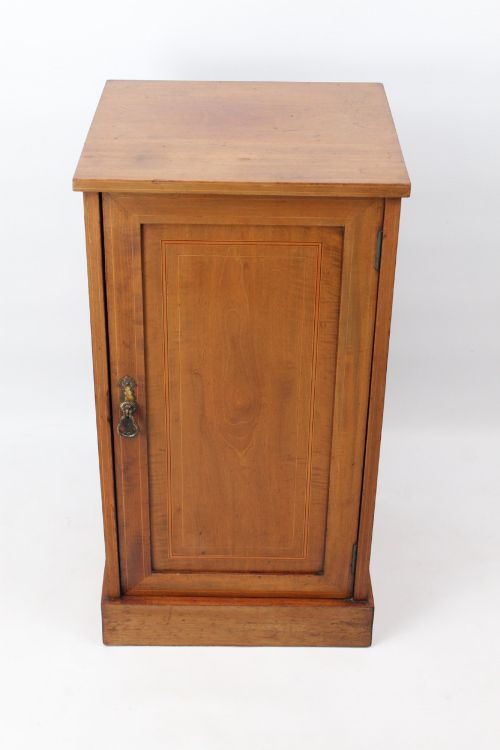
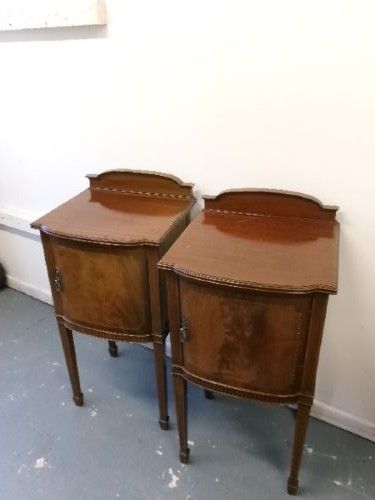
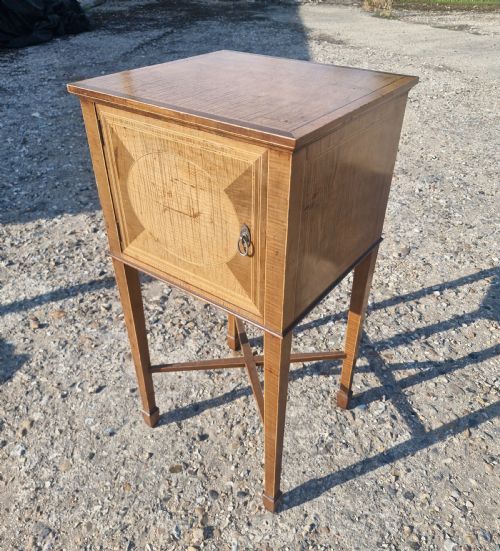
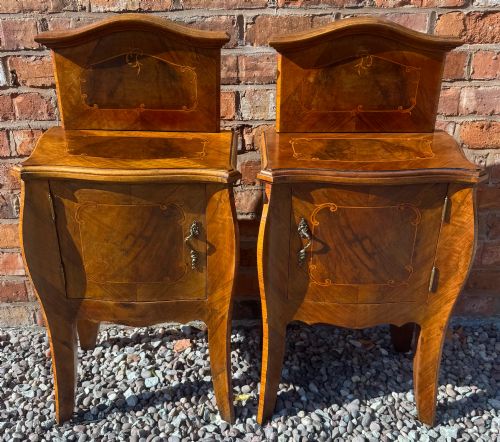
An edwardian inlaid nightstand typically appears as a bedside cabinet, cupboard, or small table designed for the bedroom. The pieces on this page emerge primarily from the Edwardian period and the late nineteenth century, reflecting the domestic needs of those decades.
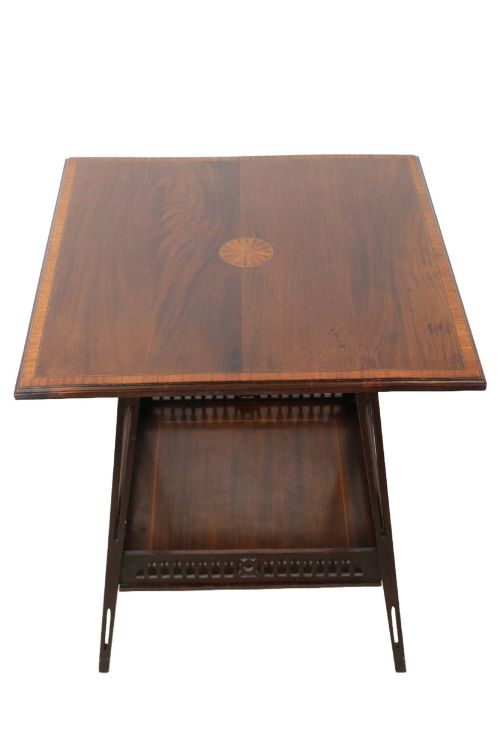
Makers and workshops of the era produced these forms in mahogany, rosewood, and satinwood, frequently accented with delicate contrasting stringing. Alongside standard bedside cupboards, buyers encounter occasional tables and chests adapted for similar domestic spaces.
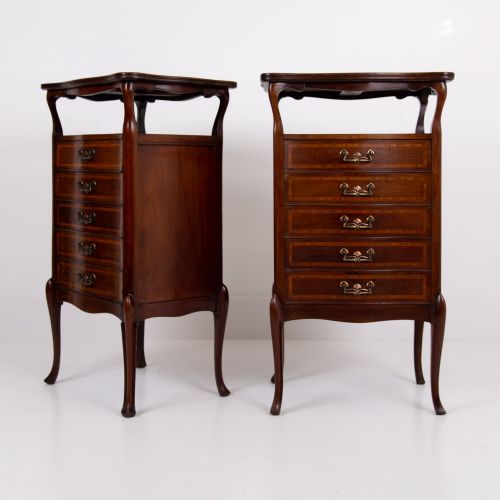
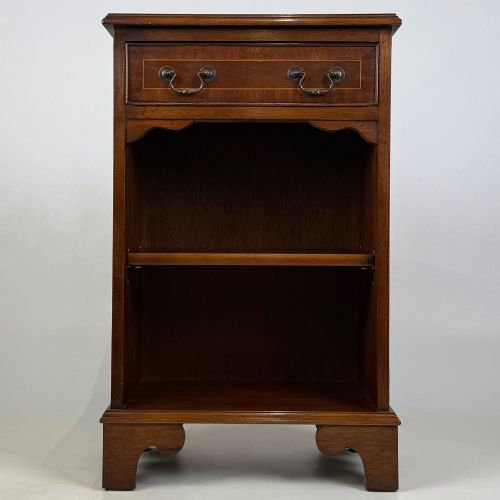
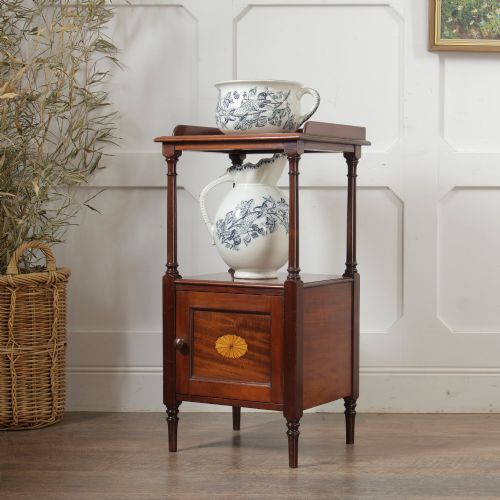
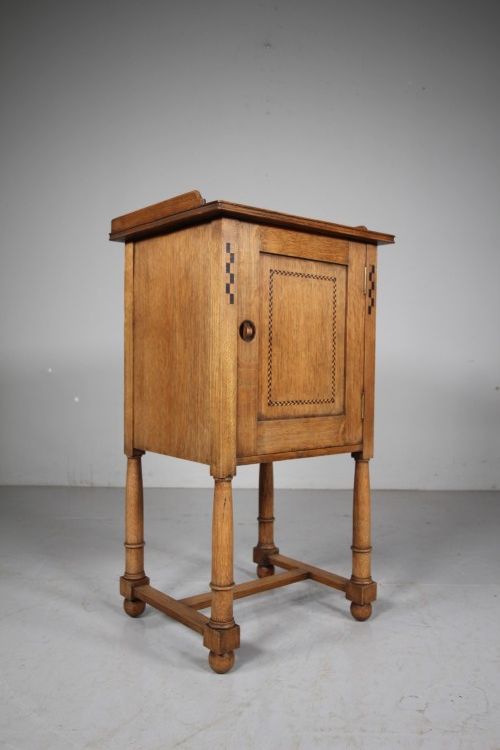
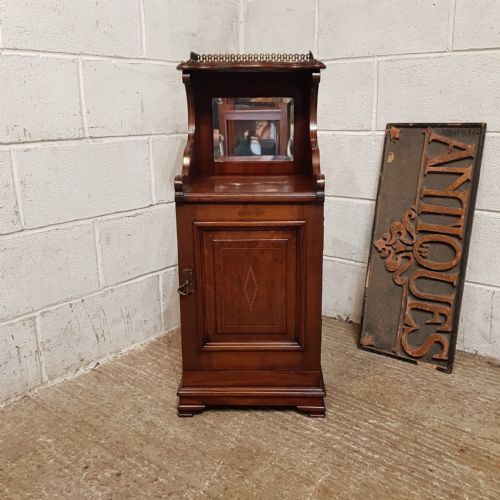
The version most commonly met on this page combines a cupboard door or drawers with slender legs and refined woodwork. These items range from simple utilitarian oak designs to elaborate Sheraton Revival and marquetry pieces.
Materials and Technique
Cabinetmakers utilised solid timbers and selected veneers such as mahogany, walnut, and rosewood as the primary structural bodies. These woods provided a stable foundation for the delicate decorative surfaces applied across the front and top panels.
Inlay work relied on contrasting materials like boxwood and satinwood, cut precisely into recesses to form geometric borders and floral motifs. Workshops combined traditional joinery techniques with brass hardware and glass elements to complete each cabinet or table.
Listings feature bedside cabinets, occasional tables, and chests constructed from mahogany, rosewood, and oak across Victorian and Edwardian periods.
Judging Quality
The distinction between standard production and superior work rests on the precision of the marquetry and the choice of timber figurations. Fine examples demonstrate crisp alignment in the boxwood and satinwood lines, with tightly fitted drawer joints and original brass furniture.
Makers known for retail excellence contributed to higher standards of construction, visible in balanced proportions and harmonious wood selections. Pieces that retain their original polished finish and structural integrity stand apart from heavily restored or altered equivalents.
Trevor Page & Co·Maple & Co·Morant & Co·Heals·Collinson & Lock·Gillows
The Edwardian Inlaid Nightstand Glossary
- Marquetry
- Decorative veneer work arranged in intricate pictorial or geometric patterns across a furniture surface. This technique allows craftsmen to combine different coloured woods for visual depth.
- Stringing
- Thin strips of contrasting wood inlaid into grooves along the edges of tabletops and drawer fronts. It forms fine linear borders characteristic of classical revival furniture.
- Pot Cupboard
- A traditional term for a small bedside cabinet originally constructed to house a chamber pot. These practical items often feature a single door above a plinth or short legs.
- Sheraton Revival
- A late nineteenth and early twentieth-century design movement inspired by eighteenth-century neoclassical furniture forms. Pieces in this style utilise light satinwood accents and tapered supports.
- Satinwood
- A durable tropical hardwood with a lustrous yellowish grain used extensively for veneers and inlay. It provides a bright contrast against darker woods like mahogany.
Edwardian Inlaid Nightstand: Frequently Asked Questions
What is an edwardian inlaid nightstand?
An edwardian inlaid nightstand is a small bedside cabinet or table produced during the early twentieth century or late nineteenth century. These pieces combine compact storage with decorative wood veneers and contrasting stringing.
They served beside beds to hold small personal items, lighting, or washing apparatus. Today, they function as practical bedside or living room accent tables.
Were these cabinets used as nightstands?
Many of these pieces functioned as bedside cupboards or pot cupboards rather than modern open nightstands. Their enclosed doors kept bedroom necessities out of sight.
Over time, changing domestic habits transformed these utility cabinets into decorative lamp tables and general bedside storage units.
How do I care for inlaid wood?
Inlaid furniture requires protection from direct sunlight and excessive humidity to prevent the delicate veneers and boxwood lines from lifting. Regular dusting with a soft, dry cloth preserves the polished finish.
Applying specialised furniture wax occasionally helps maintain the moisture balance of the timber without building up heavy residues.