



Regency Wooden Bedside Cabinets
Regency wooden bedside cabinets are compact storage pieces offering timber warmth and period character to a bedroom.
Regency Wooden Bedside Cabinets
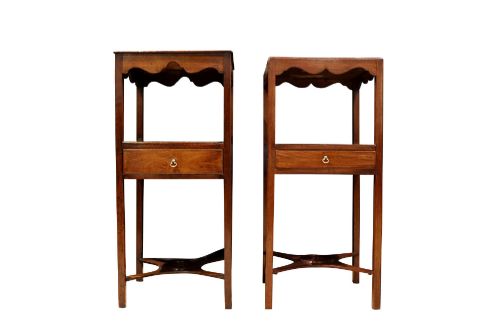
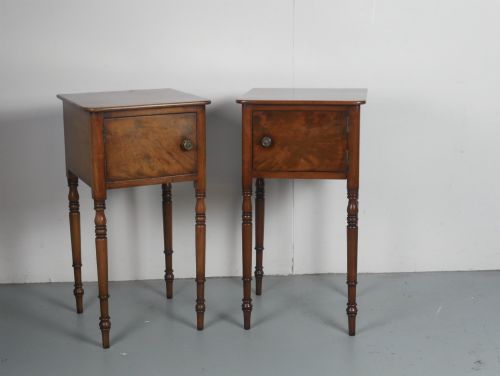
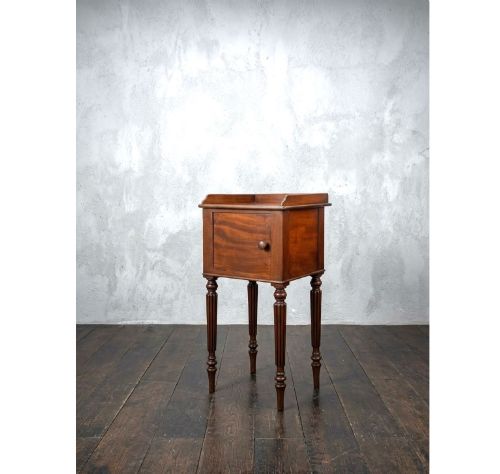
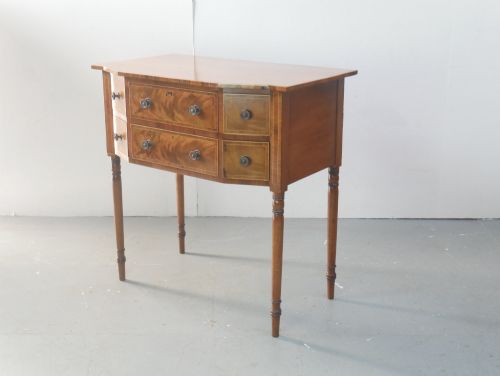
Regency wooden bedside cabinets include bedside cupboards, pedestal cupboards, and nightstands spanning the Regency, Georgian, and nineteenth-century periods. These items provide practical enclosed storage beside a bed while introducing period proportion and timber grain into a room.
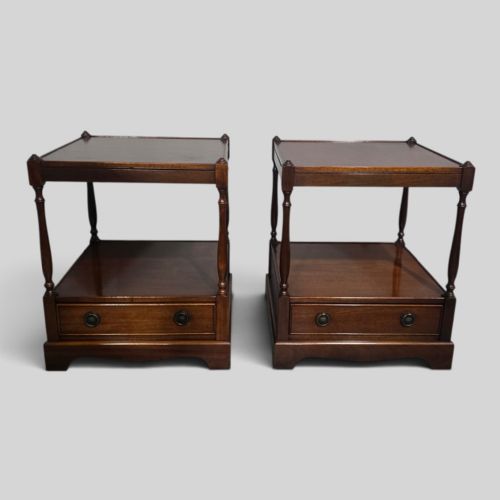
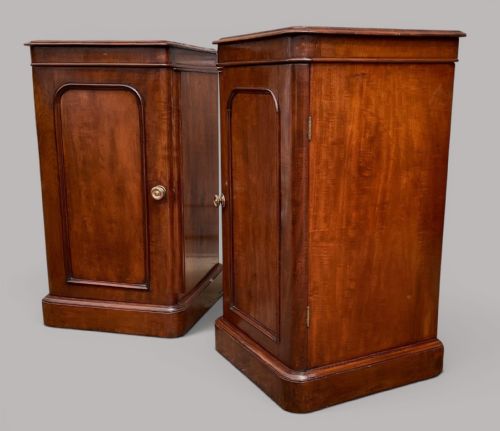
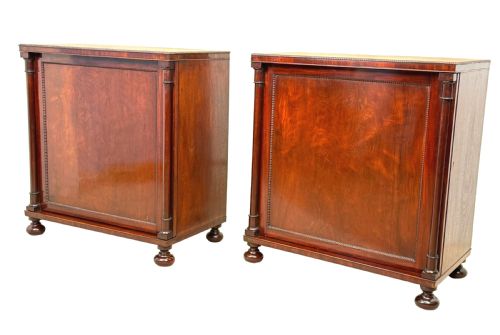
The versions most commonly met on this page are mahogany cupboards and pedestal forms, sometimes arranged as pairs. They appear in cylindrical, hexagonal, or rectangular shapes, frequently featuring single doors or drawers.
Alongside the core Regency examples, the listings encompass related nineteenth-century iterations including William IV, George IV, and Early Victorian pieces. Occasional variations stretch from eighteenth-century tables to later nineteenth-century French and Gothic Revival items.
Materials and Construction
Makers utilised solid mahogany and flame mahogany veneer as the primary timbers, frequently highlighting rich grain patterns across cylindrical or pedestal bodies. Secondary woods and exotic timbers such as goncalo alves and king-wood appear in select nineteenth-century pieces.
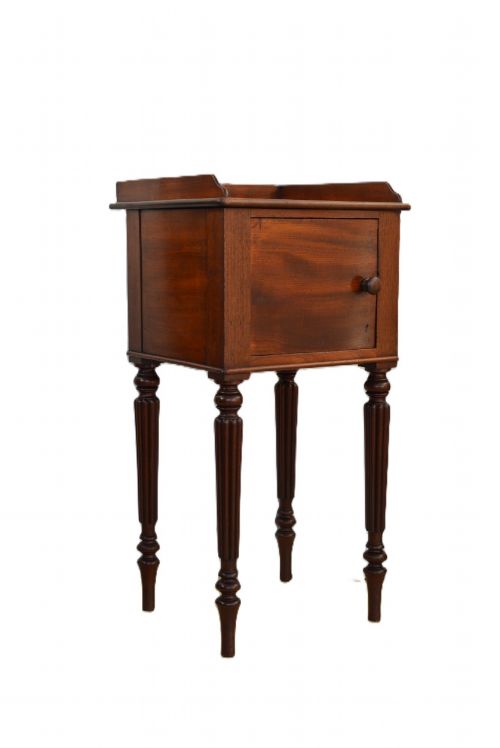
Construction techniques include finely turned reeded legs, ebony inlay, and fitted marble tops. Brass fittings and ceramic components provide functional and decorative details on doors and drawers.
Regency Wooden Bedside Cabinets Retail Price Guide 2026
Typical asking prices for regency wooden bedside cabinets among the pieces listed under this phrase on Sellingantiques today, from the lower quarter to the upper quarter. They describe what is for sale here now, not the wider market.
Cabinet forms include cylindrical, hexagonal, and rectangular bedside cupboards alongside pedestal designs.
Distinctions in Quality
Quality rests upon the selection of timber, particularly the deployment of figured flame mahogany veneer and contrasting ebony inlay. Superior cabinets demonstrate precise joinery in geometric forms like hexagonal or cylindrical bodies.
Attribution to noted workshops elevates certain pieces, distinguishing standard utility items from sophisticated furniture designed with architectural proportions and refined reeded supports.
Gillows·Holland & Sons
The Regency Wooden Bedside Cabinets Glossary
- Flame mahogany
- A veneer cut from timber where the grain creates a distinctive flame-like pattern. This material was favoured for prominent surfaces on Regency and nineteenth-century cabinets.
- Pedestal cabinet
- A tall, freestanding enclosed cupboard standing on a single base or plinth. These cylindrical or rectangular forms form a major part of the available bedside storage.
- Pot cupboard
- A small bedside cabinet originally designed to house a chamber pot. They frequently feature a single door enclosing a shelf.
- Reeded legs
- Columns carved with parallel convex mouldings running vertically. This decorative turning appears regularly on the supports of Regency tables and cabinets.
- Goncalo Alves
- A dense exotic hardwood with striking contrasting grain patterns. It is found on select nineteenth-century side cabinets.
Regency Wooden Bedside Cabinets: Frequently Asked Questions
What is a pedestal bedside cupboard?
A pedestal bedside cupboard is a tall, enclosed storage piece designed to stand next to a bed. These compact units typically feature a single door concealing interior shelving.
They offer practical concealment for bedside items while maintaining a small footprint on the floor.
How do I identify a Regency cabinet?
Regency cabinets often display architectural symmetry, classical proportions, and specific decorative elements like reeded legs or ebony inlay. The primary timber is frequently mahogany or flame mahogany.
Makers working in this style during the early nineteenth century also produced cylindrical and pedestal forms.
Are these cabinets sold as pairs?
Several listings on this page present matching pairs of bedside cupboards or pedestal cabinets. These matched sets are particularly typical of the Regency and nineteenth-century periods.
Pairs provide symmetrical balance when placed on either side of a bed.
What woods were used for these cabinets?
Mahogany is the predominant timber found across these listings, appearing both as solid wood and as figured flame mahogany veneer. Other materials include oak, satin birch, marble, and ceramic.
Select nineteenth-century pieces incorporate exotic timbers such as goncalo alves and king-wood.