
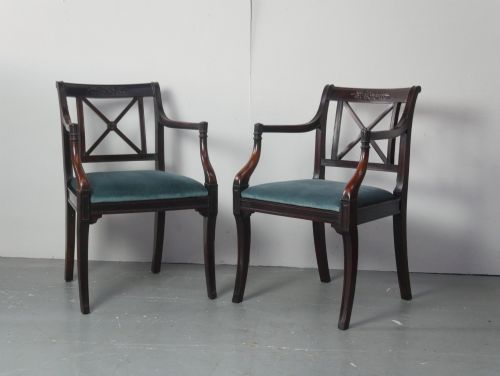
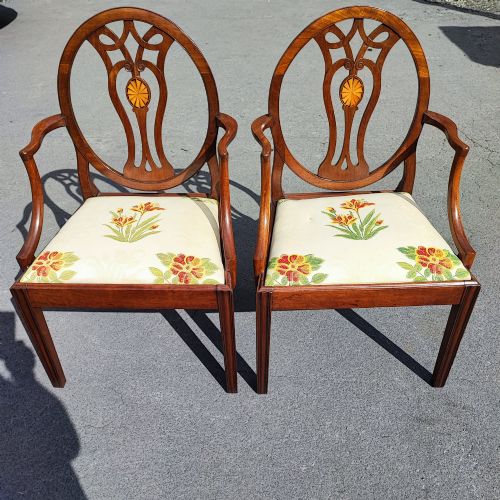
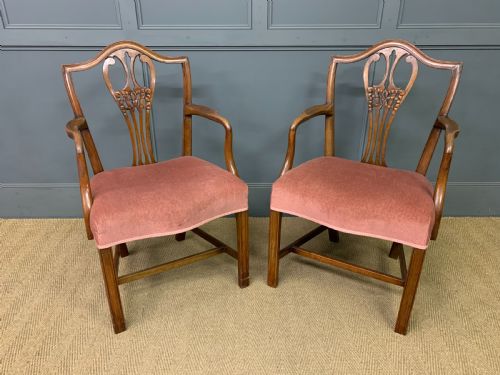
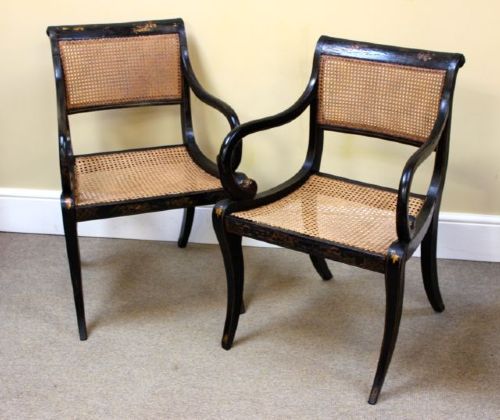
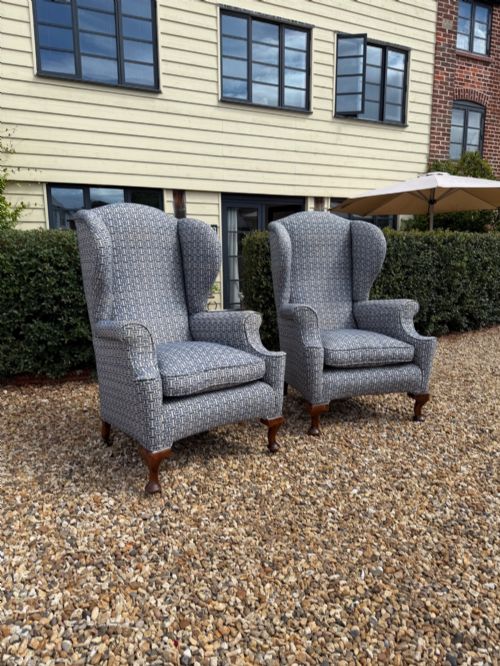
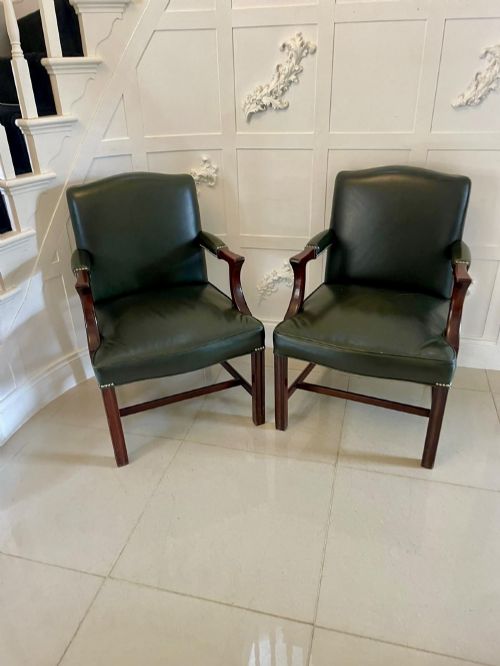
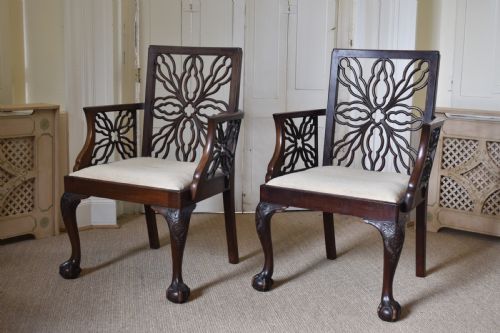
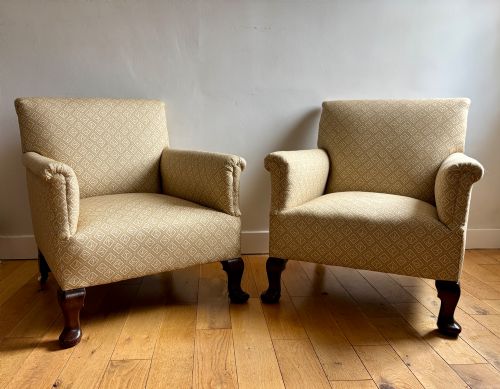
Pair Georgian Armchairs
Pair georgian armchairs bring dual symmetry and period presence to a room, offering substantial seating built to endure.
Pair Georgian Armchairs
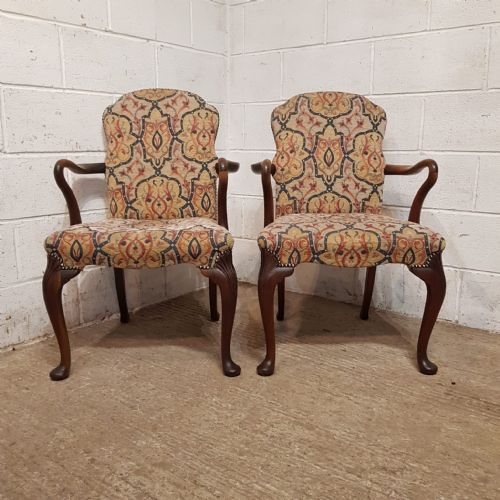
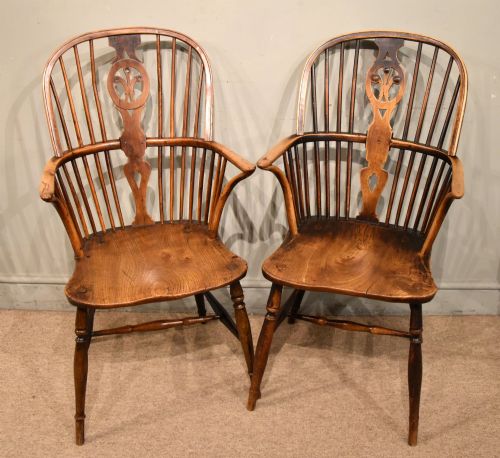
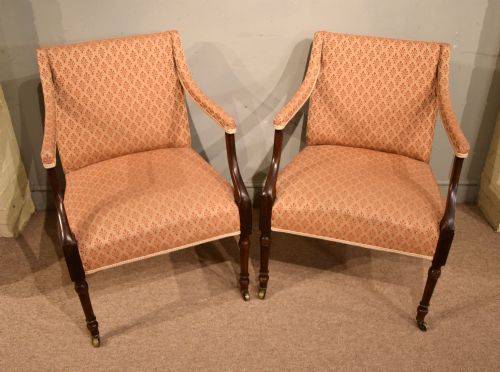
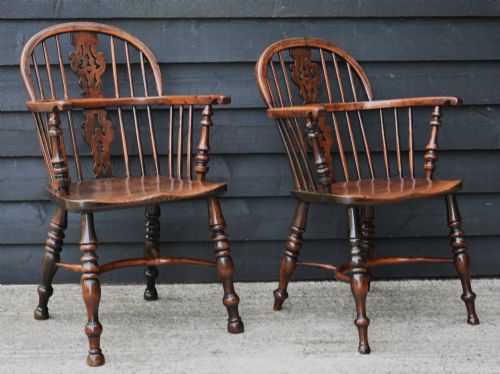
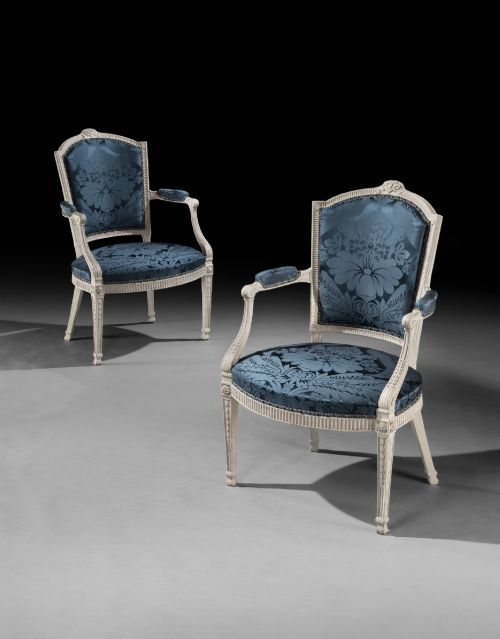
When searching for pair georgian armchairs, you encounter genuine 18th-century seating alongside later revival pieces produced across the 19th and early 20th centuries. These forms encompass open armchairs, carvers, library chairs, and high-backed Windsor variants.
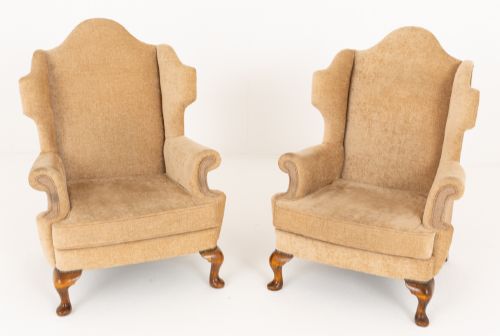
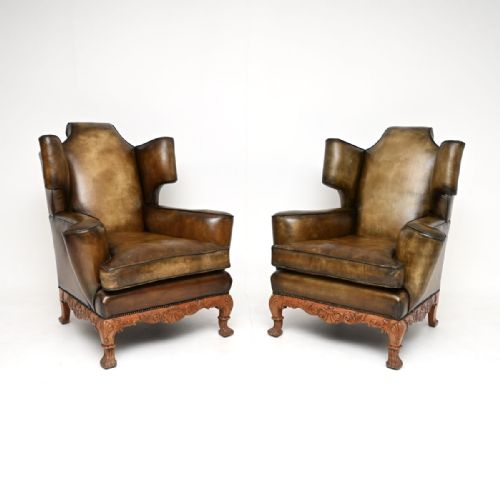
The selections span formal mahogany open-arm designs influenced by Chippendale and Sheraton alongside robust country timber constructions in elm, ash, and yew. Winged forms upholstered in leather or fabric also appear frequently across the period and revival spectrum.
Materials and construction
Makers utilised dense hardwoods like mahogany, walnut, and oak for formal frames, often incorporating intricate carved details, brass accents, or inlaid satinwood. Country variants relied on local timbers including elm, ash, and yew shaped into strong spindle and comb-back Windsor structures.
Upholstery methods involved traditional stuffing secured with fabric, needlepoint, or leather, while specialised seating utilised caned panels. Frame assembly depended on mortise and tenon joinery to provide structural rigidity for daily use.
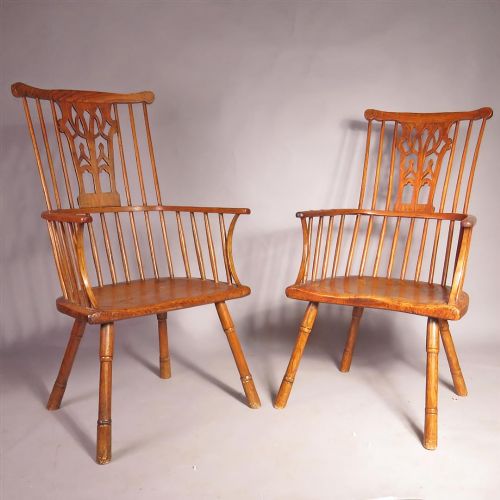
Some Windsor armchairs include remarkably wide wooden seats humorously termed broad arms, designed to accommodate voluminous period garments.
Assessing quality
Quality rests upon the crispness of carved details in the wood and the integrity of the underlying timber frame. Superior examples display harmonious proportions, tight joinery, and materials selected for balanced grain patterns.
The grade of secondary woods, the execution of inlay work, and the fidelity of revival styling relative to original periods distinguish higher-tier examples from standard production pieces.
Whytock And Reid
The Pair Georgian Armchairs Glossary
- Carver chair
- An armchair designed with open sides, historically positioned at the head of a dining table or utilised as a desk seat. These pieces feature supportive armrests integrated into the structural frame.
- Windsor chair
- A wooden seating form constructed with a solid contoured seat into which turned legs and spindle backs are wedged. These vernacular designs frequently combine elm, ash, and yew.
- Gainsborough chair
- A wide, upholstered armchair with open padded arms, short cabriole or straight legs, and a square back. Originating in the mid-18th century, these seats served libraries and writing desks.
- Wing chair
- An upholstered armchair featuring side panels designed to shield the occupant from drafts. These pieces often stand on cabriole or Marlborough legs.
- Sheraton style
- A neoclassical furniture design characterised by straight tapered legs, geometric inlay, and rectilinear proportions. Named after the late-18th-century designer, this style emphasises lightness and elegance.
Pair Georgian Armchairs: Frequently Asked Questions
How do I identify genuine period pair georgian armchairs?
Examine the timber surfaces for signs of age, tool marks, and construction methods consistent with 18th-century workshop practices. Genuine examples display natural wear patterns and hand-cut joinery rather than modern mechanical fasteners.
Compare the proportions, carved ornamentation, and secondary woods against documented examples from the period. Revival pieces from the 19th and 20th centuries often reveal machine-sawn components and different finishing techniques.
Where were pair georgian armchairs used in a home?
These chairs served multiple rooms including libraries, studies, dining rooms, and parlours. Open armchairs and carvers functioned primarily as desk seats or dining table ends.
Winged and library forms provided comfortable seating beside fireplaces or in private reading spaces. Their dual construction made them suitable for placement on either side of a fireplace or window.
How should I care for leather upholstered pair georgian armchairs?
Keep leather upholstery conditioned with appropriate balms to prevent drying and cracking over time. Avoid placing the chairs in direct sunlight or near heat sources that accelerate moisture loss.
Clean surfaces gently with a soft, dry cloth to remove dust. Professional conservation should be consulted for antique leather showing signs of structural splitting.
What is the difference between Georgian and Georgian revival pair georgian armchairs?
Original Georgian pieces were manufactured during the reigns of the four Georges between 1714 and 1830, exhibiting period-specific hand-craftsmanship and contemporary material selection. These items carry the direct patina and structural history of the 18th century.
Georgian revival pieces were produced later, particularly during the late 19th and early 20th centuries, copying earlier aesthetics using slightly later industrial techniques and timber stocks.