


Pair Column Pedestals
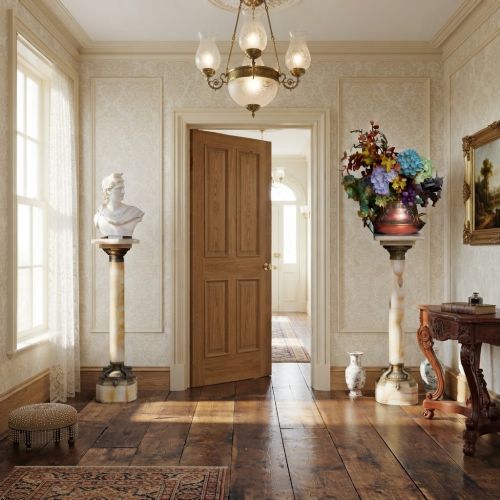
These pair column pedestals lift busts, urns and lamps into the room with architectural presence.
Pair Column Pedestals
When searching for pair column pedestals, buyers encounter matching supports designed to elevate display items such as plants, table lamps, urns and busts. The pieces on this page span several centuries, with nineteenth-century examples and Victorian iterations appearing frequently alongside Edwardian and later twentieth-century forms.
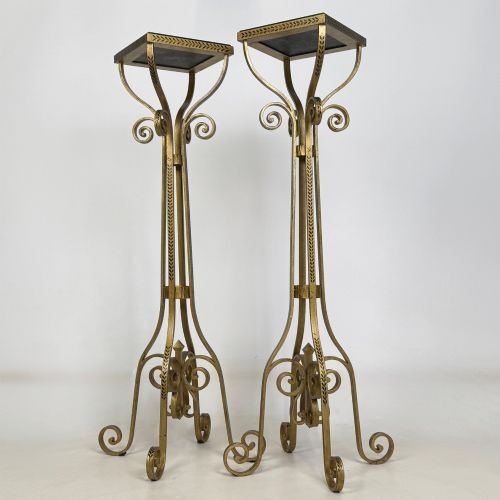
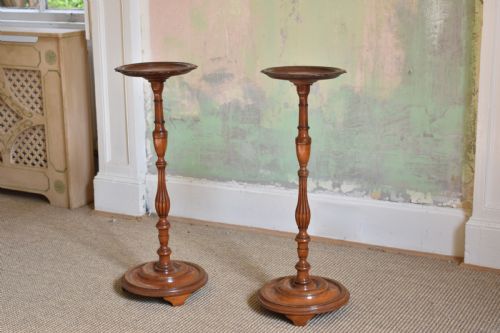
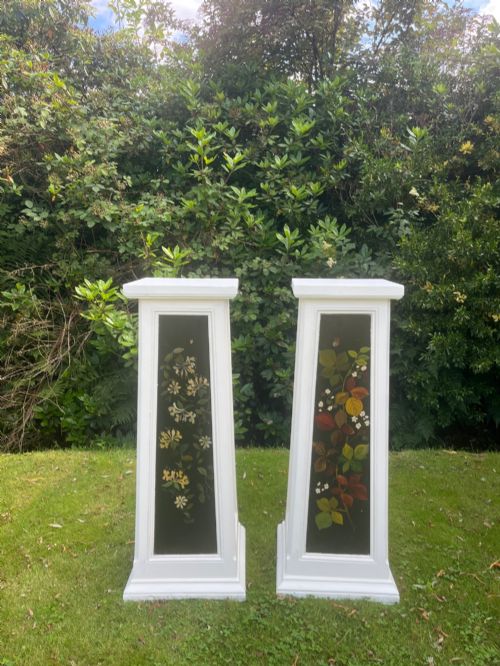
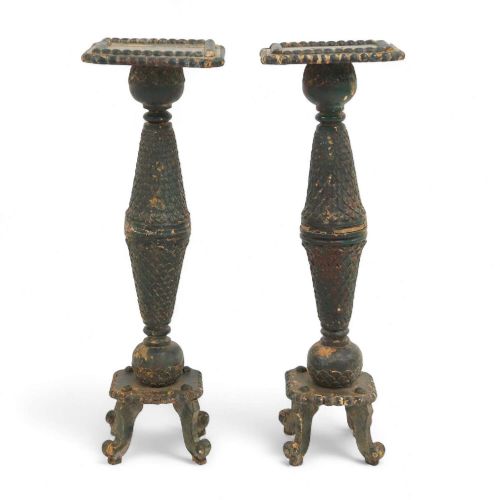
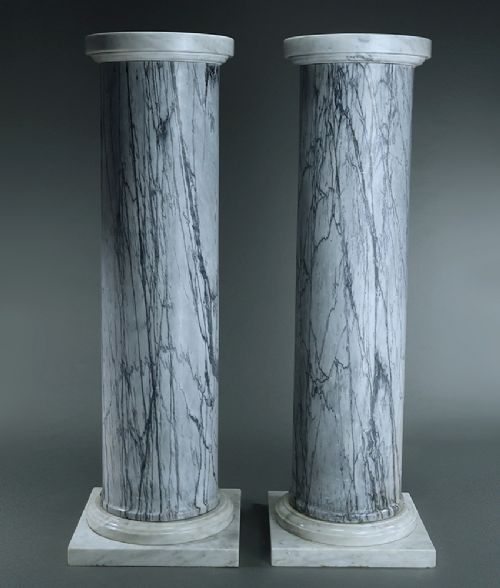
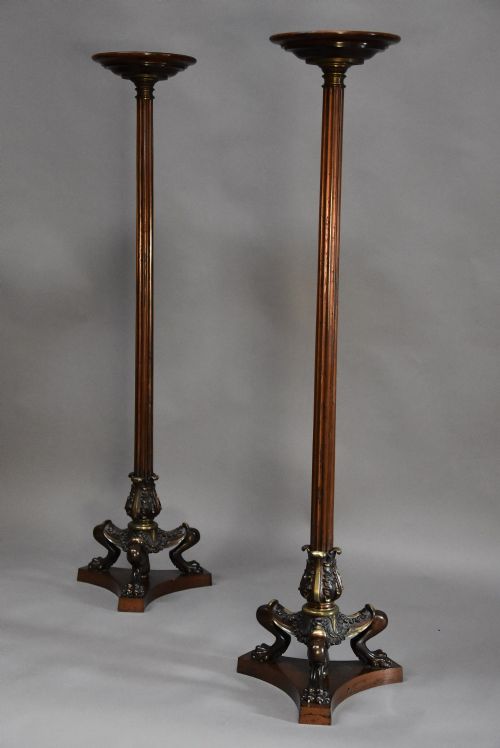
The selection ranges from tall architectural columns and torcheres to plant stands and low display plinths. Materials vary widely, encompassing marble, mahogany, painted wood, cast iron and plaster, reflecting diverse domestic and garden settings.
How they were made
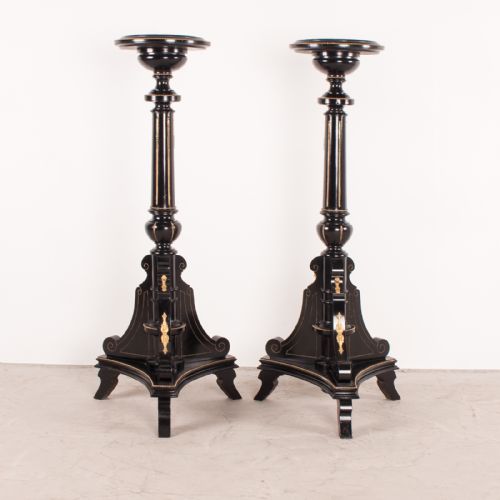
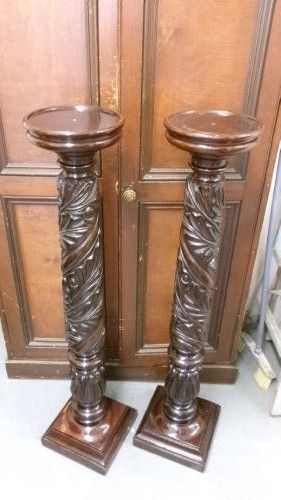
The construction of pair column pedestals relies upon timber, stone and metal work as recorded in the listings. Cabinetmakers utilised mahogany, satinwood and ebonised wood, sometimes incorporating inlay, brass mounts or ormolu collars.
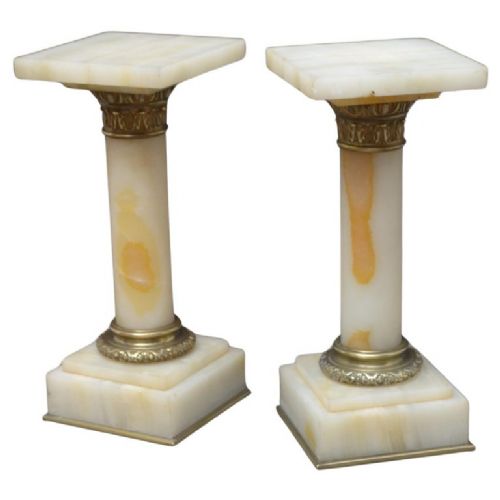
Stonemasons and marble workers shaped solid materials including Bardiglio, Carrara, onyx and alabaster into cylindrical shafts and capitals. Other variants involve cast iron, plaster, composite stone and painted surfaces applied to wood or plaster bases.
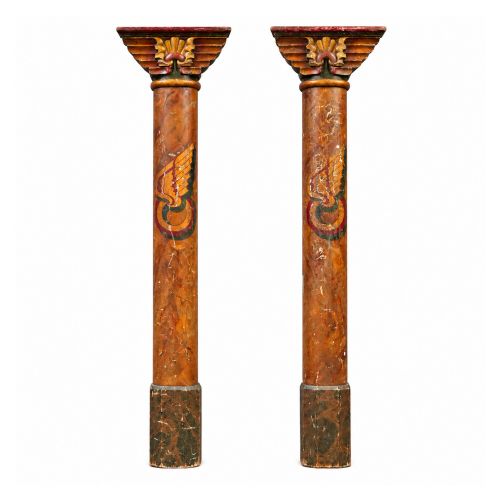
Among the historical stock, fairground carousel columns once carried spinning horses before finding a second life as decorative architectural supports.
What varies in quality
The distinction between standard items and exhibition-grade pieces rests upon the choice of materials and the execution of detail. Examples finished in amboyna, carved ebony, or fitted with precise ormolu mounts demonstrate superior craftsmanship compared to simpler painted or plaster variants.
Proportion and decorative ambition also divide the range, from straightforward turned wooden shafts to grand scale columns executed in neoclassical or French Empire styles with intricate capitals.
Marguerite·George Smith·Thomas Hope
The Pair Column Pedestals Glossary
- Torchere
- A tall, slender stand designed specifically to support a lamp, candle or small display object. These pieces often feature decorative columns or shafts raised on steady bases.
- Plinth
- A heavy flat-bottomed base or lower block that supports a column, statue or urn. They provide structural stability and visual grounding to taller vertical stands.
- Ormolu
- Gilded bronze or brass applied as decorative mounts to furniture and columns. This technique gained widespread use during the eighteenth and nineteenth centuries.
- Scagliola
- A composite material made from selenite, glue and pigments, mixed to imitate marble and other fine stones. Craftsmen apply and polish it by hand to achieve a convincing stone-like finish.
- Corinthian
- A classical architectural order identified by ornate capitals decorated with acanthus leaves and scrolls. This style appears frequently on the columns and pedestals of the nineteenth century.
Pair Column Pedestals: Frequently Asked Questions
What were pair column pedestals used for?
These matching supports served to elevate items such as table lamps, vases, busts and potted plants within grand rooms and hallways. They allowed decorative objects to sit at eye level and draw attention within the interior scheme.
In larger country houses and salons, tall torcheres and architectural columns also acted as sculptural elements in their own right. Pairs were typically placed symmetrically flanking doorways, fireplaces or large mirrors.
How do I style pair column pedestals at home?
Placing matching columns on either side of a sideboard, fireplace or entryway creates a balanced focal point in a reception room. They work effectively when topped with corresponding table lamps, bronze figures or floral arrangements.
Shorter plant stands and plinths function well in corners or empty alcoves to break up flat wall lines. Ensure the weight of the object placed on top remains appropriate for the surface area of the capital.
How can I tell the period of a pedestal?
Dating relies on observing the prevailing style, timber selection and construction methods recorded across different eras. Pieces showing heavy neoclassical influences, ormolu mounts and dense marbles often point to the nineteenth century.
Lighter satinwood examples or painted plaster forms frequently align with Edwardian or later twentieth-century production. Comparing the turned details against documented historical styles helps narrow down the decade of manufacture.
Are marble columns heavy to move?
Solid marble, alabaster and onyx columns possess substantial weight due to the density of the stone. Moving them generally requires two people to ensure safety and prevent chipping the edges or capitals.
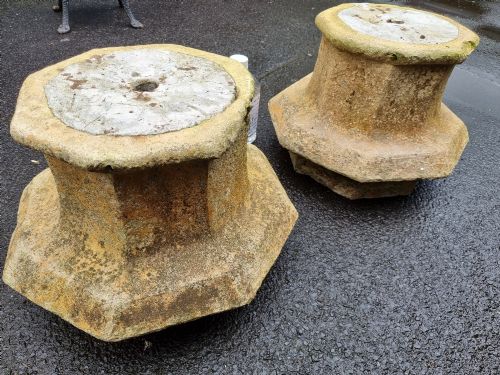
Wooden, plaster and hollow-constructed pedestals are significantly lighter and easier to reposition within a room. Garden plinths made from cast iron or composite stone are similarly heavy and designed for stationary outdoor placement.