



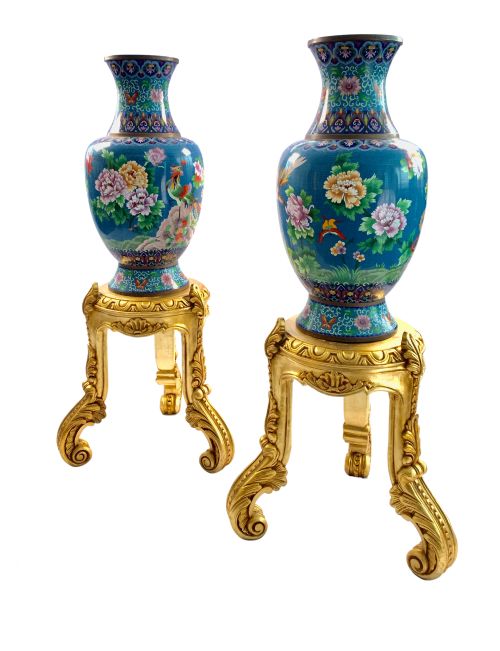


Pair Chinese Enamel Vases
When you search for a pair chinese enamel vases, you are looking at matched dual vessels crossing Victorian, Edwardian, and twentieth-century periods.
Pair Chinese Enamel Vases
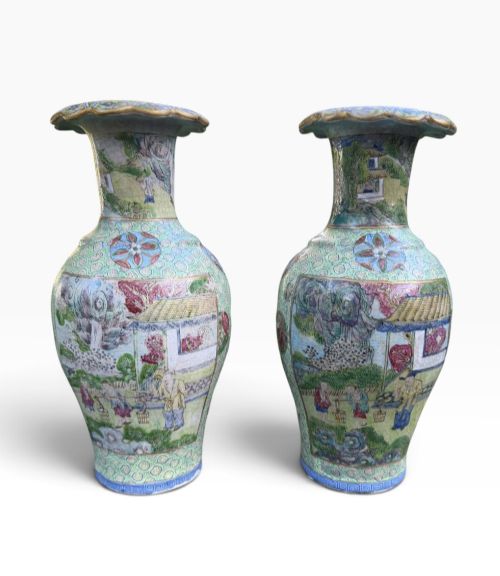
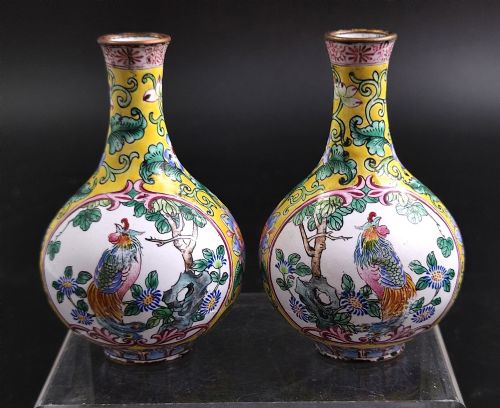
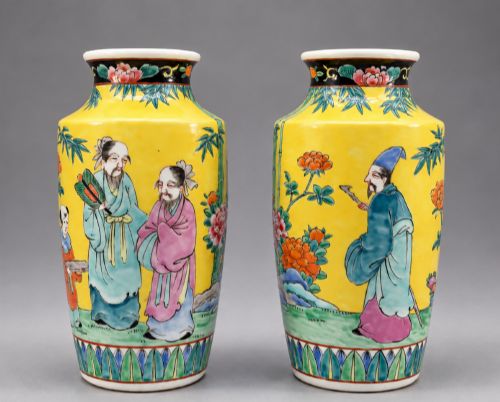
A pair chinese enamel vases grouping brings together matched vessels fashioned in porcelain or metal with coloured vitreous decoration. These items surface frequently as nineteenth-century pieces alongside early twentieth-century examples up to nineteen-thirty.
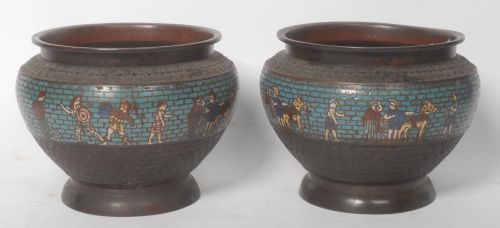
Forms span standard baluster shapes, moon flasks, cachepots, lidded jars, and bottle vases. Many of these pairs have been converted into table lamps or fitted with ormolu mounts over time.
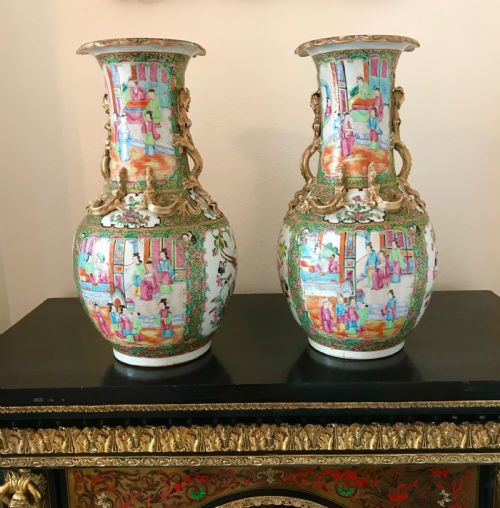
Origins trace through Chinese Export, Qing Dynasty, and Republic periods, alongside nineteenth-century European Chinoiserie interpretations. Canton and Rose Medallion designs dominate the porcelain selections found within this grouping.
How they were made
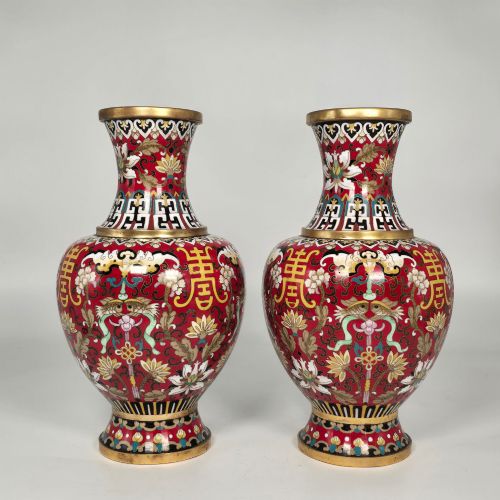
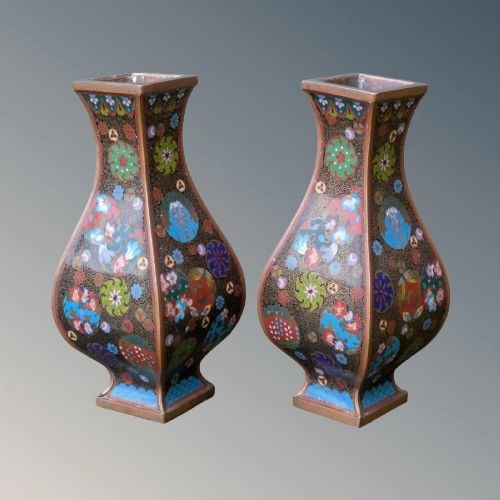
Cloisonné pieces rely on thin metal wires soldered to a brass or copper base to form distinct cells, which are then filled with coloured enamel pastes before firing. Champlevé technique involves carving troughs directly into the metal surface to receive the enamel.
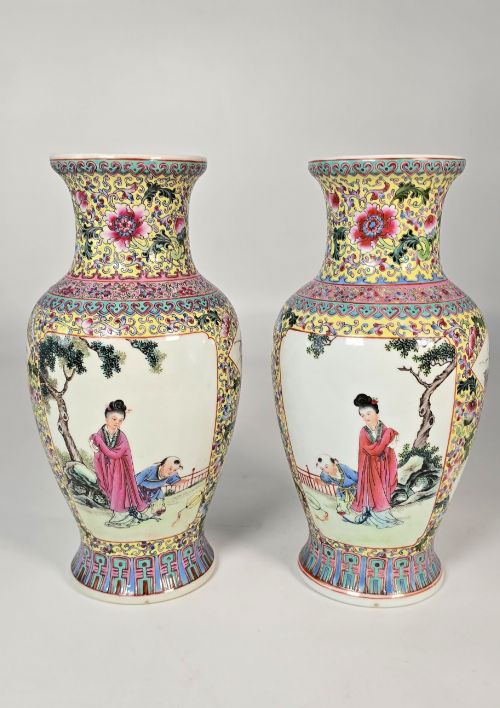
Porcelain bodies are hand-painted using enamel palettes such as Famille Rose, Famille Verte, and Famille Noir over a glazed white ceramic base. Certain examples incorporate gilt bronze or ormolu mounts to secure the rims and bases.
Pair Chinese Enamel Vases Retail Price Guide 2026
Typical asking prices for pair chinese enamel vases among the pieces listed under this phrase on Sellingantiques today, from the lower quarter to the upper quarter. They describe what is for sale here now, not the wider market.
The documented periods span from Victorian and Edwardian eras through the nineteen-thirties.
What varies in quality
The crispness of wirework in cloisonné and the precision of brushwork in hand-painted porcelain define the upper tiers of production. Softer enamels or blurred outlines indicate a simpler execution.
The symmetry between the two vessels and the consistency of the matching pattern across both items determine the strength of the pair. Uniformity in colour saturation across the matched body proves essential for balance.
The Pair Chinese Enamel Vases Glossary
- Cloisonne Enamel
- A metalwork technique where thin wires form compartments filled with vitreous paste. These cells are fired and polished smooth.
- Famille Rose
- A primary palette of opaque pink enamel introduced during the Qing Dynasty. It distinguishes porcelain decorated with soft floral and figurative scenes.
- Cachepot
- An ornamental pot used to hold a flowerpot. These decorative vessels appear frequently in bronze and cloisonné forms.
- Moon Flask
- A flattened circular flask resting on a small base, fitted with two side handles. This traditional ceramic shape provides a wide surface for enamel painting.
- Ormolu
- Gilt bronze mounts applied to the rims or bases of vases. These metal fittings add weight and decorative structure to the piece.
Pair Chinese Enamel Vases: Frequently Asked Questions
How were these vases used?
These vessels served primarily as decorative ornaments in formal rooms, often displayed on mantelpieces or tables as balanced pairs.
Many examples were later adapted into table lamps during the nineteenth and twentieth centuries, altering their original display function.
How do I tell cloisonne from porcelain?
Cloisonne items feature a metal body with visible wire partitions holding coloured enamel pastes. They feel heavier and have a tactile, segmented surface.
Porcelain pieces present a ceramic base with smooth, hand-painted enamel designs fired directly onto the glaze.
What is Rose Medallion?
Rose Medallion is a distinct style of Canton porcelain featuring segmented panels filled with figures, birds, and flowers surrounding a central medallion. The palette relies heavily on rose pink and green hues.
These designs were produced extensively during the nineteenth century for export markets.
How do I live with antique vases?
Place them away from direct sunlight to preserve the vibrant tones of the enamel decoration. Stable surfaces protect against accidental tipping.
Dust them gently with a dry, soft cloth and avoid chemical cleaning agents that might harm the surface.