
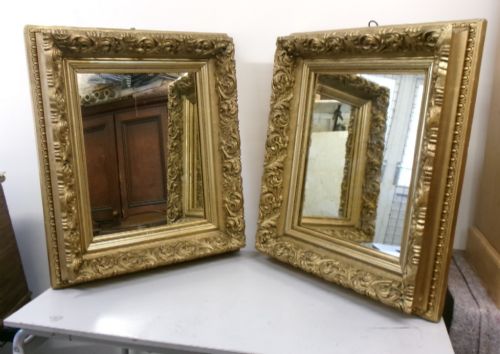
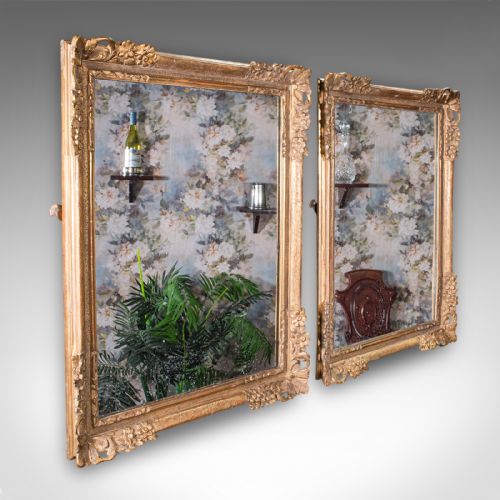
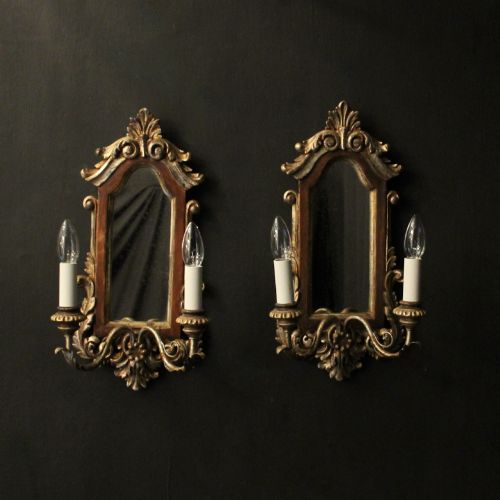
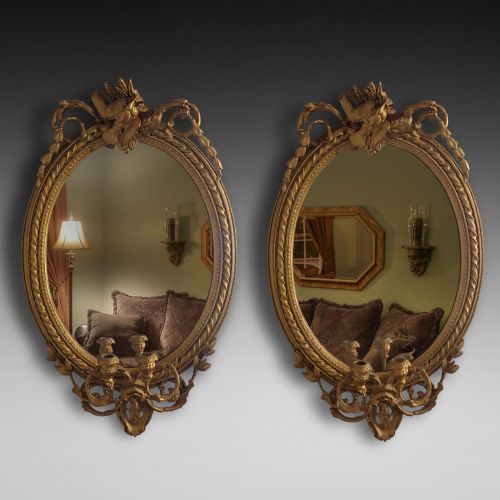
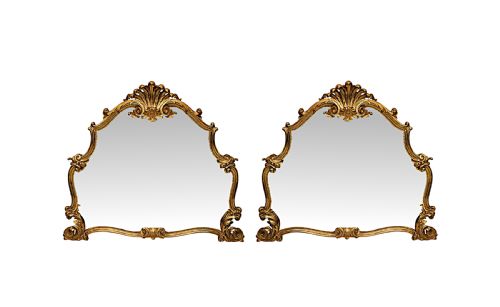
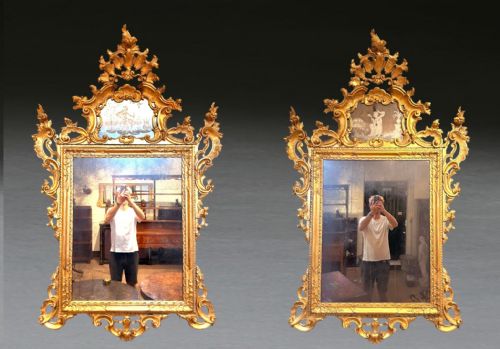
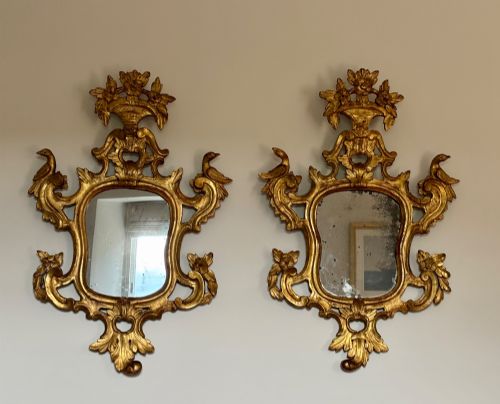
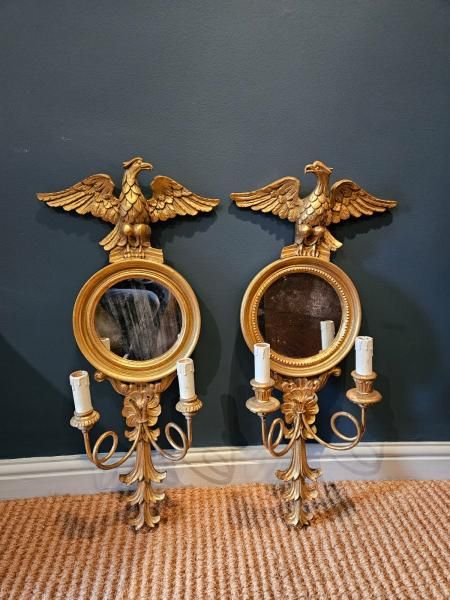
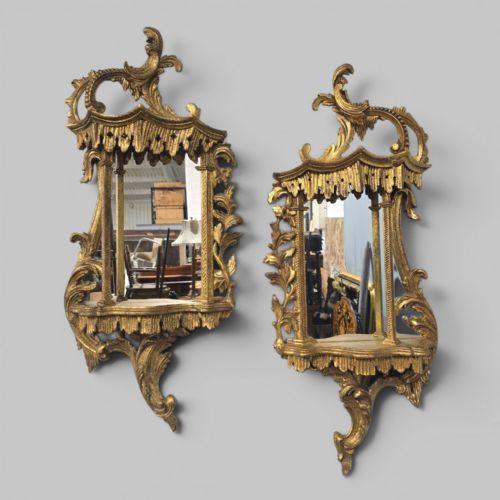
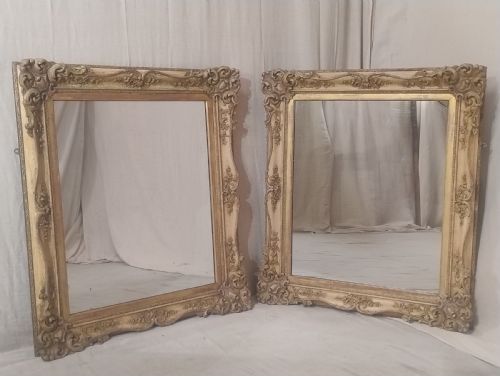
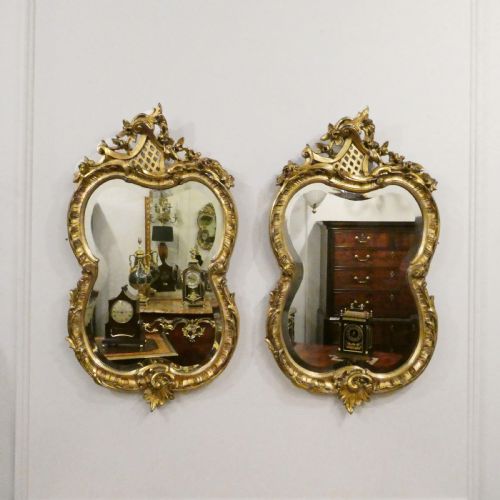
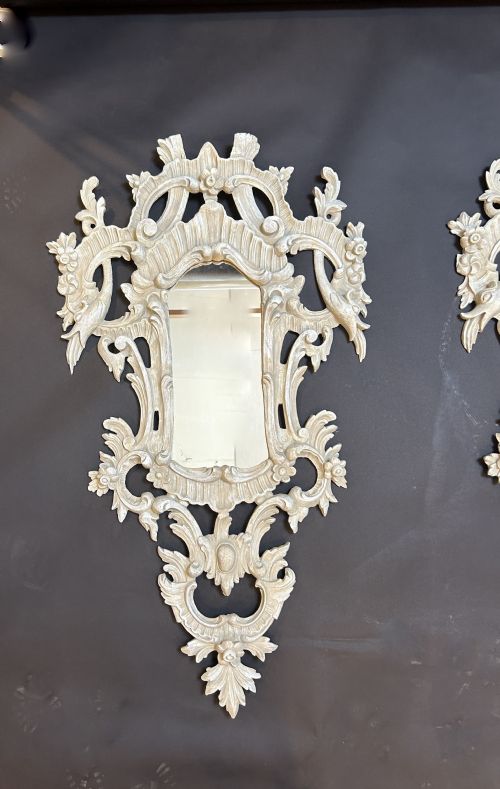
Pair Carved Wall Mirrors
Pair carved wall mirrors bring symmetry and reflected light to a room, uniting functional glass with intricate woodwork from the eighteenth century onward.
Pair Carved Wall Mirrors
When you search for pair carved wall mirrors, you encounter matched sets designed to hang together, often balancing a mantelpiece, a console table or a pair of doors. These objects range from compact Georgian oval frames to grand nineteenth-century Italian and French overmantel pieces.
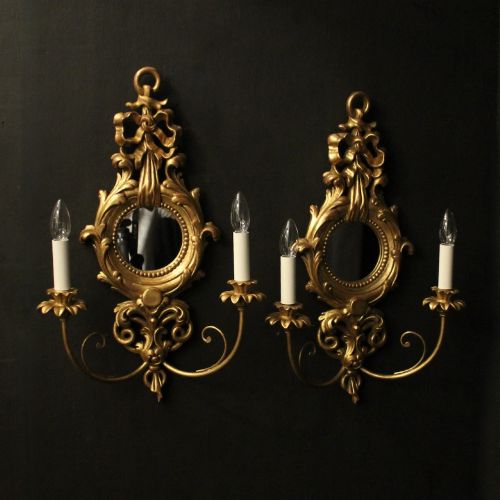
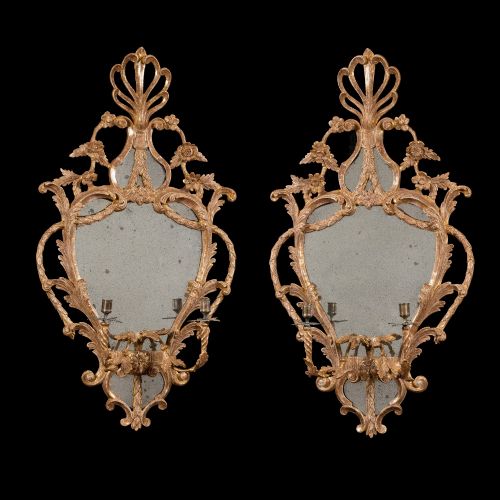
The versions most frequently met on this page span the Victorian era, the nineteenth century generally, and the Georgian period, executed in regional British, French, Italian and Anglo-Indian workshops. They appear in forms such as girandoles with candle sconces, pier glasses, and convex witch mirrors.
Collectors find these items shaped by distinct stylistic revivals, notably Rococo, Chippendale, and Adam, alongside rustic interpretations in carved pine, oak, or walnut. Each pair demonstrates the historical demand for symmetrical interior decoration in domestic reception rooms and halls.
Materials and construction
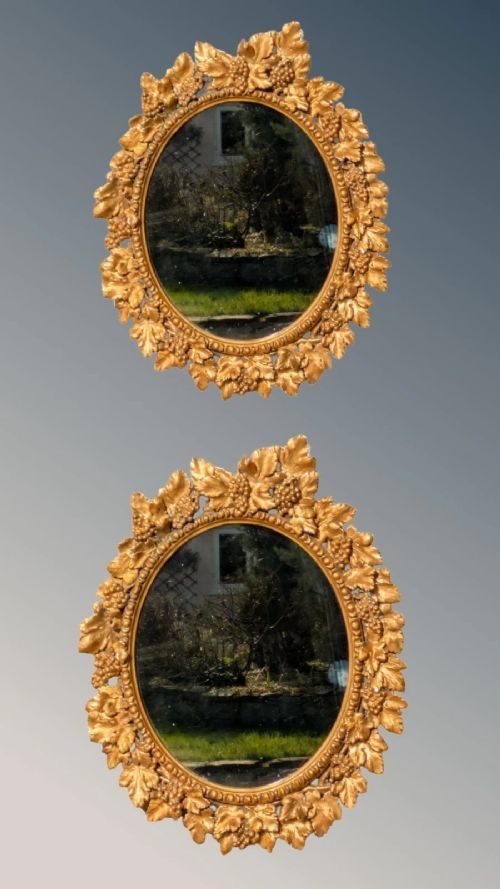
Carvers shaped timber substrates such as pine, oak, walnut, and ebony using hand chisels and gouges to build relief ornament, ranging from trailing vine leaves to elaborate C-scrolls and foliage. Gesso was frequently applied over the wood base to smooth surfaces and build up crisp details before gilding.
Gilding was achieved by applying gold leaf or water gilt layers onto the prepared gesso, creating a luminous finish that caught candlelight in period rooms. Mirror glass was set into the rabbet of the frame, occasionally utilising heavy pier glass or convex plates designed to distort and widen perceived interior spaces.
Listings feature items spanning from the 18th century through the 1920s, utilising giltwood, gesso, pine, walnut, and brass.
Qualities of craftsmanship
The standard of a pair carved wall mirrors depends on the depth and undercut of the wood carving, where crisp, hand-chiselled foliage separates superior artisanal output from flat, mechanical moulding. The integrity of the original preparation layers determines how well the surface catches light over centuries.
Proportion and matching matter profoundly in matched sets, distinguishing items originally conceived as a pair from later assembled marriages. The survival of original gilding, untouched mirror plates, and secondary woods further elevates the historical standing of a pair.
Strahan of Dublin·Butti and Son
The Pair Carved Wall Mirrors Glossary
- Girandole
- A wall mirror fitted with one or more candle sconces attached to the frame. These branches allowed the glass to multiply the flickering light of candles in evening rooms.
- Pier glass
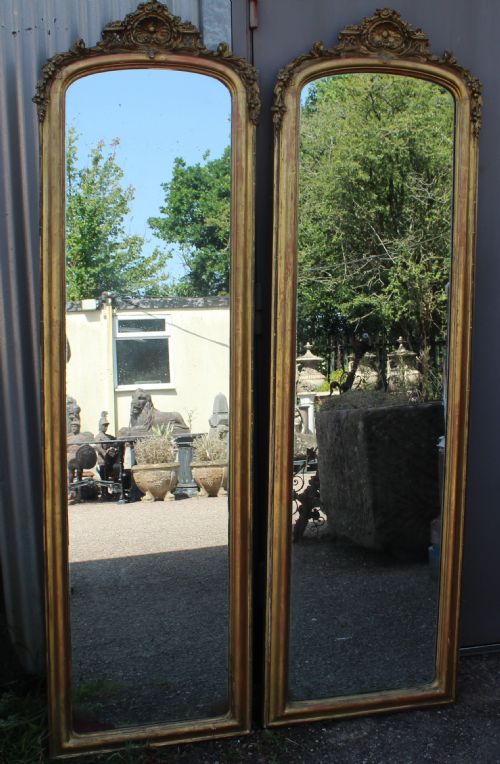
- A tall mirror specifically designed to hang on the narrow wall pier between windows. They often sat above matching console tables to maximise daylight.
- Gesso
- A plaster-like mixture of gypsum and size applied to wood frames. It provided a smooth, responsive ground for fine carving and water gilding.
- Convex mirror
- A round mirror with an outward-curving glass plate, sometimes called a sorcerer's or witch's mirror. It captures a wide-angle, distorted reflection of the entire room.
- Water gilding
- A traditional technique applying gold leaf over wet Armenian bole. It allowed the metal to be highly burnished to a mirror-like sheen.
Pair Carved Wall Mirrors: Frequently Asked Questions
How do I care for antique gilding?
Historic gilt surfaces require gentle dusting with a dry, soft ostrich feather brush rather than liquid cleaners or cloths that might catch on raised relief.
Keep them away from direct sunlight and excessive humidity to prevent the underlying gesso from cracking or lifting away from the carved wood base.
What is a girandole mirror?
A girandole is a wall mirror equipped with integrated candle arms or sconces attached directly to the frame. The polished glass and metallic finish worked together to amplify the illumination of rooms before electric lighting.
They function as both lighting fixtures and decorative art pieces.
How can I tell periods apart?
Georgian and Regency examples tend to display restrained neoclassical symmetry or crisp early Chippendale fretwork. Victorian and later revival pieces often embrace heavier, more exuberant Rococo scrolls and applied composition ornament.
Examining the construction of the wood backing and the oxidation patterns on the mirror plate offers further clues to age.