
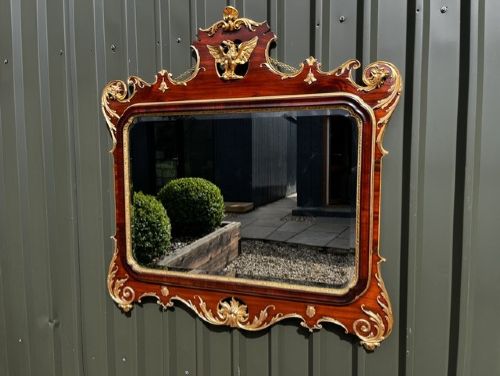


Red Gold Wall Mirror
These red gold wall mirrors bring warmth and historic character to a room, combining rich red grounds with gleaming gilt highlights.
Red Gold Wall Mirror
A red gold wall mirror offers a striking focal point, drawing the eye with its combination of vibrant red surfaces and metallic gilding. When exploring red gold wall mirrors on this page, you encounter pieces spanning the Georgian era through to the early twentieth century.
Originating from periods such as the Victorian and Edwardian epochs, alongside earlier eighteenth-century influences, these mirrors display distinct regional and stylistic traits. Each piece demonstrates how historical artisans played with colour and light in domestic interiors.
Materials and construction methods
Craftsmen built these frames using traditional timbers such as mahogany and general wood substrates, applying gesso to create smooth surfaces for decorative detail. The distinctive red finish often involves lacquer, japanning, or scarlet paint beneath the outer layers.
Gilding was applied to highlight carved elements, framing the glass plates securely within the decorative structure. Artisans utilised techniques seen in French revival and Chinoiserie traditions to build depth and visual texture into the frames.
Some mirrors sport a spirited camel crest, proving that historical frame makers occasionally liked to introduce a touch of the exotic to their curves.
Assessing quality in red gold mirrors
Quality rests in the depth and hand-finishing of the carved wood and gesso ornamentation, where crisper detailing indicates superior craftsmanship. The application of the red ground and the precision of the gilt work reveal the maker's hand.
Proportion and balance define the better examples, ensuring the frame complements the glass plate harmoniously. Historical integrity in the surface finish elevates certain pieces above standard decorative items.
The Red Gold Wall Mirror Glossary
- Giltwood
- Wood that has been coated with gold leaf or a gold-coloured metallic finish. This technique creates a luminous border that catches interior light.
- Japanning
- A European imitation of East Asian lacquerwork, typically involving layered varnishes and decorative motifs on a dark or red ground. It provides a hard, glossy surface.
- Chinoiserie
- The European interpretation of Chinese and East Asian artistic traditions, popular in furniture and mirrors during the eighteenth and nineteenth centuries. It often incorporates scenic landscapes and figures.
- Pier Mirror
- A tall mirror specifically designed to hang on the pier, the solid section of wall between two windows. These pieces often sit above small console tables.
- Overmantel Mirror
- A wide mirror designed to be positioned directly above a fireplace mantelpiece. They serve as substantial decorative anchors for a room.
Red Gold Wall Mirror: Frequently Asked Questions
Where should I hang a pier mirror?
A pier mirror traditionally hangs on the narrow wall space between two windows, reflecting natural light deeper into the room. They also work effectively in hallways or above suitable console tables.
Ensure the wall construction supports the weight of the timber and glass frame securely before hanging.
How do I identify a Chinoiserie mirror?
Chinoiserie mirrors display decorative motifs inspired by East Asian art, often featuring painted or lacquered scenes on red grounds. These details include figures, landscapes, and pavilions.
The overall aesthetic blends European furniture forms with oriental decorative narratives.
What is a trumeau mirror?
A trumeau mirror incorporates a painted panel or a piece of artwork directly above the glass plate within a single decorative frame. They originated in France and provide a balanced architectural element.
Matching console tables sometimes accompany these mirrors to form a unified wall ensemble.
How do I care for giltwood and lacquered frames?
Dust giltwood and lacquered surfaces gently with a soft, dry cloth to prevent the accumulation of dirt. Avoid using chemical cleaners or excessive moisture that might damage the delicate gesso and leaf.
Keep the mirrors away from direct sunlight and significant temperature fluctuations to preserve the finish.