


Pair Lidded Vases
These pair antique lidded vases are matched decorative vessels designed for symmetry and display across the nineteenth and twentieth centuries.
Pair Lidded Vases
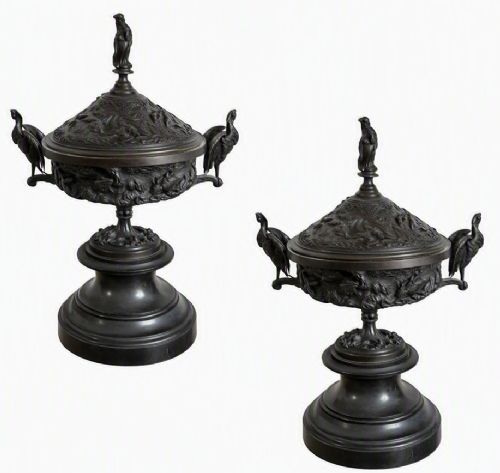
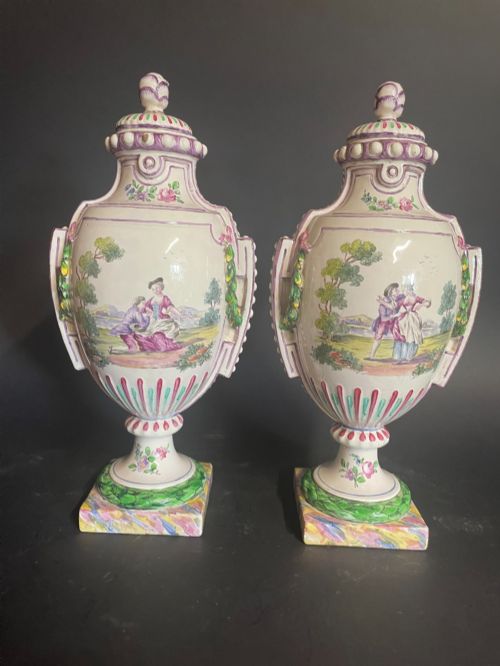
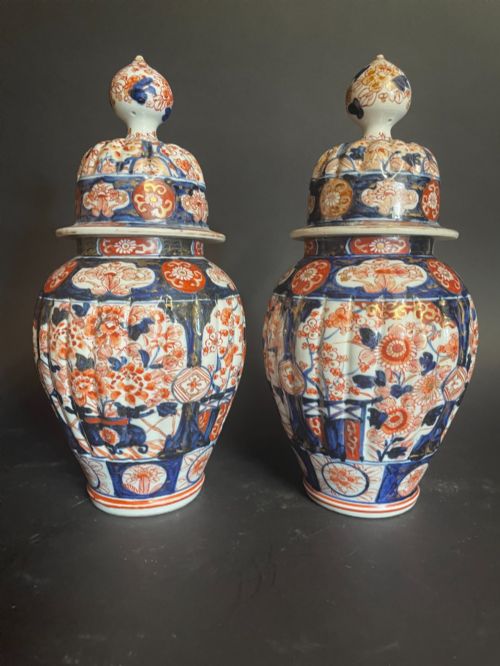
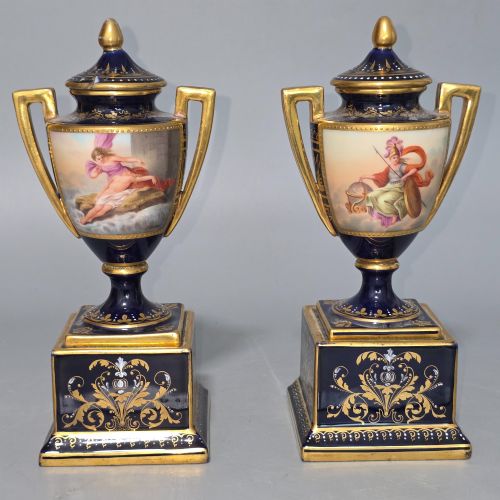
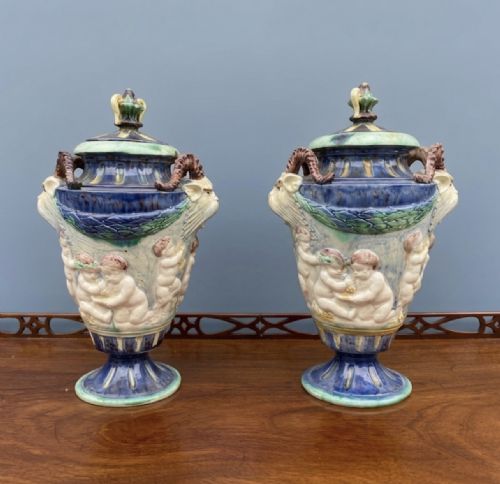
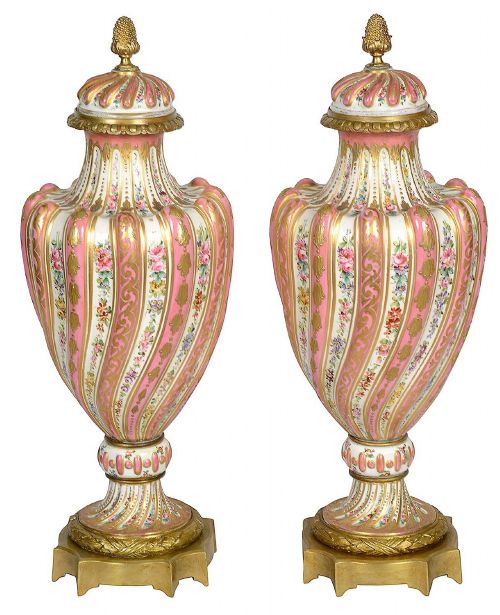
Pair antique lidded vases appear in porcelain, earthenware, bronze and marble across nineteenth-century and earlier European and Japanese production. The most common examples on this page are porcelain vessels decorated in the Japanese Imari taste or European factory styles like Sèvres and Vienna.
Makers produced these covered urns and jars for formal interior display on mantelpieces, pedestals and console tables. Surviving sets frequently retain their matching lids, which complete the silhouette of the vessel.
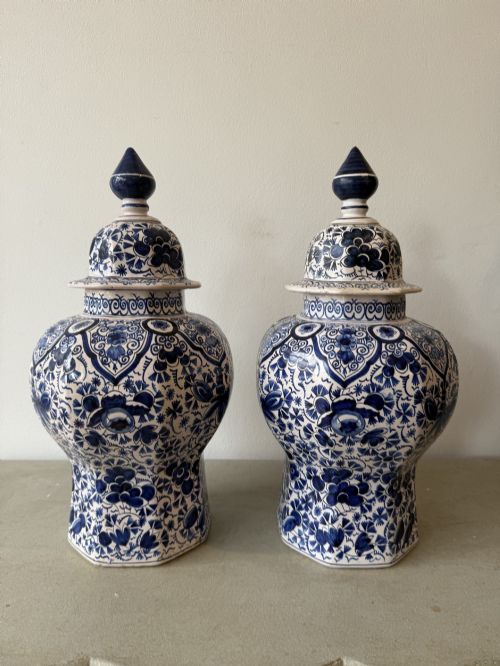
The inventory encompasses diverse cultural traditions, ranging from English ironstone and Derby porcelain to French ormolu-mounted ceramics and Japanese Arita wares. Each region applied distinct decorative palettes, from cobalt blue and white to rich gilding and hand-painted reserves.
How they were made
Ceramic bodies were thrown or moulded in clay before receiving tin glazes, soft-paste enamels or hard-paste porcelain glazes fired in kilns. Artisans applied hand-painted pigments, transfer printing and gold leaf directly onto the glazed surface.
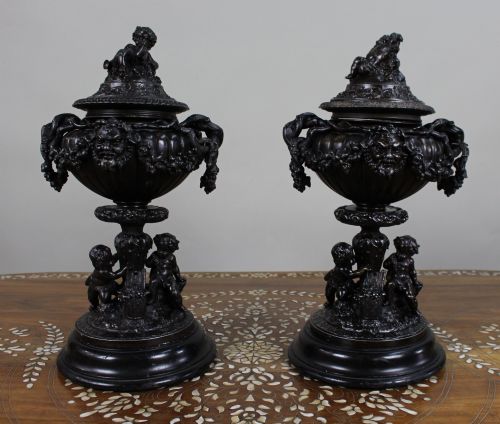
Metal vessels utilised cast bronze, spelter or brass, frequently enhanced with ormolu mounts, gilding and applied figural details such as putti and bacchic masks. Stone examples relied on turned marble and hardstone paired with cast metal collars and finials.
Materials recorded span gilt bronze, marble, ironstone, and tin-glazed earthenware.
What varies in quality
Quality rests on the crispness of the modelled details in the clay or metal and the precision of the hand-painted decoration. Finer examples display delicate brushwork, secure gilding and well-matched covers that fit the vessel profile exactly.
The weight of the materials and the sophistication of the mounts separate standard production from exhibition-grade pieces. Superior works combine high-fired porcelain or heavy cast bronze with meticulous finishing by named artists or recognised factories.
Jules Moigniez·F. Koller·Richard Budd·John Smith
The Pair Lidded Vases Glossary
- Ormolu
- Gilded bronze used for decorative mounts on ceramics and furniture. This technique involved applying a mercury and gold amalgam to cast bronze before heating.
- Imari
- Japanese porcelain decorated in underglaze blue, iron red, and gold. This style was widely copied by European factories during the nineteenth century.
- Cassolette
- A decorative vase or urn with a reversible lid that functions either as a closed vessel or a perfume burner. These pieces often feature pierced metal mounts.
- Spelter
- A zinc alloy used as a cheaper alternative to bronze for cast decorative figures and urns. It is typically finished with a bronze-coloured patina.
- Enamel
- Opaque glass fused to a metal or ceramic surface through firing. This technique provides vibrant, durable colour to decorative vessels.
Pair Lidded Vases: Frequently Asked Questions
What were lidded vases used for?
These vessels served primarily as decorative garnitures on mantelpieces and sideboards in formal interiors. Some variants, such as potpourri jars, held dried flowers and spices to perfume rooms.
Larger urns were displayed symmetrically to anchor architectural fireplace arrangements and grand room schemes. Their fitted covers completed the balanced silhouette required by period interior design.
How do I identify Japanese Imari?
Japanese Imari porcelain is characterised by a distinct palette combining underglaze cobalt blue with iron red and supplementary gilding. The motifs typically feature floral and brocade patterns arranged in dense, symmetrical panels.
Earlier examples from the seventeenth century contrast with nineteenth-century revival pieces produced both in Japan and by European factories like Samson.
What is Sèvres style porcelain?
Sèvres style porcelain refers to European wares that imitate the distinctive forms, ground colours and gilding of the French royal manufactory. These pieces often feature turquoise bleu céleste grounds, rich gold leaf borders and hand-painted romantic or historical scenes.
Many nineteenth-century examples were produced by other European potteries to satisfy the sustained demand for French rococo and neoclassical aesthetics.
How should I clean antique porcelain?
Dust these vessels gently with a soft, dry brush to prevent the accumulation of dirt within recessed moulded details. Avoid submerging pieces with old repairs or exposed metal mounts in water.
Harsh chemical cleaners can damage delicate overglaze enamels and fragile gold leaf gilding. Professional conservation cleaning is recommended for valuable or structurally complex items.