


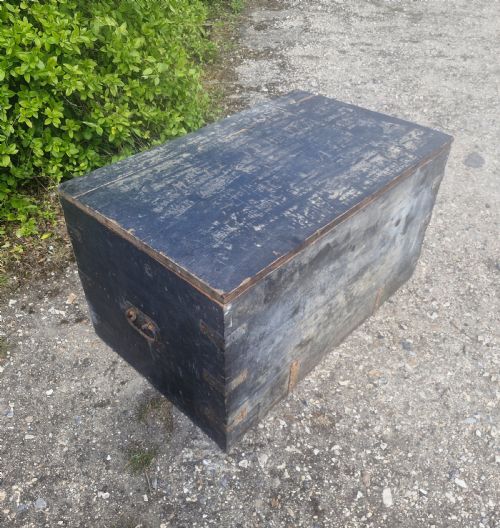

Painted Wooden Storage Trunk
A painted wooden storage trunk offers robust utility, combining practical compartment space with regional decorative pigment work spanning centuries.
Painted Wooden Storage Trunk
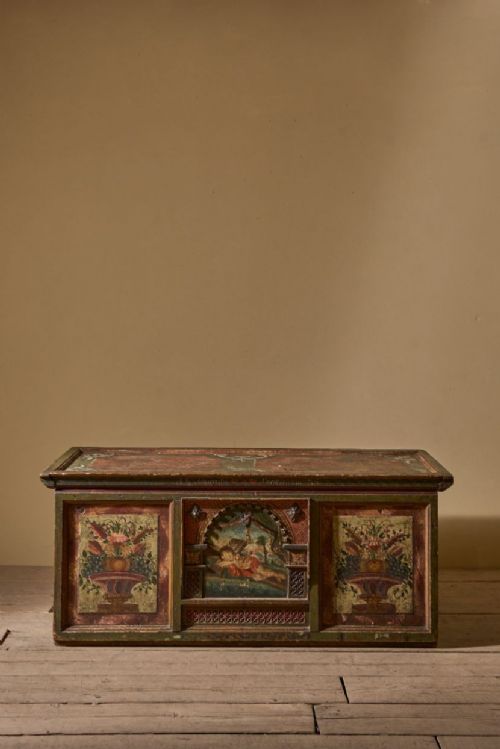
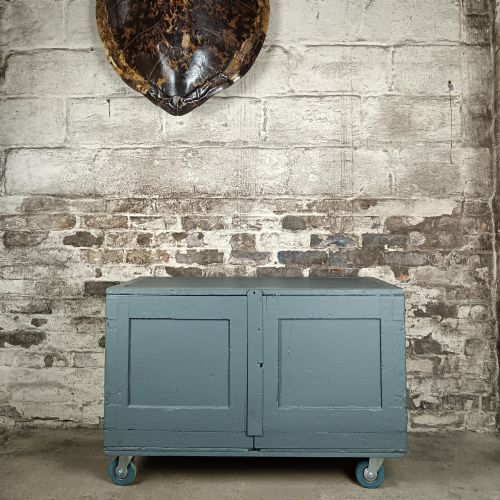
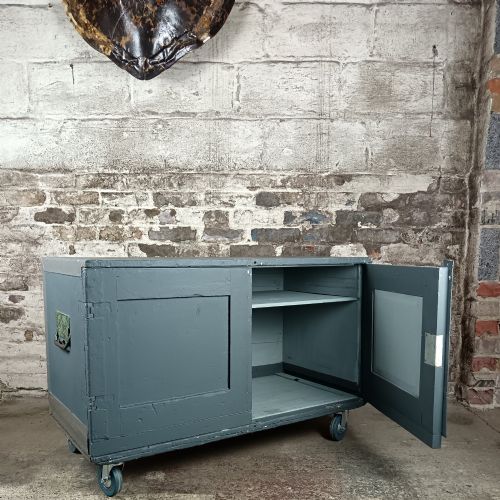
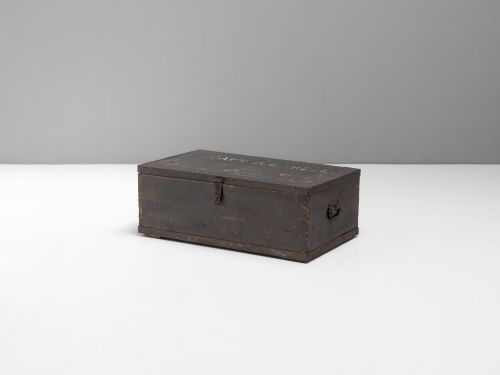
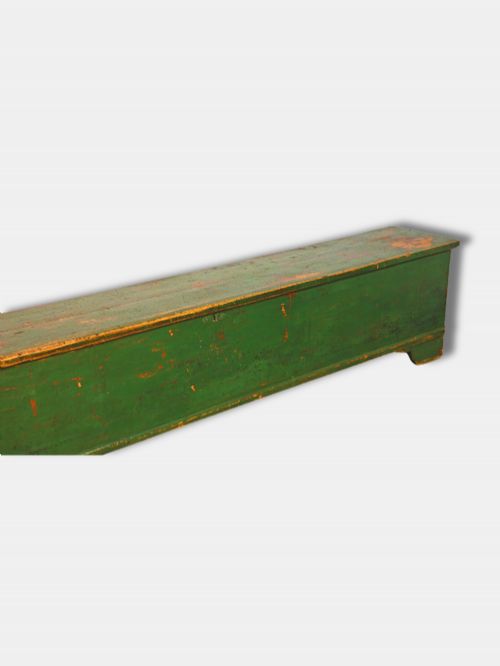
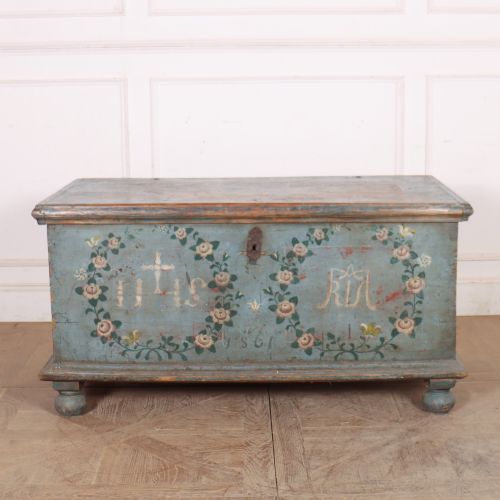
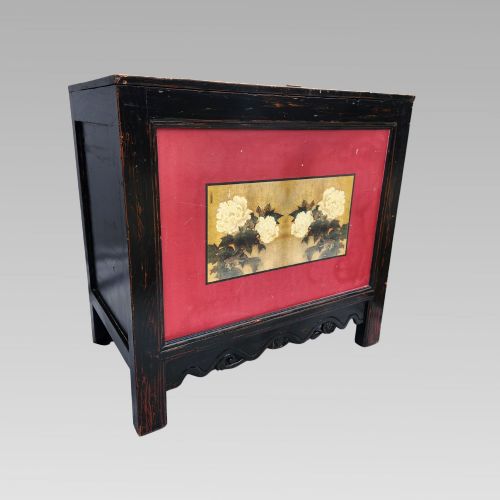
A painted wooden storage trunk provides deep cavity storage for household goods, blankets, and personal items while displaying decorative surface pigment. Buyers searching for a painted wooden storage trunk typically encounter pine and oak pieces originating from nineteenth-century British, Hungarian, and Scandinavian workshops.
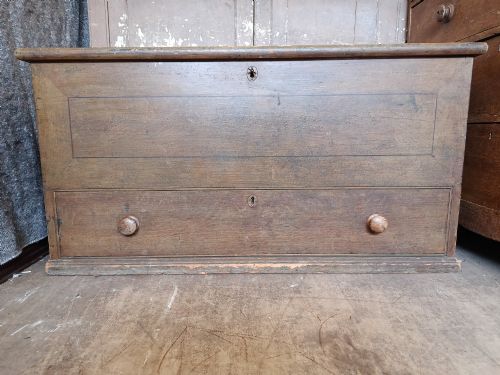
The surviving inventory ranges from domestic blanket boxes and mule chests to travel campaign cases and marriage coffers. Regional traditions dictate the surface decoration, moving from simple scumble finishes to elaborate folk art patterns and floral motifs.
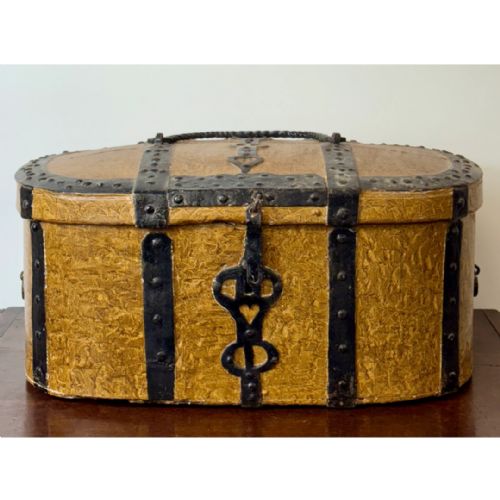
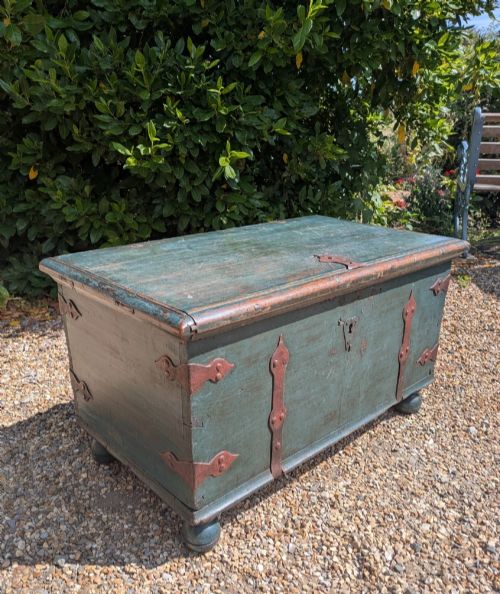
Many examples retain original hinges, handles, and lock plates forged from iron or brass. Form follows function directly, resulting in solid rectangular boxes with hinged lids designed to withstand heavy transit and domestic daily use.
Materials and construction methods
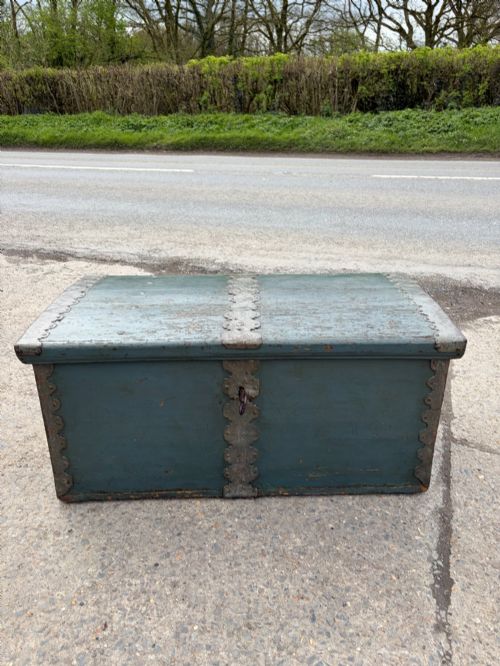
Carpenters constructed these boxes primarily from solid pine and oak planks joined with dovetail or rebate techniques to ensure structural longevity under heavy loads. Wrought iron and brass strapwork, hinges, and carrying handles reinforced the corners and lid edges for transit resilience.
Artisans applied various pigments, oils, and lacquers directly to the timber substrate, sometimes employing scumble glaze techniques to simulate finer grain patterns or applying distinct folk art designs by hand. Original paint layers frequently survived beneath later protective coats, preserving the authentic regional palette.
The inventory spans functional travel campaign cases, domestic blanket boxes, and decorative marriage coffers.
Factors determining quality
The survival rate of the original pigment layer heavily influences the standing of an individual piece within its category. Examples retaining uncompromised folk art decoration, untouched surface patination, and period ironmongery hold greater integrity than those stripped or repainted later.
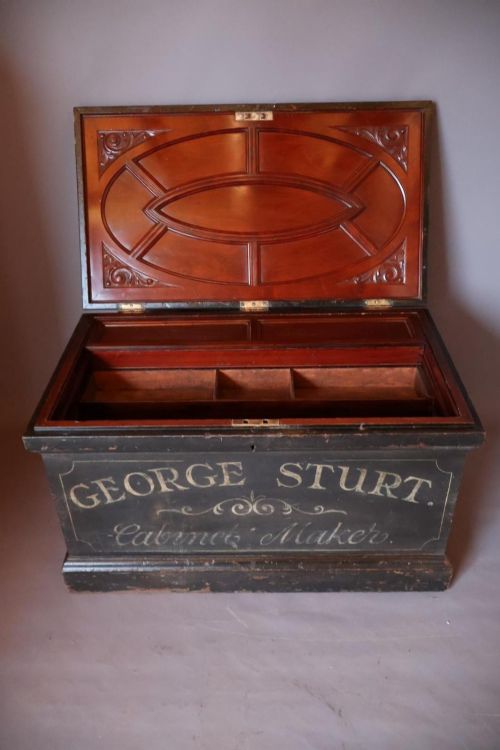
Structural soundness in the timber body, including original dovetailed joints and intact internal floor boards, separates utilitarian packing cases from superior cabinet-maker productions. The presence of documented regional provenance, such as specific Hungarian coffer characteristics or Swedish marriage box inscriptions, elevates the piece.
The Painted Wooden Storage Trunk Glossary
- Mule chest
- A storage box fitted with one or more drawers beneath the main internal compartment. This form bridges the gap between a traditional trunk and a chest of drawers.
- Scumble pine
- Timber treated with a translucent glaze manipulated with combs, rags, or brushes while wet to create faux wood grain or decorative patterns. This technique protected the softwood underneath while adding visual texture.
- Strapwork
- Metal bands or strips applied across the exterior corners, lid, and body of a chest for reinforcement. These iron or brass additions protected the edges from heavy impacts during transport.
- Marriage chest
- A celebratory box commissioned or decorated for a wedding, often bearing initials, dates, or specific folk art motifs. These pieces served as container dowries in Scandinavian and European communities.
- Coffer
- A heavy wooden box traditionally used for storing valuables, documents, or textiles. They typically feature robust construction and secure locking mechanisms.
Painted Wooden Storage Trunk: Frequently Asked Questions
What were painted wooden storage trunks used for originally?
These chests served primarily to transport personal belongings, military equipment, or household textiles across regions and countries. Inside the home, families utilised them for storing heavy winter blankets, garments, and marriage dowry items safely away from dust and pests.
The sturdy construction allowed sailors, soldiers, and travellers to rely on them during long voyages. Over time, their utility shifted toward static domestic storage where the decorative exterior contributed to room furnishings.
How do I distinguish regional styles?
Scandinavian and Alpine examples frequently display bright folk art floral motifs and painted dates reflecting local traditions. Hungarian coffers often feature specific brightly coloured panels and characteristic hardware arrangements.
British pieces tend to favour simpler finishes like scumble pine or plain metal-bound surfaces associated with estate or travel use. Examining the specific pigment palette and joining techniques helps clarify the geographic origin of each box.
How do I care for original paintwork?
Keep these pieces away from direct sunlight and steady moisture to prevent the historic pigment from fading or flaking. Dust the surface gently with a dry, soft cloth without applying modern chemical polishes or abrasive cleaners.
Maintaining a stable indoor room temperature protects both the underlying softwood and the fragile exterior decoration. Avoid placing damp items directly onto the interior wooden floor.
How can I tell if the paint is original?
Inspect the surface under magnification to check for natural micro-crazing, wear patterns consistent with age, and the absence of modern primers underneath. Original pigment layers often show integrated wear around handles, keyholes, and edges where hands touched the wood repeatedly.
Layers of dust trapped within the microscopic crevices of the brushstrokes indicate long-term survival. Comparing the interior and exterior wear helps confirm whether the decoration dates to the construction period.