
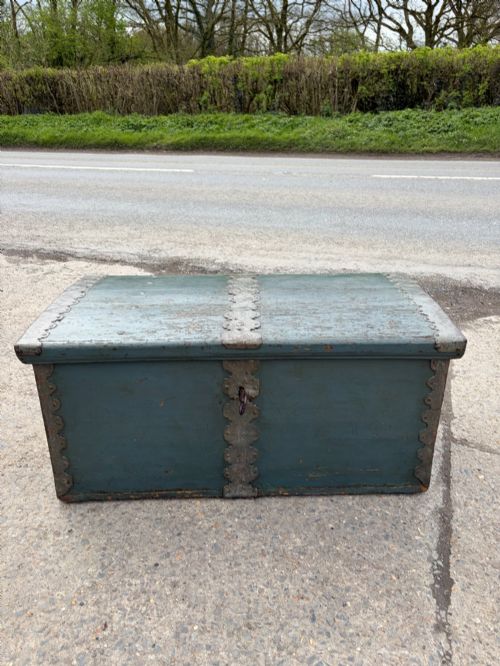


Rustic Painted Blanket Chest
A rustic painted blanket chest brings practical storage and vernacular colour into a room, shaped by the hands of provincial makers.
Rustic Painted Blanket Chest
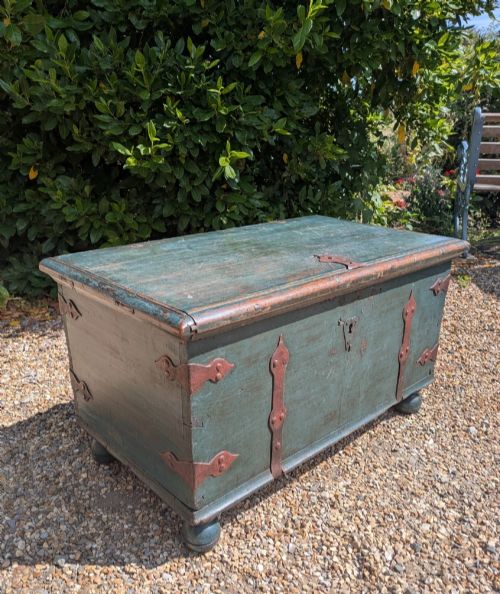
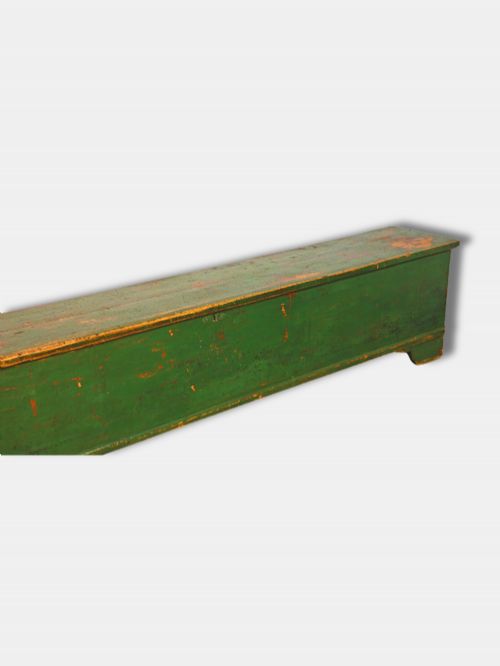
When you search for a rustic painted blanket chest, you look at utilitarian wooden boxes designed to hold household textiles, linens, and personal possessions. These pieces originate from domestic environments across Britain, Scandinavia, Hungary, France, and the Alpine regions. The most common examples met on this page are constructed from pine, often bearing layers of surviving historic paint or scumble decoration.
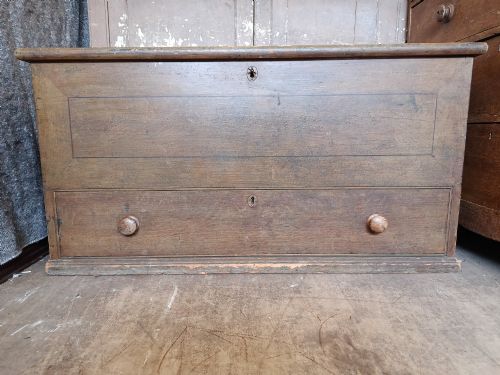
The forms range from flat-topped trunks and dome-top coffers to mule chests featuring a drawer beneath the main compartment. Many retain their original hinges, locks, and bracket feet, serving as functional storage units that reflect regional woodworking traditions from the Georgian period through the Victorian era and into the early twentieth century.
How They Were Made
Makers constructed these boxes primarily from solid pine and occasionally oak, utilising simple dovetail or butt joints to form the main body. The wood was then finished with hand-mixed paints, scumble glazes to imitate finer timbers, or folk art motifs applied directly to the surface. Iron strapwork, wrought iron handles, and brass elements provided structural reinforcement and security.
Lids were frequently hinged to allow easy access, and interiors sometimes incorporated small internal till boxes for smaller valuables. The reliance on locally sourced timber and straightforward joinery defined the vernacular construction methods of these rural storage pieces.
Listings feature pine and oak storage chests spanning the Georgian, Regency, and Victorian eras, alongside Scandinavian and Hungarian folk art pieces.
What Varies in Quality
The distinction between standard utility boxes and finer examples rests largely in the survival of original surface decoration and the integrity of the timber. Pieces retaining unblemished early paintwork, distinct scumbling, or regional folk art carry greater visual interest than those stripped or repainted in later periods. Proportion and scale also differentiate the stock, ranging from small Welsh coffers to large Swedish marriage chests.
Hardware contributes significantly to the character of a piece, with hand-forged iron strapwork and operational original locks commanding attention over later replacements. The underlying construction, such as sound dovetailing and sturdy bracket feet, determines how well a chest has survived centuries of domestic service.
The Rustic Painted Blanket Chest Glossary
- Scumble
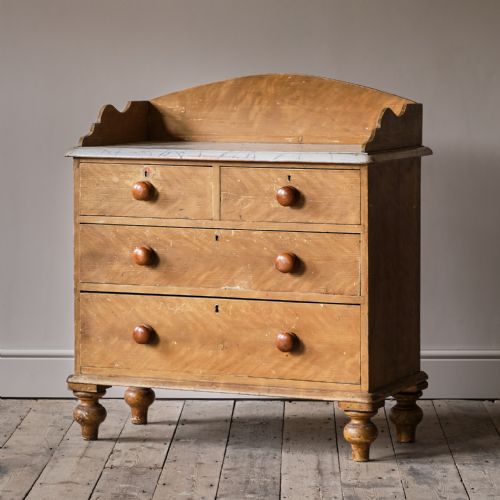
- A translucent layer of glaze manipulated over a pale ground to imitate the grain of more expensive woods. It creates a rich, textured finish common on Victorian storage boxes.
- Mule chest
- A storage chest featuring one or more drawers built into the base beneath the main compartment. This form bridges the gap between a traditional coffer and a chest of drawers.
- Strapwork
- Flat strips of metal, often iron or brass, fastened across the exterior of a chest to reinforce the joints. Hand-forged examples add both strength and decorative contrast.
- Marriage chest
- A specially commissioned box often decorated with dates, initials, or folk motifs to mark a wedding. These originate frequently from Scandinavian and Alpine regions.
- Coffer
- A heavy, sturdy wooden box used historically for storing valuables and documents. They typically feature hinged lids and sometimes sit on bracket feet or stiles.
Rustic Painted Blanket Chest: Frequently Asked Questions
What is a rustic painted blanket chest used for?
These chests were originally built to store household blankets, heavy linens, and personal garments in domestic spaces. Today, they serve equally well as living room coffee tables, hallway storage, or bedroom blanket boxes.
Their robust construction allows them to hold bulky modern items while adding distinct regional character and colour to an interior.
How do I identify original paint on a chest?
Original paint typically shows natural craquelure, soft edge wear from handling, and subtle tonal variations accumulated over generations. Examining the edges of hinges and locks reveals whether the paint predates the hardware.
Later overpainting often feels flat and uniform, masking the grain and tool marks of the underlying pine timber.
What is the difference between a coffer and a trunk?
A coffer generally denotes a heavier, more architecturally rigid box intended for security and long-term storage of valuables. Trunks often incorporate iron carrying handles and lighter construction suited for travel or frequent movement.
In vernacular furniture, the terms frequently overlap depending on the regional workshop tradition.
Where do painted pine chests usually come from?
The pieces listed here originate from rural workshops across Britain, France, Hungary, and Scandinavian countries like Sweden. Each region developed distinct painting styles, from simple scumble finishes to elaborate folk art motifs.
Local timber availability and domestic customs shaped the specific proportions and decorative schemes of each area.
How should I care for an antique painted chest?
Maintain stable humidity and temperature away from direct sunlight to protect the fragile historic paint layers and dry pine timber. Dust gently with a dry, soft cloth and avoid chemical polishes that can soften or lift original finishes.
Allow the wood to breathe and handle the old hinges and lids with care.