



Green Pine Coffer
A green pine coffer brings practical storage and regional character into a room through honest timber and historic paint.
Green Pine Coffer
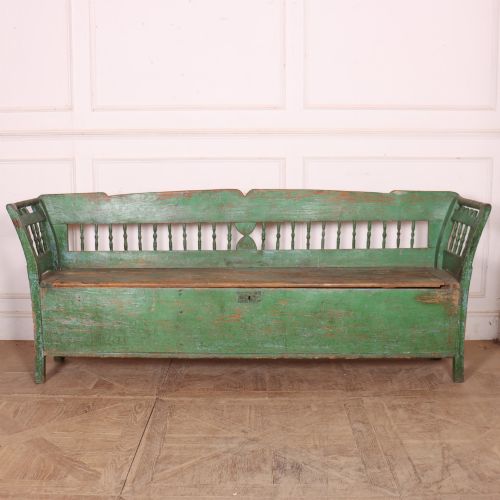
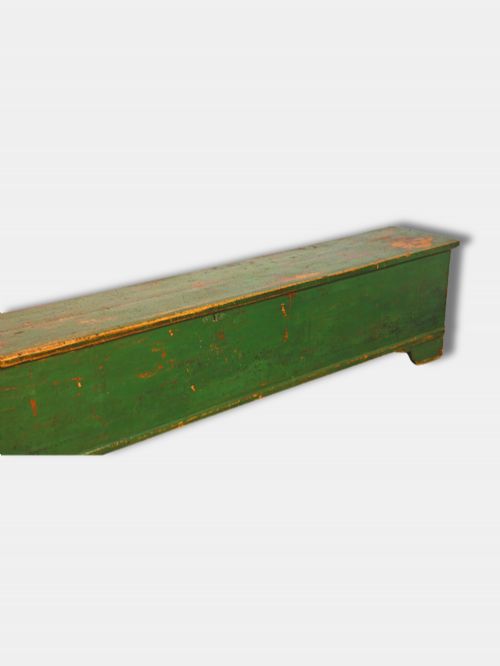
When you search for a green pine coffer, you are looking at sturdy wooden storage pieces finished in various shades of green paint. These items include blanket boxes, marriage chests, strong boxes, and farmhouse benches originating from diverse European and British traditions.
The pieces on this page span the eighteenth, nineteenth, and early twentieth centuries, reflecting the utility and domestic craftsmanship of rural homes. You will encounter domed caskets, flat-topped storage trunks, and artisan chests shaped by regional styles from England, Wales, Sweden, Austria, Holland, Hungary, and Romania.
Most examples rely on simple plank construction designed to hold household linens, clothes, or valuables securely. Their enduring appeal lies in the combination of functional utility and the weathered patination of historic painted surfaces.
How they were made
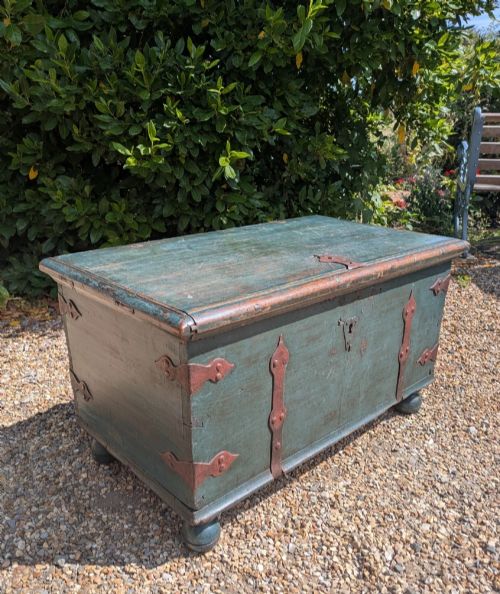
Construction relies primarily on solid pine boards joined simply and effectively to withstand heavy domestic use. Artisans reinforced corners and lids with hand-forged iron strapwork, hinges, and carrying handles where extra strength was required.
Surfaces were frequently finished with layers of paint, sometimes incorporating folk art motifs, regional pigments, or decorative brushwork. Over decades, this paintwork ages into a distinct patinated skin that records the handling and environment of the piece.
Green Pine Coffer Retail Price Guide 2026
Typical asking prices for green pine coffer among the pieces listed under this phrase on Sellingantiques today, from the lower quarter to the upper quarter. They describe what is for sale here now, not the wider market.
Some nineteenth-century marriage chests still hide the faint ghosts of painted initials inside their lids, left by long-ago brides.
What varies in quality
Quality rests heavily on the integrity of the original painted surface and the degree of survival. Pieces retaining their early or original green pigment without excessive later repainting command greater interest from collectors.
Proportion, craftsmanship in the ironwork, and the presence of period details such as domed lids or marriage motifs distinguish standard utility boxes from more distinctive folk art examples. The depth of the timber's patina and the honesty of the construction dictate the visual weight of each piece.
The Green Pine Coffer Glossary
- Cofer
- A large wooden chest or box used for storing valuables or household goods. These sturdy containers often featured heavy iron hardware and domed lids.
- Marriage chest
- A specially commissioned box gifted to mark a wedding, frequently inscribed or painted with dates and names. They served as both storage and a symbol of a new household.
- Strapwork
- Ornamental bands or strips of iron applied across the exterior of a chest to reinforce joints and provide security. These were often hand-forged by local blacksmiths.
- Patina
- The surface sheen and colour depth developed by wood and paint through age, handling, and light exposure. It marks the authentic passage of time.
- Folk art
- Utilitarian objects decorated within regional aesthetic traditions by self-trained makers. This style prioritises expressive regional character over academic design rules.
Green Pine Coffer: Frequently Asked Questions
What were green pine coffers used for?
These chests served as primary storage in historical homes, holding heavy woollen blankets, family linens, winter clothing, and personal documents. Their robust construction and fitted locks also made them suitable for securing valuables against theft or fire.
Over time, specific forms like marriage chests became ceremonial gifts to mark unions, while smaller strong boxes kept currency and legal papers safe in domestic or military settings.
How do I care for a painted pine chest?
Keep the chest out of direct sunlight and away from direct heat sources such as radiators to prevent the pine timber from shrinking and the old paint from flaking. Dust gently with a dry, soft cloth and avoid chemical polishes or water on historic painted surfaces.
Maintain stable room humidity to protect both the softwood structure and the fragile layers of historic pigment. If the interior smells of old storage, airing the chest naturally on dry days is safer than using masking scents.
How do I tell regional styles apart?
Regional identity shows in the carpentry joints, the profile of the mouldings, and the specific palette of the green paint. Scandinavian pieces often feature crisp folk art brushwork, while Dutch and Austrian examples might utilise heavier planking and robust ironwork.
British country pieces generally display simpler, more utilitarian construction without the decorative motifs found on continental marriage chests. Comparing the hardware style and the preparation of the timber helps narrow down the likely origin.
Are these chests suitable for modern living?
Their generous internal volume makes them ideal for concealing clutter, spare duvets, and shoes in modern hallways, living rooms, or bedrooms. The flat lids also allow them to function easily as window seats, coffee tables, or end-of-bed storage units.
When placing one in a contemporary interior, ensure the floor is level so the ancient joints do not twist under uneven weight. They add grounded texture and historical depth to minimal or traditional spaces alike.