

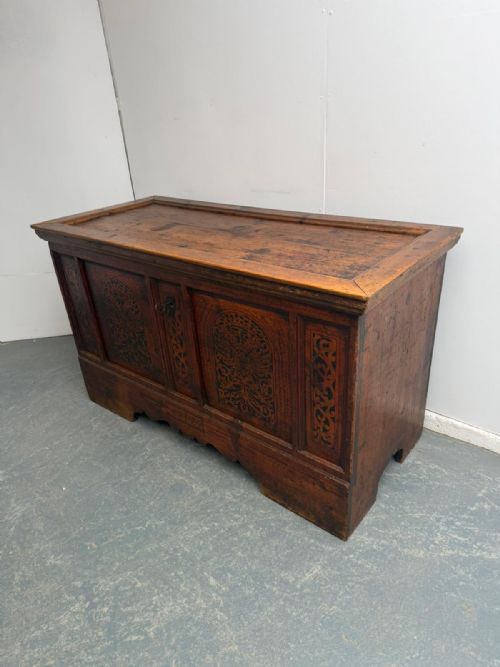


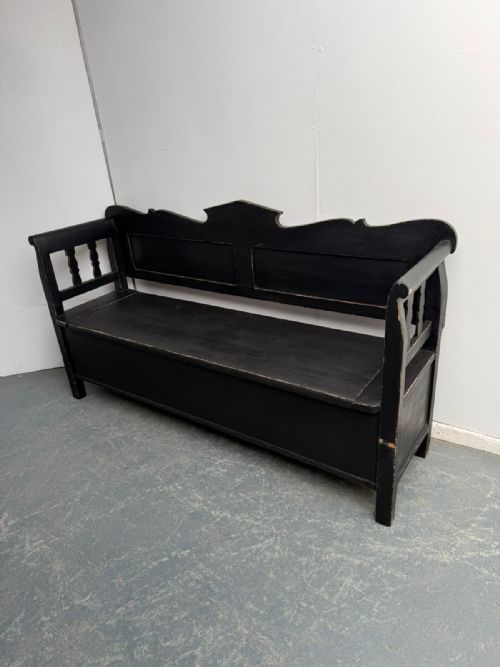


Traditional Painted Pine Coffer
Traditional painted pine coffer pieces are robust storage chests carrying rich regional pigments and folk art motifs across domestic interiors.
Traditional Painted Pine Coffer
A traditional painted pine coffer serves as a sturdy storage trunk or blanket box designed for domestic utility. These pieces frequently appear from nineteenth-century European traditions, encompassing Scandinavian, Hungarian, Spanish, and English workshops.
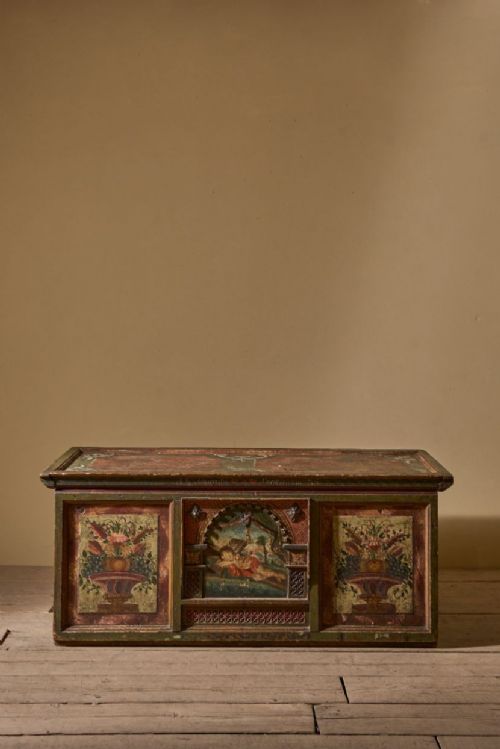
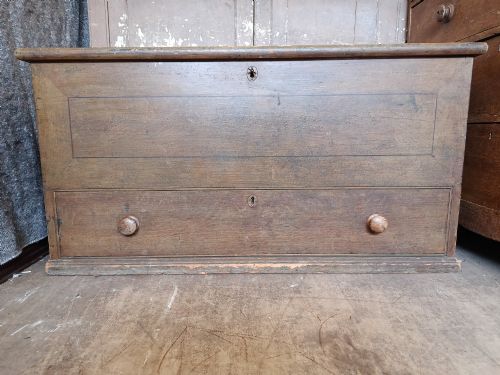
Forms range from small decorative boxes and marriage chests to large mule chests fitted with lower drawers. Buyers often encounter pieces displaying original surface pigments, floral ornamentation, and regional folk art styling.
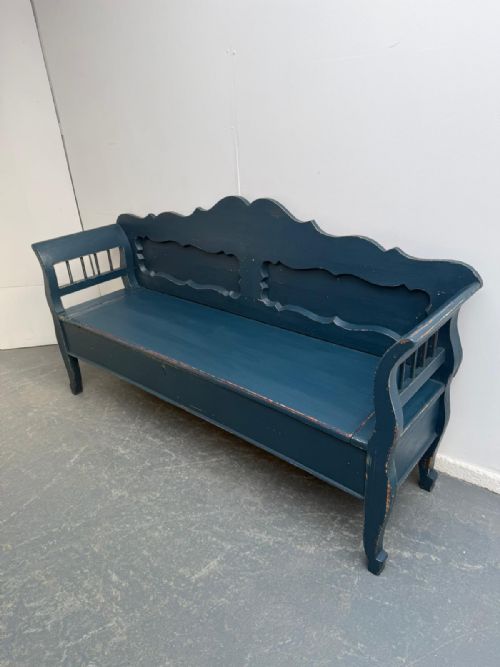
Makers constructed these storage items using softwoods, mounting them on bracket feet or plain bases. Many examples function simultaneously as benches, serving multiple purposes within rural and country households.
How They Were Made
Carpenters joined solid pine boards using traditional methods, constructing rigid panel boxes to withstand heavy domestic demands. Surfaces received protective and decorative coats of paint, mineral pigment, or scumble finishes.
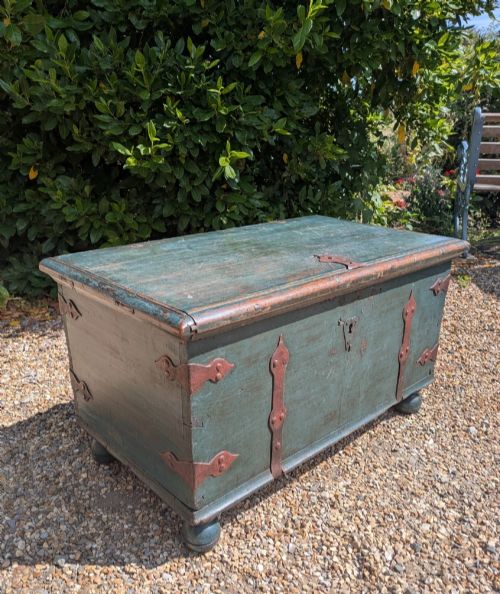
Workshops reinforced lids and corners utilising hand forged iron strapwork and brass fittings. Hinging mechanisms and locks relied on durable blacksmith work to secure the contents of marriage and dowry chests.
Listings feature regional pieces spanning the nineteenth century, utilising pine, iron, and mineral pigments across folk art styles.
What Varies in Quality
The survival of original surface paint distinguishes exceptional examples from stripped or heavily restored items. Pigment preservation and untouched folk art decoration dictate the visual character and historical integrity of each box.
Joinery execution and the presence of hand forged ironwork indicate the origin and standard of the workshop. Superior pieces maintain structural completeness alongside authentic regional motifs without modern intervention.
The Traditional Painted Pine Coffer Glossary
- Pine
- A softwood utilised extensively for domestic furniture due to its availability and workability. Carpenters shaped these coniferous boards into thick structural walls for heavy storage boxes.
- Mule chest
- A storage trunk featuring one or more drawers built beneath the main compartment. This form bridges the traditional blanket box and the chest of drawers.
- Scumble
- A decorative paint technique involving translucent layers dragged over a base coat to simulate finer timber grain. Artisans applied this method to give common pine richer visual depth.
- Strapwork
- Ornamental bands of iron or metal fixed across the exterior of a chest for reinforcement and decoration. Blacksmiths hand forged these strips to secure corners and lids.
- Dowry chest
- A large box prepared for a bride to store household linens and possessions prior to marriage. These pieces often display specific regional floral painting and family motifs.
Traditional Painted Pine Coffer: Frequently Asked Questions
How were traditional painted pine coffers used?
Households utilised these spacious chests primarily for storing blankets, woollens, and household linens away from dust and dampness. Many examples doubled as seating benches within domestic living quarters.
Larger marriage and dowry chests transported a bride's personal belongings to her new home. They remained central pieces of furniture holding valuable textiles across generations.
How do I identify original paint?
Original pigment shows natural wear, subtle crazing, and integrated ageing consistent with the period of manufacture. Traces of early brushwork and undisturbed layers beneath later hardware reveal authenticity.
Modern repainting often masks the timber surface evenly without the patina accumulated through decades of use. Close inspection under natural light highlights the depth of historic mineral pigments.
Where did these painted chests originate?
Makers constructed these storage pieces across various European regions, notably in Scandinavian countries, Hungary, Spain, and England. Each area developed distinct folk art traditions and colour palettes.
Hungarian and Swedish workshops produced many of the surviving marriage boxes and shaped coffers. Local aesthetic preferences dictated whether a piece featured floral motifs or scumbled grain effects.
How do I care for antique pine furniture?
Keep wooden coffers away from direct heat sources and dramatic humidity fluctuations to prevent timber splitting. Stable environmental conditions preserve both the structural pine and fragile surface pigments.
Clean surfaces gently with a soft dry cloth, avoiding harsh chemical cleaning agents that strip historic finishes. Minimal intervention maintains the original patina built up over centuries.