



Painted Porcelain Planters
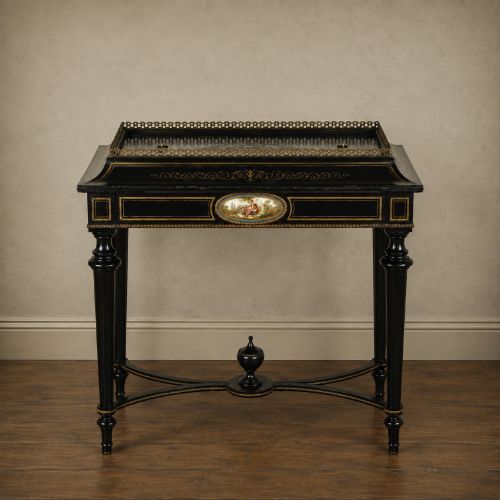
These painted porcelain planters bring floral and figurative brushwork into interiors across forms ranging from Georgian pots to French jardinieres.
Painted Porcelain Planters
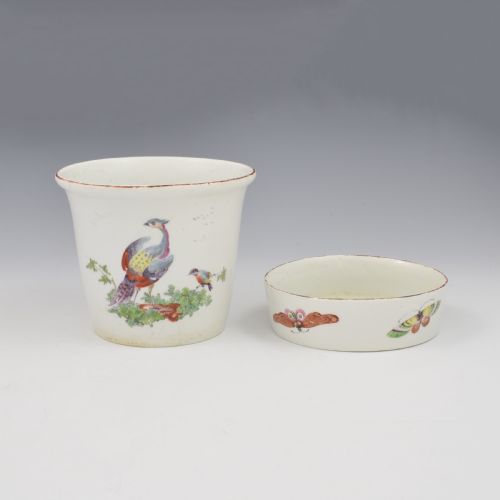
Painted porcelain planters encompass jardinieres, cache pots, and flower pots produced across the eighteenth, nineteenth, and early twentieth centuries. Buyers seeking these items encounter vessels intended to hold potted plants within domestic rooms, often accompanied by matching drip trays.
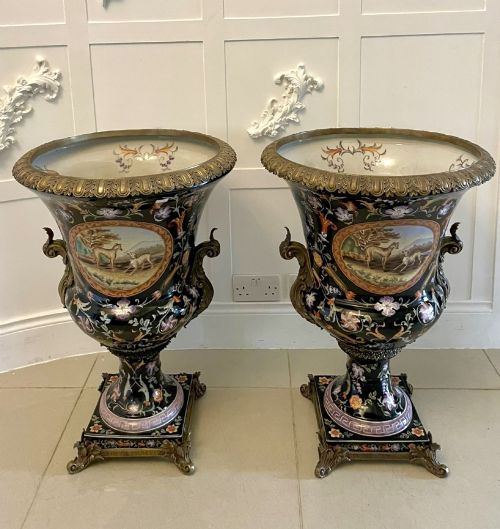
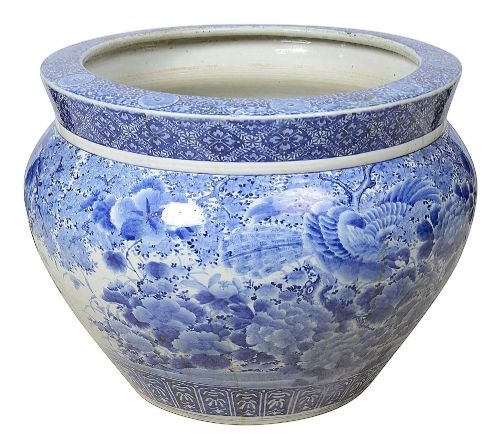
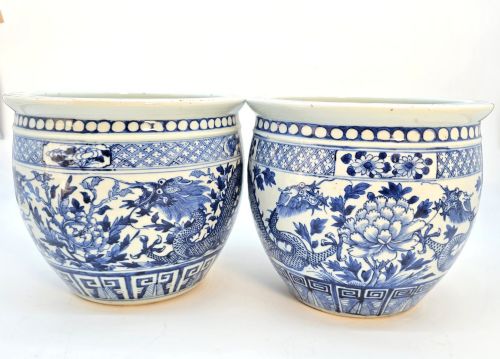
The selection on this page draws heavily from nineteenth-century European factories and Asian export wares. Pieces span French Napoleon III stands, Chinese blue and white fish bowls, and Japanese Imari vessels, reflecting diverse regional aesthetics.
How they were made
Makers utilised porcelain bodies finished with glaze, enamel, and cobalt underglaze pigments. Many examples incorporate hand-painted botanical or figurative motifs executed directly onto the ceramic surface.
Mounts in brass and details in gold leaf frequently complete French and English cache pots. Structural forms range from hexagonal planters to lobbed rectangular bowls shaped by moulding and throwing techniques.
Listings feature porcelain planters spanning the Georgian, Victorian, and Edwardian periods alongside Qing Dynasty Chinese ceramics.
What varies in quality
The refinement of the hand-painted brushwork distinguishes standard production ware from superior pieces. Crisp definition in floral subjects and subtle shading in enamel pigments indicate skilled workshop execution.
The integration of secondary materials such as cast brass mounts and matched drip trays affects the overall presence of a planter. Heavier porcelain bodies and well-preserved gilt accents separate exceptional items from simpler commercial output.
Barr, Flight and Barr·Royal Worcester·Coalport·Vion and Baury
The Painted Porcelain Planters Glossary
- Jardiniere
- A large ornamental pot or stand designed to hold a plant or flower arrangement. These vessels often sit on floors or tables in reception rooms.
- Cache pot
- A decorative flower pot used to conceal a plain inner plant pot. The term translates from French as hiding pot.
- Imari
- A style of Japanese export porcelain decorated in underglaze blue, iron red, and gold. This palette appeared frequently on eighteenth and nineteenth-century vessels.
- Famille Rose
- A Chinese ceramic palette dominated by opaque pink enamel colours. Artisans utilised these tones to depict florals and figures on nineteenth-century pieces.
- Gilt
- A thin layer of gold applied to surfaces such as porcelain or brass mounts. This technique highlights rims, handles, and structural details.
Painted Porcelain Planters: Frequently Asked Questions
What is the difference between a jardiniere and a cache pot?
A jardiniere typically refers to a larger vessel meant for substantial plants or floor placement, whilst a cache pot is generally smaller and designed to sit on furniture.
Both serve to house potted plants decoratively, though the terminology often overlaps depending on the period and origin.
How do I care for antique porcelain planters?
These ceramic vessels require gentle cleaning with a soft cloth and lukewarm water to protect hand-painted enamel and gold leaf details.
Using a plastic liner inside the planter prevents moisture from contacting porous antique ceramic bodies over time.
Can I plant directly into these antique pots?
Direct planting is discouraged because damp soil and drainage water can damage aged glaze and ceramic bodies.
Placing a separate nursery pot inside allows for watering without exposing the antique interior to moisture and mineral deposits.
How do I distinguish eighteenth-century pieces from nineteenth-century ones?
Eighteenth-century examples often display specific paste characteristics and hand-mixed pigments associated with early European and export factories.
Nineteenth-century production frequently incorporates industrial advancements, different standard marks, and revival styles such as Rococo or Chinoiserie.