


Painted Porcelain Clock
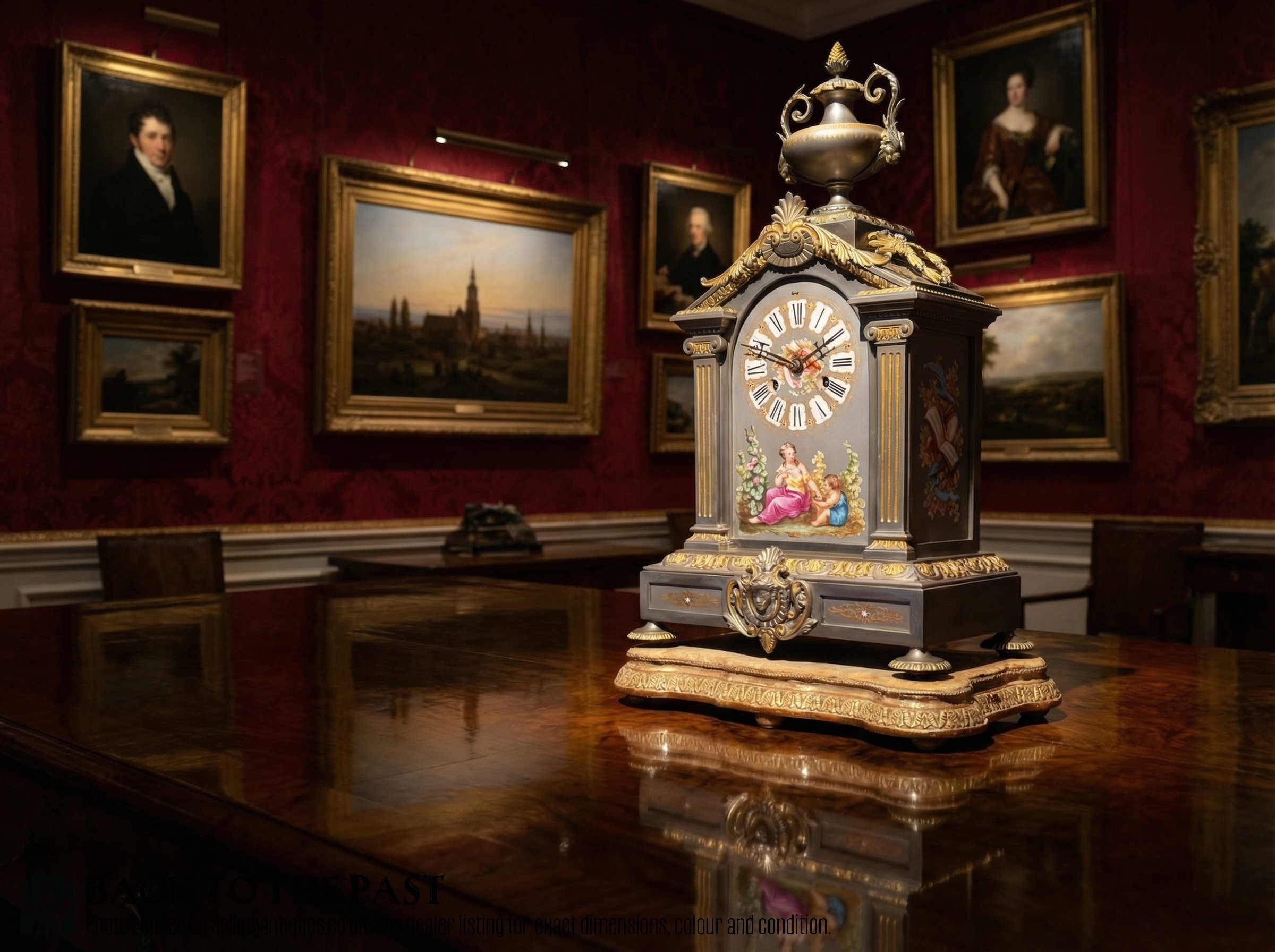
When you handle a painted porcelain clock, you hold nineteenth-century French ormolu and hand-painted ceramic fired into a single domestic ornament.
Painted Porcelain Clock
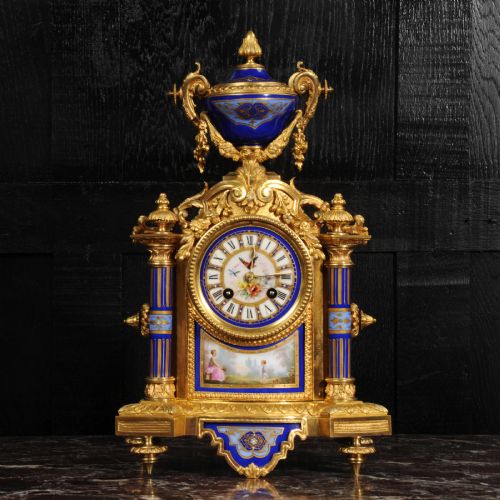
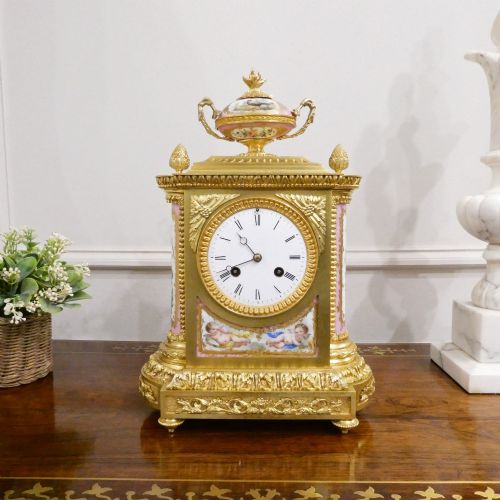
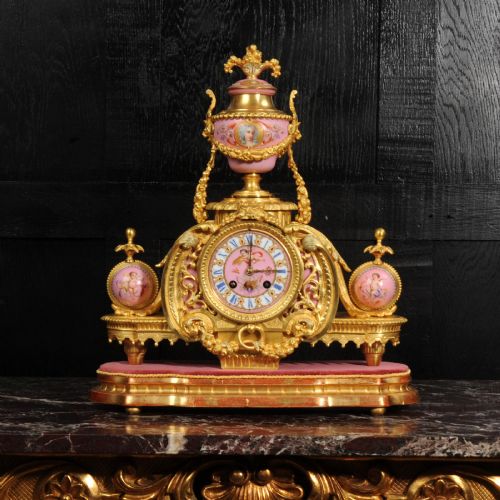
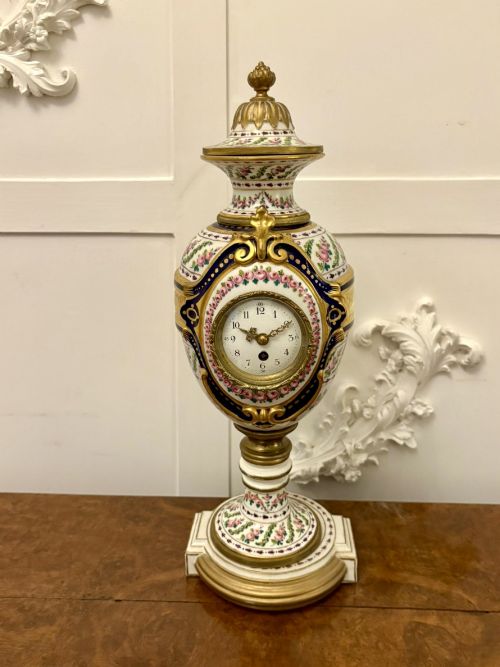
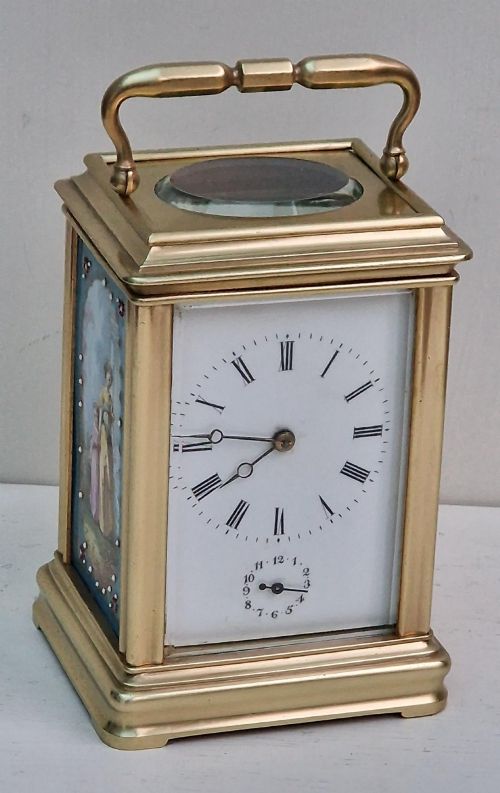
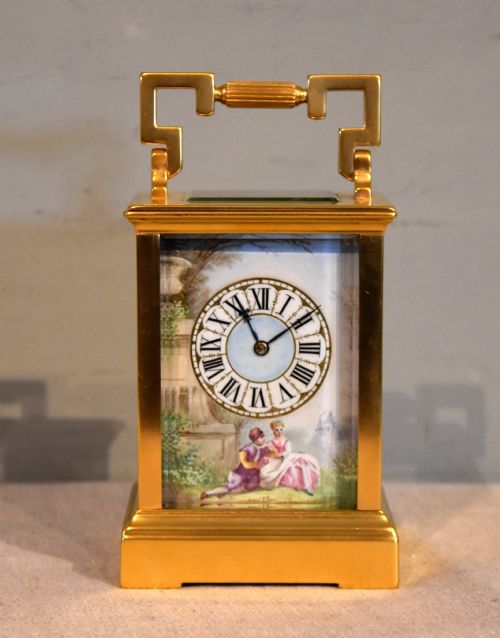
A painted porcelain clock combines a working timekeeper with ceramic panels, dials, or entire urn-shaped bodies decorated with hand-painted scenes and floral motifs. When you search for a painted porcelain clock, you encounter nineteenth-century French mantel clocks, carriage timepieces, and larger garniture sets flanked by matching vases.
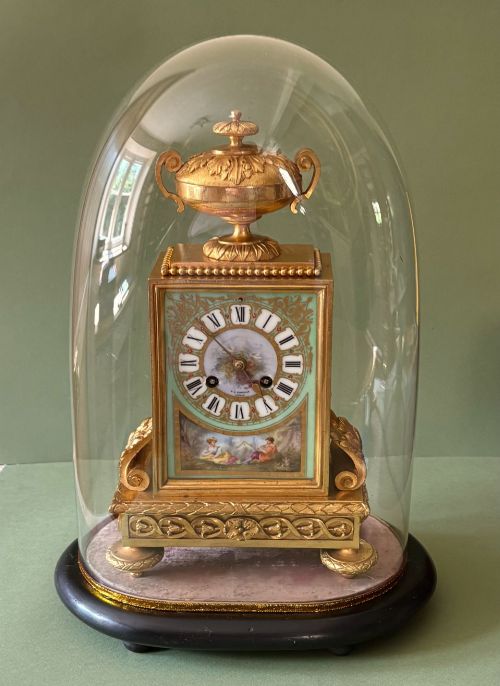
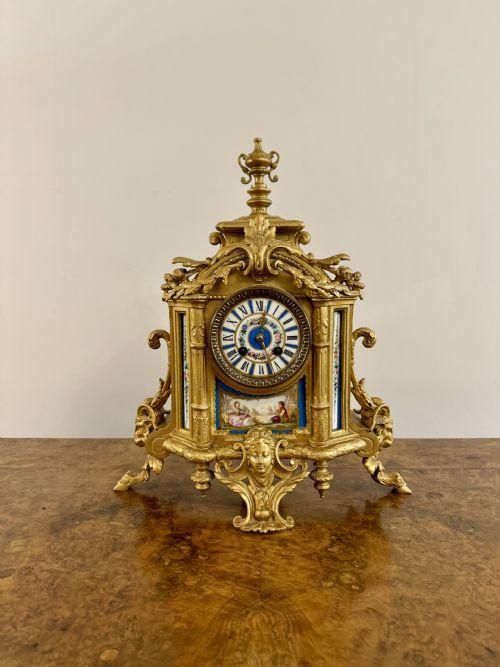
The most common examples on this page are French mantel clocks from the Victorian era, specifically pieces housed in gilt bronze, ormolu, or gilt metal frames. These objects reflect nineteenth-century revival styles, notably Louis XVI and Rococo designs, where decorative ceramic elements were integrated directly into the metalwork casing.
Beyond the standard mantel clock, the evidence shows rarer variations including crystal regulators with painted glass or enamel panels, drum head clocks, and multi-piece garniture sets. Pieces range from compact boudoir clocks to large urn-shaped examples designed as centrepieces for formal rooms.
Materials and construction methods
Makers constructed the housing of a painted porcelain clock using cast ormolu, gilt bronze, and gilt metal, often combined with brass and glass components. These metal mounts were cast, chased, and gilded to form ornate rococo scrolls or formal neoclassical architectural frames.
The porcelain components, frequently referred to in styles emulating Sèvres or produced by factories such as KPM Berlin, were hand-painted with ceramic colours and enamel before being fired. Artisans mounted these delicate painted plaques, dials, and urn bodies securely into the metal chassis alongside eight-day mechanical clock movements.
Painted Porcelain Clock Retail Price Guide 2026
Typical asking prices for painted porcelain clock among the pieces listed under this phrase on Sellingantiques today, from the lower quarter to the upper quarter. They describe what is for sale here now, not the wider market.
Distinctions in quality
The quality of a painted porcelain clock rests upon the crispness of the bronze casting and the artistic merit of the hand-painted ceramic panels. Finer examples display deeply chased ormolu mounts with sharp relief and delicate, highly detailed brushwork on the porcelain plaques, whereas simpler pieces rely on standard factory-stamped brass and routine floral transfers.
Maker attribution also separates the standard production from the exceptional range, with signed movements or dial plates by renowned horologists and bronze-founders commanding greater regard. The integration between the heavy metal framework and the fragile porcelain body determines the overall structural success and visual balance of the piece.
Japy Freres·Jean-Baptiste Delettrez·Achille Brocot·PH Mourey·LE ROY & FILS·VINCENTI of PARIS·KPM Berlin
The Painted Porcelain Clock Glossary
- Ormolu
- A gilded bronze technique utilising a mercury amalgam, commonly found on nineteenth-century French clock mounts. This finish provides a warm, durable golden lustre that defines the luxury appearance of the period.
- Garniture set
- A decorative arrangement consisting of a central clock flanked by matching side ornaments such as urns or vases. These sets were designed to create a symmetrical display across a mantelpiece.
- Crystal regulator
- A mantel clock enclosed entirely by bevelled glass panels within a brass or gilt frame, allowing light to pass through the movement. This style gained popularity during the later nineteenth century.
- Sèvres style
- A descriptive term for porcelain decorated with rich coloured grounds and hand-painted subjects that emulates the output of the French royal manufactory. These panels feature prominently on nineteenth-century clock cases.
- Movement
- The internal mechanical heart of the clock, comprising gears, springs, and escapements. Most examples from this category house eight-day striking movements requiring periodic winding.
Painted Porcelain Clock: Frequently Asked Questions
How do I wind my clock?
Most nineteenth-century mechanical movements require a key inserted into the dial holes to tension the springs every eight days.
Take care not to over-wind the mechanism, and consult a professional horologist if the resistance feels unusual during winding.
Where were these clocks placed?
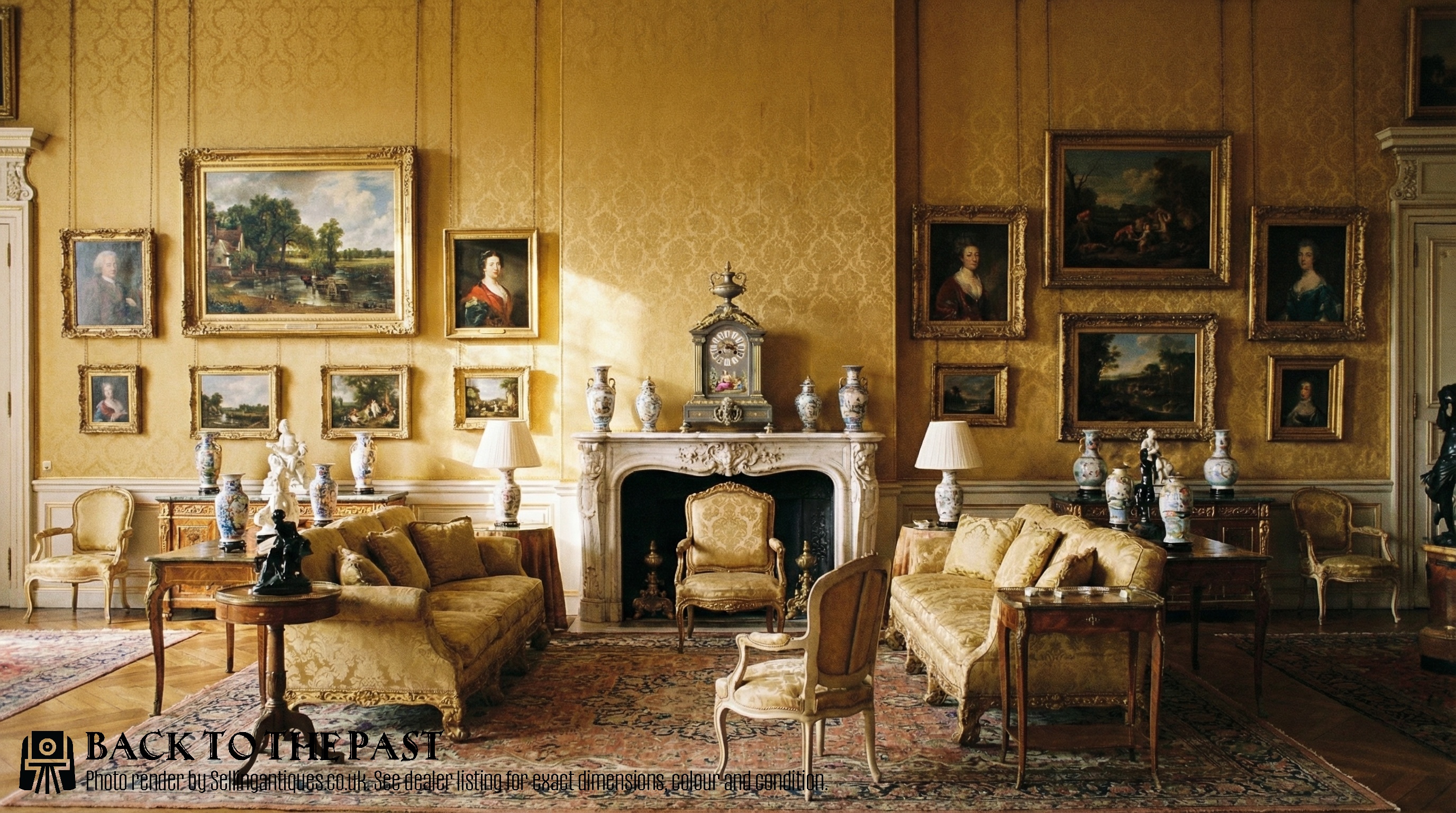
Owners typically positioned these decorative objects on mantelpieces above fireplaces or upon pier tables within Victorian and French drawing rooms.
Grand houses often utilised three-piece garniture sets to create a symmetrical display beneath wall mirrors.
How do I identify a Sèvres style clock?
Look for hand-painted ceramic panels featuring romantic scenes or exotic birds set against coloured backgrounds like deep blue or pink. These panels are mounted directly into gilt bronze or ormolu frames.
Many pieces bear painted or pseudo-factory marks on the reverse of the porcelain, though these often imitate the famous French manufacturer rather than originating from it.
What is a crystal regulator?
A crystal regulator is a mantel clock constructed with heavy bevelled glass panels on all sides held within a gilt brass framework. This design lets light pass through the entire case to reveal the swinging pendulum and moving escapement.
These models emerged later in the nineteenth century and offer a lighter visual presence than solid ormolu clock cases.