


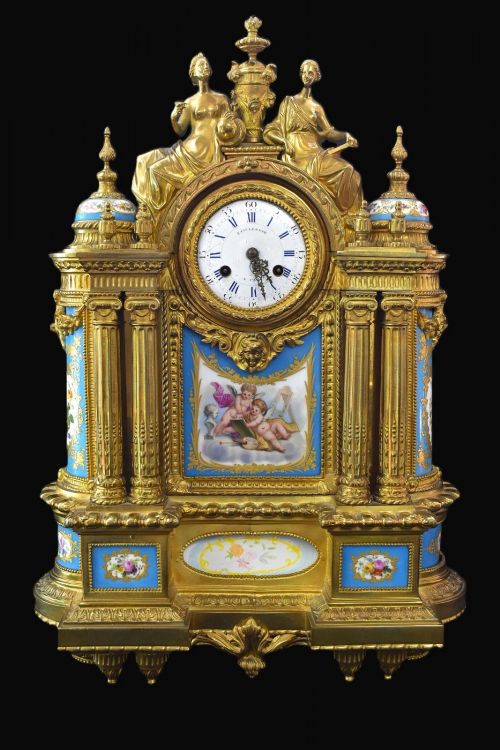

Decorative Clock
A decorative clock measures the hours through brass, ormolu, porcelain, and glass, bringing period craftsmanship directly into a room.
Decorative Clock
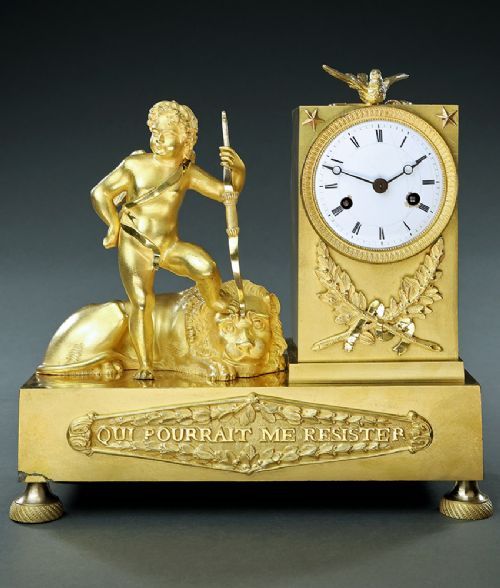
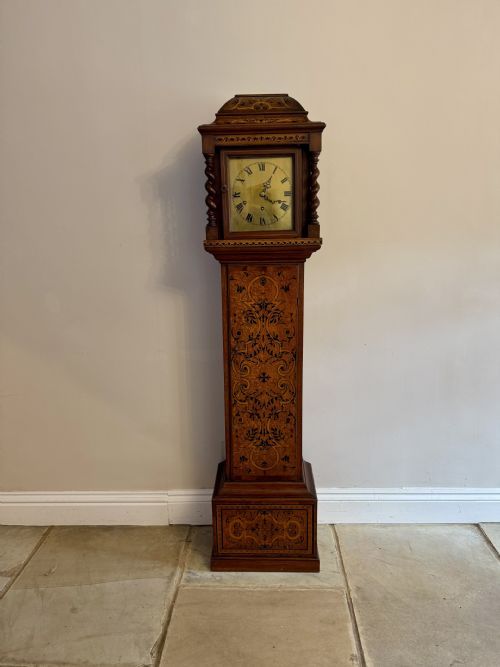
A decorative clock spans several centuries of design, appearing most frequently as a French mantel clock or a brass carriage clock from the nineteenth century. These objects include towering grandfather clocks, smaller bracket clocks, wall-hung cartel clocks, and detailed desk timepieces.
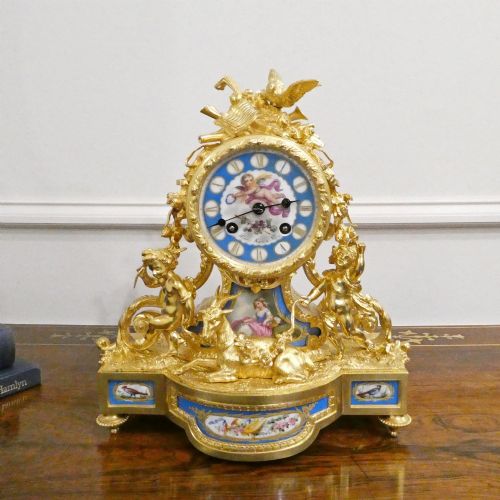
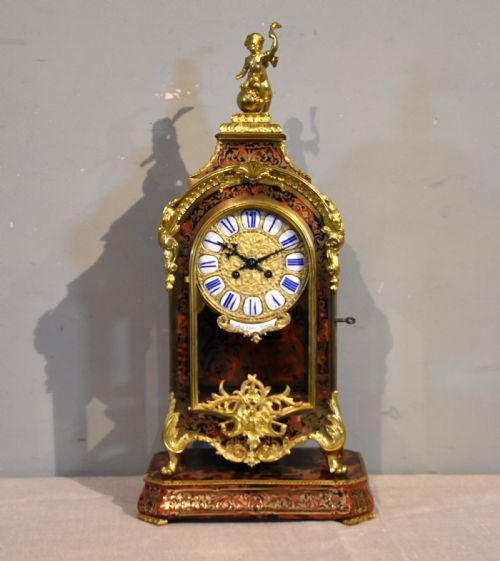
The selection ranges from restrained Victorian carriage clocks with glass panels to elaborate French Rococo revival pieces adorned with bronze mounts and enamel dials. Many examples hail from the 1880s and 1890s, alongside earlier Georgian items and later Art Deco designs.
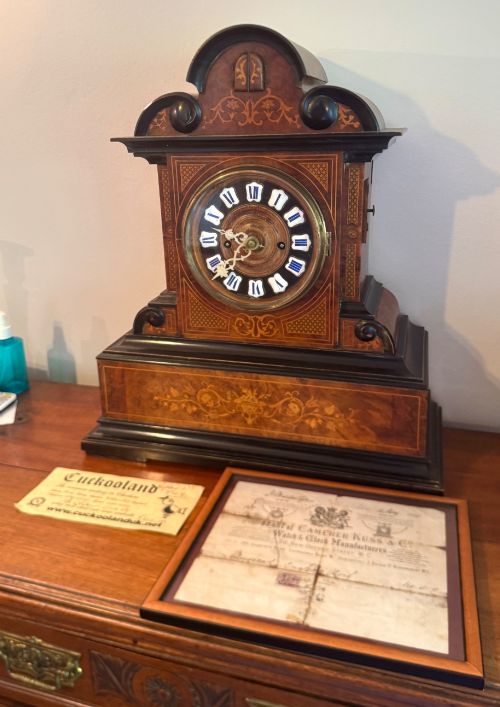
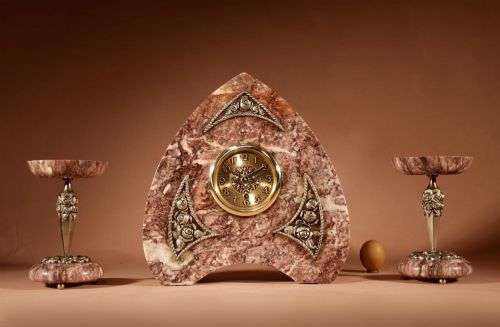
Buyers encounter timepieces framed in ebonised wood, marble, gilt brass, and tortoiseshell effects, often accompanied by matching garnitures or candelabra. Each object combines mechanical timekeeping with distinct sculptural or architectural ornament suited for domestic display.
How they were made
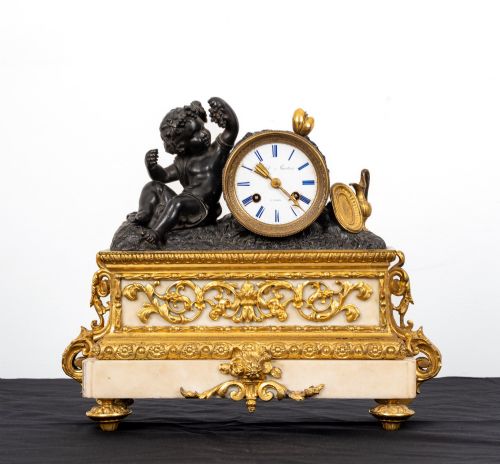
Maker workshops built these movements using brass and steel, housing them within cases shaped from cast bronze, gilt metal, and carved wood. Ormolu gilding was applied to bronze components to create a durable, golden finish that caught the light.
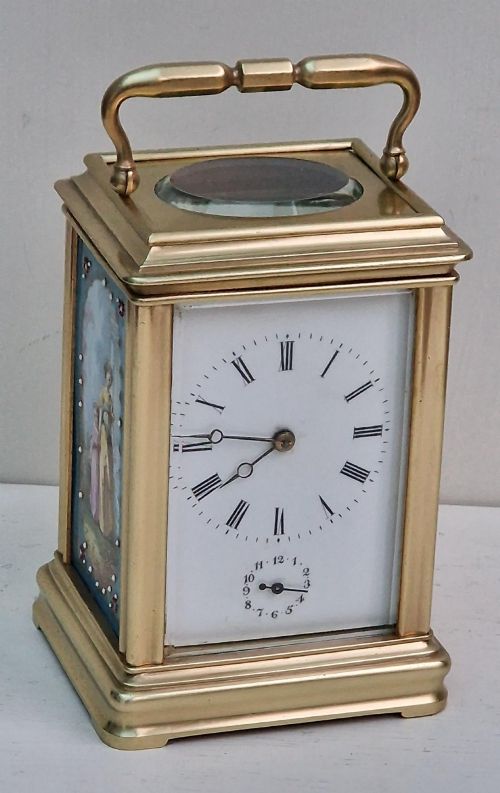
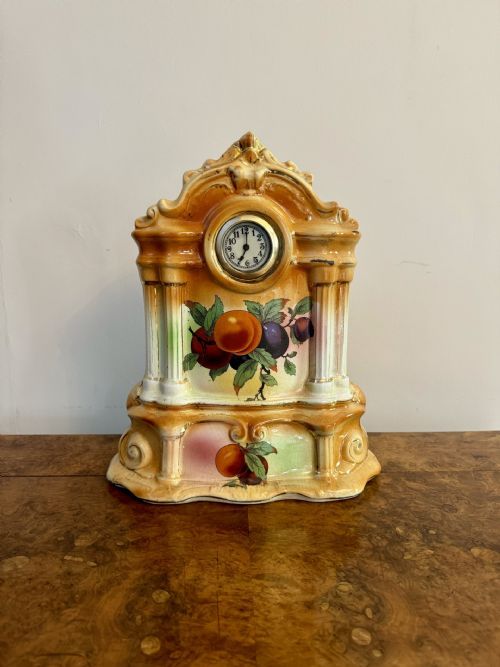
Porcelain panels, often painted with figures or floral scenes, and champlevé enamel dials added colour and texture to the metalwork. Marquetry techniques introduced contrasting walnut and rosewood veneers into the wooden bodies of bracket and grandmother clocks.
Listings feature carriage clocks, wall clocks, and mantel clocks dating from the Georgian period through the 1930s.
What varies in quality
The standard of a decorative clock rests upon the precision of its cast bronze mounts and the finesse of its painted enamel dials. Superior examples display crisp, deeply chased metalwork where every leaf and scroll remains sharply defined.
The integration of materials dictates distinction, as seen in the balance between fire-gilded ormolu, hand-painted porcelain plaques, and finely figured wood veneers. Movement makers who signed their work often denote a higher tier of horological achievement.
Henry Marc·Siffel and Cartier·Etienne Lenoir·Rodier·Le Roy·Thuret·Duverdrey and Bloquel·Tiffany·Wetterstrands·Seller of Reading
The Decorative Clock Glossary
- Ormolu
- A technique of applying finely ground high-carat gold to a bronze object using a mercury amalgam. This process yielded a rich, enduring metallic lustre.
- Champlevé
- An enamelling method where troughs are dug into a metal surface and filled with vitreous enamel powder before firing. The resulting design sits flush with the surrounding metal.
- Garniture
- A set of matching decorative objects, typically comprising a central clock flanked by two matching vases or candelabra. These sets were designed to balance a mantelpiece.
- Cartel clock
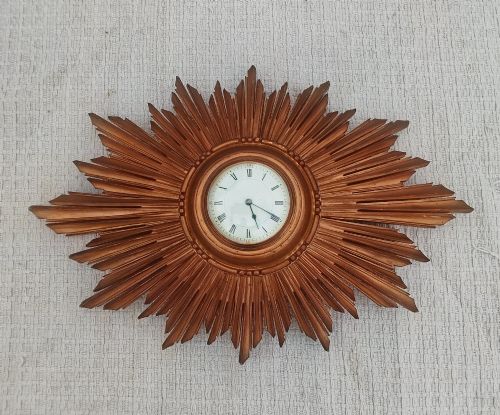
- A wall clock mounted in an ornate frame made of giltwood, bronze, or brass. Originating in France, these pieces use asymmetrical scrollwork.
- Repeater
- A mechanical complication in a clock or watch that chimes the hours and quarters upon demand when a lever is pressed. This allowed owners to check the time in darkness.
Decorative Clock: Frequently Asked Questions
What is a carriage clock?
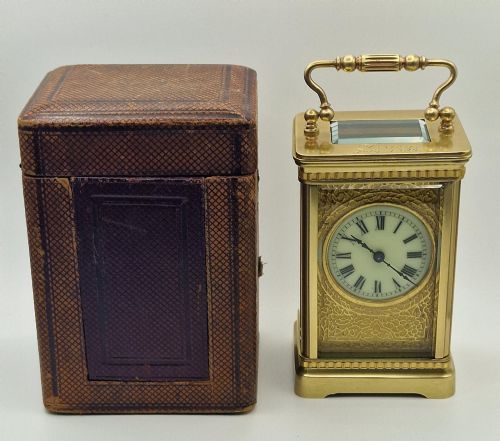
A carriage clock is a portable timepiece developed for travel during the nineteenth century, typically housed in a brass case with glass panels that reveal the internal movement.
Most examples feature a swing handle on top and an enamel dial, often packed inside a fitted leather travel case when originally sold.
How do I wind an antique clock?
Antique clocks require a matching winding key inserted into the dial holes to tension the internal springs or lift the hanging weights. Care must be taken not to overwind the mechanism.
Different movements require winding at intervals ranging from daily for small desk clocks to weekly for larger mantel clocks.
Where should I place a mantel clock?
A mantel clock sits best on a flat, stable surface away from direct sunlight, dampness, and rapid temperature changes that can affect wood and metal. A sturdy mantelpiece or sideboard provides ideal support.
Ensuring the surface is level helps the pendulum swing evenly and keeps the mechanical beat regular.
How do I identify a French Rococo clock?
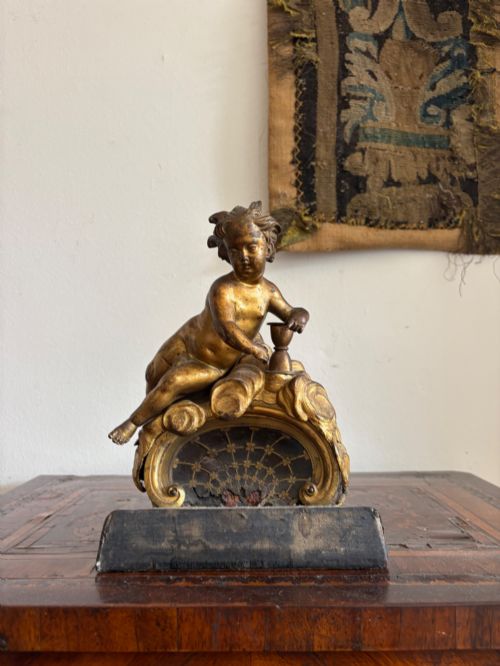
French Rococo clocks are characterised by asymmetrical cases filled with C-scrolls, floral motifs, and cast bronze putti. The styling emphasises flowing, naturalistic curves rather than rigid symmetry.
These pieces frequently utilise gilt bronze, ormolu, and painted porcelain to achieve a lavish decorative effect.