

Painted Mahogany Cabinet
A painted mahogany cabinet unites rich timber with decorative brushwork, offering both practical storage and a fine display surface for collectors.
Painted Mahogany Cabinet
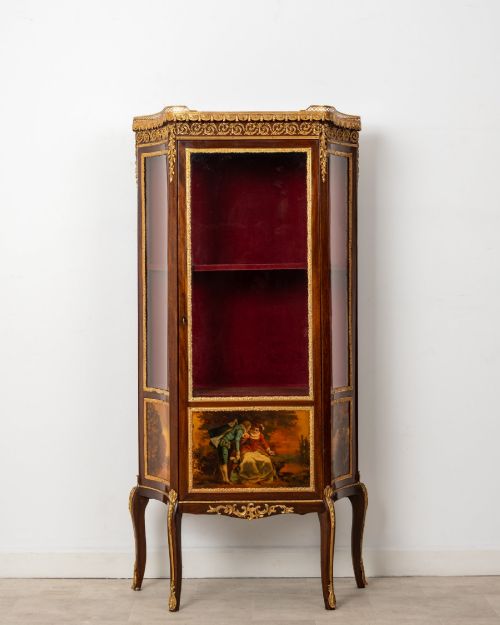
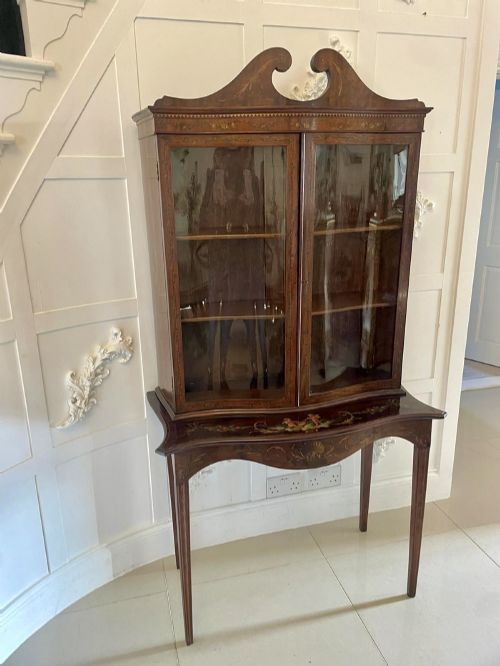
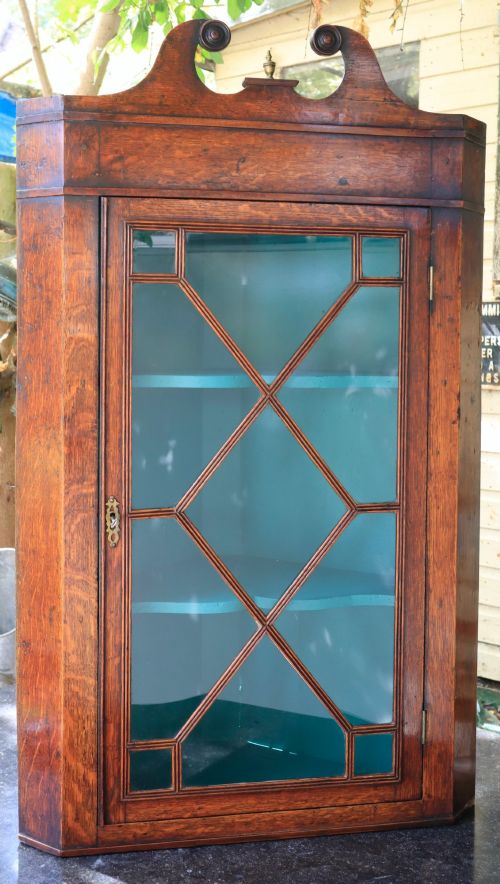
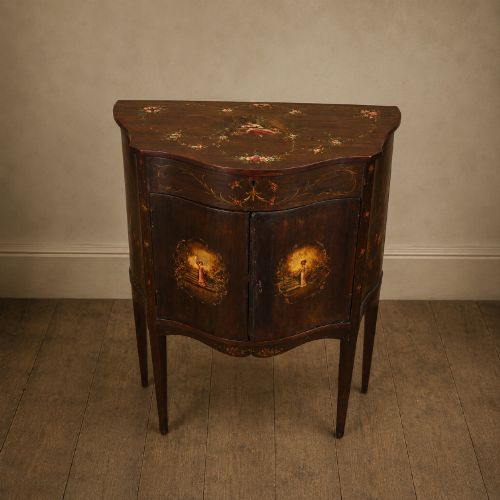
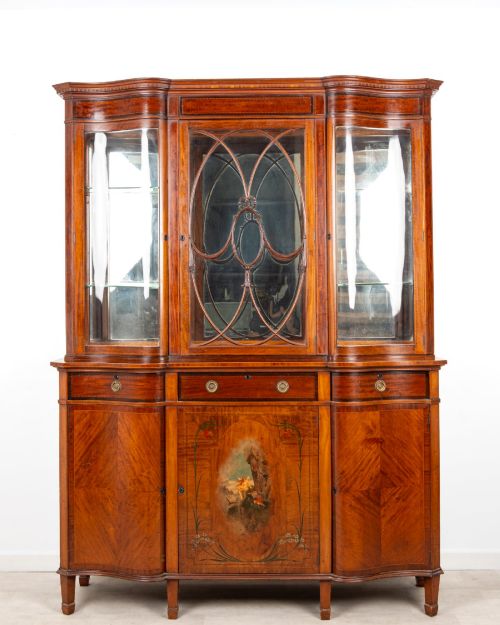
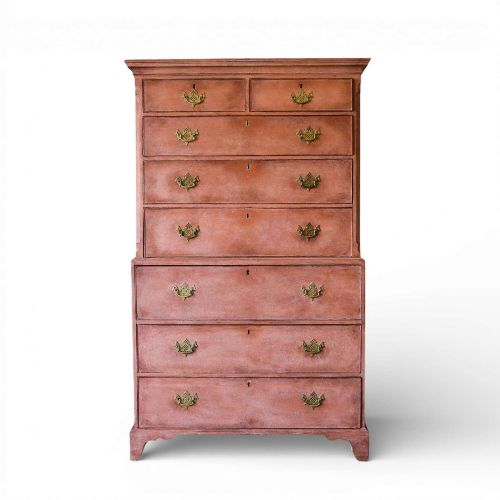
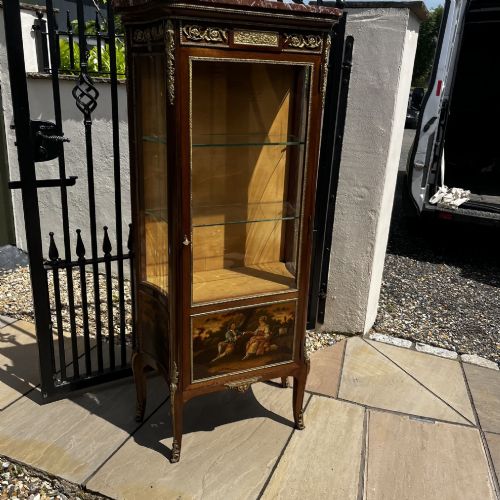
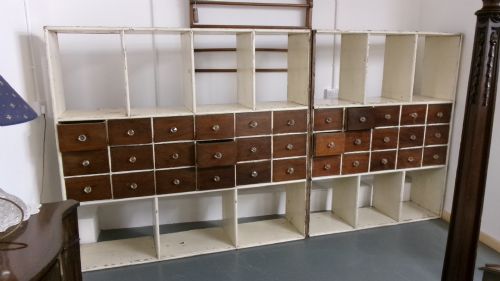
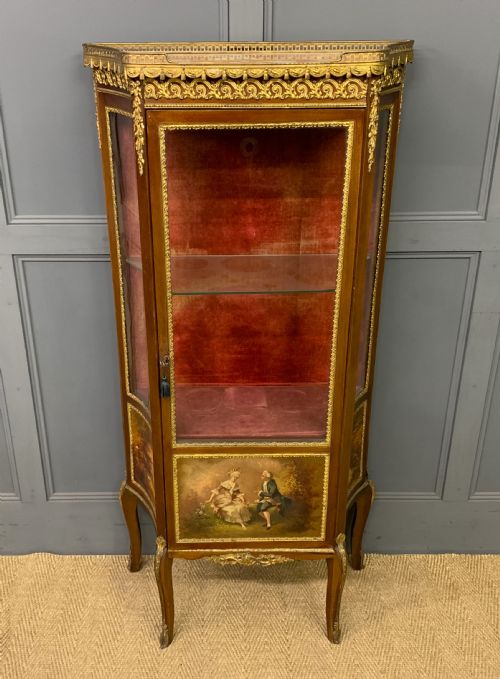
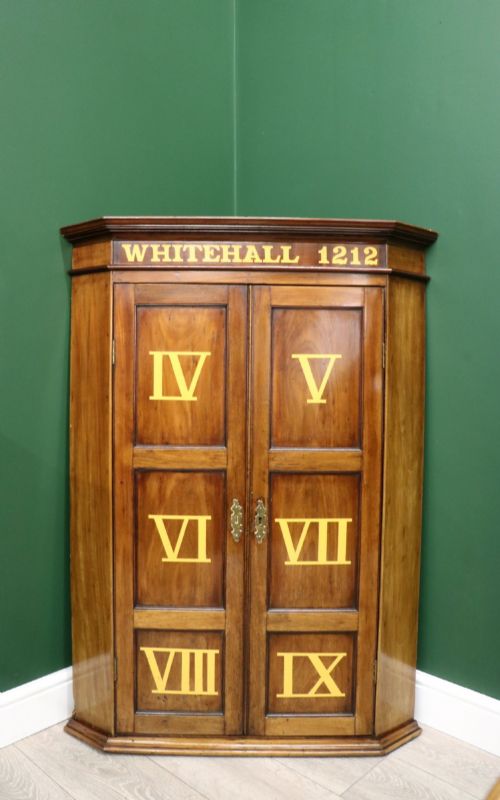
A painted mahogany cabinet brings together solid timber construction and artistic surface decoration, taking many distinct structural forms. The pieces available span display cabinets, vitrines, bedside cupboards, corner units, and music cabinets. You will most frequently encounter Edwardian and Victorian examples alongside French pieces featuring Vernis Martin finishes.
The tradition encompasses both British revival styles and continental European ateliers. Pieces range from large standing display vitrines with glass panels to intimate bedside tables and wall-mounted corner cupboards. The underlying mahogany is consistently paired with either hand-painted floral motifs or figurative panels.
Materials and Techniques
Makers utilised dense mahogany as the primary structural timber, frequently embellishing surfaces with contrasting veneers of satinwood or stringing. Structural integrity was maintained through traditional joinery, whilst glass and velvet lined the interiors of display versions.
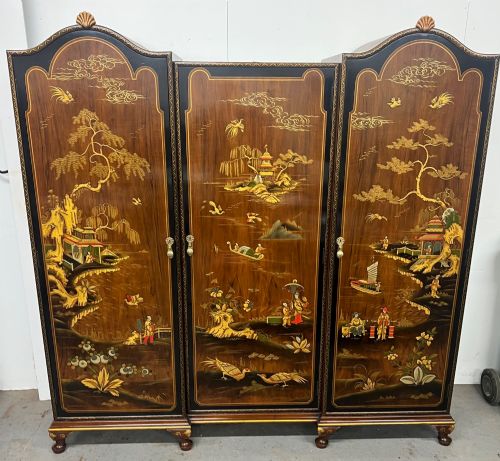
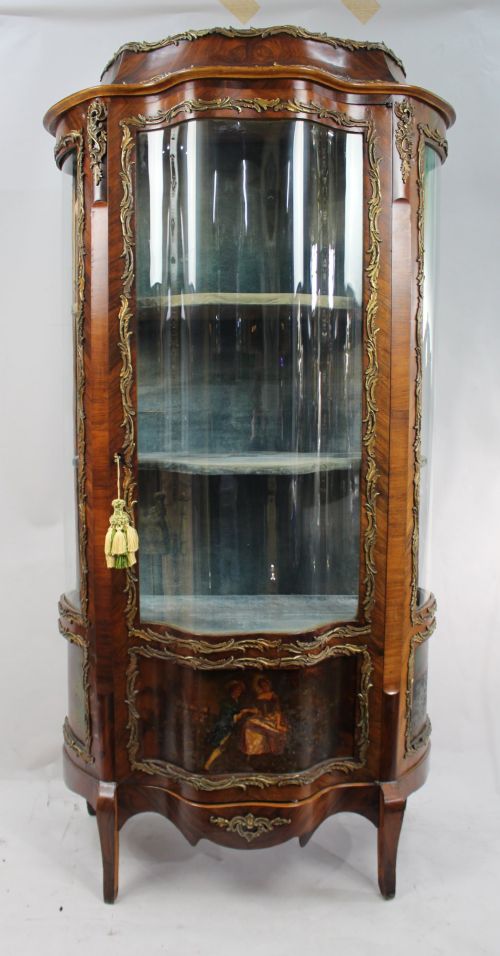
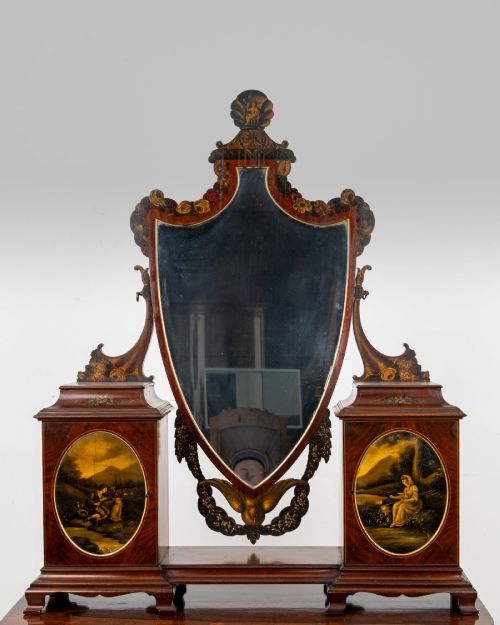
Surface ornamentation relied heavily on skilled brushwork, producing hand-painted floral swags, classical figures, and Chinoiserie scenes. French examples incorporated specialised Vernis Martin lacquer techniques, complemented by cast ormolu mounts and marble tops.
Listings for painted mahogany cabinet span the Georgian period, Victorian era, and Edwardian epoch, incorporating glass, brass, ormolu, and satinwood.
Judging Quality
Quality rests upon the crispness of the hand-painted decoration and the fidelity of the timber grain. Finer pieces demonstrate precise brushwork on panels rather than mechanical transfer prints, alongside well-figured mahogany timbers.
Construction details dictate longevity and refinement. The inclusion of original brass hardware, clean glass panes, and substantial mounts like ormolu distinguishes superior workshop production from standard commercial output.
Maples and Co·Hewetson and Thexton·François Linke·Hobbs and Sons·Jewell of Holborn
The Painted Mahogany Cabinet Glossary
- Vernis Martin
- A simulated Japanese lacquer technique developed in France during the eighteenth century, used to create lustrous painted panels on furniture.
- Ormolu
- Gilt-bronze mounts applied to the exterior of furniture for decorative accent.
- Serpentine
- A curved shape that undulates outward and inward, frequently seen on the fronts of higher-end cabinets.
- Vitrine
- A glass-fronted cabinet designed specifically for displaying porcelain, curiosities, or books.
- Sheraton Revival
- A late nineteenth-century design movement drawing inspiration from the lighter, classical furniture forms of the eighteenth-century designer Thomas Sheraton.
Painted Mahogany Cabinet: Frequently Asked Questions
What is a painted mahogany cabinet?
A painted mahogany cabinet is a piece of storage or display furniture constructed primarily from mahogany timber and finished with hand-painted decorative motifs, panels, or specialised lacquer work.
These pieces emerged across various periods including the Georgian era, Victorian times, and the Edwardian epoch, serving both utilitarian storage functions and decorative display roles.
How do I identify Vernis Martin?
Vernis Martin work appears as a glossy, resin-based translucent lacquer applied over painted scenes, most commonly found on French display cabinets and vitrines.
The technique creates a deep, protective sheen that often depicts pastoral figures, floral arrangements, or oriental landscapes in imitation of Asian lacquerware.
Where should I place a corner cabinet?
A corner cabinet fits directly into room junctions, making efficient use of overlooked spaces while providing secure display capacity for small objects or china.
Both floor-standing and wall-mounted versions exist within the painted mahogany cabinet category, suiting dining rooms, drawing rooms, and hallways alike.
How do I date a painted cabinet?
Dating relies upon examining structural styles, hardware, secondary timbers, and the nature of the painted decoration rather than relying on a single indicator.
Victorian and Edwardian iterations often display revival influences like Sheraton or Adam motifs, whilst earlier Georgian pieces exhibit heavier structural proportions and hand-cut joinery.