


Tall Corner Unit
These tall corner unit pieces turn neglected angles into display space, built from mahogany and pine across Georgian, Victorian, and later decades.
Tall Corner Unit
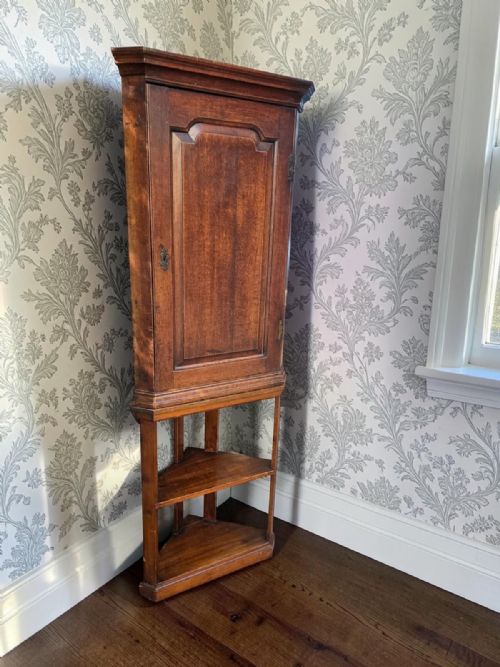
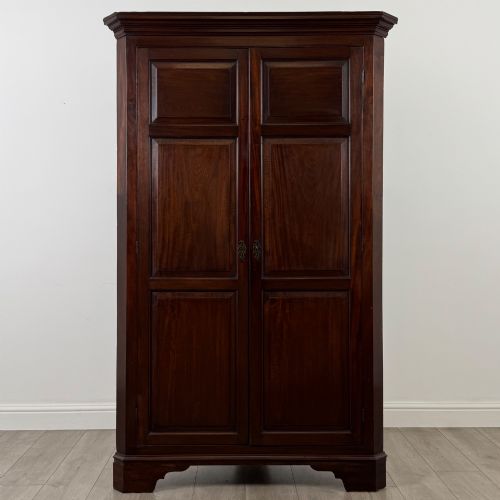
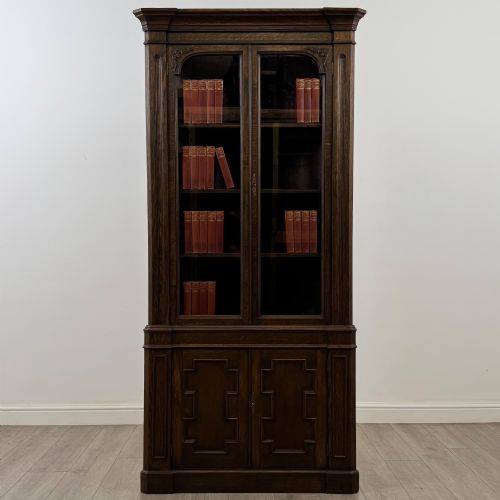
When you search for a tall corner unit, you are looking at tall storage and display furniture designed to fit cleanly into room angles. The forms seen here range from floor-standing cupboards in mahogany and oak to tiered shelves and etageres.
You are most likely to meet Georgian mahogany cabinets and Victorian pine or oak examples on this page. These pieces serve to utilise dead space while housing china, glass, or books behind panelled and glazed doors.
How they were made
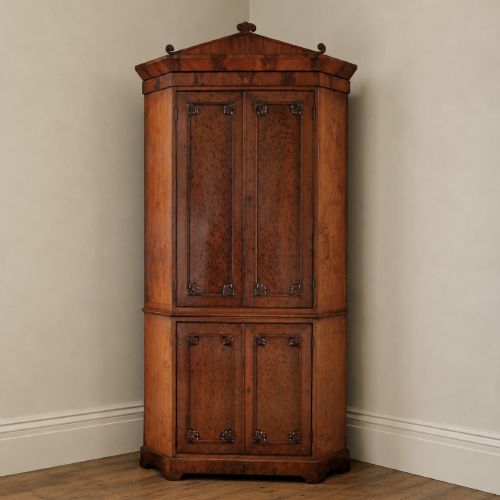
Makers built these pieces using solid timbers like mahogany, oak, and pine, frequently enhanced with plum pudding mahogany veneers and ebonised wood details. Brass hardware such as hinges, handles, and working keys complete the construction.
Surface treatments vary from polished natural grain to painted finishes, including chinoiserie decoration. Carpenters joined structural members to withstand the weight of floor-standing tier arrangements and heavy corner cupboards.
Listings feature pieces spanning from the Georgian era through Victorian, Edwardian, and mid-twentieth-century periods in mahogany, pine, and oak.
What varies in quality
The selection of timber dictates the upper tier of quality, particularly where figured plum pudding mahogany or fine oak is chosen for prominent display surfaces. Secondary timbers in pine or lesser woods mark simpler regional workshop production.
Refinement in surface detail, such as fine mouldings and hand-painted chinoiserie motifs, separates standard utilitarian cupboards from ambitious cabinetmaker commissions. Original brass fittings and functioning keys retain the integrity of the piece.
The Tall Corner Unit Glossary
- Bowfront
- A convex curved front facade that projects outward. This shape appears on select mahogany standing corner cupboards.
- Whatnot
- An open set of tiered shelves used for displaying ornaments and books. The four-tier shelf format represents this type.
- Chinoiserie
- European decorative style reflecting Chinese artistic motifs and painted scenes. This finish appears on eighteenth-century pieces.
Tall Corner Unit: Frequently Asked Questions
How do I fit a tall corner unit into a room?
Measure the wall depth on both sides of the corner to ensure the frame sits flush against the skirting boards. Floor-standing models require stable wall contact to distribute weight safely.
Consider the door swing space for cupboards so adjacent furniture does not block access to the interior shelves.
What is the difference between a cupboard and a cabinet?
Cupboards generally feature solid wooden doors enclosing utilitarian storage space for everyday items. Cabinets often incorporate glass panels designed for displaying porcelain and silver collections.
Both forms utilise triangular footprints tailored for room angles.
How do I identify a Georgian corner unit?
Look for architectural proportions, classical cornice mouldings, and dense mahogany or oak construction typical of the eighteenth and early nineteenth centuries. Brass H-hinges and panelled doors frequently indicate this period.
Later revival pieces replicate these traits but often use lighter secondary woods inside.
Can these units hold heavy books?
Solid oak and mahogany floor-standing models possess sturdy internal shelving capable of supporting heavier volumes. Pine and lighter twentieth-century variants suit lighter decorative objects and dinnerware.
Check the fixed or adjustable shelf supports before loading heavy collections.