
Painted French Chest
A painted french chest brings continental elegance to an interior, offering practical storage disguised beneath decorative brushwork and classical form.
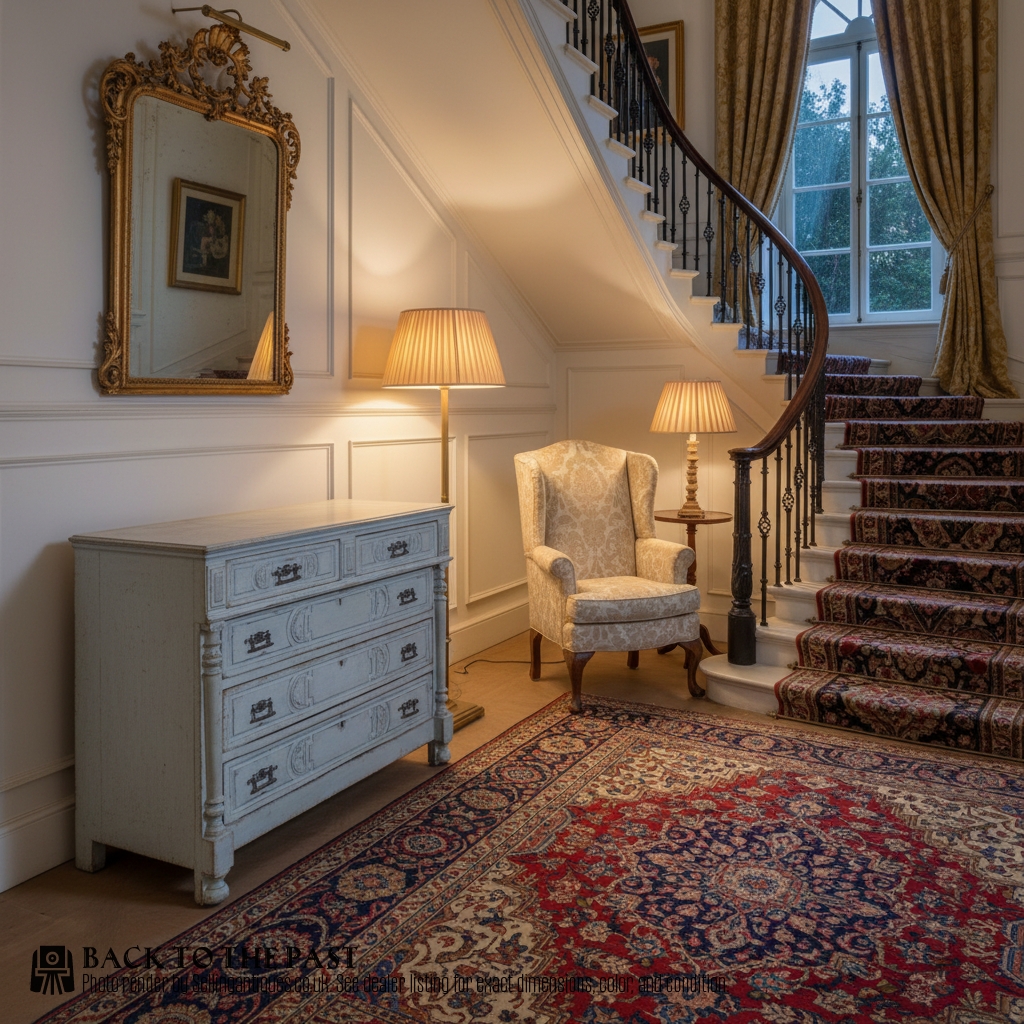
Painted French Chest
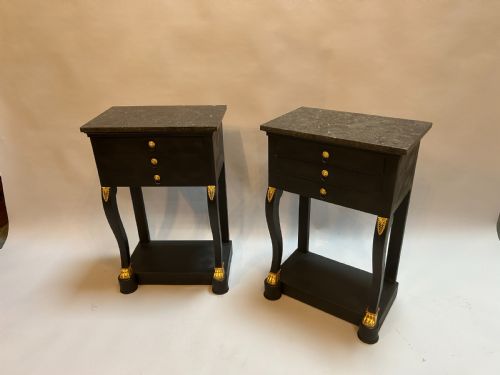
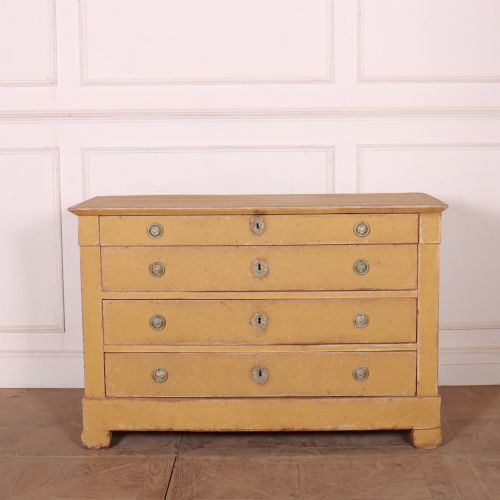
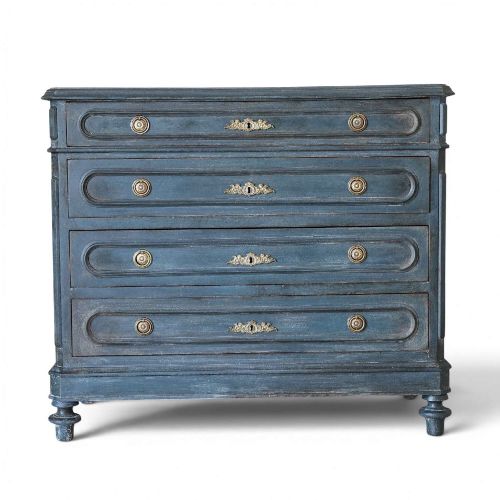
A painted french chest typically takes the form of a commode, bedside cabinet or tall chest of drawers derived from provincial workshops or grand Parisian ateliers. The search phrase covers pieces ranging from eighteenth-century provincial commodes to early twentieth-century revival pieces finished in decorative pigments.
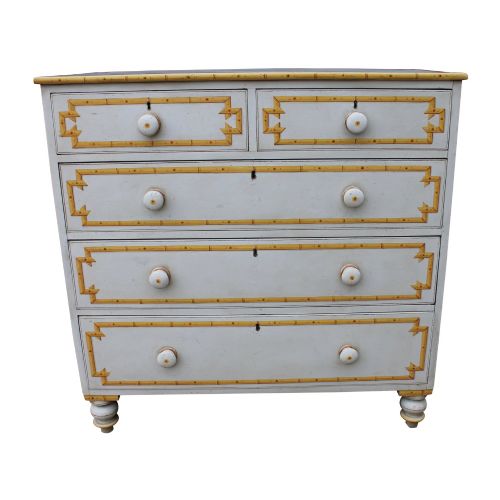
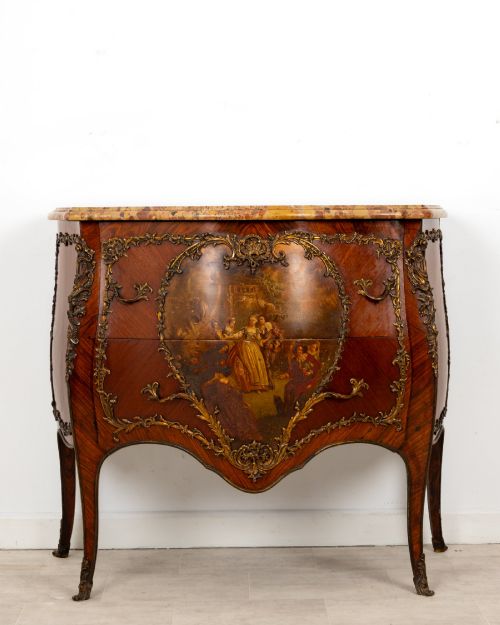
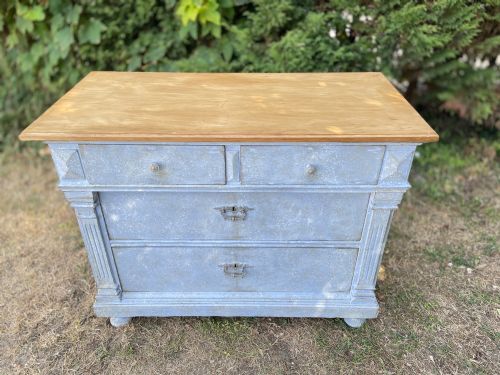
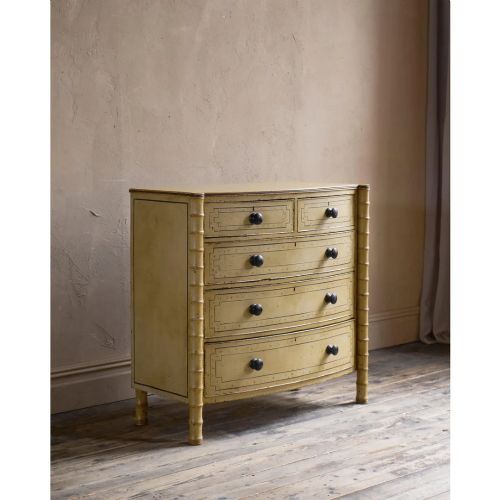
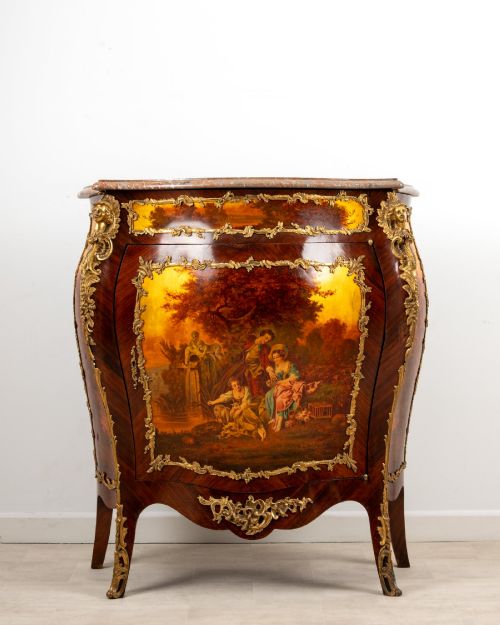
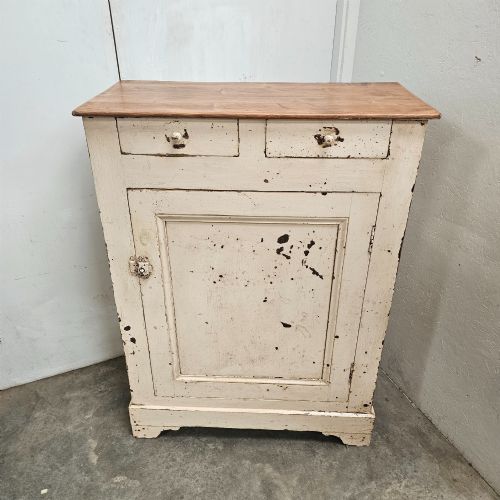
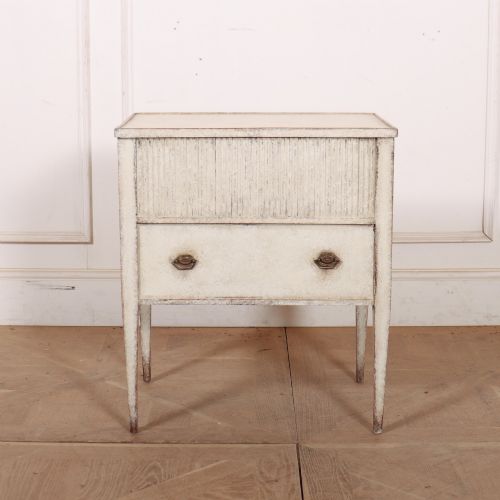
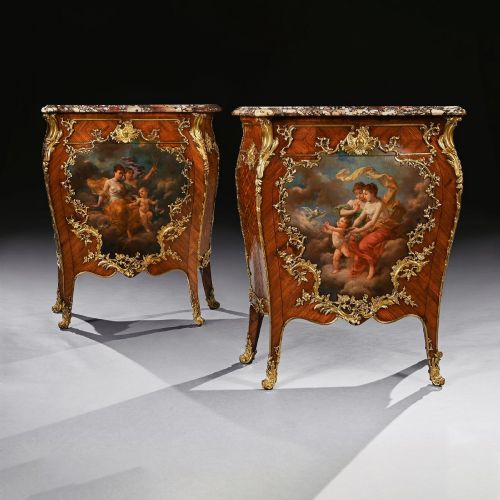
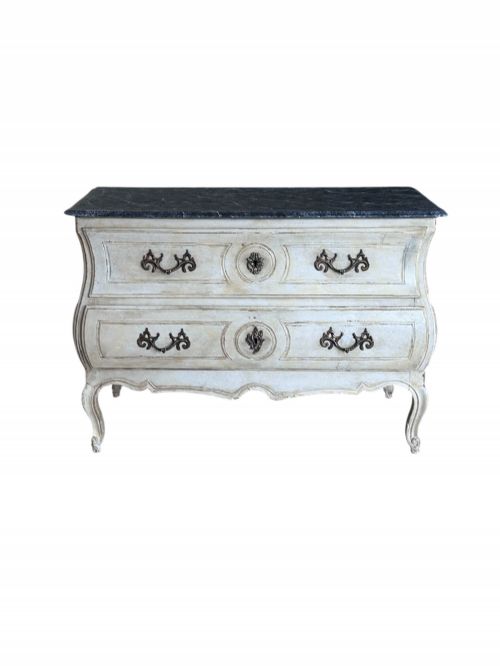
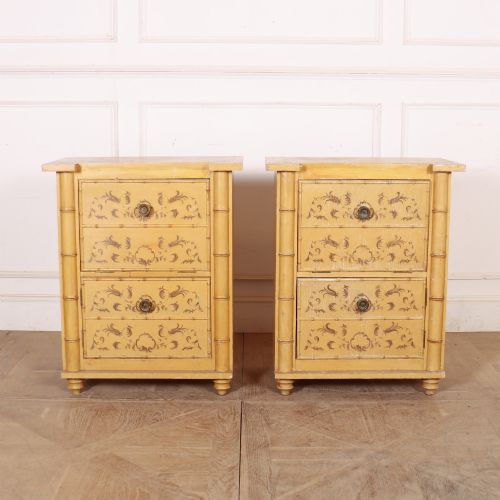
The dominant variations on this page include serpentine fronts, bombé profiles and straight-sided pine or oak carcases. Makers often utilised traditional motifs reflecting Louis XV and Louis XVI styles, alongside faux bamboo or Gustavian influences.
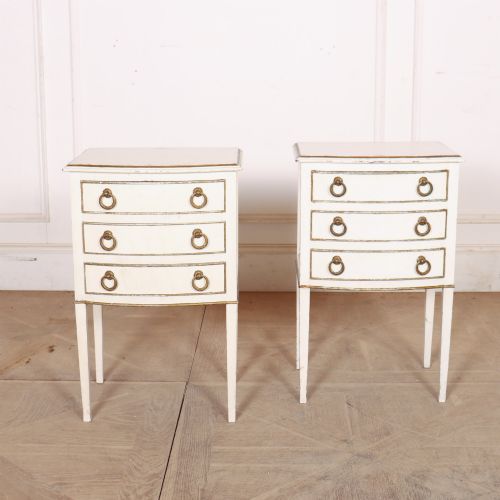
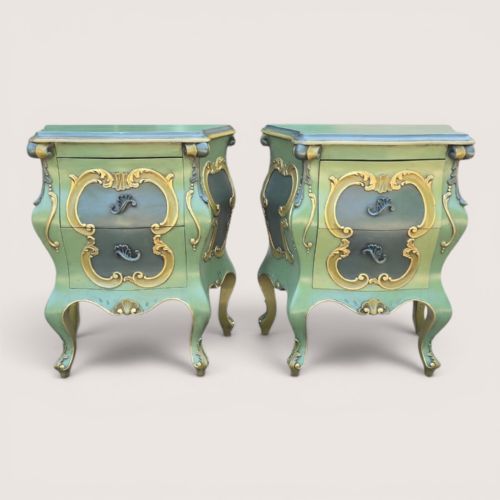
Buyers encounter everything from petite bedside chests to grand marble-topped commodes designed for formal reception rooms. Regional pieces display simpler joinery and local timbers, whereas urban examples exhibit finer ornamentation.
Materials and construction
Carpenters constructed the carcases of these chests using native timbers such as oak, pine and beech, occasionally incorporating exotic veneers like kingwood on high-status Parisian pieces. Drawers feature traditional dovetail joints, reflecting the standard of cabinetmaking appropriate to each period.
Surface decoration relies upon applied layers of paint, sometimes combined with parcel gilt, faux marble effects or intricate Vernis Martin lacquer work. Marble slabs feature heavily on the tops of neoclassical and empire models, whilst mounts of gilt-bronze and brass secure corners and handles.
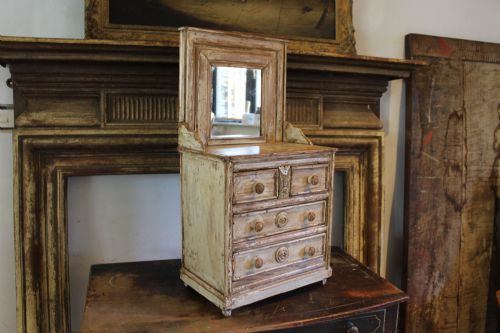
Miniature apprentice pieces let journeymen practice complex bombé curves on a scale small enough to fit on a mantelpiece.
Judging quality in continental storage
Quality rests upon the harmony of the proportions, the crispness of any carved woodwork and the fidelity of the painted surface to its period. Pieces with original decorative schemes command greater appreciation than later surface embellishments applied to older carcases.
The refinement of the hardware, from cast ormolu mounts to hand-cut dovetails, separates standard regional furniture from sophisticated urban commissions. Heavy marble tops fitted precisely to serpentine or bombé frames indicate superior workshop standards.
Edwards and Roberts
The Painted French Chest Glossary
- Commode
- A low chest of drawers or cabinet standing on legs, originating in France during the seventeenth century. These pieces usually feature two or more drawers and often incorporate shaped fronts.
- Bombé
- A swelling, outward-curving profile found on the sides and fronts of certain eighteenth-century and revival chests. This bulbous form requires advanced woodworking skill to execute.
- Vernis Martin
- A type of simulated Japanese lacquer developed in France during the eighteenth century by the Martin brothers. It involves multiple layers of varnish applied to create translucent decorative scenes.
- Serpentine
- A shaped furniture front featuring a concave centre flanked by convex ends, or vice versa. This flowing contour appears frequently on commodes.
- Ormolu
- Gilded bronze used for decorative mounts, handles and feet on fine furniture. The technique involves applying a gold amalgam to cast bronze before heating.
Painted French Chest: Frequently Asked Questions
What is a commode?
A commode is a low chest of drawers developed in France as a functional yet decorative piece of furniture for domestic interiors.
Over time, the form evolved from simple cabinetry into sophisticated items featuring curved drawer fronts and marble surfaces.
How do I spot original paint?
Original painted surfaces show natural wear patterns, craquelure and integration with the underlying timber structure consistent with age.
Later overpainting often conceals earlier decoration or lacks the patina developed through decades of cleaning and exposure.
Where were these pieces used?
These chests served primarily in bedrooms, salons and hallways to store clothing, linens and personal items.
Grand reception rooms utilised marble-topped commodes to display decorative objects, while smaller cabinets functioned as bedside storage.
What is a bombé shape?
A bombé shape refers to a heavily curved, swelling silhouette where the wood bows outward on the front and sides.
This sculptural form demands precise carpentry to ensure the drawers operate smoothly within a non-linear frame.