
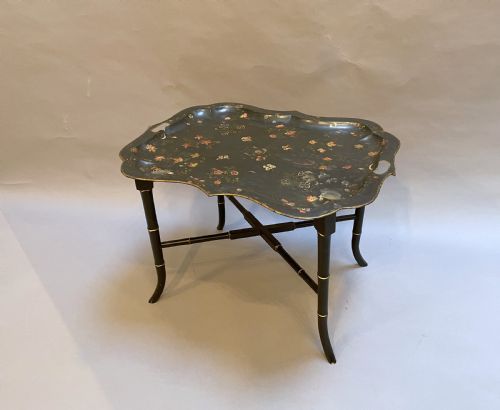


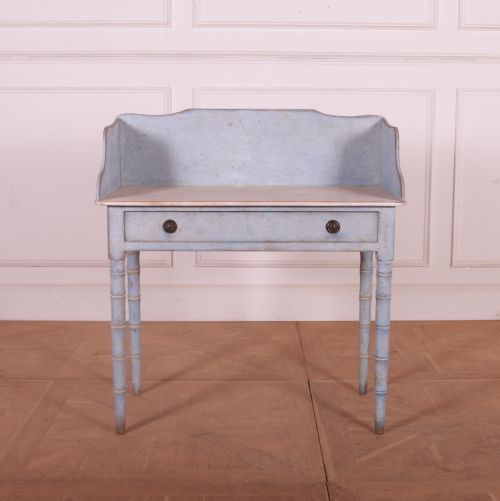

Painted Faux Bamboo Table
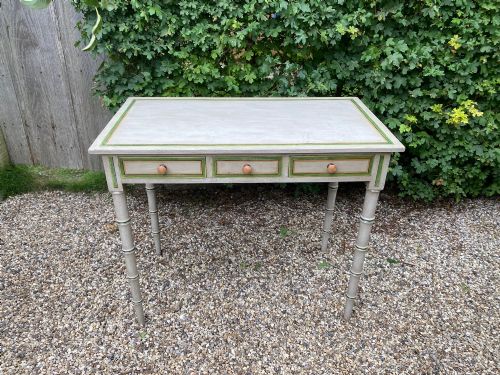
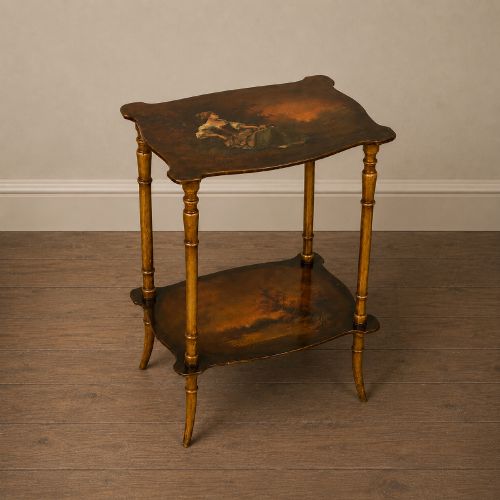
A painted faux bamboo table brings whimsical neoclassical charm to a room through clever imitation woodturning.
Painted Faux Bamboo Table
A painted faux bamboo table is a piece of furniture designed to imitate natural bamboo through woodturning and hand finishing. When you search for this phrase, you find a variety of forms ranging from writing desks to side tables and nests.
The versions most commonly met on this page date from the nineteenth century and the Regency era, utilising painted wood, softwood, and lacquer. These tables often appear in side, occasional, or writing formats, sometimes featuring gilt highlights or toleware trays.
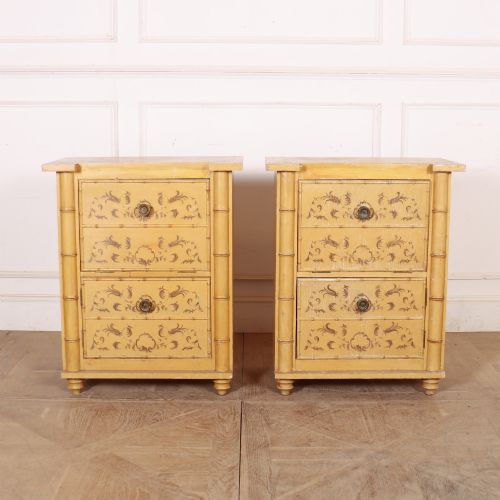
Originating in periods that favoured exotic and whimsical design, such as the Regency and Aesthetic Movement, these items bring distinct character to interiors. They serve practical functions as bedside cabinets or coffee tables while maintaining a decorative silhouette.
Materials and construction
The construction typically relies on turning softwood or hardwood on a lathe to recreate the characteristic jointed nodes of natural bamboo. Artisans then apply layers of paint, often in ochre, alongside lacquer or gilt details to enhance the illusion.
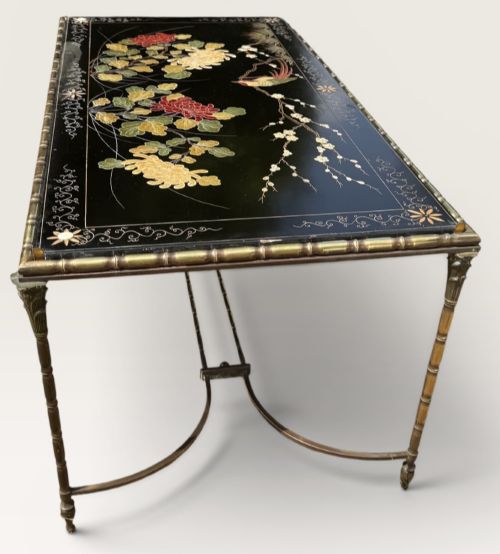
Surfaces frequently feature hand-painted floral motifs or decorative finishes applied over a painted wood base. Metal components such as brass occasionally appear on related tray stands or structural supports.
The inventory includes side tables, writing tables, occasional tables, nests of tables, and bedside cabinets.
Factors of quality
Quality in these pieces depends heavily on the finesse of the turning and the preservation of the original painted surface. Finer examples display crisp, convincing bamboo nodes carved into the wood rather than superficial decoration.
The depth and execution of the hand-painted finish separate superior pieces from simpler utilitarian items. Original paintwork, such as untouched ochre surfaces, commands greater interest than later repainting.
Maison Bagues
The Painted Faux Bamboo Table Glossary
- Faux bamboo
- Simulated bamboo created by turning wood on a lathe to mimic natural cane joints. This technique was popular in nineteenth-century furniture design.
- Toleware
- Painted or enamelled sheet metal utilised for trays and decorative objects. These trays are frequently mounted on folding or fixed stands to serve as tables.
- Ochre
- An earthy natural pigment varying from light yellow to brownish-yellow. It frequently provides the base colour for nineteenth-century painted furniture.
- Étagère
- A set of open shelves or tiers used for displaying small objects or serving. These pieces often feature lightweight frames and multiple surfaces.
- Regency
- An English design period spanning the early nineteenth century known for classical restraint and exotic influences. Furniture from this era often incorporates simulated materials.
Painted Faux Bamboo Table: Frequently Asked Questions
What is a faux bamboo table?
A faux bamboo table is a wooden item turned and painted to resemble natural cane. Craftsmen carved annular rings into the wood to replicate the characteristic nodes of bamboo.
These pieces were especially popular during the nineteenth century and Regency periods, offering a lighter, more exotic alternative to standard timber furniture.
Where were they used?
These tables served various domestic functions in nineteenth-century homes, acting as writing surfaces, bedside cabinets, or occasional stands. Their lighter construction allowed them to be moved easily between sitting rooms and bedrooms.
Tray tables and nests of tables provided flexible surfaces for entertaining and serving refreshments. Conservatories and orangeries also housed metal variants designed for brighter spaces.
How do I spot original paint?
Original paint exhibits natural craquelure, subtle fading, and wear consistent with age rather than artificial distress. Examining the surface under magnification can reveal earlier layers and period pigments beneath topcoats.
Later overpainting often obscures the crispness of the underlying woodturned joints. Patina accumulated over decades gives genuine nineteenth-century pieces a softer visual depth.