






Grey Painted Writing Table
A grey painted writing table brings understated elegance to a room, offering a functional surface rooted in centuries of craftsmanship.
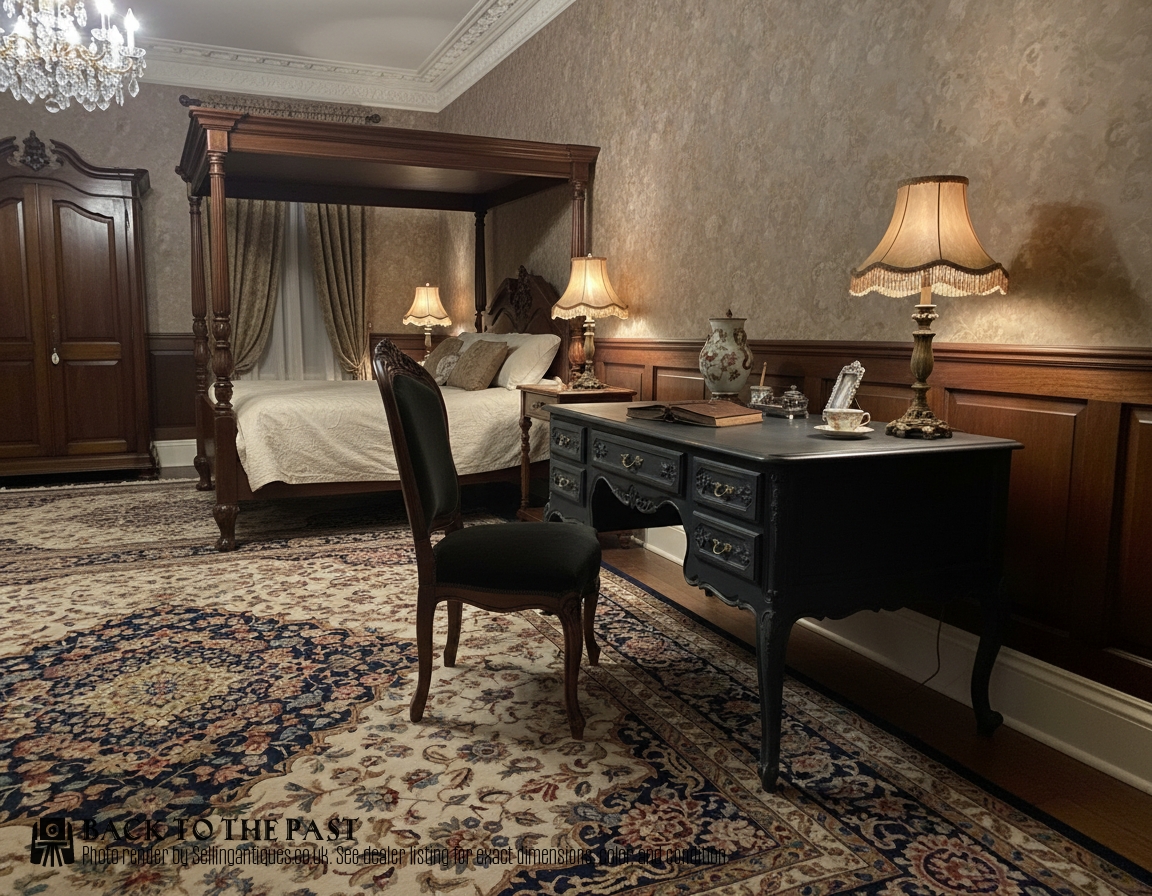
Grey Painted Writing Table
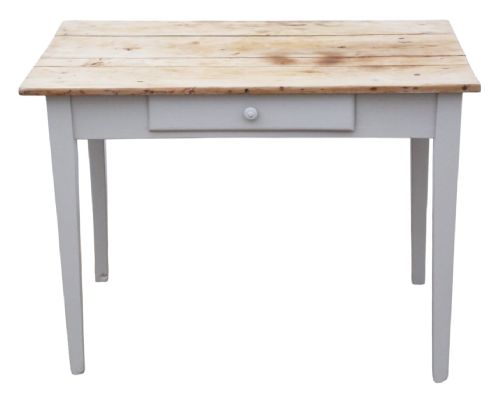
A grey painted writing table encompasses various utilitarian forms designed for correspondence and light study, often discovered in styles ranging from French Provincial to Swedish Gustavian. These items predominantly date from the nineteenth century, reflecting periods such as the Regency and Victorian eras alongside specific years like 1890, 1900, and 1920.
The objects listed under this search phrase span multiple related categories including writing tables, writing desks, side tables, and kitchen tables. Buyers frequently encounter pieces originating from English, French, and Swedish workshops, each bringing distinct regional characteristics to the fundamental form.
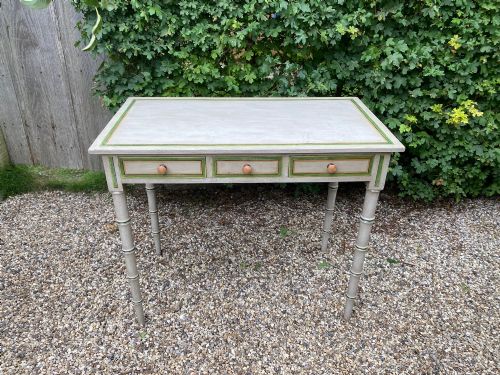
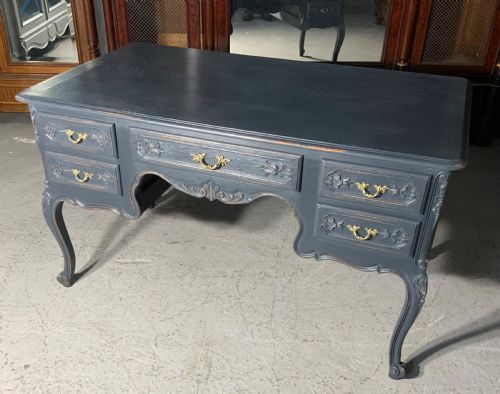
Makers adapted basic timber frames into specific writing furniture, sometimes incorporating design influences such as faux bamboo or French Rococo detailing. The overarching aesthetic relies on painted finishes applied over pine, softwood, oak, walnut, or general painted timber.
How they were made
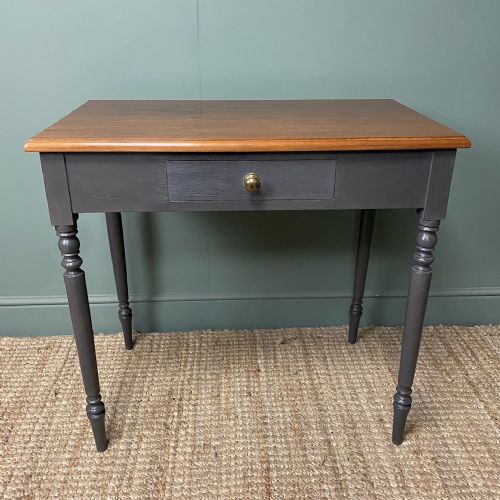
Carpenters typically constructed the foundational frames of these tables using pine, softwood, oak, or walnut, sometimes enhanced with decorative brass hardware. Construction methods relied on traditional joinery to ensure stability in daily domestic use.
Surface treatments involved applying layers of paint directly onto wood or timber substrates, creating the characteristic grey painted finish seen across Gustavian, French Country, and English country traditions. Some examples feature carved wooden elements, particularly within French Rococo and later nineteenth-century interpretations.
One clever nineteenth-century maker decided humble pine could pass for exotic bamboo, carving a side table into botanical illusion.
What varies in quality
The distinction between standard domestic items and finer examples often rests upon the sophistication of the carved detailing and the fidelity of regional styles, such as authentic Swedish Gustavian proportions versus later adaptations. Faux bamboo turning and precise decorative paint application require considerable skill, elevating the visual interest of a piece.
Selection of primary timbers also influences the character of the table, with dense hardwoods like oak and walnut offering different structural qualities compared to pine or softwood carcases. The integrity of the original painted surface layer remains a key consideration for collectors evaluating period authenticity.
Gillows Design
The Grey Painted Writing Table Glossary
- Gustavian
- A Swedish neoclassical style originating in the late eighteenth century, characterised by restrained carving and pale painted finishes. This aesthetic heavily influences many nineteenth-century Swedish writing desks.
- Faux bamboo
- A decorative technique where wood is carved and painted to imitate natural bamboo stems. It appears frequently on nineteenth-century Regency period tables.
- Rococo
- An ornate artistic style featuring asymmetrical scrollwork and shell motifs, often seen in French decorative pieces. This style adds dramatic curves to table legs and aprons.
- Softwood
- Timber derived from conifers such as pine, commonly utilised for the carcase construction of painted furniture. It provides a lightweight yet durable base for painted finishes.
- Side table
- A small functional table intended to sit against a wall or beside seating, frequently overlapping in form with early writing desks.
Grey Painted Writing Table: Frequently Asked Questions
Where were these tables used?
These pieces served primarily in domestic studies, drawing rooms, and country house chambers for correspondence and record-keeping. Smaller versions functioned flexibly as side tables or lamp tables.
Their domestic placement meant they were built to handle daily administrative tasks while complementing interior decoration schemes.
How do I care for painted wood?
Maintaining painted furniture requires keeping surfaces away from direct heat sources and excessive moisture to protect the finish. Regular dusting with a soft, dry cloth preserves the integrity of the paint layer.
Harsh chemical cleaners should be avoided entirely, as they can strip or discolour historical painted timber surfaces over time.
What defines Swedish Gustavian style?
Swedish Gustavian design draws inspiration from French neoclassical forms but adopts a lighter, more restrained palette and ornamentation. Grey and pale painted finishes are typical hallmarks of this tradition.
Tables from this design lineage often feature fluted legs and subtle carved details rather than heavy, ornate embellishments.