
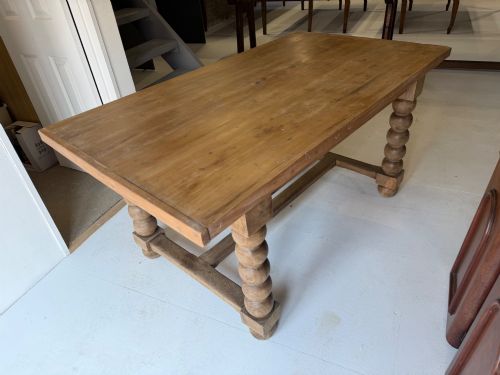
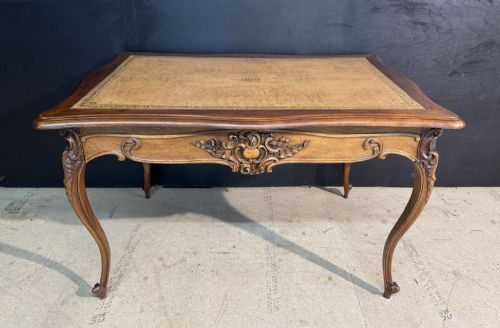
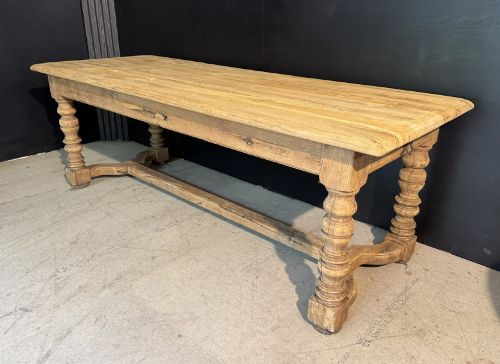
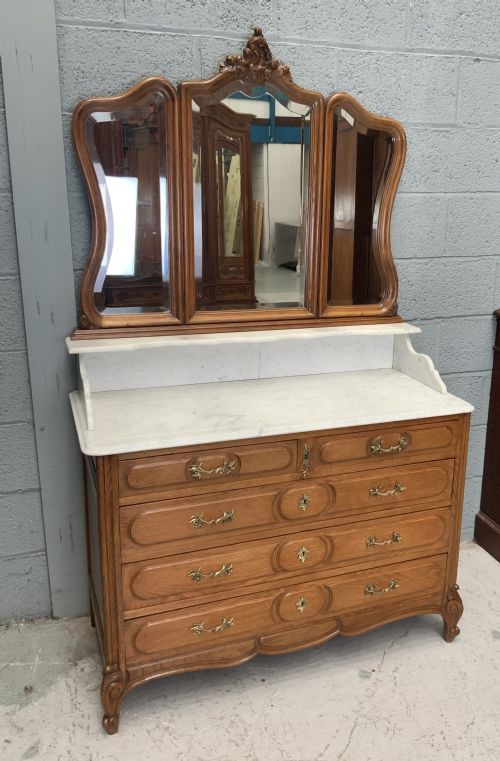


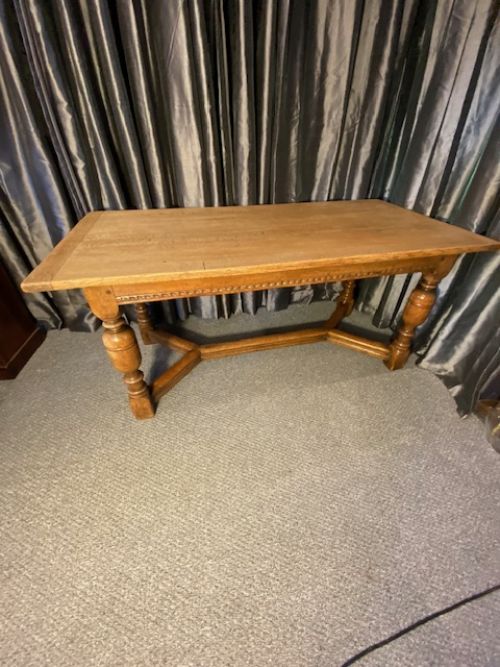

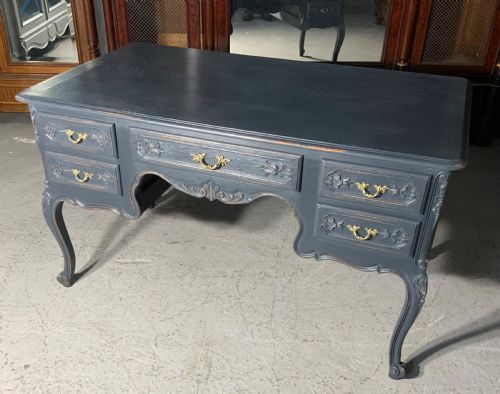


Carved French Oak Desk
A carved french oak desk brings solid Continental craft and heavy timber grain directly into a working study.
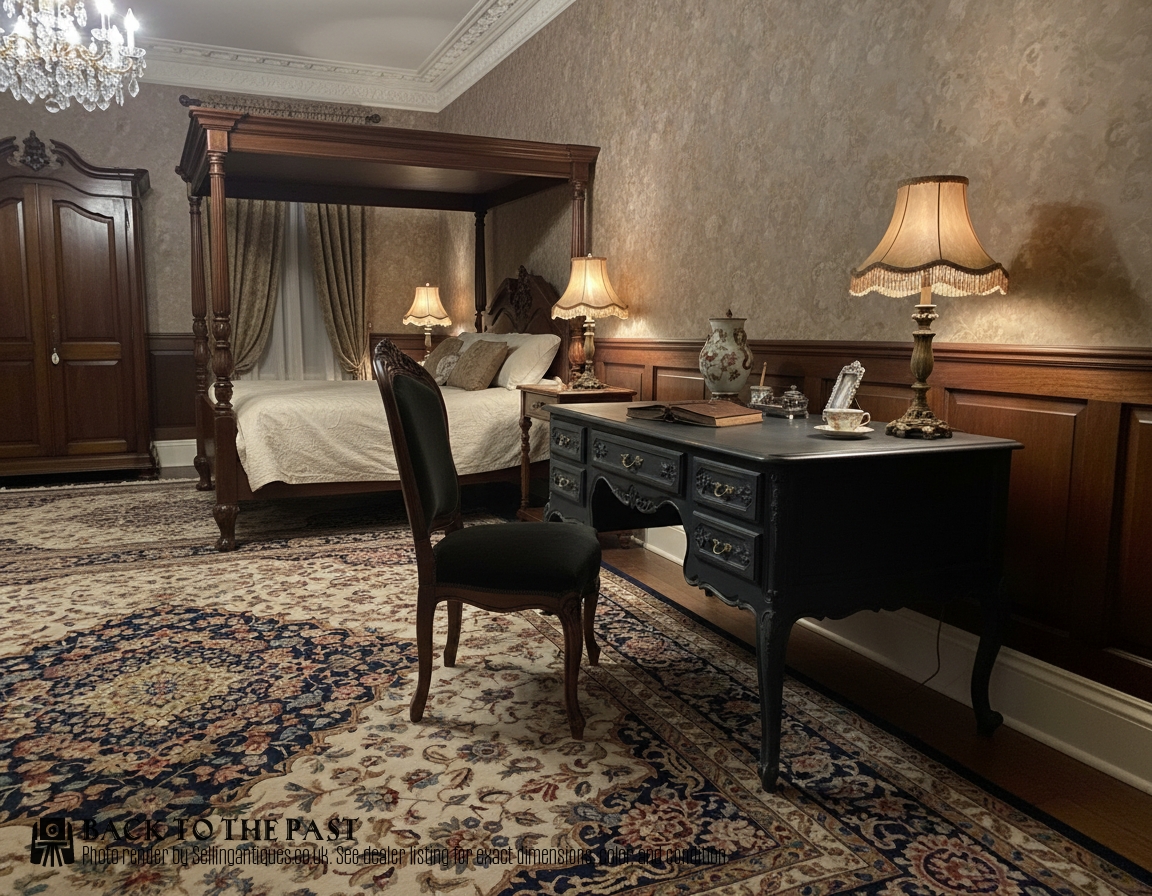
Carved French Oak Desk
A carved french oak desk combines practical writing surfaces with robust Continental woodwork. Buyers searching this phrase encounter substantial pieces originating from nineteenth-century workshops as well as provincial farmhouse traditions.
The selections available range from simple freestanding writing tables to elaborate partners desks fitted with leather inserts and carved panels. Most examples rely on heavy timber construction rather than delicate veneers.
Provincial interpretations feature simpler moulded edges, whilst revival styles incorporate deeper relief carving along the friezes and drawers. Each form provides a functional workspace anchored by dense native hardwood.
How they were made
Makers utilised solid oak alongside secondary timbers, securing joints with traditional pegged mortise and tenon construction. Surfaces often display hand-chiselled relief work and moulded drawer fronts.
Fittings include cast brass handles, inset leather writing surfaces, and occasional iron supports. Timber was left natural, bleached, or painted depending on the regional workshop style.
One recorded desk comes carved with cherubs, reminding us that nineteenth-century craftsmen enjoyed adding whimsical faces to heavy office furniture.
What varies in quality
Quality rests on the depth and crispness of the hand-carved ornamentation across the friezes and legs. Deeply undercut foliage and figural motifs demand greater skill than shallow machine stamping.
The integrity of the structural joinery and the selection of quarter-sawn oak boards determine durability. Finer examples retain original brass hardware and balanced proportions across double-sided pedestals.
Étienne Kohlmann
The Carved French Oak Desk Glossary
- Partners desk
- A large freestanding desk designed with drawers on both sides to accommodate two users facing each other. These often feature inset leather writing surfaces and substantial pedestals.
- Bonheur de jour
- A light lady's writing desk featuring a small cabinet or set of drawers superstructures above the main writing surface. The form appeared frequently during the nineteenth century.
- French Provincial
- Furniture produced in regional provincial workshops outside Paris, combining rustic utility with local interpretations of court styles. Oak served as the primary structural timber.
- Renaissance Revival
- A nineteenth-century design movement drawing inspiration from sixteenth-century architectural and sculptural motifs. Pieces display heavy relief carving, pilasters, and classical symmetry.
- Parquet
- Geometric wood inlay patterns arranged across tabletops or drawer fronts. This technique created decorative surfaces using contrasting timber grains.
Carved French Oak Desk: Frequently Asked Questions
How do I clean a carved oak desk?
Dust surfaces regularly with a dry, soft cloth to prevent grit accumulation within the carved recesses. Apply a traditional beeswax sparingly to nourish the oak without building up heavy residues.
Avoid commercial silicone sprays and excessive moisture, which can damage aged timber finishes and lift glued joints.
Are these desks suitable for daily computer work?
Most antique writing desks accommodate modern laptops comfortably, provided the writing height matches your seating requirements. Freestanding library tables offer ample knee clearance beneath the frieze.
Care must be taken with integrated leather tops, which benefit from protective blotters to prevent scratching from modern hardware.
How can I tell a provincial desk from a revival piece?
Provincial furniture prioritises practical construction with restrained, local interpretations of ornament. The carving is often simpler and integrated directly into the structural boards.
Renaissance or Rococo revival desks exhibit heavier, more dramatic sculptural flourishes, deeply undercut motifs, and deliberate classical symmetry.
Did these desks always have leather inserts?
Many nineteenth-century writing tables and partners desks featured inset panels of tooled leather or hide to provide a smooth writing surface. Simpler provincial examples often utilised plain timber tops without inserts.
Surviving leather panels frequently show age-related patina, whilst replacements are common on restored pieces.