
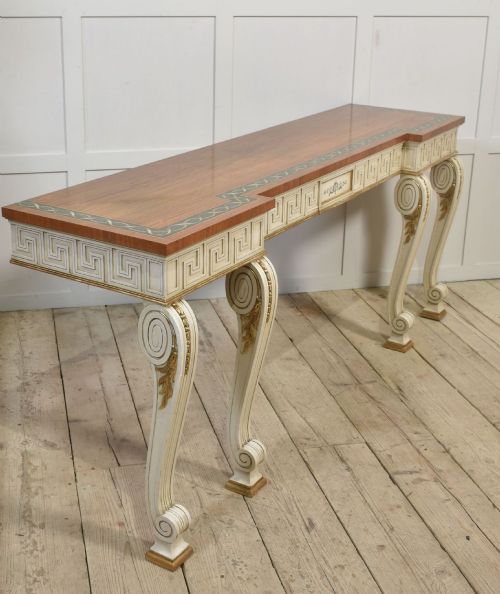


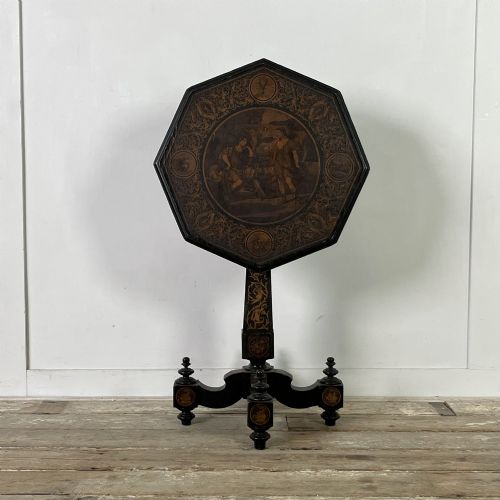


Regency Painted Side Table
A regency painted side table brings lightness and classical geometry to a room through painted wood surfaces and fine decorative detail.
Regency Painted Side Table
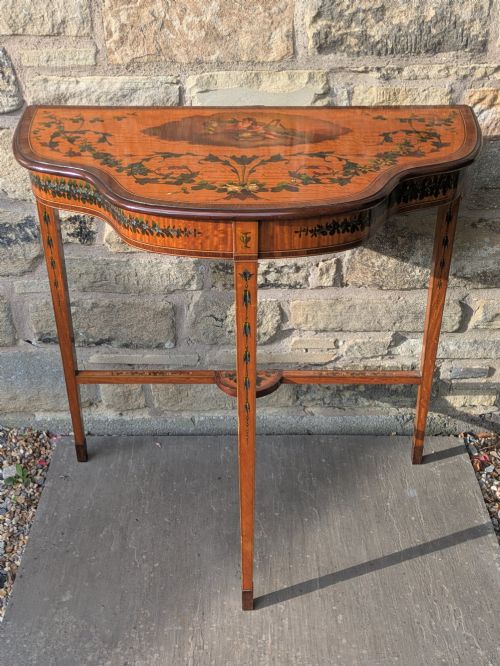
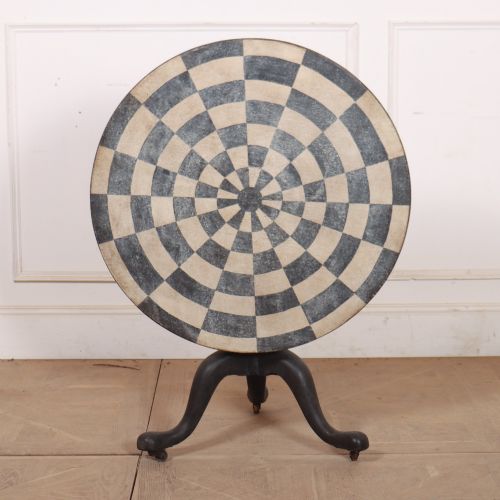
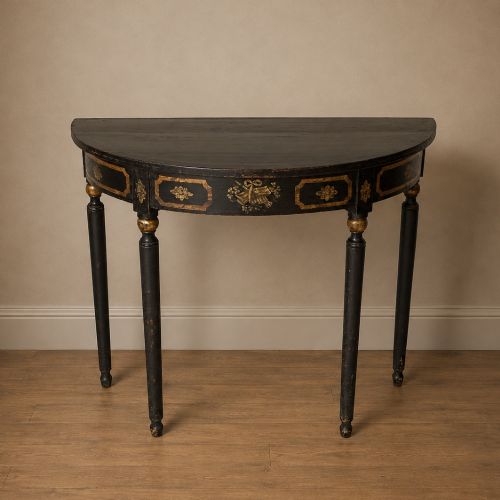
A regency painted side table is a compact surface intended for display or occasional use, originating primarily from the nineteenth century alongside later revivals. The forms include demi-lune console tables, tilt-top tables, tray tables, and occasional tables with painted or lacquered finishes.
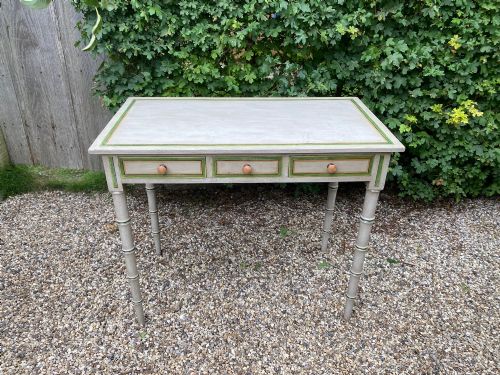
The materials span painted wood, satinwood, mahogany, and pine, often finished with gilt or brass details. Many pieces adopt neoclassical lines, Chinoiserie decoration, or faux bamboo framing to suit the decorative tastes of the period.
Buyers encounter examples ranging from authentic nineteenth-century pine and satinwood pieces to early twentieth-century revival items. Console tables and smaller lamp or bedside tables dominate the selection, showing both simple utilitarian construction and elaborate decorative schemes.
Materials and construction
Makers utilised softwoods like pine alongside hardwoods such as mahogany and satinwood to build the foundational carcase of each table. Surfaces were then prepared for decorative treatments through smoothing and priming before any pigment was applied.
Finishing involved hand-painting, lacquer work, ink work, and the application of gold leaf or parcel gilt highlights. Details such as faux bamboo turning or hand-painted geometric and Chinoiserie motifs required specialist brushwork directly onto the wood or tray surface.
The furniture forms span compact lamp tables, drop-leaf Pembroke tables, nests of tables, and wall-anchored console tables.
Distinctions in quality
The integrity of the original paint surface determines much of the distinction between examples, with untouched historic pigment carrying more visual weight than later overpainting. Subtle hand-painted details, crisp lines on geometric or Chinoiserie motifs, and the preservation of original ochre or black grounds separate finer outputs from standard work.
Joinery and timber selection also play a part, distinguishing robust cabinetmaking from lighter occasional pieces. Tables retaining original brass mounts, intact lacquer, and well-executed faux bamboo turnings demonstrate superior workshop standards from their period.
Gillows·Thomas Hope
The Regency Painted Side Table Glossary
- Demi-lune
- A half-moon shape used for console tables designed to sit flush against a wall. This profile became popular for serving and display tables during the neoclassical period.
- Chinoiserie
- European theatrical interpretation of Chinese artistic motifs, featuring hand-painted figures, landscapes, and pavilions on lacquered surfaces.
- Faux bamboo
- Wood turned and painted to imitate natural bamboo stalks, frequently utilised for legs and framing in Regency seating and small tables.
- Parcel gilt
- The practice of applying gold leaf selectively to specific raised or carved portions of a painted wooden surface.
- Tilt-top table
- An occasional table featuring a mechanism that allows the wooden top to pivot vertically when not in use, saving floor space.
Regency Painted Side Table: Frequently Asked Questions
How do I spot original paint on a Regency table?
Examine the surface under magnification to check for natural crazing, micro-cracking, and wear patterns consistent with age. Original pigment settles into the grain of the wood differently than modern synthetic paints applied during later restorations.
Look at areas subject to natural handling, such as table edges and legs, where genuine historic paint thins uniformly. Later overpainting often conceals the underlying timber preparation and lacks the subtle tonal variations found in nineteenth-century work.
Where should I place a console table?
Console tables sit comfortably in hallways, living rooms, or dining spaces where floor space is limited. Their flat backs allow them to anchor against a wall while displaying lamps, ceramics, or small decorative objects.
Because many examples feature finished backs or delicate painted tops, avoid positioning them in direct, harsh sunlight that could fade original pigments. Pairing a demi-lune or rectangular console with a mirror creates a traditional focal point in an entranceway.
What is the difference between a side table and a lamp table?
Side tables generally offer slightly larger surface areas and taller proportions designed for general placement beside seating or against walls. Lamp tables are typically smaller occasional pieces intended specifically to hold lighting.
In older periods, these forms overlap considerably, as makers adapted tables for multifarious domestic tasks. The primary indicator is physical scale rather than a strict functional categorisation from the workshop.
How do I care for a painted antique wooden surface?
Dust surfaces gently with a soft, dry microfibre cloth to prevent particulate accumulation from scratching the delicate paint layers. Avoid commercial polishes, chemical sprays, and excessive moisture, which can soften historic lacquer or lift original pigments.
Maintain a stable indoor environment away from sudden temperature shifts and radiators to prevent the underlying wood from expanding. Professional conservation remains the safest route for addressing structural movement or significant surface flaking.