
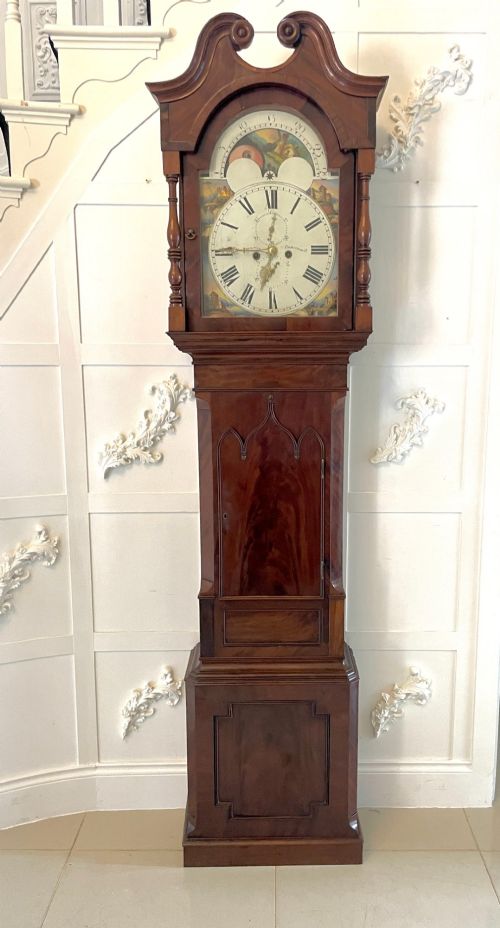
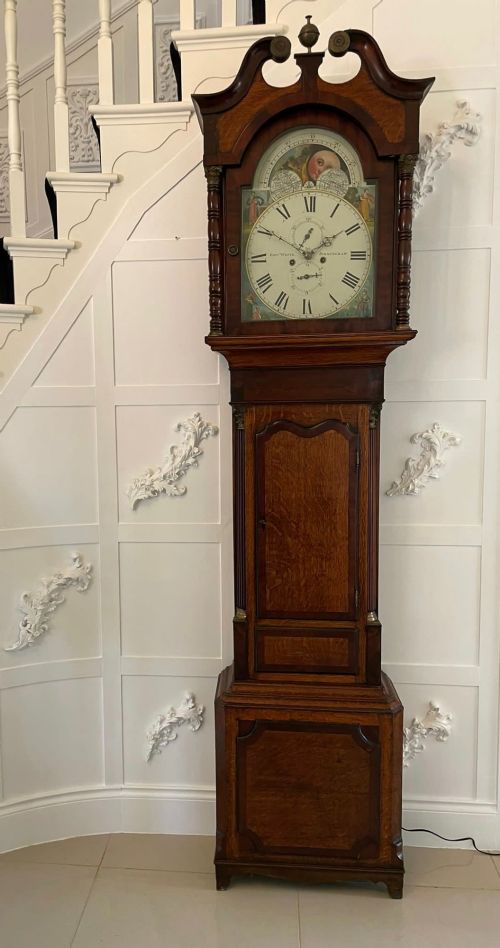
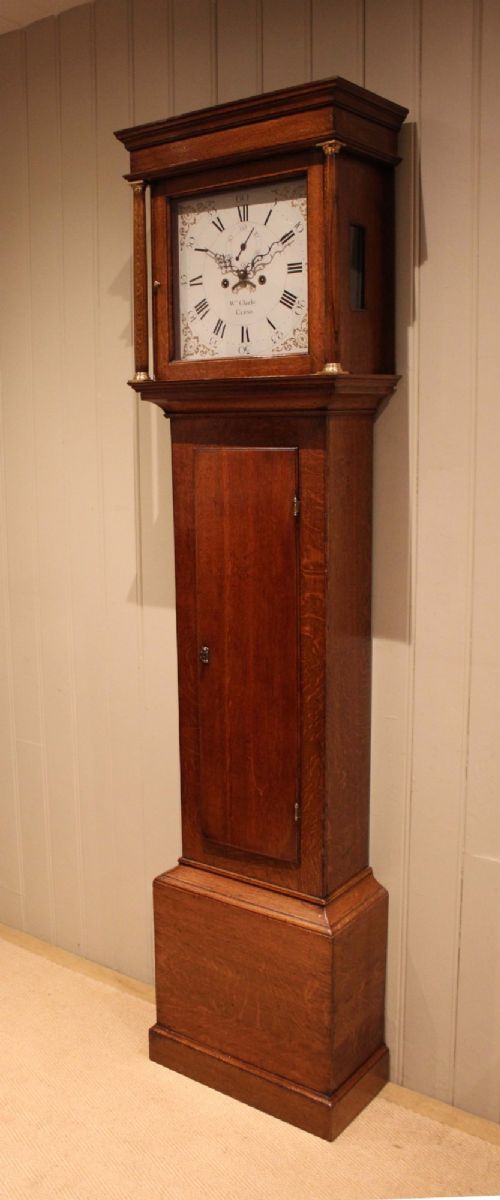
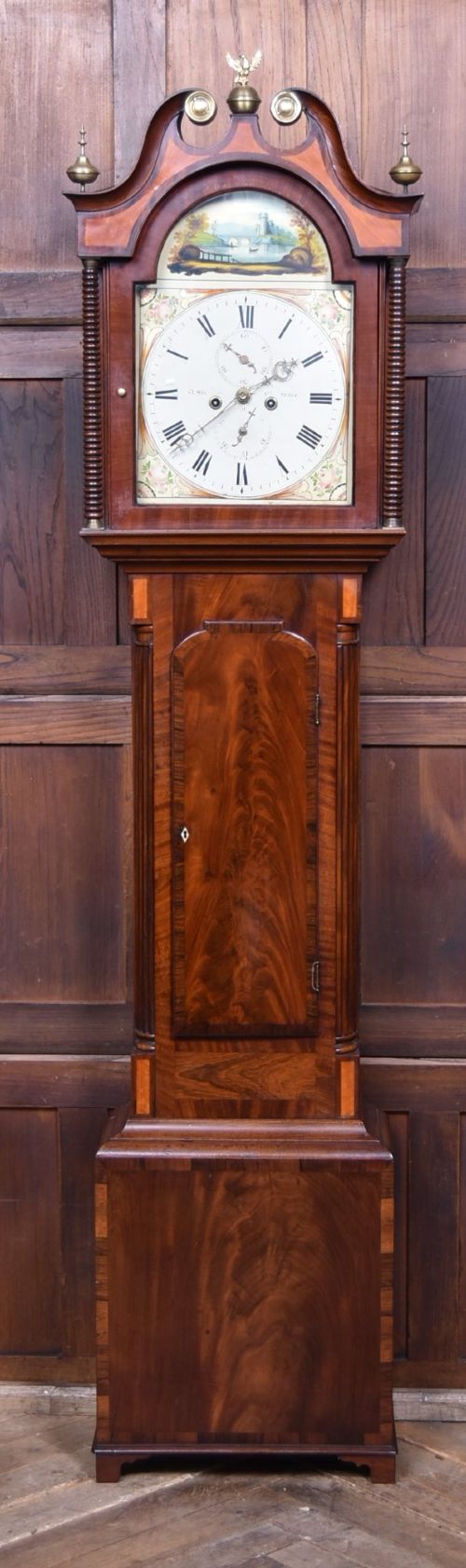

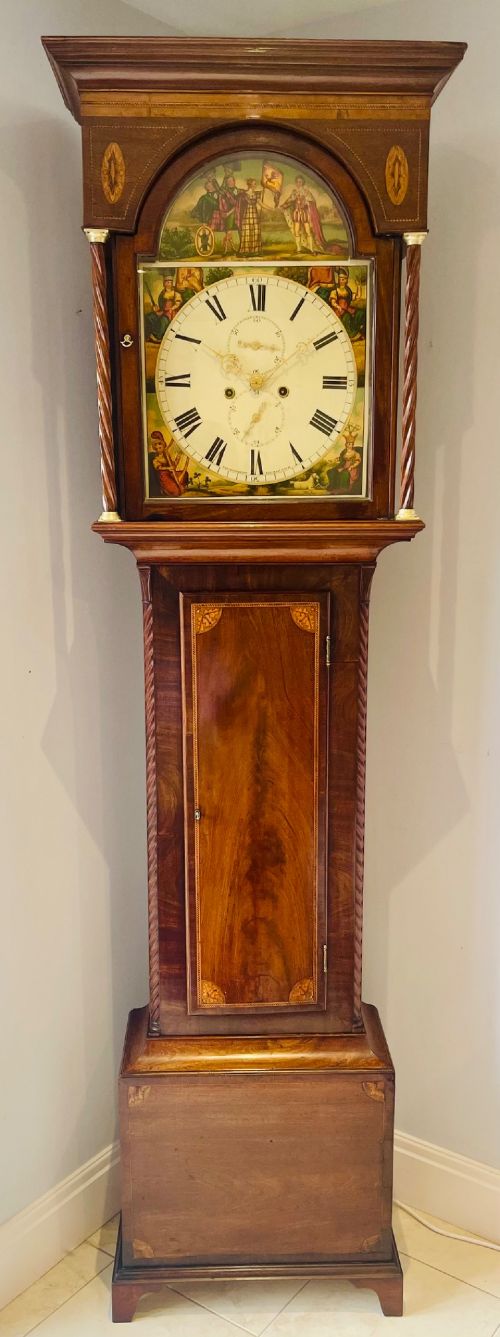
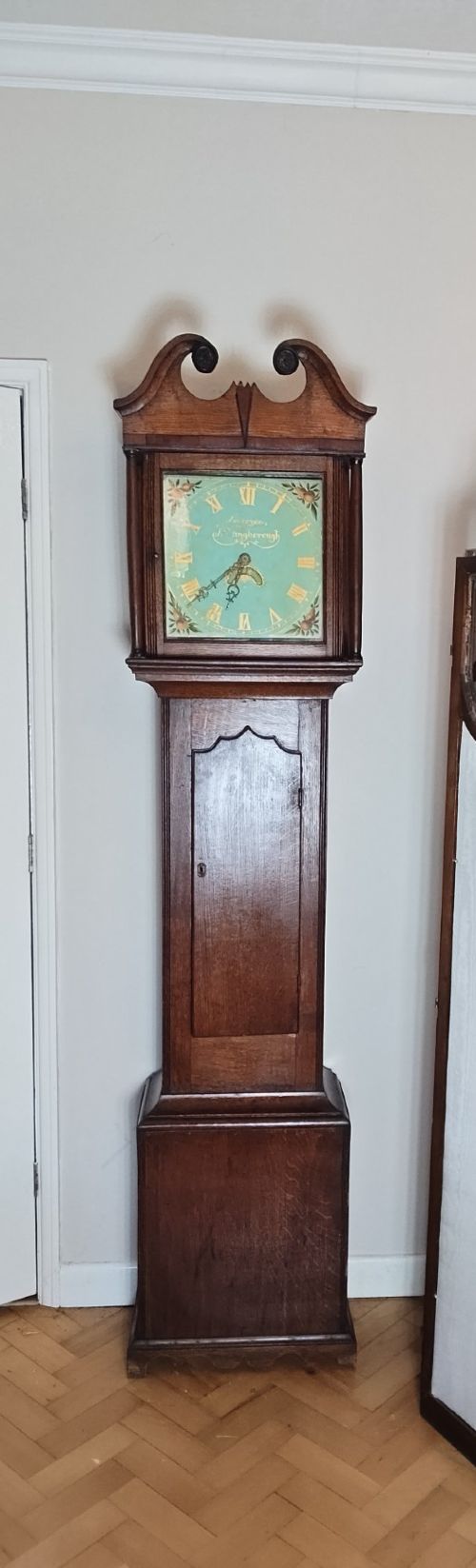
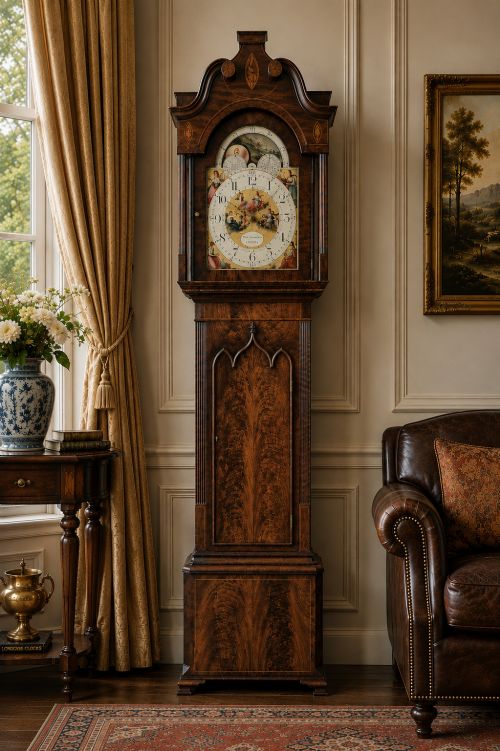
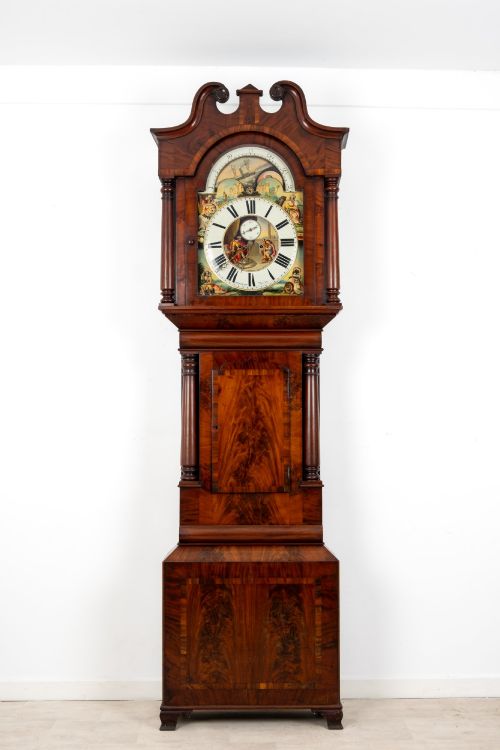
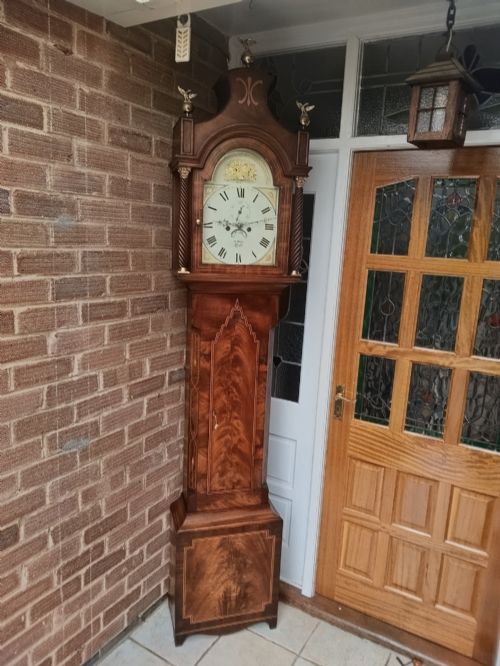
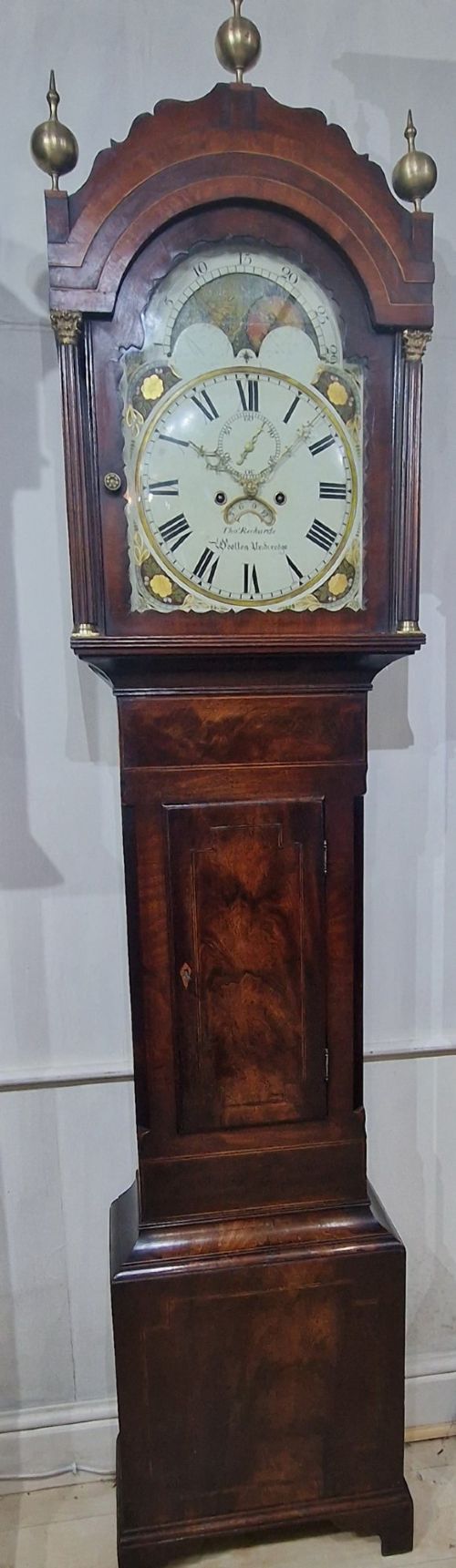
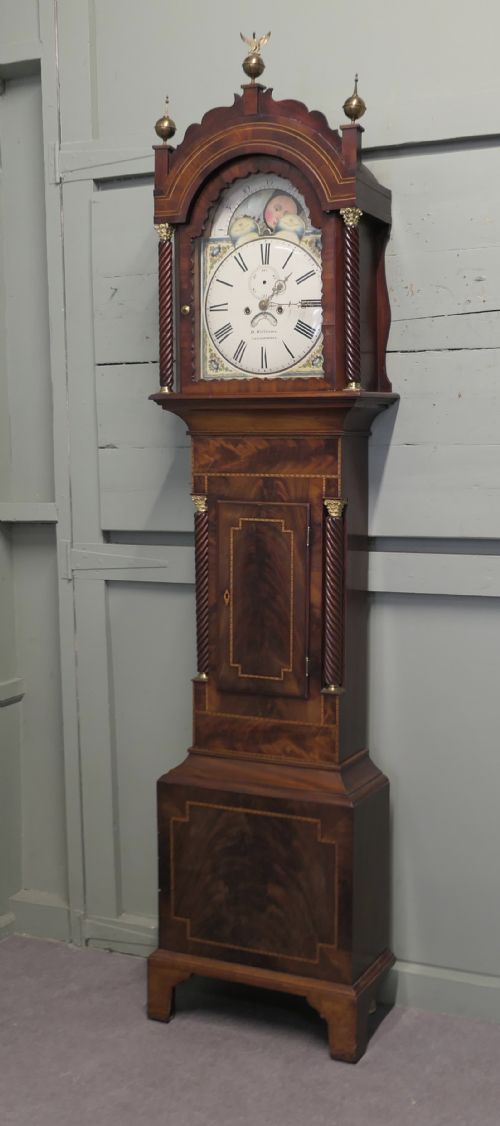
Painted Dial Tallcase Clock
A painted dial tallcase clock brings together timekeeping and regional craftsmanship, offering a commanding presence in a room.
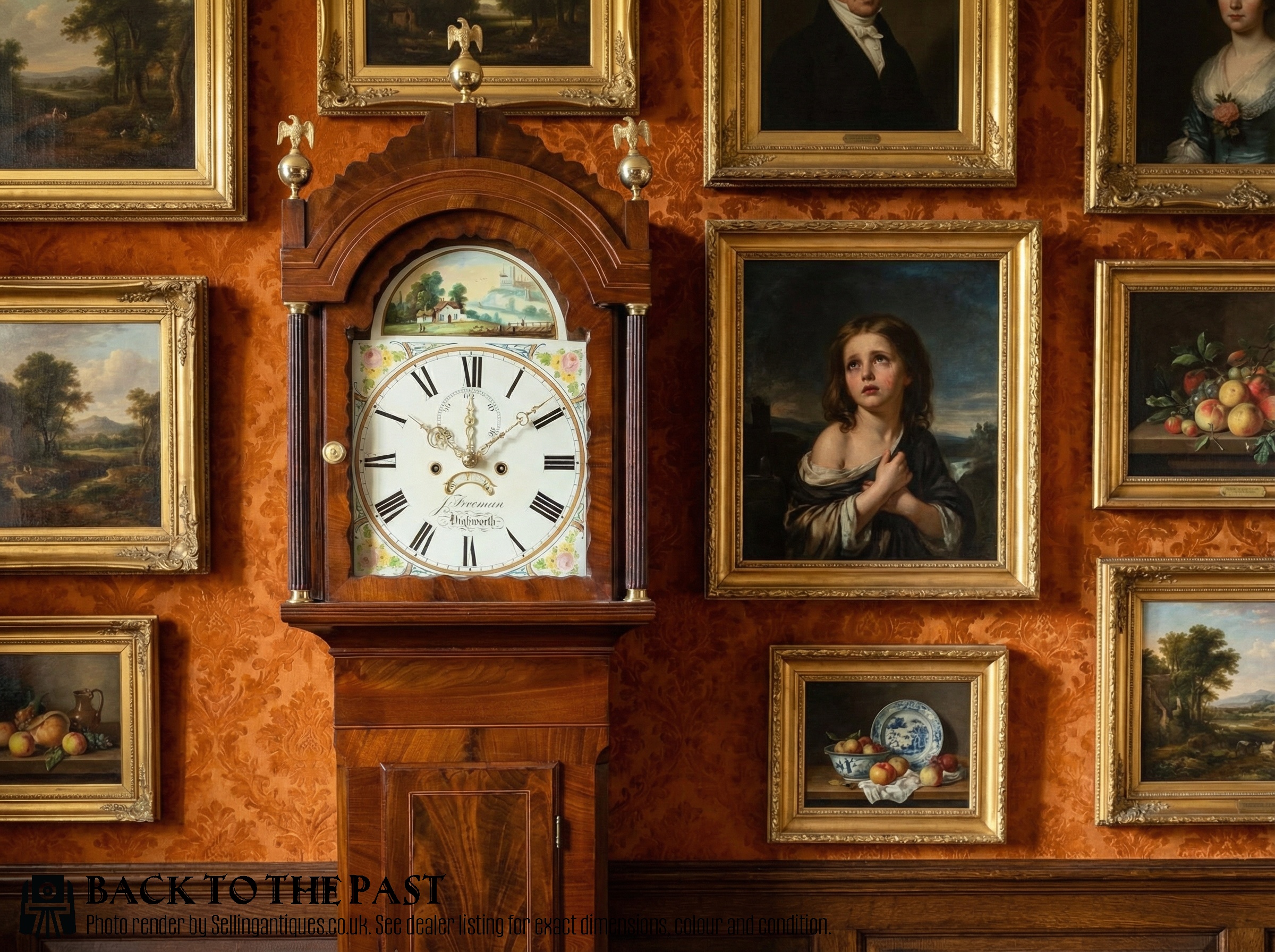
Painted Dial Tallcase Clock
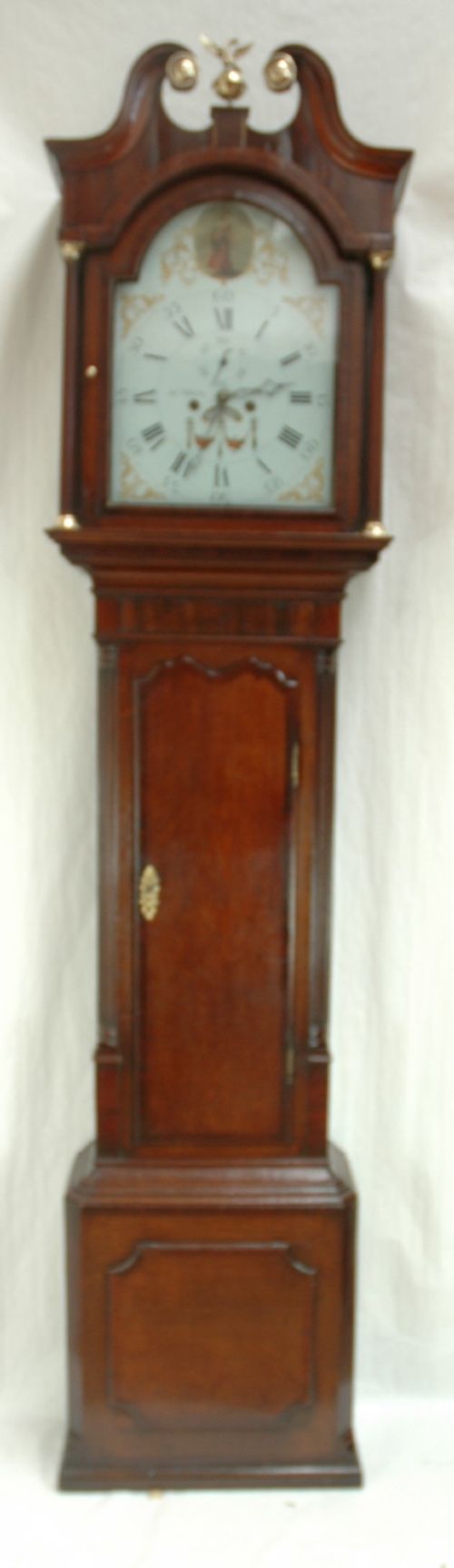
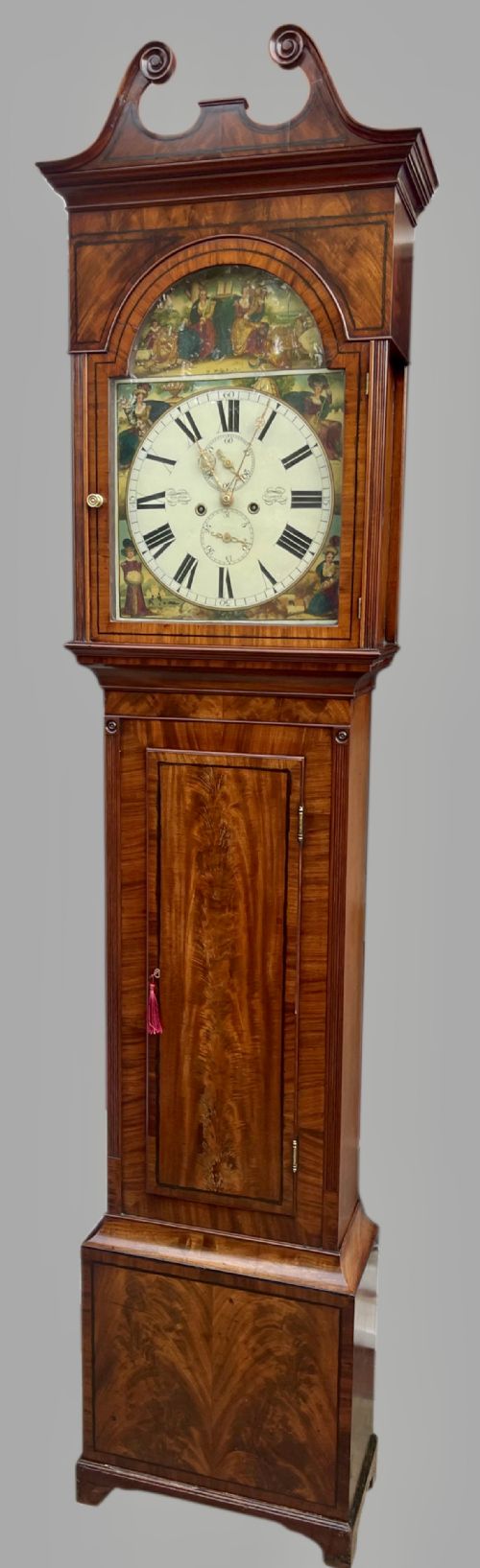
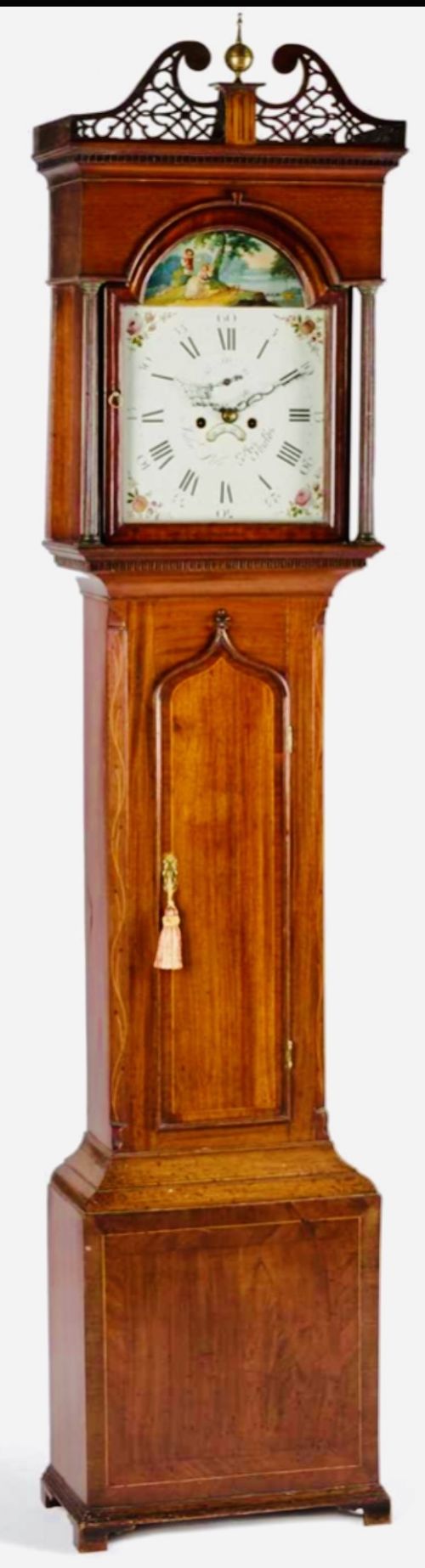
A painted dial tallcase clock stands as a prominent piece of furniture housing a weight-driven movement within a tall wooden case. These items emerge from periods spanning the eighteenth and nineteenth centuries, taking forms commonly known as longcase, grandfather, or grandmother clocks.
The versions most likely to appear on this page include Georgian and Victorian examples housed in mahogany or oak. Regional pieces from Scotland, Wales, and various English towns surface frequently among the listings.
Makers sign the faces with town names, recording local horological history across the British Isles. The proportion varies from full-sized floorstanding units down to smaller grandmother formats.
How They Were Made
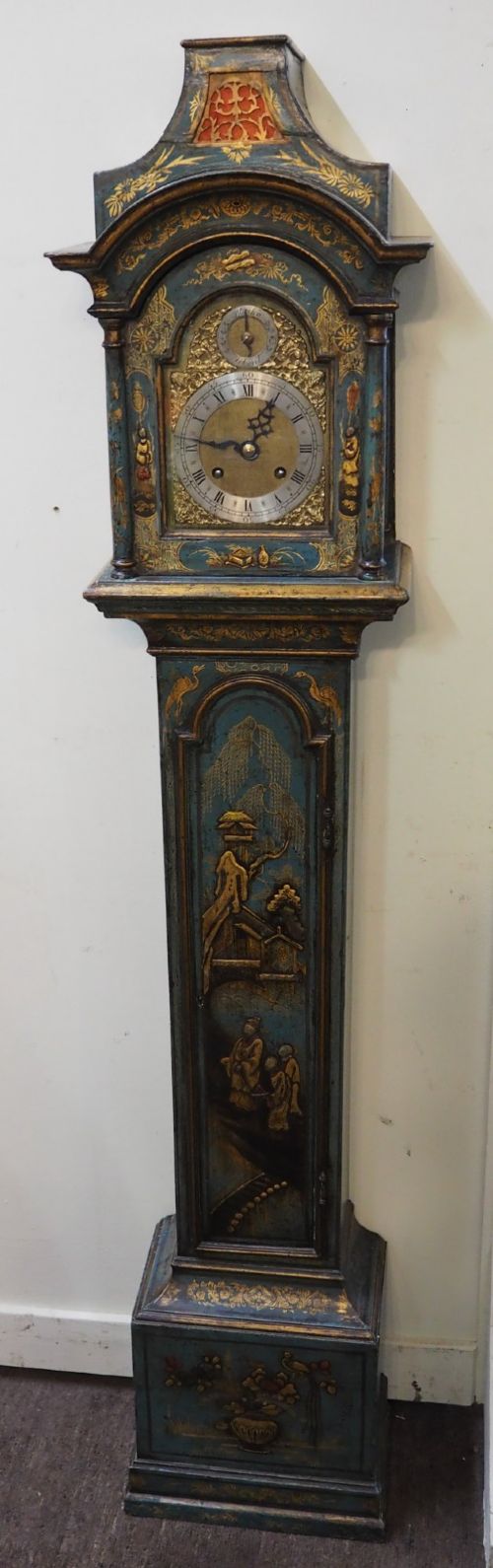
Cabinetmakers constructed the tall cases primarily from solid timbers like mahogany, oak, and occasionally pine or ash, sometimes applying flame veneers, inlay, or lacquer finishes. Glass protected the dial face while brass components governed the internal movement.
Dial faces combined iron with painted finishes, often incorporating enamel details or brass subsidiary hands for moon phases and calendar displays. Movements relied on iron and brass gear trains driven by hanging weights.
The selection encompasses regional British schools of clockmaking, spanning makers from Scotland, Wales, and English towns.
What Varies in Quality
The refinement of the painted dial artwork separates standard examples from superior pieces, particularly where detailed floral motifs or complex moonphase mechanisms are present. Hand-painted decoration by recognised regional makers elevates the visual interest of the face.
Cabinetwork execution distinguishes the range, with figured flame mahogany, crisp crossbanding, and intricate case carving marking out the finer productions. The complexity of the movement, such as eight-day durations versus thirty-hour systems, also influences the standing of the piece.
D. Straiton, Montrose·Tait, Peebles·Samuel Kellett of Bredbury·Parkinson Bros, Batley·D Williams of Crickhowell·Edward Shepley of Manchester·Thomas Webbe of New Quay·Richard Sharkey Birmingham·Thwaites, London·Charles Dowsett Of Canterbury·Edward White Birmingham·Benjamin Peers, Chester
The Painted Dial Tallcase Clock Glossary
- Tallcase clock
- An alternative term for a longcase or grandfather clock, describing a tall wooden clock case standing on the floor. These house the dial and pendulum mechanism.
- Moonphase
- A mechanism on the dial that tracks the lunar cycle through a painted rotating disc. This complication appears on many eighteenth and nineteenth-century examples.
- Grandmother clock
- A smaller version of the traditional longcase clock produced during the Georgian and later periods. It sits lower to the floor while retaining standard movement functions.
- Chinoiserie
- A decorative style employing imitation Chinese motifs, seen on lacquered clock cases. This technique adds colourful painted ornamentation to the exterior wood.
- Drum head
- A circular dial housing design set atop a tall mahogany trunk, characteristic of certain nineteenth-century variations. This head shape creates a distinct silhouette.
Painted Dial Tallcase Clock: Frequently Asked Questions
How do I wind a tallcase clock?
Winding involves raising the internal weights using a crank key inserted into holes on the painted dial face. Care must be taken not to over-wind the movement.
Most eight-day models require attention weekly, while thirty-hour versions need winding daily or slightly less often depending on the specific weight drop.
Where should I place a longcase clock?
Select an interior wall away from direct sunlight, central heating vents, and exterior doors to protect the wooden case and movement from temperature swings. A stable floor prevents vibrations that might affect the pendulum.
Ensure the surface is level so the pendulum swings evenly and the clock keeps accurate time without stopping.
What is the difference between a grandfather and grandmother clock?
A grandfather clock refers to the standard full-sized tallcase clock standing over six feet tall. These dominated hallways and principal rooms from the Georgian era onward.
Grandmother clocks are scaled-down versions produced in smaller proportions, designed to fit rooms with lower ceilings while operating on similar weight-driven principles.
How can I tell the period of a painted dial?
Style shifts in the painted iron faces, typography of the maker's signature, and spandrel decorations help identify the era. Georgian dials often feature distinct floral arches, whereas Victorian versions display different border details.
Cabinet timbers and construction methods also provide clues, as mahogany gained wider popularity in the nineteenth century alongside older oak frameworks.