

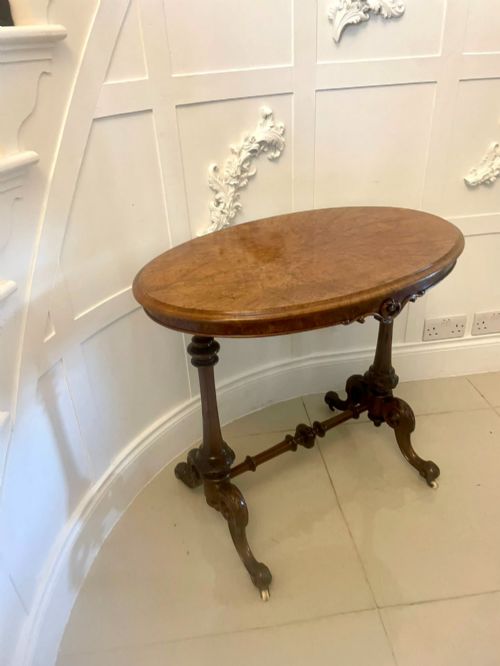
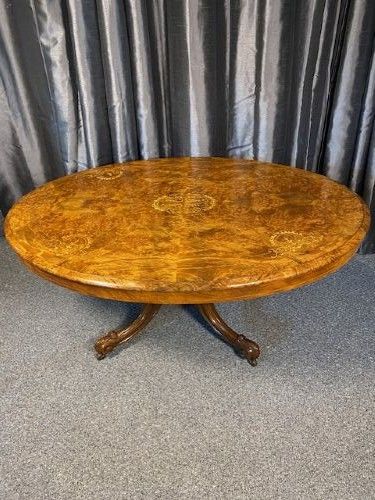
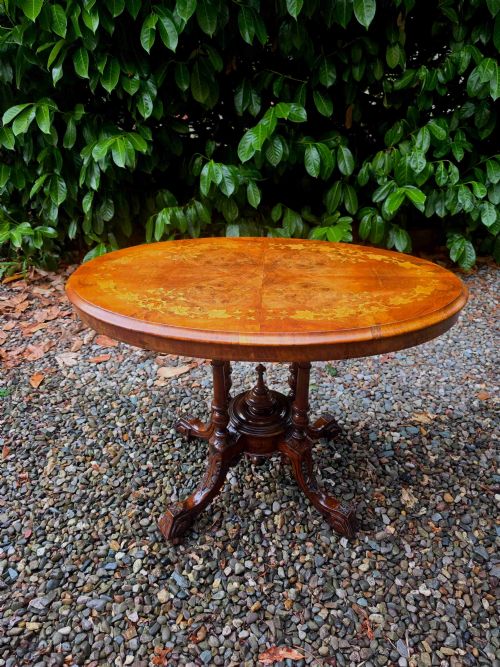
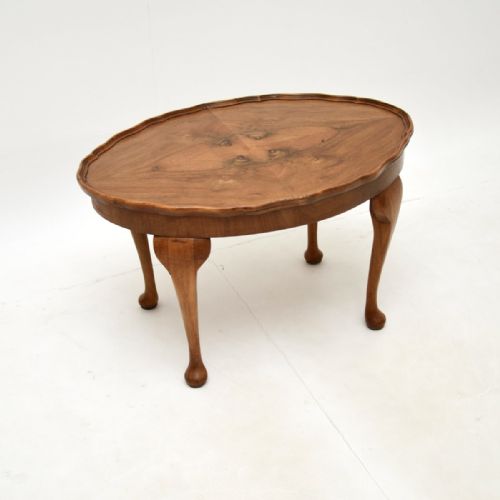
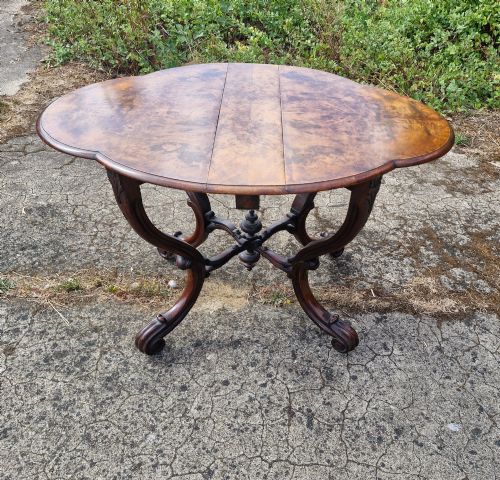
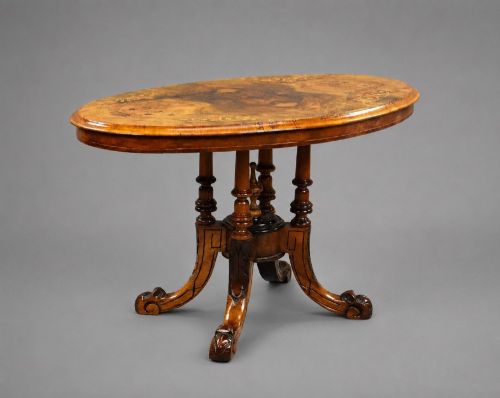
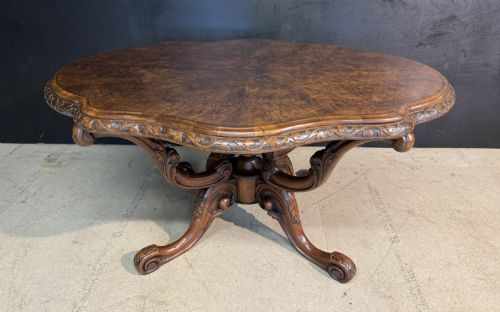
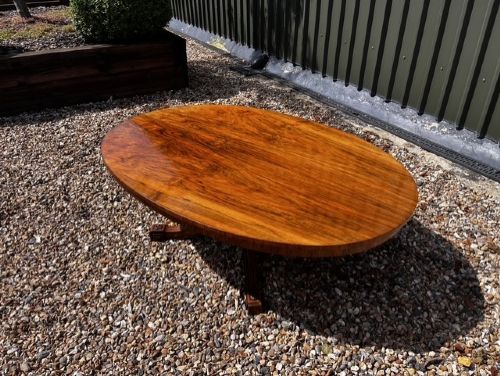
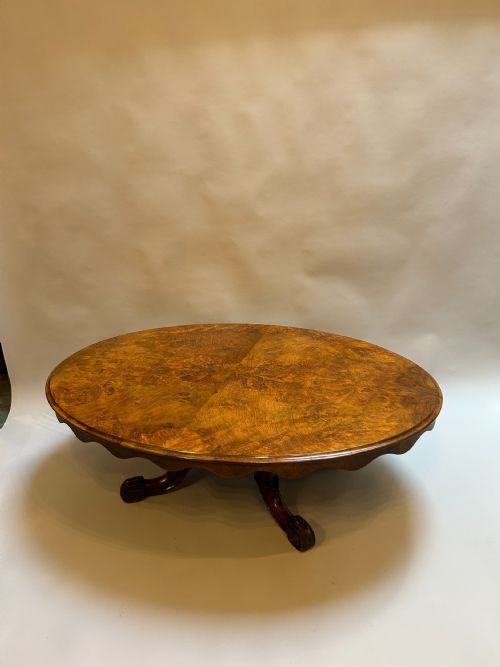
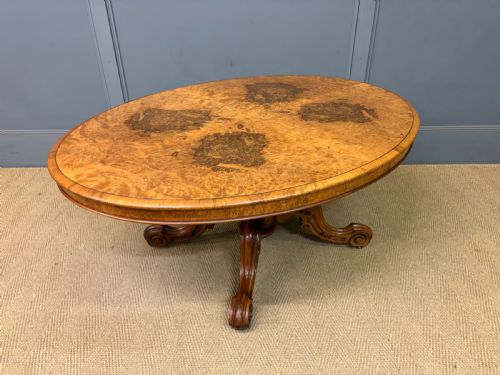
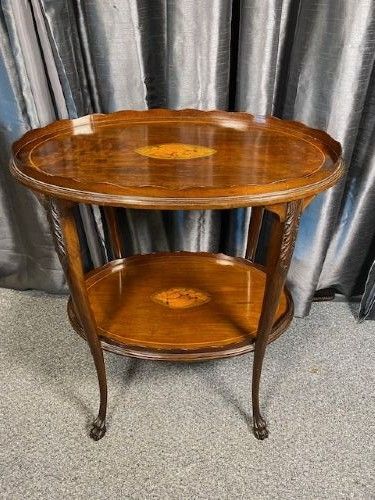
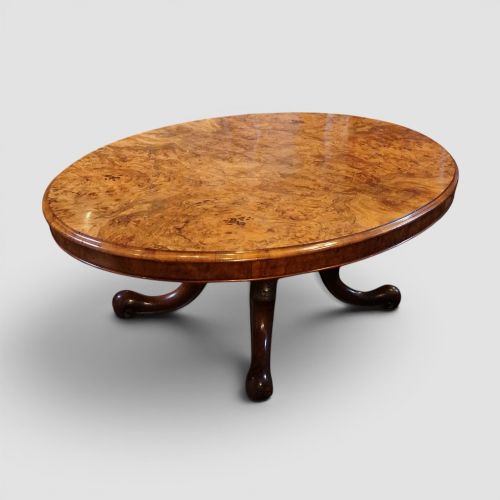
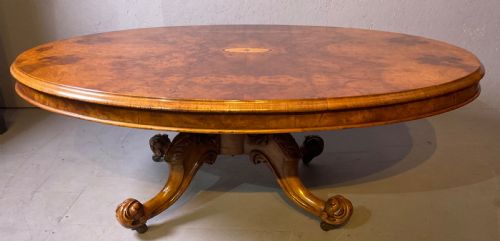
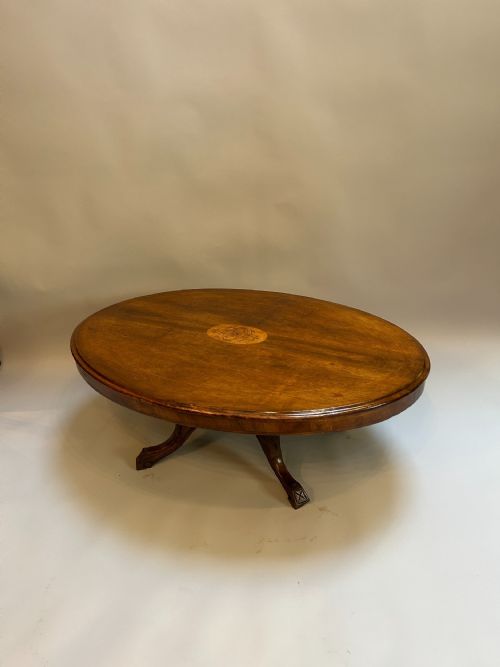

Oval Walnut Tea Table
An oval walnut tea table brings warmth and rich grain to a room, offering a versatile surface for daily use.
Oval Walnut Tea Table
An oval walnut tea table is a domestic surface designed for sitting rooms and parlours, predominantly appearing from the Victorian period through to the early twentieth century. These pieces function as coffee tables, lamp tables, or occasional tables, often constructed with distinctive curved tops.
Burr walnut and figured walnut feature heavily among the listings, displaying striking natural grain patterns across the surface. Many examples incorporate marquetry inlay, boxwood inlay, or hand-carved bases, ranging from compact lamp tables to larger centre and Sutherland tables.
How they were made
Cabinetmakers utilised solid walnut and applied decorative veneers of burr walnut to the top surfaces to highlight complex timber figures. Marquetry and boxwood inlay required precise hand-cutting, embedding contrasting woods directly into the primary timber.
Structural integrity relied on traditional joinery, complemented occasionally by brass fittings, ceramic castors, or amboyna mounts. Bases varied from hand-carved timber pedestals and stretcher frames to modern cast iron tripod adaptations.
Listings feature Victorian, Edwardian, and 1930s periods, utilising walnut, burr walnut, mahogany, and brass.
What varies in quality
The distinction between standard domestic pieces and top-tier workshop productions lies in the selection of the walnut veneer and the execution of the marquetry. Highly figured burr walnut with balanced, symmetrical grain placement commands greater visual impact.
The crispness of hand-carved details on the bases and the precision of boxwood stringing indicate the skill level of the original maker. Subtleties in proportion and the harmony between the inlaid top and the supporting frame separate ordinary tables from distinguished examples.
Holland & Sons Of London·Gillows
The Oval Walnut Tea Table Glossary
- Burr walnut
- A specialised timber cut from walnut tree growths, prized for its swirling, highly figured grain patterns. Cabinetmakers used it as a decorative veneer on table tops.
- Marquetry inlay
- The art of applying small pieces of veneer to form decorative patterns and pictures on a wooden surface. Floral motifs often appear on Victorian table tops.
- Sutherland table
- A narrow drop leaf table where the leaves fold down almost vertically on either side. It stands on gatelegs that swing out to support the extended leaves.
- Pie crust
- A decorative carved edge raised around the perimeter of a circular or oval table top. This style gained popularity during revival periods.
- Boxwood inlay
- Thin strips of pale boxwood embedded into darker walnut to create contrasting geometric lines or borders. This technique highlights the edges of table tops.
Oval Walnut Tea Table: Frequently Asked Questions
What is an oval walnut tea table used for today?
These tables serve primarily as coffee tables, lamp tables, or central display pieces in living spaces. Their proportions make them suitable for placing beside seating or anchoring the centre of a room.
The elongated oval shape allows them to fit into spaces where round tables take up too much width or rectangular tables feel too severe.
How do I identify a Victorian oval walnut table?
Victorian examples typically feature rich burr walnut veneers, dark timber tones, and often incorporate marquetry inlay or hand-carved pedestals. Many pieces rest on ceramic castors designed to protect nineteenth-century carpets.
Construction methods such as traditional hand-cut joinery and timber shrinkage patterns help confirm the nineteenth-century origin of the piece.
What is the difference between a centre table and an occasional table?
Centre tables are traditionally built to stand free in the middle of a room, finished with detail on all sides so they look correct from every angle. Occasional tables are lighter, smaller pieces meant to be moved about as needed for specific tasks.
Both forms appear frequently in walnut with inlaid decoration across the top surfaces.
How do I care for a walnut veneer table?
Walnut benefits from minimal moisture and protection from direct sunlight to prevent the timber and veneer from drying out. Regular dusting with a soft, dry cloth preserves the polished finish without harming the historic surface.
Avoiding extreme temperature fluctuations in the room keeps the wood stable and prevents the veneer from lifting over time.