



Figured Walnut Low Table
A figured walnut low table brings rich grain and warmth to a room, serving as a low coffee or occasional surface.
Figured Walnut Low Table
When you search for a figured walnut low table, you are looking at low occasional tables, coffee tables, and lowboys built from richly patterned timbers. These pieces appear across several periods, stretching from the Victorian era through the Art Deco epoch and into the nineteen-twenties and thirties.
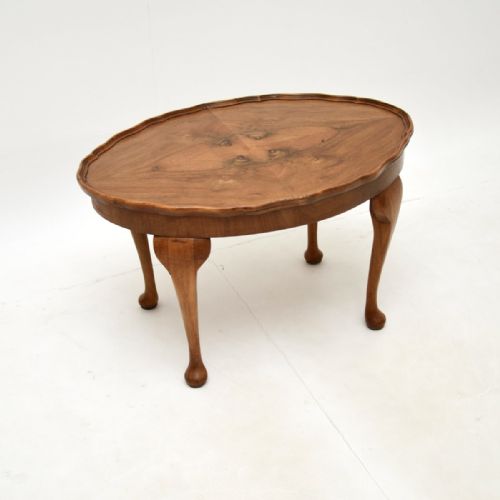
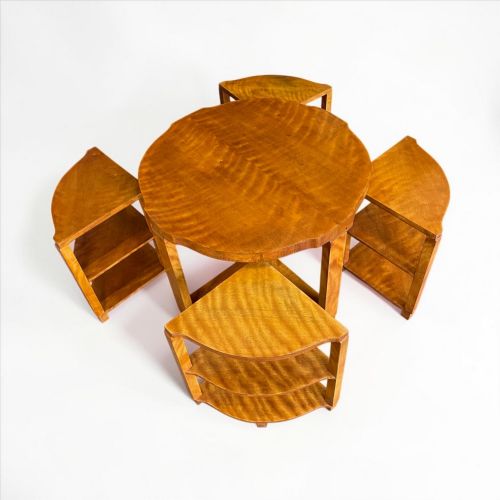
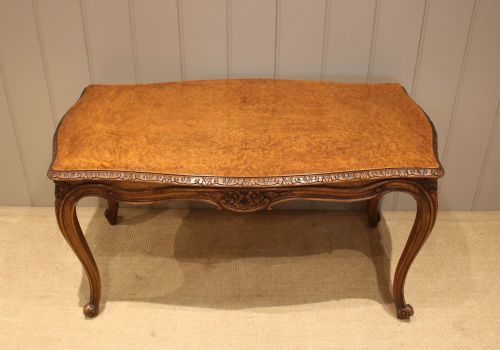
The form often takes a coffee table shape, sometimes with two tiers, round tops, or traditional pie crust edges. Alongside these dedicated coffee tables, the selection includes low occasional wine tables and eighteenth-century style lowboy side tables with cabriole legs.
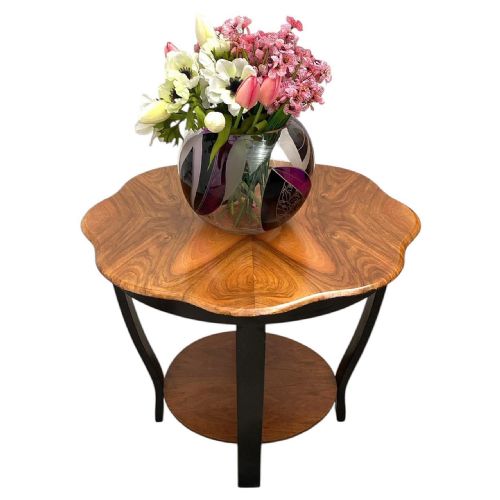
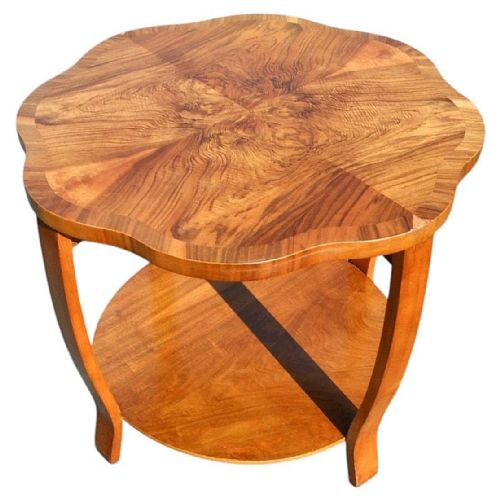
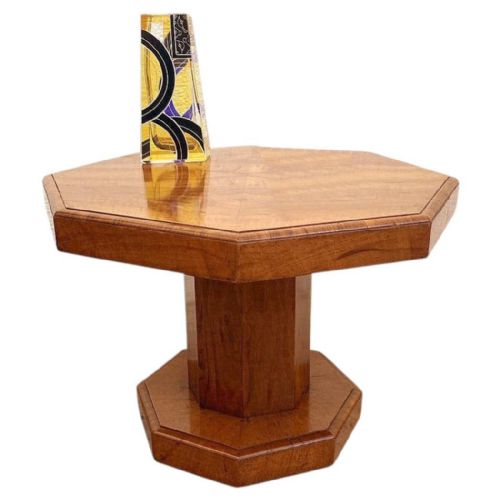
Victorian examples bring darker burr walnut and marquetry inlay, while Art Deco pieces from nineteen-thirty lean towards clean geometric lines and rounded tiers. You will also find occasional pieces labelled simply as low tables or side tables, reflecting varied domestic uses.
How they were made
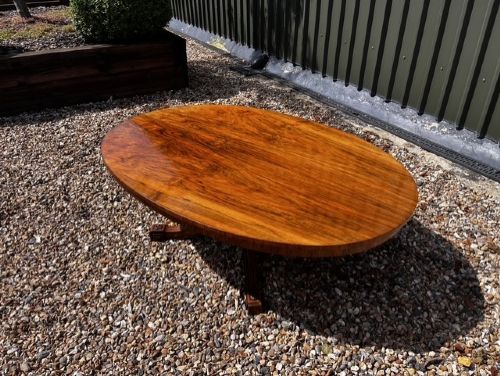
Cabinet makers utilised walnut, figured walnut, and burr walnut veneers laid over solid secondary woods to create striking grain patterns on the surface. These veneers were carefully matched and balanced across the top boards to highlight the natural swirls and knots of the timber.
Brass fittings appear on certain drawer pulls or mounts, while construction methods range from traditional hand-cut joinery on Victorian and earlier pieces to streamlined framing on Art Deco models. Polishing finishes protected the wood and deepened the visual contrast of the grain.
Listings feature periods from the Victorian era through nineteen-twenty and nineteen-thirty, using walnut veneers, brass, and solid wood forms.
What varies in quality
The distinction between ordinary and exceptional work rests on the choice and matching of the veneer. Grain that flows harmoniously across a top board or creates a mirrored pattern denotes superior craftsmanship.
Proportion and the handling of edge details, such as a crisp pie crust moulding or well-turned cabriole legs, separate standard production items from master cabinet work. The integrity of the polish and the retention of crisp detail in the woodwork determine the standing of each piece.
Holland & Sons Of London·Hille of London·The Bowman Brothers·Gillows of Lancaster·Waring Gillows
The Figured Walnut Low Table Glossary
- Figured walnut
- Timber sourced from walnut trees that display unusual and decorative grain patterns, such as swirls or waves. It is sliced into thin veneers for furniture surfaces.
- Burr walnut
- Wood taken from a growth or burl on the walnut tree, creating a dense cluster of swirling knots. This material is highly prized for its decorative appearance.
- Cabriole leg
- A furniture leg that curves outward and then tapers inward, inspired by the motion of a leaping animal. It typically terminates in a pad or foot.
- Pie crust edge
- A raised, carved decorative moulding around the rim of a round table top, resembling the crust of a pie. It is often found on circular occasional tables.
Figured Walnut Low Table: Frequently Asked Questions
How do I clean figured walnut?
Dust the surface regularly with a soft, dry cloth to prevent dirt accumulation. Avoid harsh chemical cleaners and excessive moisture, which can damage the delicate veneer.
Apply a quality beeswax polish occasionally to nourish the wood and maintain its natural lustre. Buff gently along the grain for the best finish.
Are these tables solid walnut?
Most of these tables utilise walnut veneers applied over a stable core of secondary wood. This method prevents warping while showcasing decorative grain patterns.
Solid walnut appears on structural elements like legs and edge mouldings. The combination ensures both durability and visual appeal.
What is the difference between burr and figured walnut?
Figured walnut refers to wood grain with natural waves, ripples, or distinct patterns. It offers a smooth and flowing appearance across a table top.
Burr walnut comes from tree growths containing clustered knots and eyes. It creates a dense, highly textured mosaic of swirling dark marks.
How do I date an Art Deco walnut table?
Art Deco pieces typically feature streamlined forms, geometric tiers, and unadorned surfaces dating from around nineteen-thirty. Look for rounded edges and practical two-tier designs.
Construction details and maker stamps, where present, help confirm the period. English pieces from this era often balance modernist shapes with traditional wood veneers.
Can I use a low table as a coffee table?
Many of these pieces function naturally as coffee tables due to their height and proportions. Occasional tables and lowboys serve this purpose well in modern living spaces.
Ensure the surface finish is protected against hot cups and spills. Use coasters to preserve the walnut veneer over years of daily use.