



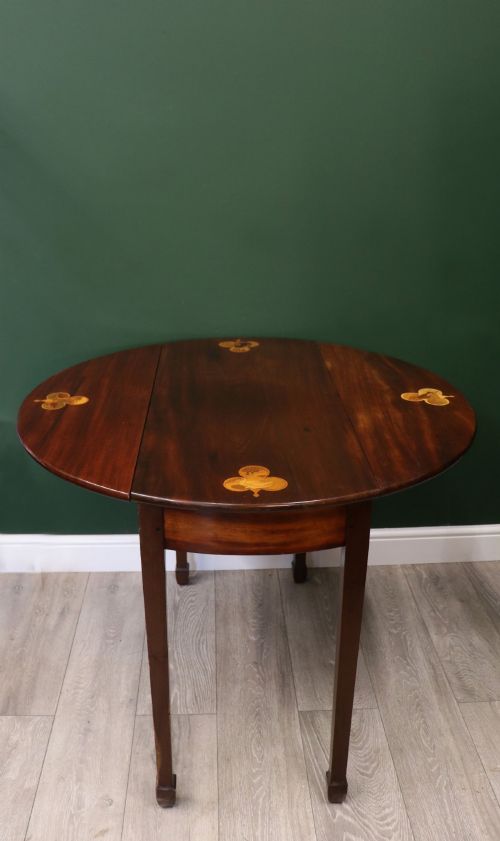
Oval Mahogany Occasional Table
When you search for an oval mahogany occasional table, you are looking at a compact, versatile piece of furniture designed to sit beside a chair or in a hallway.
Oval Mahogany Occasional Table
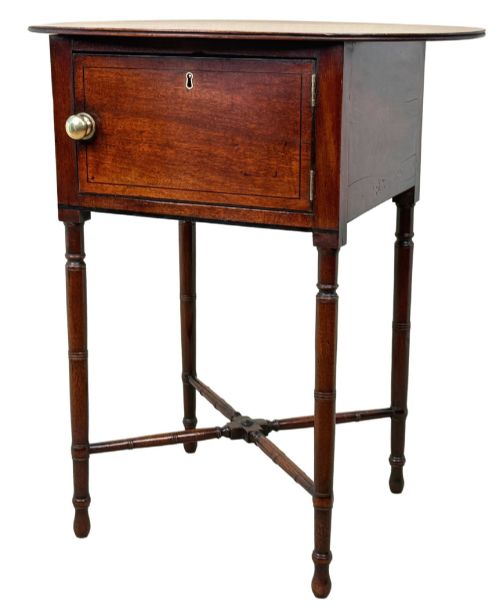
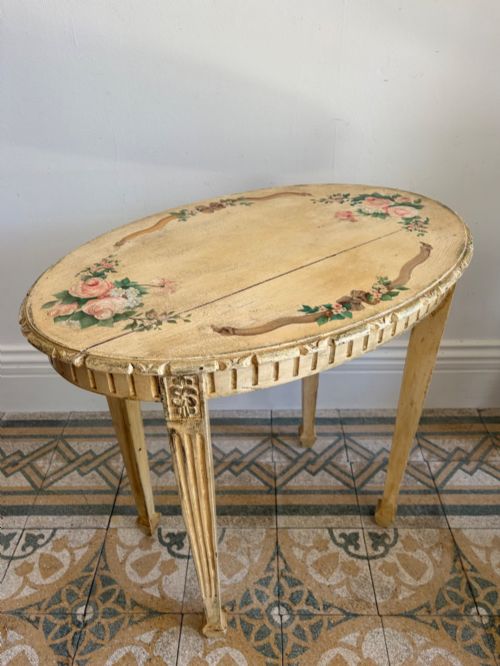
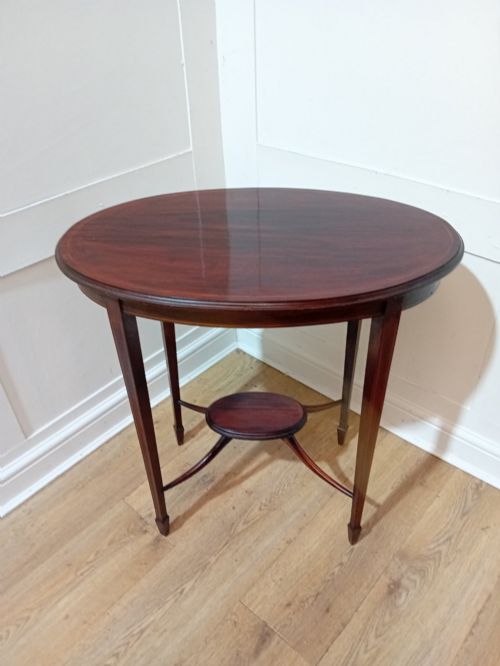
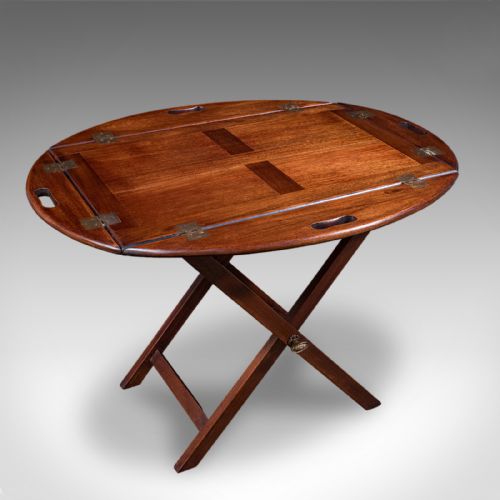
An oval mahogany occasional table is a small, moveable piece of furniture intended for daily domestic use rather than formal dining. The examples you encounter on this page span several decades, with Edwardian and Georgian periods most heavily represented in the selection.
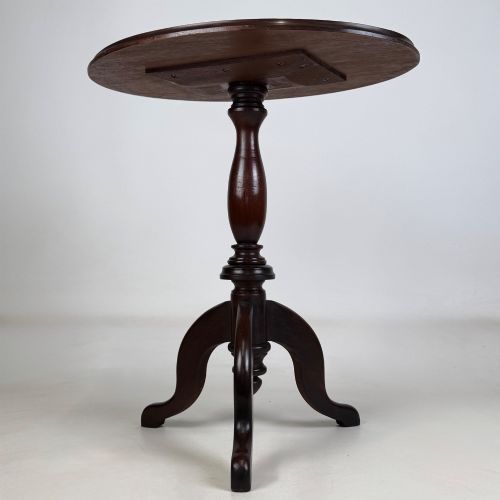
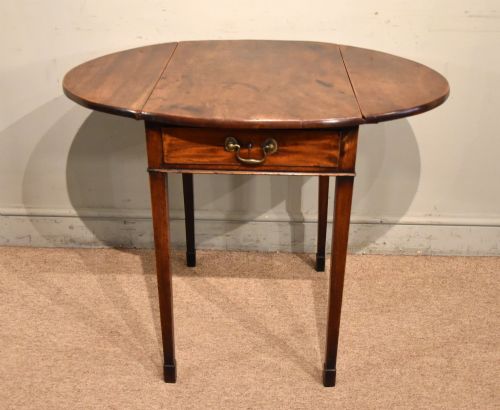
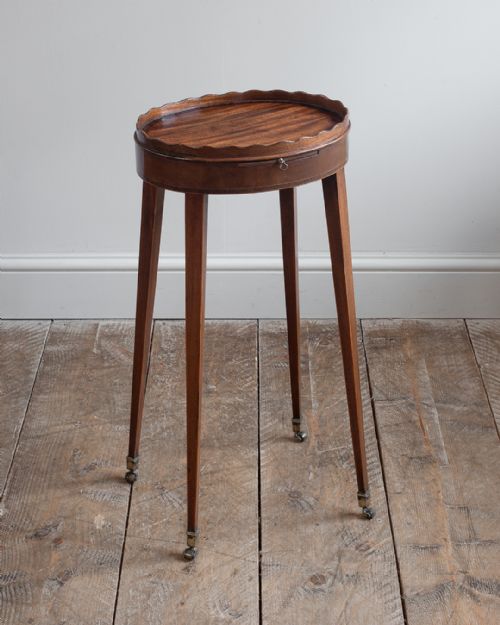
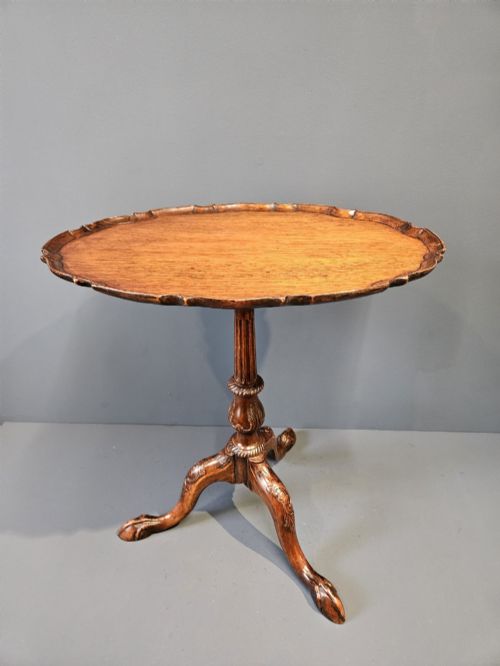
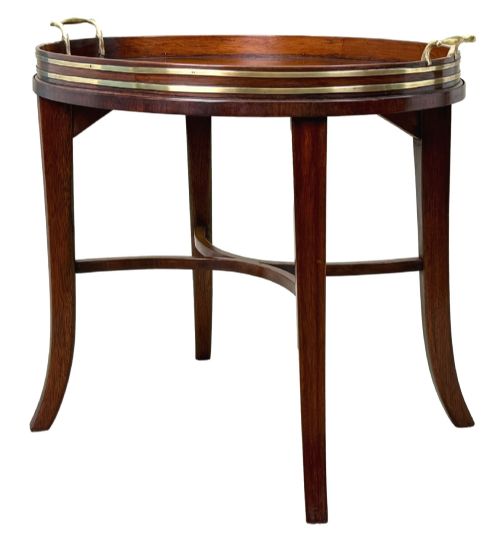
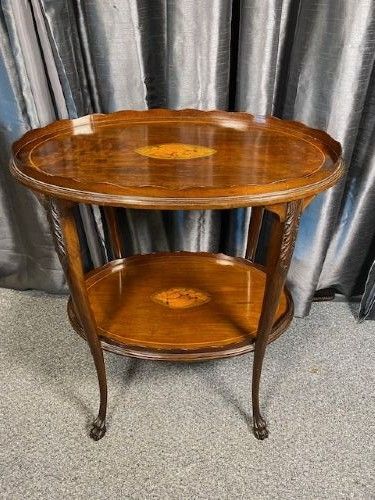
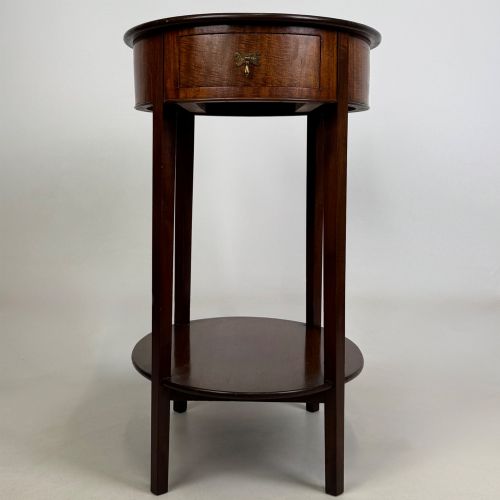
The form encompasses various functional designs, including standard side tables, drop-leaf Pembroke tables, two-tier étagères, and wine tables with tilting tops. Many incorporate satinwood, boxwood, or ebony inlay following Sheraton and neoclassical traditions, while others feature brass bound edges or pie crust borders.
How they were made
The primary construction material across these pieces is mahogany, often selected for its rich grain or chosen as flame mahogany for decorative impact. Workshops applied contrasting stringing and cross-banding using satinwood, boxwood, and ebony to create delicate geometric borders on the top surfaces.
Joinery techniques combined traditional solid timber construction with fine veneers applied to secondary woods. Details such as hand-carved foliate edges, brass binding, and inlaid marquetry motifs reflect the prevailing craftsmanship of the Georgian, Victorian, and Edwardian eras.
Listings feature pieces spanning from the 18th century through to the Edwardian period, constructed primarily from mahogany with satinwood, boxwood, and ebony inlay.
What varies in quality
Quality in an oval mahogany occasional table rests upon the selection of the timber and the precision of the cabinetwork. Superior examples display carefully matched grain patterns on the oval top and crisp, uncompromised inlay work without lifting veneer.
Structural integrity also separates the output of standard workshops from finer pieces. Better tables maintain tight joints, stable pedestals or legs, and thoughtful proportions that balance the curved top without feeling top-heavy.
The Oval Mahogany Occasional Table Glossary
- Pembroke table
- A small side table featuring two hinged drop leaves on either side of a central rectangular or oval top. They often include a single small drawer and slender legs.
- Cross-banding
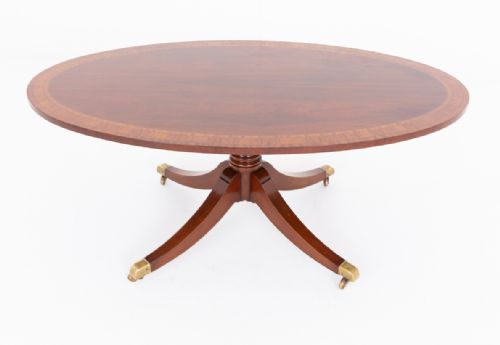
- A decorative border of veneer laid around the perimeter of a table top so that the grain runs at right angles to the central panel. This technique frames the primary wood.
- Étagère
- A set of open shelves or a multi-tiered stand used for displaying small decorative items or holding books and lamps. They appear frequently in Edwardian formats.
- Pie crust edge
- A raised, carved moulding along the rim of a round or oval table top that mimics the crimped crust of a pastry pie. It is typically found on wine tables.
- Marquetry
- The art of applying pieces of veneer to a structure to form decorative patterns or pictures. Craftsmen utilise woods like satinwood and ebony for tonal contrast.
Oval Mahogany Occasional Table: Frequently Asked Questions
Where should I place an oval table?
An oval table works well beside a sofa or armchair because the curved edges soften the geometric lines of a room and allow easier movement around the furniture.
They also function effectively as lamp tables in hallways or as display surfaces in corners where a square table might look too bulky.
How do I care for mahogany surfaces?
Maintenance requires keeping the timber away from direct sunlight and excessive heat sources to prevent the wood and underlying veneers from drying out.
Regular dusting with a soft, dry cloth preserves the polished finish without the need for heavy silicone polishes.
What is a Pembroke table used for?
Historically, a Pembroke table served as a versatile breakfast table, writing desk, or needlework station that could be tucked away when not in use.
Today, dropping one or both leaves allows the table to sit flat against a wall or expand to provide extra surface area when needed.
How do I tell Georgian from Edwardian pieces?
Georgian tables, dating from the eighteenth and early nineteenth centuries, generally display heavier timber construction, simpler functional lines, and deeper patination.
Edwardian pieces, built around the turn of the twentieth century, frequently revive earlier Sheraton styles with lighter frames, extensive satinwood stringing, and multiple tiers.