
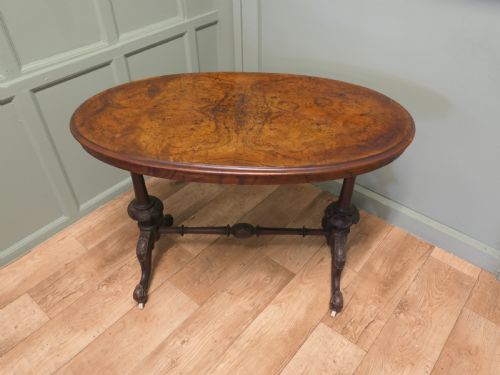
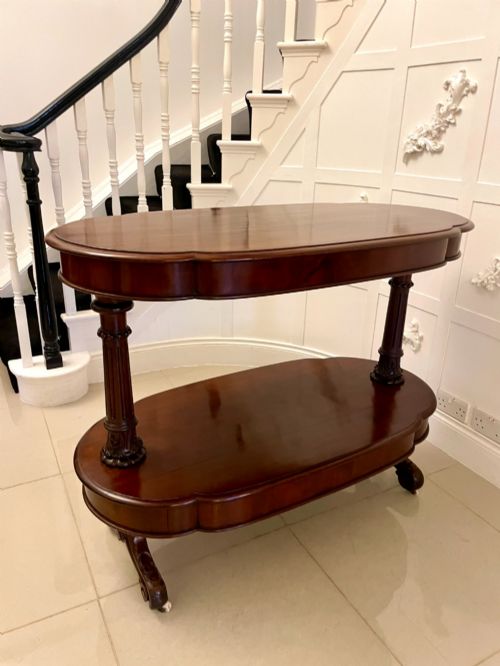
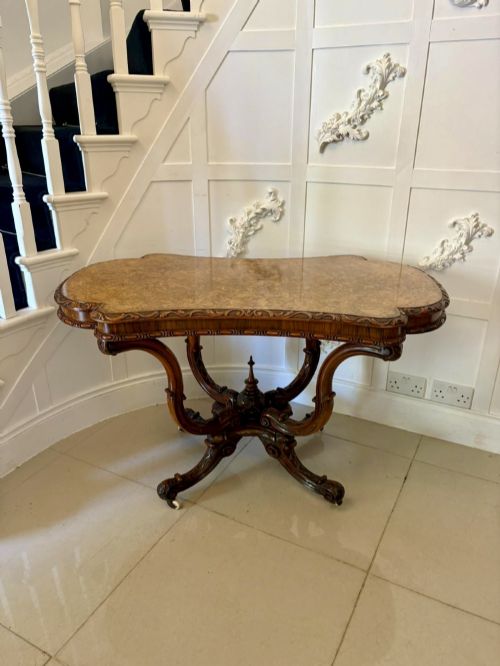
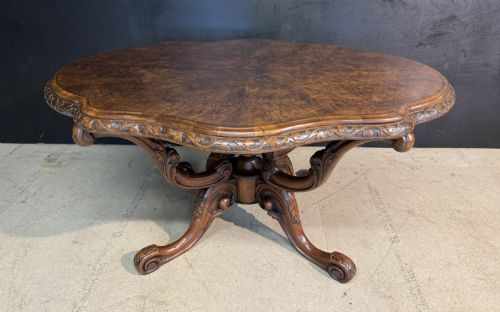







Victorian Oval Hall Table
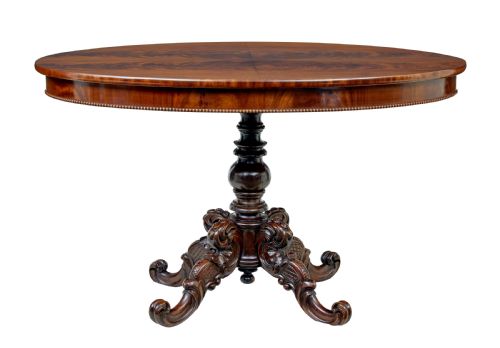
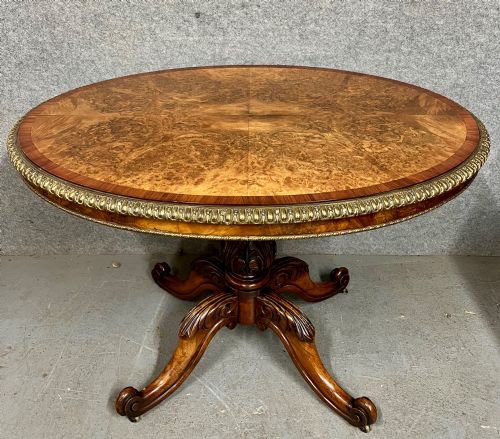
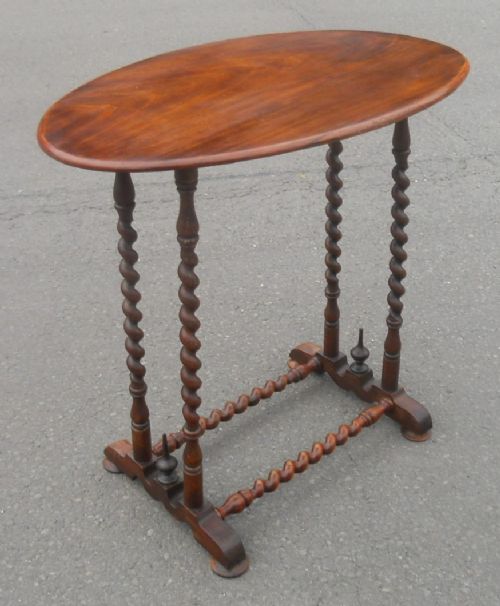
A victorian oval hall table anchors an entranceway with curved warmth, offering a practical surface for post and keys.
Victorian Oval Hall Table
A victorian oval hall table brings curved nineteenth-century lines into a narrow entrance, serving as a striking focal point beneath a mirror or coat rack. These pieces arrive in forms including centre tables, occasional tables, side tables, and breakfast loo tables, spanning the nineteenth century with notable examples from eighteen-fifty, eighteen-sixty, eighteen-seventy, and eighteen-eighty.
The selection encompasses diverse stylistic influences such as Sheraton style, nineteenth-century Scandinavian, Aesthetic movement, Louis XVI Revival, and Grand Regency. Makers utilised rich timbers like walnut, burr walnut, mahogany, oak, rosewood, and satinwood, often enhanced by decorative boxwood inlay, brass fittings, and ceramic elements.
Judging quality in nineteenth-century tables
The choice of timber sets the foundation, where finely figured burr walnut and carefully matched veneers elevate a piece far above standard utility items. The depth and precision of hand carving, marquetry inlay, and boxwood stringing demonstrate the maker's skill and the workshop's ambition.
Structural integrity and proportion distinguish superior examples, particularly in how pedestals, tripod supports, or basket bases meet the floor. Original surfaces, whether polished walnut, bleached oak, or painted finishes, retain a patination that machine-sanded restorations cannot replicate.
The site's listings demonstrate a strong preference for walnut and mahogany, accompanied by decorative boxwood inlay and distinctive pedestal or tripod bases.
The Victorian Oval Hall Table Glossary
- Burr walnut
- A wood harvested from the abnormal growth of a walnut tree, yielding highly swirled, decorative grain patterns prized for tabletops.
- Marquetry
- The art of applying pieces of veneer to a structure to form decorative patterns, often seen in floral or geometric designs on table surfaces.
- Boxwood inlay
- The insertion of contrasting light boxwood into recesses within a darker wood to create crisp geometric or linear borders.
- Centre table
- A freestanding table designed to be viewed from all sides, intended to sit in the middle of a room or grand hallway.
- Basket base
- A distinctive support structure beneath the tabletop resembling a woven basket form, found on specific nineteenth-century centre tables.
Victorian Oval Hall Table: Frequently Asked Questions
Where should I place an oval hall table?
An oval table suits narrow entranceways and corridors because the curved ends prevent sharp corners from obstructing foot traffic.
Position it against a wall beneath a mirror or artwork to create an inviting entrance that still allows easy passage.
How do I care for nineteenth-century wood furniture?
Protect antique wood surfaces by keeping them away from direct sunlight and sudden temperature changes, which can dry out veneers.
Apply a quality beeswax polish occasionally to nourish the timber and maintain a soft, protective sheen without building up heavy residue.
How can I tell if a table is from the Victorian era?
Examine the timber selection, construction joints, and decorative styles such as Aesthetic movement motifs or Sheraton Revival influences typical of the period.
Look for hand-cut joinery, timber shrinkage patterns, and patination that confirm nineteenth-century manufacture.