





Dark Walnut Foyer Table
A dark walnut foyer table grounds an entrance hall with deep timber tones and traditional craftsmanship, offering a surface for everyday items.
Dark Walnut Foyer Table
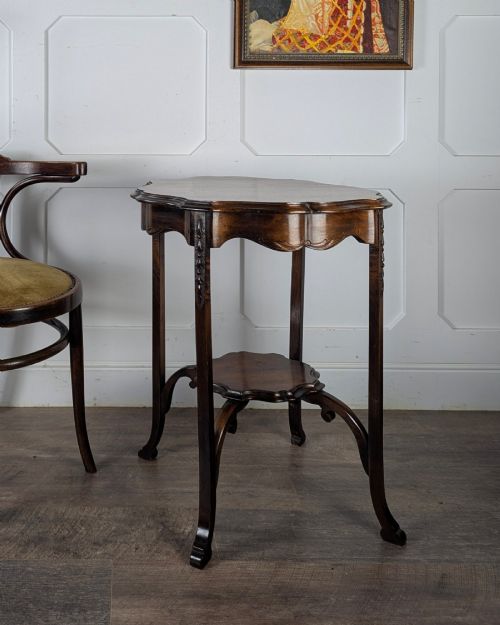
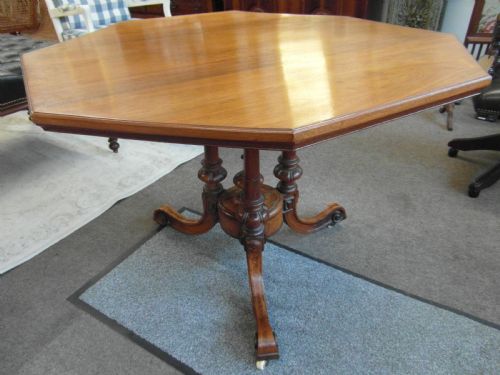
A dark walnut foyer table encompasses console tables, centre tables, and side tables designed for entrance halls and reception spaces. These pieces span the eighteenth century, nineteenth century, and early twentieth century, showing periods such as Victorian and styles including Rococo Revival, Italian Rococo, and the Aesthetic Movement.
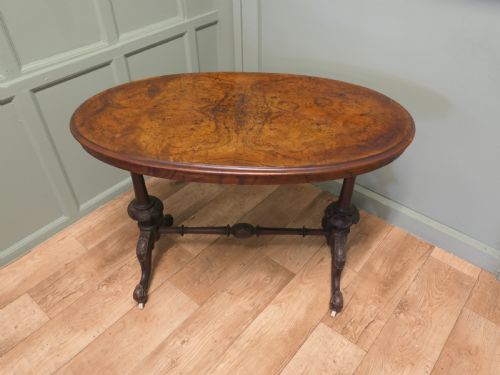
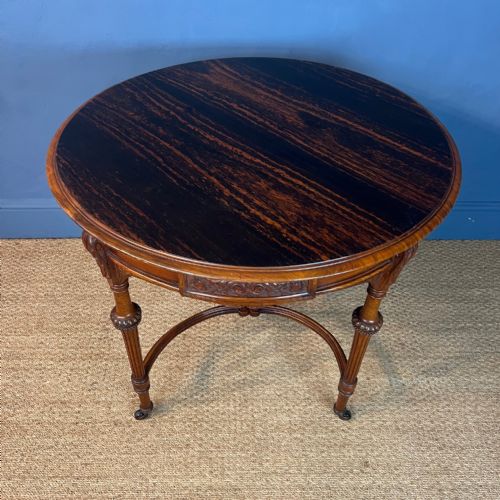
Shoppers encounter forms ranging from demilune console tables and oval centre tables to large console tables with marble tops. The material palette centres on walnut and burr walnut, frequently complemented by marble, fruitwood, mahogany, brass, ceramic, and coromandel.
How they were made
Construction relies heavily on solid walnut and burr walnut veneers applied to carcases, sometimes enhanced by intricate inlay work and carving. Workshops utilised traditional joinery techniques suited to the period.
Insets of white or coloured marble provide durable top surfaces on specific console forms, while brass hardware and contrasting woods like fruitwood, mahogany, and coromandel add decorative detail.
The current selection spans the 18th century, 19th century, Victorian period, and 1800 to 1900, using walnut, marble, and brass.
What varies in quality
Quality differences emerge in the selection of timber figures, particularly where burr walnut or figured grain is chosen for the primary surfaces. Finer examples display meticulous matching of veneers across expansive tops and friezes.
The sophistication of structural carving and the integration of secondary materials, such as inset marble slabs and contrasting inlay work, distinguish standard production from exceptional examples.
The Dark Walnut Foyer Table Glossary
- Console table
- A table designed to stand against a wall, traditionally supported by wall brackets or front legs. These pieces suit entrance halls and narrow spaces.
- Centre table
- A freestanding table intended to occupy the middle of a room or a large hall. They feature finished detail on all sides.
- Burr walnut
- A specialised timber cut from the wart-like growths on walnut trees, prized for its swirling, decorative grain patterns. It appears frequently on tabletops.
- Demilune
- A half-moon shape characteristic of certain console tables designed to sit flush against a flat wall. This form saves floor space in smaller entryways.
- Aesthetic Movement
- A late nineteenth-century design style focusing on art for art's sake, incorporating eclectic influences and refined craftsmanship. Pieces from this movement often utilise contrasting timbers.
Dark Walnut Foyer Table: Frequently Asked Questions
Where should a foyer table go?
These tables belong in entrance halls, reception rooms, and corridors where they provide a functional surface and a focal point for visitors.
Placement depends on the specific form, with console tables resting against walls and centre tables occupying open floor space.
How do I maintain walnut furniture?
Keep wooden surfaces away from direct sunlight and extreme temperature shifts to prevent timber drying and veneer lifting.
Regular dusting with a soft cloth preserves the polish without stripping the natural patina built over the decades.
What is the difference between console and centre tables?
Console tables feature flat backs designed to stand against a wall, often anchored for stability. Centre tables are finished on all sides for standalone placement in rooms.
Both serve different spatial requirements within an entrance hall or living space.
How can I identify Victorian walnut tables?
Victorian examples display characteristic nineteenth-century revival styles, including Rococo Revival curves and elaborate carved walnut frames. Inlaid details and oval top formats frequently accompany these pieces.
Examining the construction methods and secondary timbers helps confirm the nineteenth-century origin.