
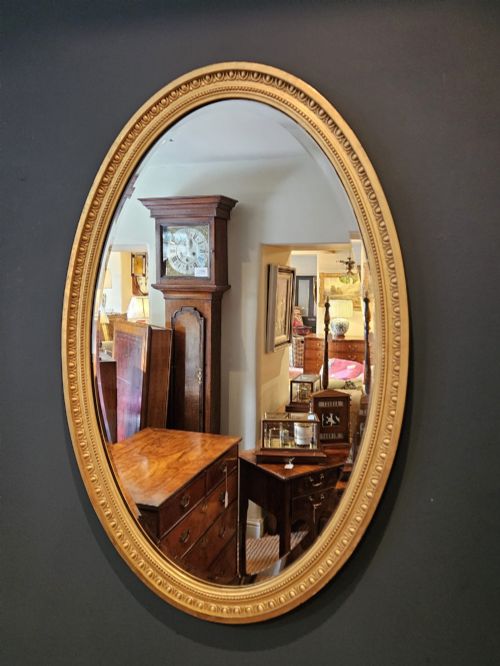
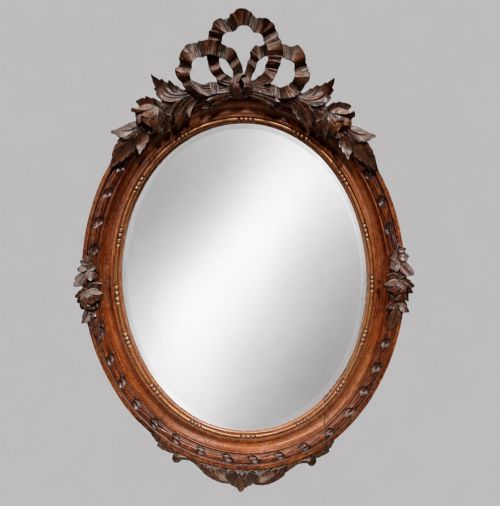
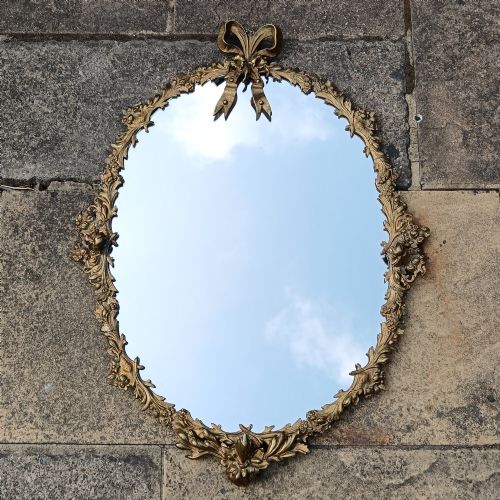
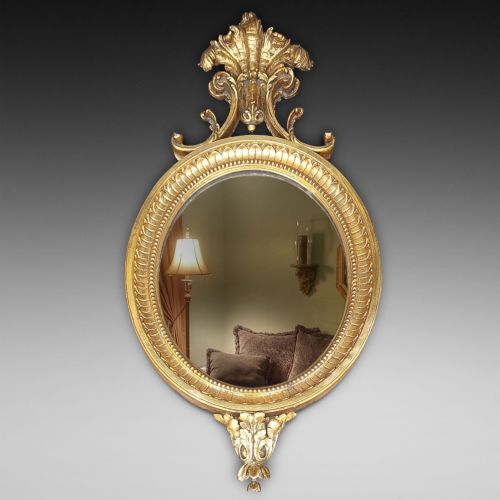


Oval Hanging Wall Mirror
An oval hanging wall mirror brings vertical proportion and curved grace to a room, catching the light in a way rectangular frames simply cannot manage.
Oval Hanging Wall Mirror
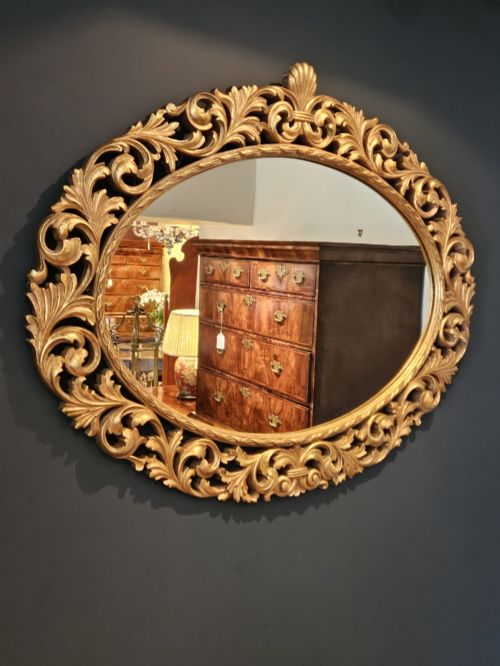
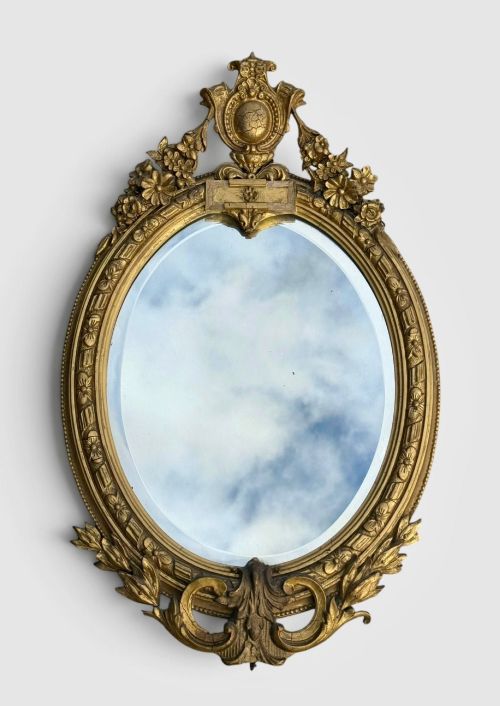
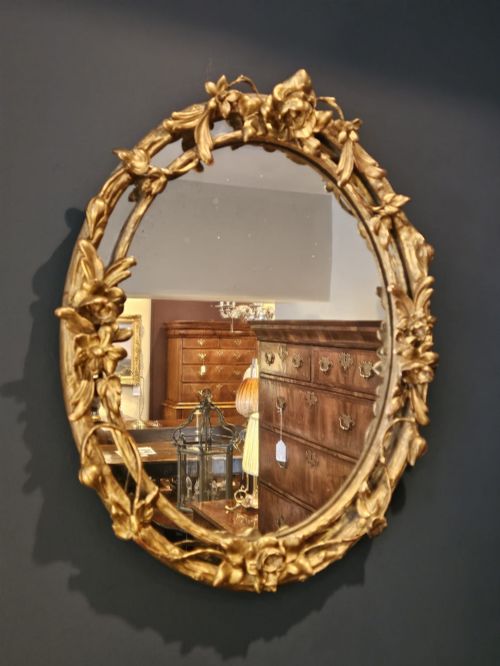
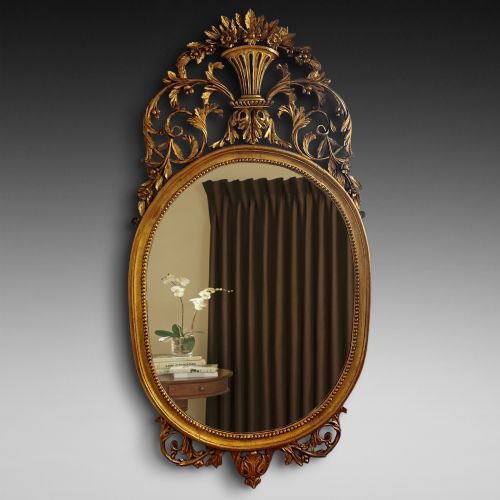
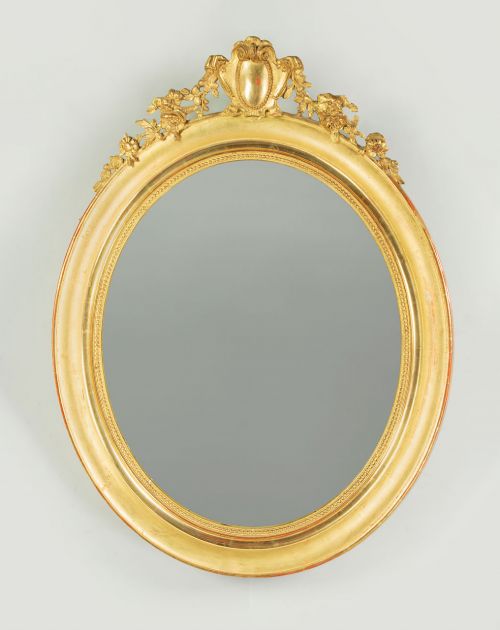
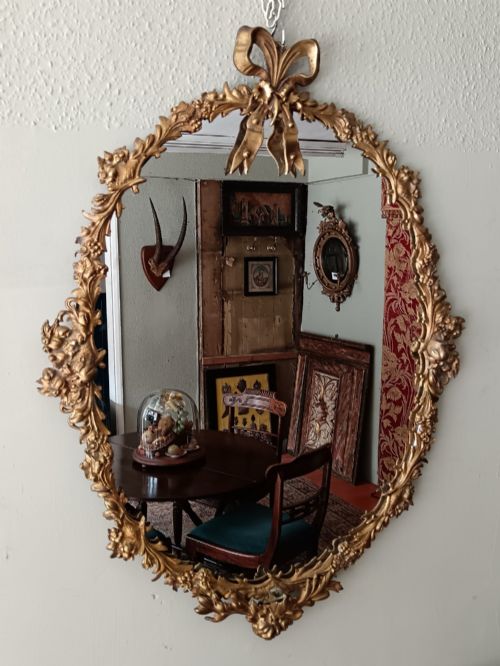
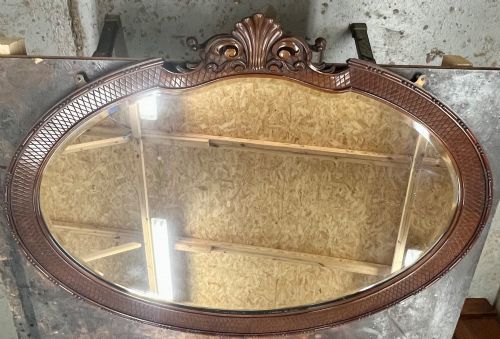
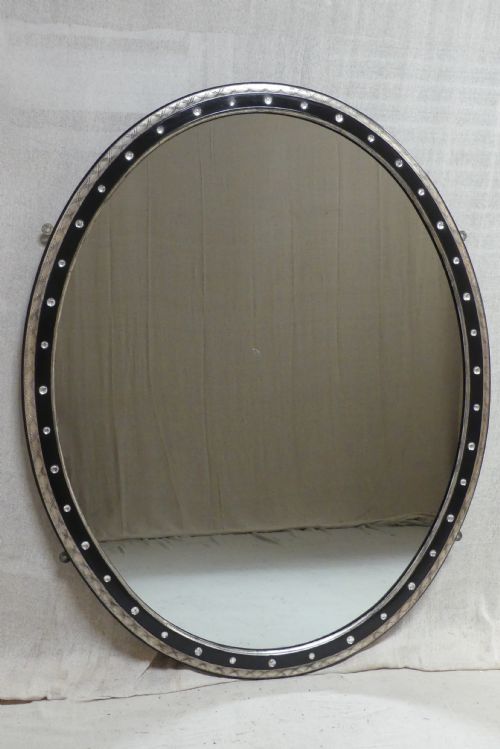
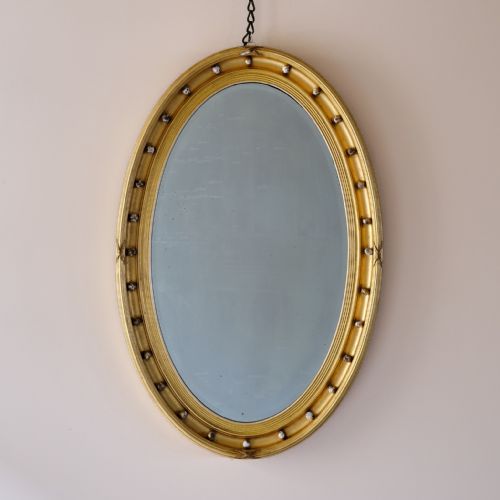
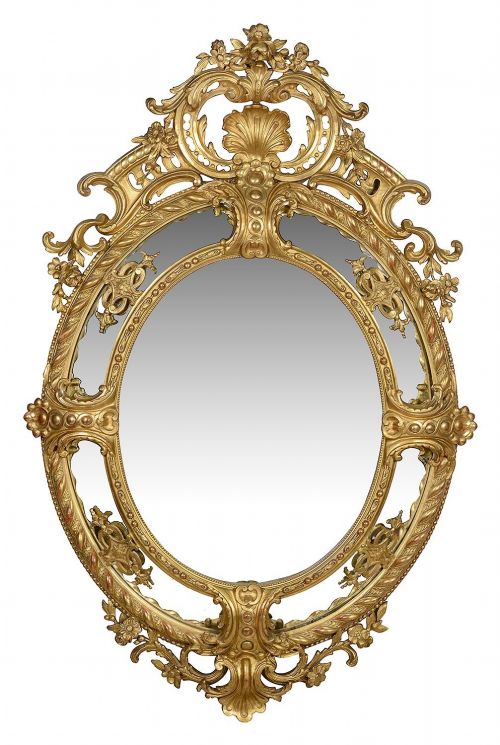
An oval hanging wall mirror provides a distinct vertical or horizontal sweep that softens the hard angles of a room. When searching for an oval hanging wall mirror, buyers encounter everything from modest Edwardian mahogany frames to heavily ornamented Victorian and Regency giltwood designs.
The selection ranges widely across the nineteenth and early twentieth centuries, featuring revival styles such as Adam, Louis XVI, and Rococo. These pieces served primarily as functional ornaments in reception rooms, halls, and boudoirs, often hung to bounce natural daylight into darker corners.
Victorian and Edwardian versions dominate current and past selections, alongside Georgian and Regency examples. The frames span simple timber mouldings to intricate plasterwork, accommodating varied interiors from country houses to urban town apartments.
How They Were Made
Craftsmen shaped these frames from dense timbers like mahogany and oak, or carved them from softer woods such as pine and lime before applying layers of gesso. Gesso provided a smooth, absorbent base for gilding with gold leaf or metallic paint, allowing for crisp relief ornament.
Glass plates were silvered using traditional methods, sometimes leaving behind characteristic foxing or ageing spots over decades of exposure. Frames featured mechanical joints appropriate to their period, from simple mitred corners to complex built-up carvings secured with pins and glue.
Listings feature 18th, 19th, and early 20th-century pieces, spanning Georgian, Regency, Victorian, and Edwardian periods.
What Varies in Quality
The crispness of the carved or moulded detail dictates much of the visual success of the frame. Superior examples show sharp undercut foliage, ribbons, and scrolls rather than soft, muddy relief cast from worn composition moulds.
The integrity of the reflective plate and its housing matters significantly. Original mirror glass with authentic mercury backing or early bevelling holds greater distinction than a modern replacement glass fitted into an antique frame.
The Oval Hanging Wall Mirror Glossary
- Gesso
- A plaster mixture applied to wood frames to create a smooth surface for gilding or painting. It accepts fine carving and moulding work exceptionally well.
- Giltwood
- Timber that has been coated in gold leaf or gold paint. It reflects candlelight and daylight with a warm, diffuse glow.
- Foxing
- Small dark spots or patination within the glass plate caused by the degradation of the silvering over time. Collectors often prize this as evidence of age.
- Bevel
- An angled edge cut around the perimeter of the mirror glass. This technique catches light at multiple angles and adds perceived depth.
- Composition
- A moulded mixture of whiting, resin, and oil pressed into ornament. Makers utilised it as a faster alternative to hand-carving intricate frame details.
Oval Hanging Wall Mirror: Frequently Asked Questions
How do I hang a heavy antique mirror safely?
Heavy frames require fixings screwed directly into masonry or substantial wall studs rather than standard plasterboard plugs. Ensure the hanging wire or integrated metal loops on the rear can comfortably bear the total weight of the timber and glass.
Position the piece at eye level where it reflects an open space or window rather than a bare wall. Secure the lower corners with discrete wall buffers if the frame tends to tilt forward.
Are these mirrors suitable for bathrooms?
Historic frames constructed from gesso and giltwood suffer in damp environments because moisture softens the plaster layers and damages the historic finish. Timber frames like mahogany or oak fare slightly better but still risk wood movement and silvering degradation from steam.
Limit placement to dry hallways, living rooms, and bedrooms to preserve the original materials. Constant humidity accelerates the decay of both the frame construction and the antique glass plate.
How do I clean antique mirror glass?
Apply a mild, non-ammonia cleaner to a soft microfibre cloth rather than spraying the glass directly. Liquid can seep behind the rebate and attack the old silvering or wooden backing boards.
Wipe gently across the surface to remove dust and fingerprints without applying excessive pressure. Avoid abrasive pads or chemical solvents that strip aged patination.
What indicates a Georgian period mirror?
Georgian pieces typically display hand-carved mahogany or giltwood frames with symmetrical motifs such as scrolls, shells, and floral garlands. The construction employs pegged mortise and tenon joints with early pine or oak secondary woods.
The glass plates often feature thinner profiles, hand-beveiled edges, or original mercury backing that produces a slightly distorted, deep reflection.