
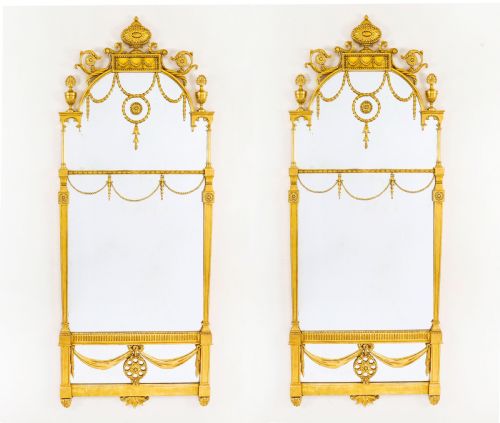


Neoclassical Urn Wall Glass
These neoclassical urn wall glass pieces combine classical motifs and giltwood frames, offering refined symmetry for discerning interiors.
Neoclassical Urn Wall Glass
When searching for neoclassical urn wall glass, you encounter wall mirrors and overmantel mirrors spanning the eighteenth and nineteenth centuries. These pieces draw upon Georgian, Regency, and Victorian neoclassical idioms alongside Adam revival designs.
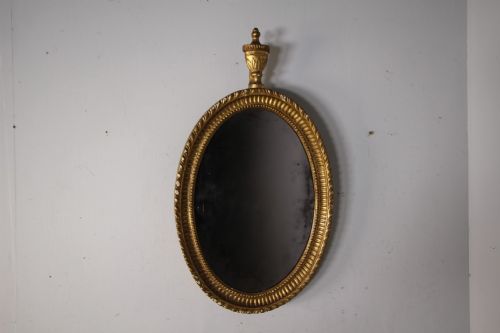
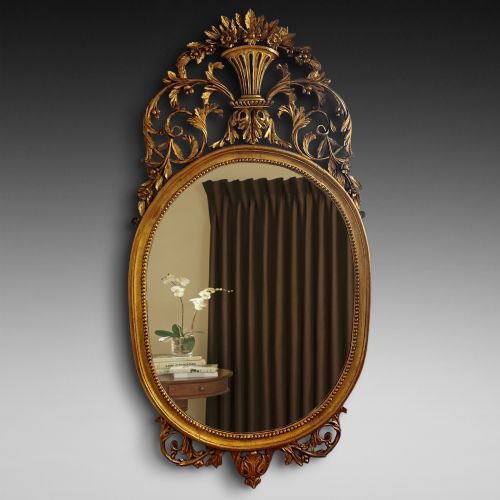
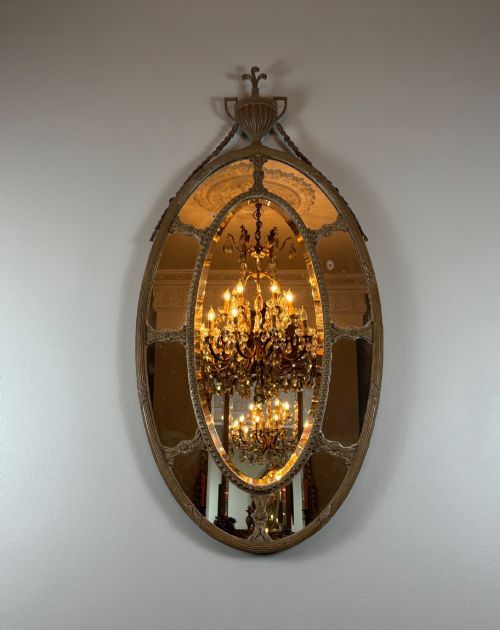
The most common formats on this page include oval wall mirrors and pier glasses featuring classical motifs, swags, and carved urn crestings. Origins extend across English, French, and Swedish workshops utilising traditional framing techniques.
Materials and construction methods
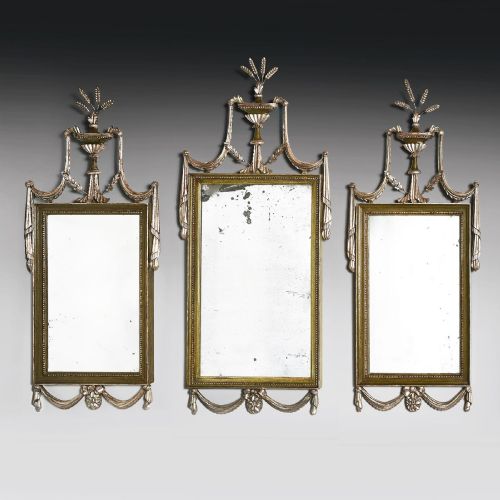
Makers built these frames primarily from carved wood, composition, and gesso, applying gold leaf or parcel gilt finishes over mahogany, giltwood, and ebonised timber. Silvered green paint also appears on specific nineteenth century commissions.
Mirrors incorporate mirror glass and border glass set within structured wooden carcasses, finished with intricate applied ornamentation including swags and classical urns.
One set of mirrors even travelled down from Coilsfield House carrying an unusual silvered green paint finish.
Distinctions in quality
Quality rests upon the crispness of the carved details and the depth of the gilding across the gesso and wood surfaces. Superior pieces demonstrate meticulous execution in the swags, urns, and classical motifs.
The integration of the mirror glass within the frame and the selection of primary timbers, such as finely figured mahogany or substantial giltwood, further separate standard examples from finer works.
Gillows Of Lancaster
The Neoclassical Urn Wall Glass Glossary
- Giltwood
- Wood carved and subsequently covered with gold leaf or metal leaf. This forms the primary lustrous surface on many classical frames.
- Gesso
- A plaster-like mixture applied to a wooden base to create a smooth surface for carving or gilding. It allows intricate relief ornaments like swags to be moulded onto the frame.
- Pier glass
- A tall mirror designed to be hung on the pier, the solid wall space between windows. These pieces often feature neoclassical urn details at the crest.
- Overmantel mirror
- A large horizontal mirror designed specifically to hang above a fireplace mantel. They frequently incorporate extended frames and classical motifs.
Neoclassical Urn Wall Glass: Frequently Asked Questions
Where should I hang a neoclassical urn wall glass?
These mirrors suit principal reception rooms, hallways, or above a fireplace mantel where their vertical proportions and reflective surfaces enhance natural light.
Ensure the wall construction supports the weight of carved wood and giltwood frames safely.
How do I distinguish an eighteenth century mirror from a revival piece?
Examine the construction of the wooden carcass, the wear patterns on the gilding, and the characteristics of the mirror glass itself.
Revival pieces often utilise nineteenth century composition ornaments alongside earlier stylistic references.
How do I care for antique giltwood frames?
Dust gently with a soft, dry brush and avoid applying liquid cleaning agents directly to the giltwood or gesso surfaces.
Protect the piece from direct sunlight and fluctuating humidity to preserve the gold leaf and wood.