

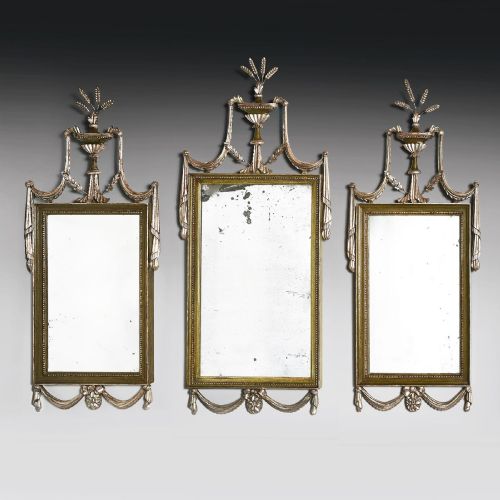
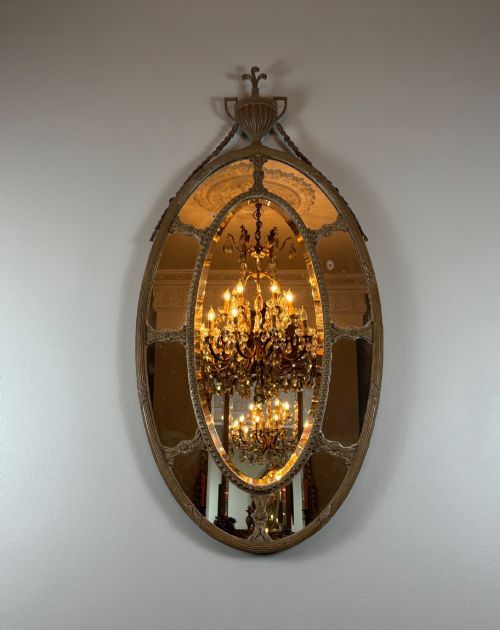
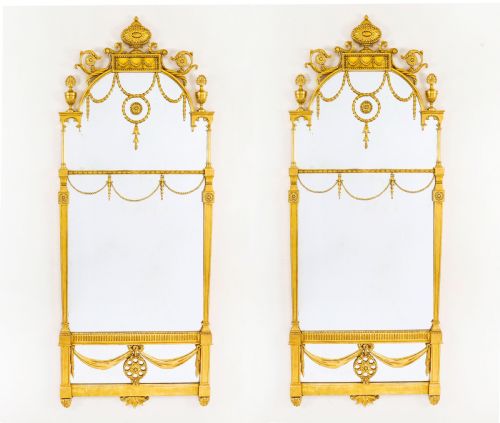


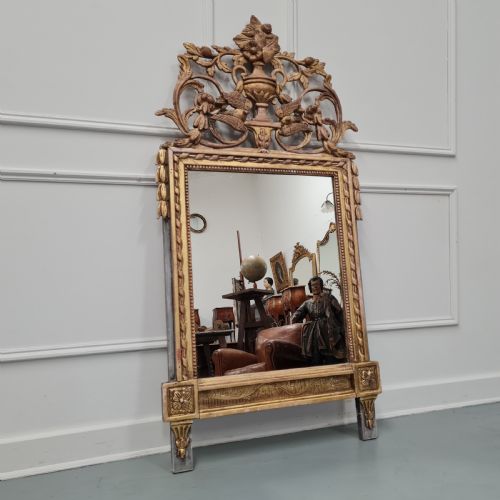
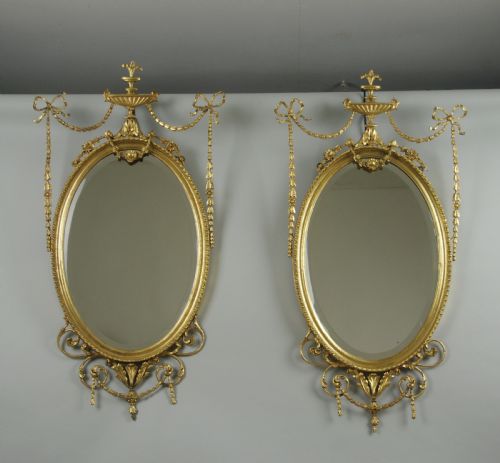


Urn Crest Mirror
An urn crest mirror brings classical proportion to a room, carrying the formal grace of the eighteenth century through to the Edwardian period.
Urn Crest Mirror
An urn crest mirror is a wall or overmantel glass defined by its decorative neoclassical crowning motif, frequently paired with swags, framing plates from the eighteenth, nineteenth, and early twentieth centuries. When searching for an urn crest mirror, buyers encounter oval, rectangular, and pier formats executed across Victorian, Edwardian, and Regency revivals alongside authentic late eighteenth-century examples.
The prevailing forms on this page span Victorian and Edwardian revivals of Adam and Neoclassical styles, often rendered in giltwood, gesso, or ebonised wood. These pieces function primarily as vertical wall ornaments or horizontal overmantels, bringing architectural symmetry and reflected light into principal rooms.
How they were made
Maker workshops built the foundational frames of these mirrors using timber such as oak, mahogany, or carved wood, frequently layering composition ornaments and gesso to achieve crisp neoclassical relief details. Artisans applied gold leaf, silvered paints, or ebonised finishes to the prepared surfaces, sometimes combining two colours of gilding to accentuate the carved swags and urn cresting.
Mirror plates were set into the frames, ranging from single glass sheets to border glass configurations where smaller mirror segments surround the central plate. French and British makers utilised traditional joinery and mounting techniques suited to the heavy weight of gilded wood and composite decoration.
Listings span periods from the late eighteenth century through the Regency, Victorian, and Edwardian eras, executed in giltwood, ebonised wood, and painted finishes.
What varies in quality
Quality rests in the crispness of the carved or moulded gesso detailing on the urn and swags, where sharp undercutting distinguishes finer workshops from softer, mass-produced commercial output. The depth and integrity of the original gilding or painted finish, whether gold leaf or two-colour gilt, governs the visual authority of the piece.
The proportion between the mirror plate and its decorative crest shapes the overall balance, with superior examples maintaining harmonious scale across the frame and glass. Structural cohesion in the timber framework and the preservation of original mirror glass further divide baseline utility from collector-grade pieces.
Gillows Of Lancaster
The Urn Crest Mirror Glossary
- Giltwood
- Wood carved and coated with gold leaf. This finish defines the most formal Neoclassical and Adam revival wall mirrors.
- Gesso
- A plaster-like mixture applied to wood frames and carved or moulded into relief decoration. It forms the base for subsequent gilding on many nineteenth-century pieces.
- Overmantel
- A large mirror designed to hang specifically above a fireplace mantel. These pieces frequently incorporate horizontal formats and elaborate crests.
- Adam Revival
- A decorative style looking back to the neoclassical designs of the Adam brothers. It is characterised by urns, swags, and symmetrical oval frames.
- Border Glass
- A mirror construction featuring multiple smaller glass segments surrounding the main central plate. This technique adds faceted reflection to the piece.
Urn Crest Mirror: Frequently Asked Questions
Where should an urn crest mirror be hung?
These mirrors suit principal reception rooms, halls, or above fireplace mantels where their vertical height and decorative crests can command the wall space.
Because many examples are substantial overmantels or large wall glasses, secure wall fixings into masonry or studs are essential to support their weight safely.
How do I distinguish an original eighteenth-century mirror from a revival piece?
Eighteenth-century pieces, such as authentic Adam period works, show period-specific timber construction, hand-carved details, and aged mirror plates with characteristic oxidation.
Revival pieces from the Victorian and Edwardian eras utilise machine-moulded gesso composition ornaments and later glass manufacturing methods while faithfully copying the earlier neoclassical vocabulary.
What is the difference between giltwood and painted finishes?
Giltwood involves the application of gold leaf over a prepared gesso and bole ground, producing a reflective metallic lustre suited to formal neoclassical interiors.
Painted finishes, including ebonised wood, silvered green paint, or French two-colour gilding, offer a more subdued or decorative chromatic palette favoured in French Chateau and Regency styles.
Are these mirrors suitable for everyday use?
These mirrors function effectively for daily reflection while serving as primary decorative focal points within a room's interior scheme.
Care should be taken to clean the glass gently without disturbing historic giltwood, gesso, or painted wooden surfaces.