
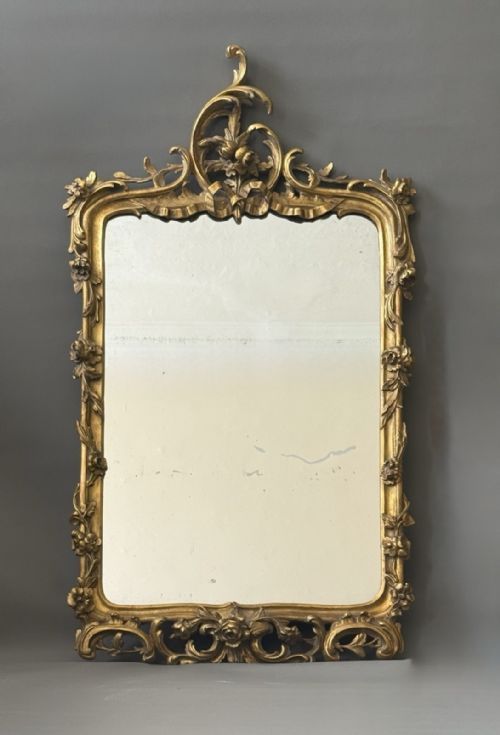

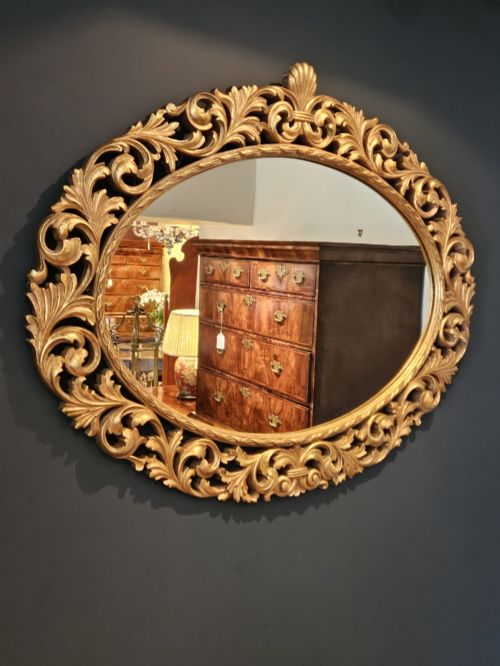
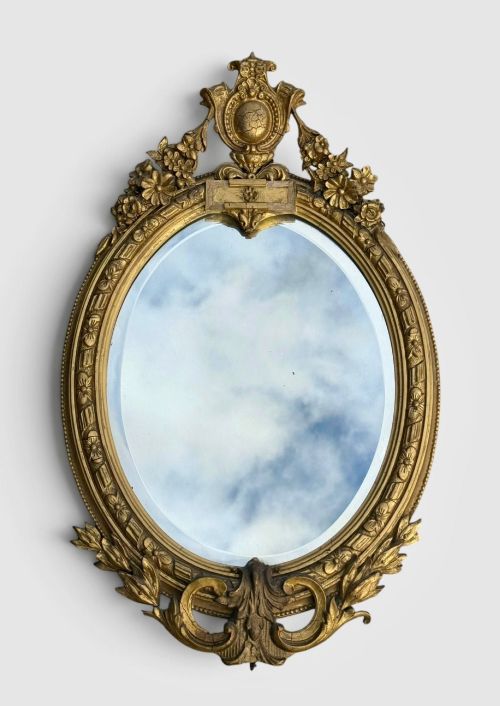
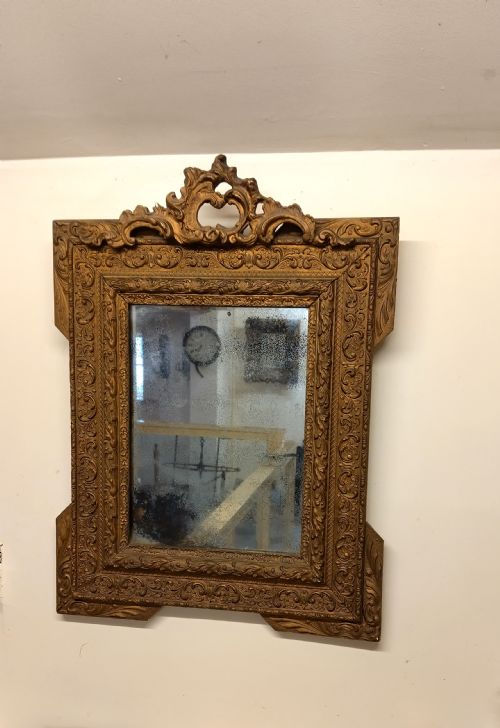

Ornate Hanging Mirror
An ornate hanging mirror brings architectural depth and reflected light into a room, spanning centuries of revival styles and gilt craftsmanship.
Ornate Hanging Mirror
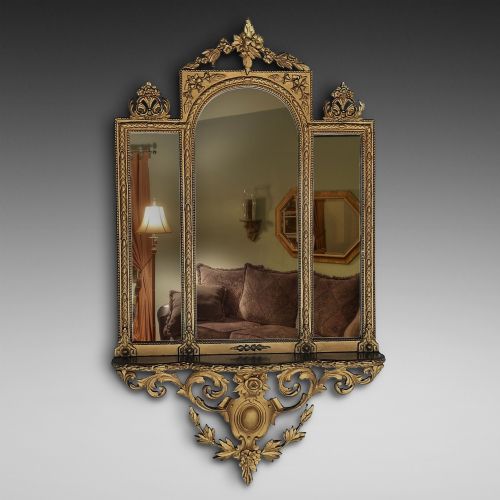
An ornate hanging mirror serves as both a functional object and a decorative focal point, drawing on historical design vocabularies to enliven wall spaces. When searching for an ornate hanging mirror, buyers encounter a rich mix of wall mirrors, console tables with mirrors, and overmantle formats designed for prominent interior placement.
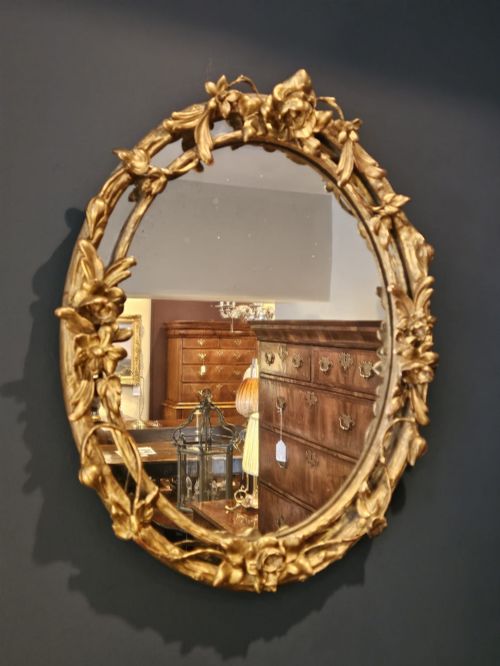
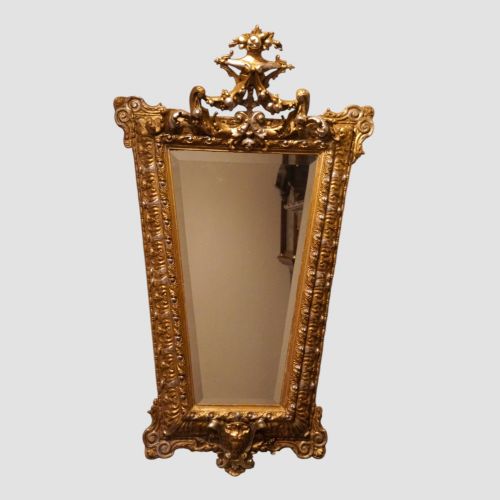
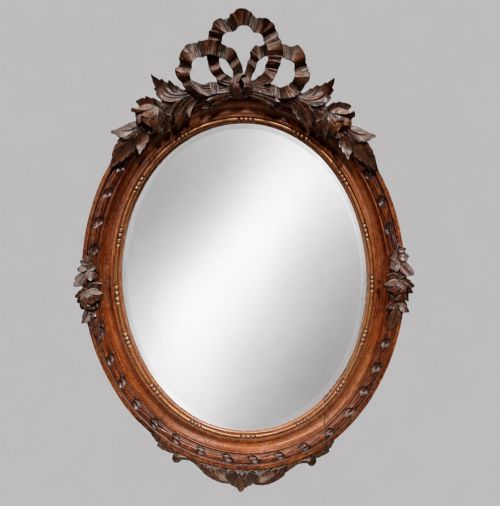
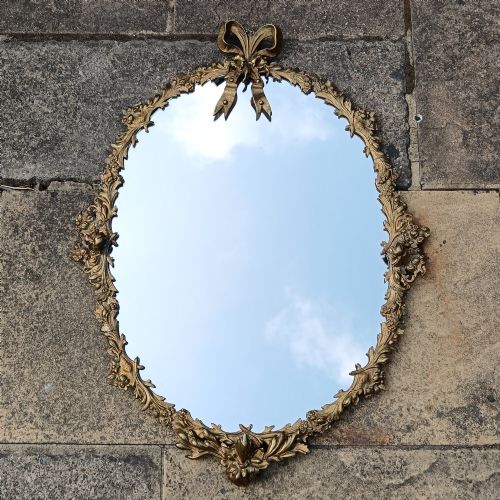
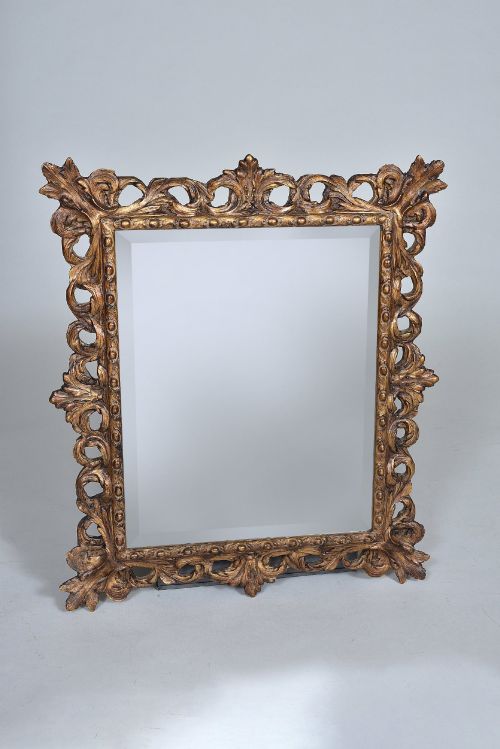
The selection ranges from small dressing mirrors to large wall pieces, drawing heavily on nineteenth-century Victorian production as well as eighteenth-century origins. Examples frequently adopt elaborate silhouettes, including oval, rectangular, trapezoidal, and arched forms that make substantial visual impacts in domestic settings.
How they were made
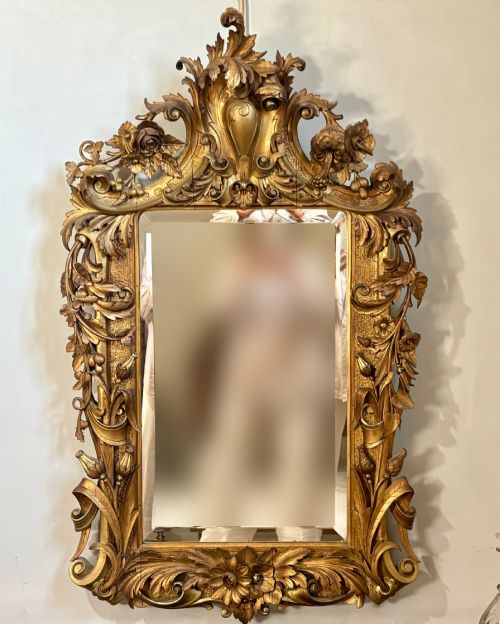
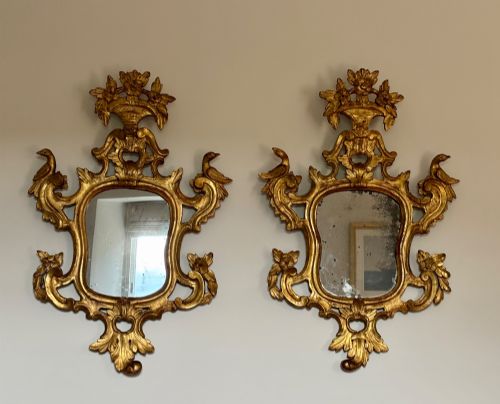
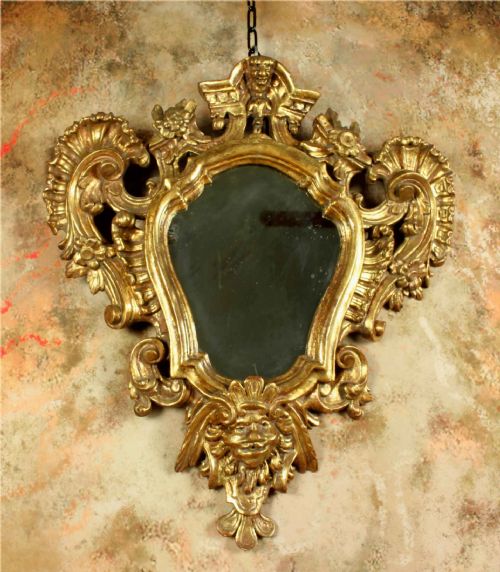
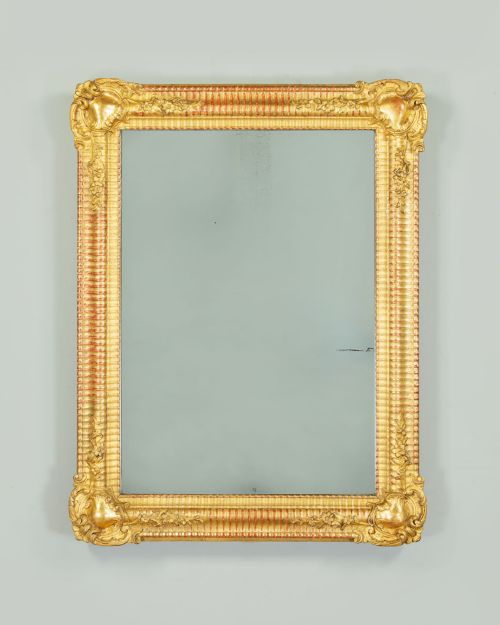
Makers shaped timber and applied layers of gesso to create intricate sculptural relief before applying gold leaf or silver-gilt finishes. Carved wood and composition ornaments were built up on wooden frames, capturing the complex scrollwork and floral motifs characteristic of revival aesthetics.
Mirrors incorporated antique plates, engraved glass, or cut and etched glass panels, sometimes featuring ruby red borders or aged patination. Pressed brass and gilt bronze also appear in the framing techniques, offering alternative metallic textures alongside traditional gilding.
The selection spans from the seventeenth century through to the 1930s, featuring periods such as the Victorian era, Georgian, and various twentieth-century decades.
What varies in quality
The depth and crispness of the carving distinguish finer examples from simpler production, particularly where gesso ornaments meet wooden structures. Artisanal execution shows in the precision of floral scrolls, figural masks, and classical motifs.
The character of the mirror plate itself influences the overall integrity of the piece, with antique silvering, bevelled edges, and hand-engraved details adding distinct depth to the reflection.
The Ornate Hanging Mirror Glossary
- Giltwood
- Wood that has been coated with gold leaf or gold paint. This technique creates a luminous metallic surface that defines many historic frames.
- Gesso
- A plaster mixture applied to a wooden substrate and carved or moulded. It provides the raised detail found on elaborate frames.
- Rococo Revival
- A nineteenth-century design movement mimicking the asymmetrical scrolls and shell motifs of the eighteenth century. It remains a dominant style for decorative wall mirrors.
- Pier mirror
- A tall mirror designed to hang on the wall between two windows. They often sat above matching console tables.
- Overmantle mirror
- A wide mirror intended to be positioned above a fireplace mantelpiece. These pieces frequently span significant horizontal lengths.
Ornate Hanging Mirror: Frequently Asked Questions
Where should I hang an ornate mirror?
These pieces traditionally anchor a room when placed above a fireplace mantel, a console table, or along a primary hallway wall.
Positioning the glass opposite a window maximises natural daylight and expands the perceived proportions of the interior space.
How do I identify a Victorian mirror?
Victorian examples often utilise gesso over timber frames, displaying deep floral carvings, rose vines, or heavier architectural moulding.
Construction details on the reverse and the specific formulation of the mirror plate help confirm the nineteenth-century period of manufacture.
What is the difference between Rococo and Venetian styles?
Rococo frames rely on heavily carved and gilded wood or gesso featuring asymmetrical C-scrolls, foliage, and naturalistic motifs.
Venetian mirrors focus the decorative effect on the glass itself, incorporating cut, etched, or coloured glass borders rather than heavy wooden surrounds.
Are these mirrors heavy to hang?
Many of these pieces possess substantial weight due to the density of solid timber, gesso composition, and thick glass plates.
Secure wall fixings and appropriate load-bearing brackets are essential for safe installation.