



Gold Leafed Mirror
A gold leafed mirror brings warmth and reflective depth to a room, drawn chiefly from nineteenth-century English and French workshops.
Gold Leafed Mirror
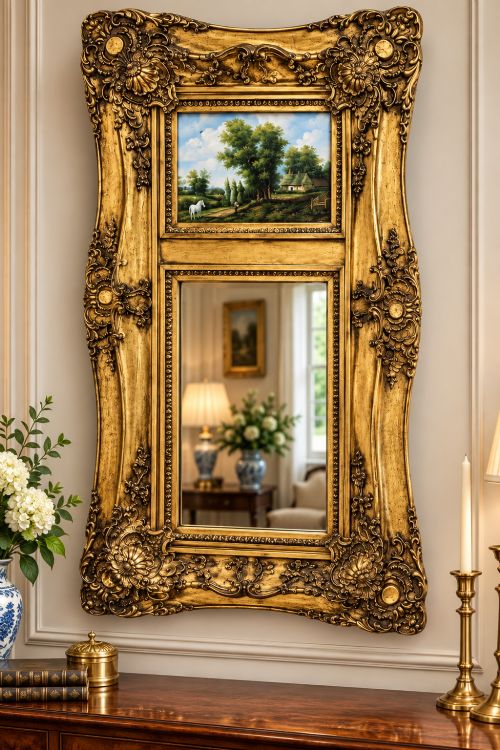
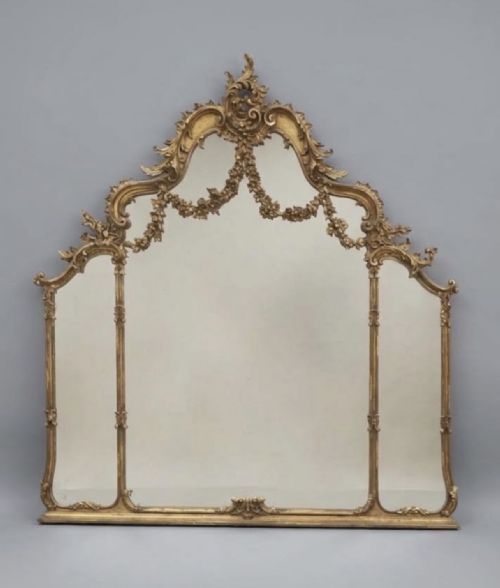
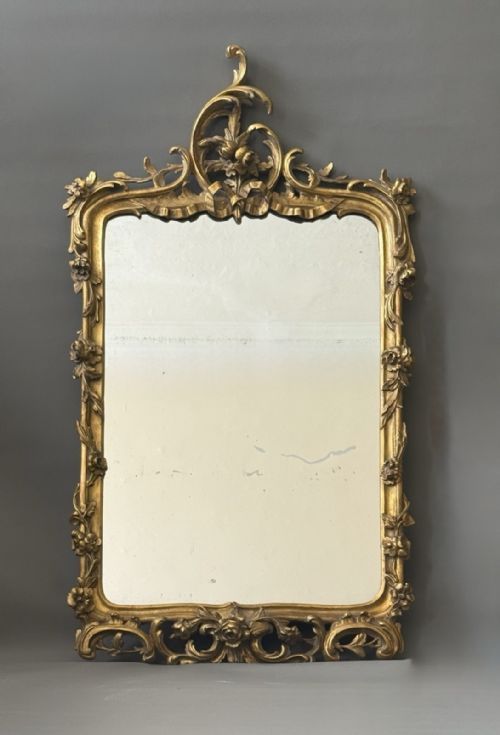
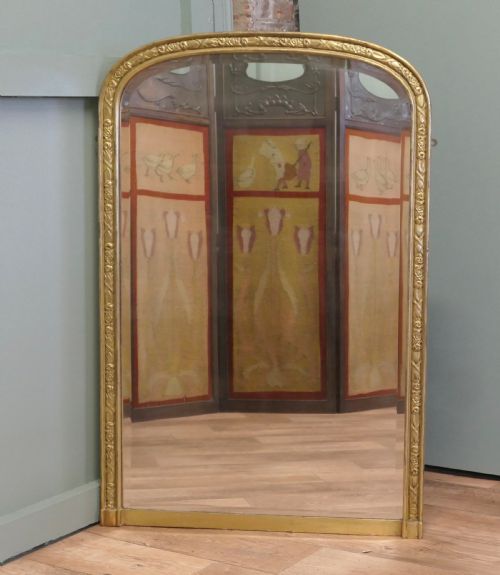
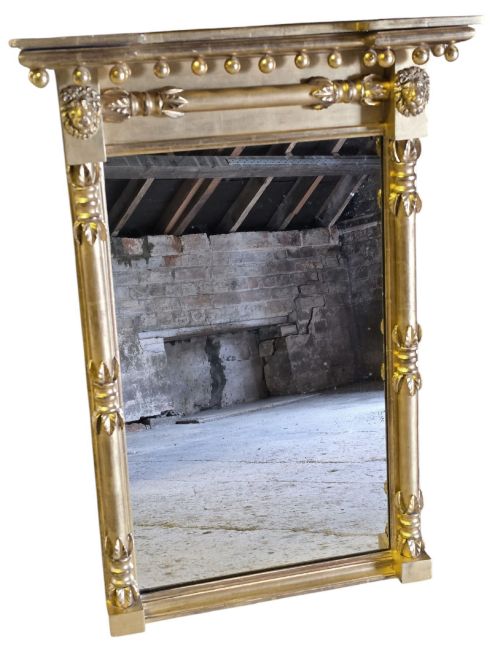
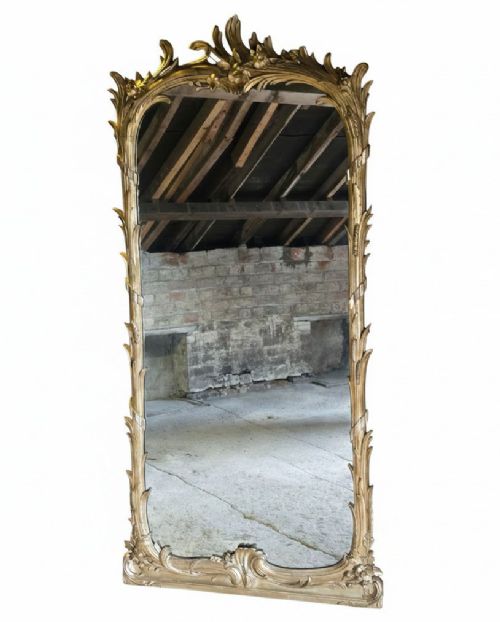
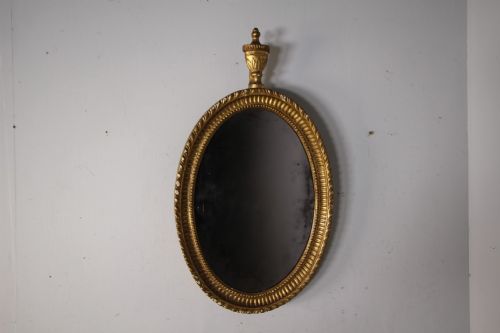
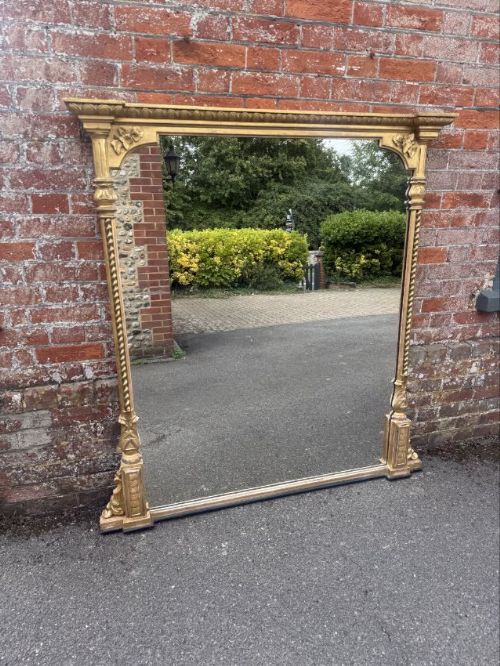
A gold leafed mirror takes several distinct forms, ranging from grand overmantels and tall pier mirrors to smaller wall-hanging ovals and picture frames. These pieces originate across the eighteenth, nineteenth, and early twentieth centuries, reflecting diverse periods such as the Regency, Victorian era, and French Rococo Revival.
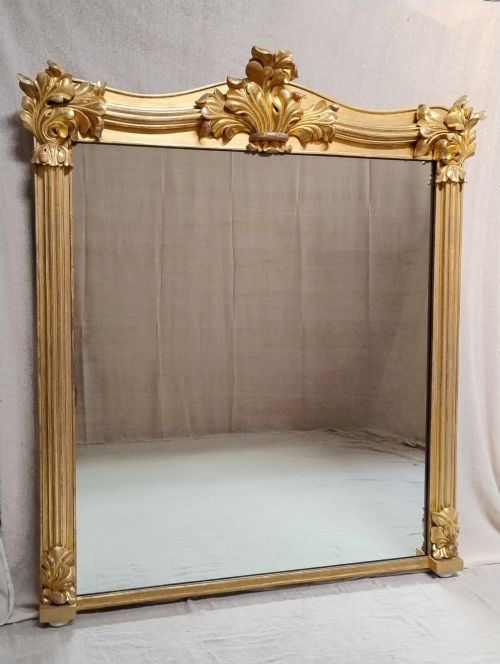
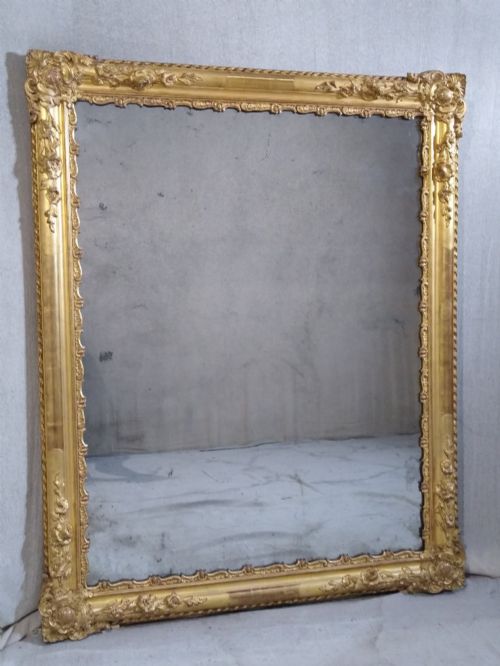
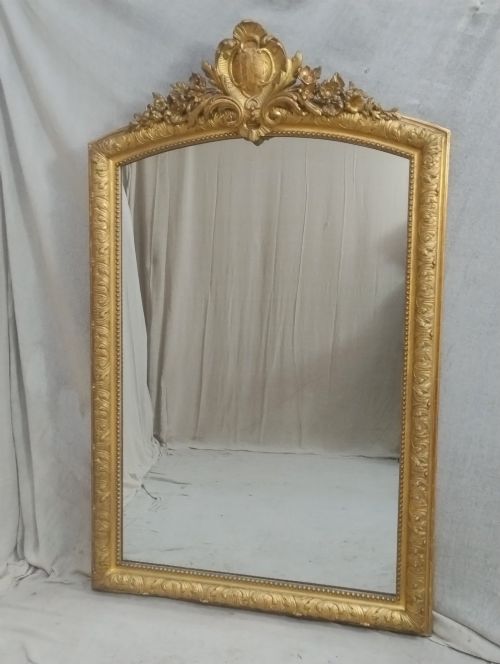
The version most commonly met on this page is the large nineteenth-century giltwood or gesso wall and overmantel mirror. These substantial items often display architectural proportions, arched tops, or elaborate carved detailing designed to command a principal room.
How they were made
Carved timber forms the foundational structure for many of these frames, utilising woods such as pine, walnut, or mahogany. Artisans layered gesso, a mixture of chalk and binder, over the carved wood to build up relief details and crisp floral or acanthus motifs before gilding.
Gold leaf or composition metal leaf was applied to the prepared surfaces by hand, sometimes accompanied by painted accents or polished gesso highlights. The reflective plates themselves include period examples featuring antique mercury glass or bevelled mirror glass.
Listings feature eighteenth-century walnut, nineteenth-century giltwood, and early twentieth-century painted wood frames.
What varies in quality
Quality rests in the crispness of the hand-carved wood and gesso ornamentation compared to heavy, uniform moulded composition. Finer pieces retain sharp undercut foliage, clean rope twists, and well-proportioned frames that show the distinct hand of the maker.
The integrity of the original mercury or antique mirror plate and the depth of the gilding further distinguish finer examples. Retaining original gilding without excessive modern over-painting marks a higher standard of preservation.
The Gold Leafed Mirror Glossary
- Giltwood
- Timber that has been coated with gold leaf or gold paint. This finish provides the characteristic metallic brilliance seen on period frames.
- Gesso
- A plaster-like material applied to wood frames and carved to create raised decorative motifs. It serves as the smooth base layer for subsequent gilding.
- Pier mirror
- A tall mirror specifically designed to hang on the narrow wall space between windows. These pieces often coordinate with matching pier tables.
- Overmantel mirror
- A large horizontal mirror intended to sit directly above a fireplace mantelpiece. They frequently feature architectural arches and grand proportions.
- Mercury glass
- An early type of silvered glass created by pouring a mercury amalgam between double-walled blown glass. It produces a characteristic mottled, foxed reflection.
Gold Leafed Mirror: Frequently Asked Questions
Where should I hang a large overmantel mirror?
An overmantel mirror is traditionally placed directly above a fireplace mantelpiece to reflect light and anchor the room's main focal point. They also work effectively on prominent salon walls where their grand scale can be fully appreciated.
Ensure the wall structure is secure enough to support the substantial weight of carved wood and glass frames, particularly for large nineteenth-century examples.
How do I identify a mercury glass mirror plate?
Mercury glass typically displays a dark, mottled, or foxed reflection with characteristic age spots where the backing has aged over time. This appearance differs from the bright, uniform reflection of modern silvered glass.
Period pieces from the eighteenth and nineteenth centuries frequently retain these original plates, adding authenticity to the frame.
Can I lean these mirrors instead of hanging them?
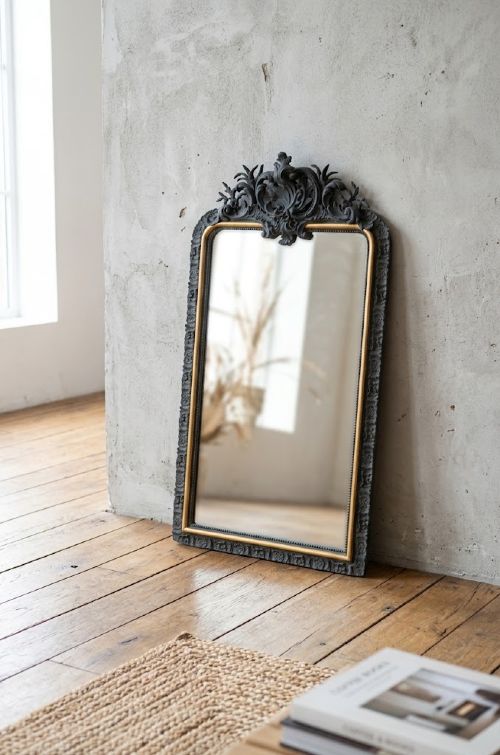
Many large nineteenth-century mirrors are built as leaner mirrors, designed to rest securely against a wall without wall fixings. This placement creates a relaxed, architectural presence in a bedroom or hallway.
When leaning a heavy giltwood frame, use appropriate floor anchors or wall tethers to ensure stability and safety.
How do I clean antique giltwood frames?
Dust giltwood frames gently with a soft, dry brush to prevent damage to fragile gesso and delicate gold leaf layers. Avoid using water, chemical sprays, or abrasive cloths that can strip the historic finish.
Professional conservation cleaning is recommended if the surface accumulates stubborn grime over decades of display.