
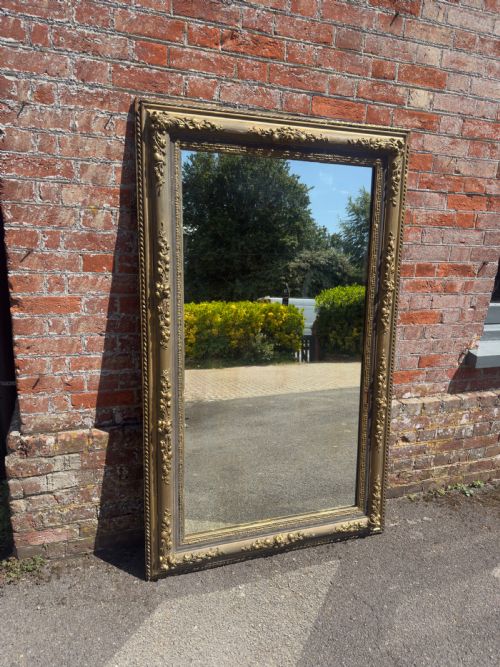


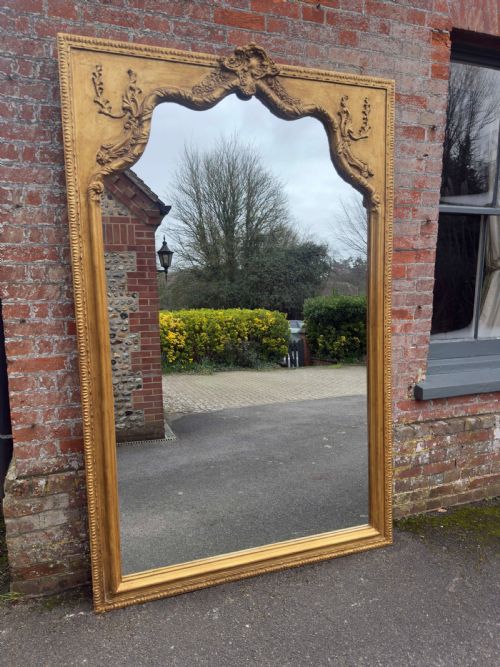


Ornate Gilt Floor Mirror
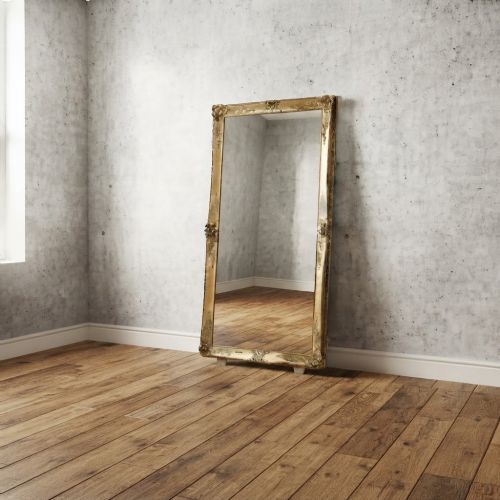
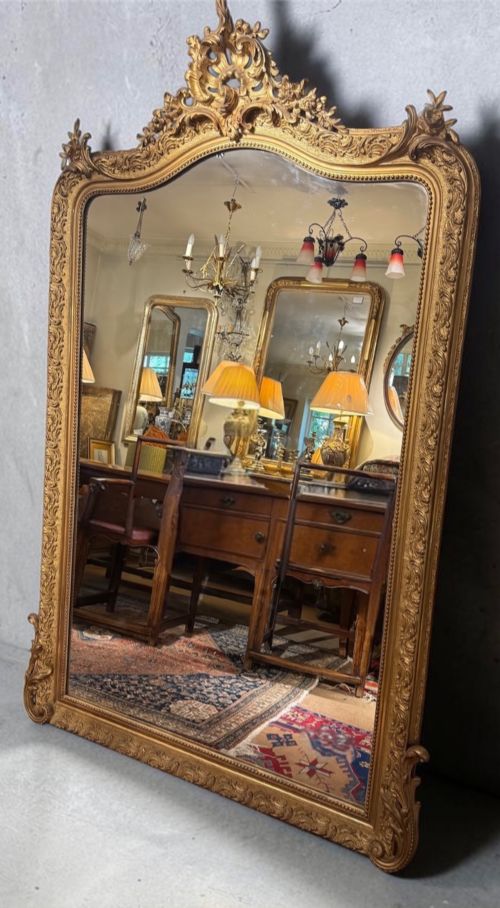
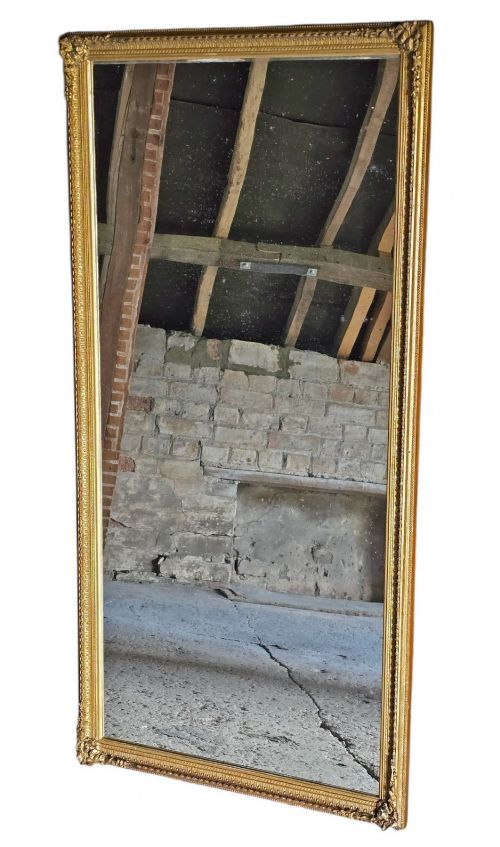
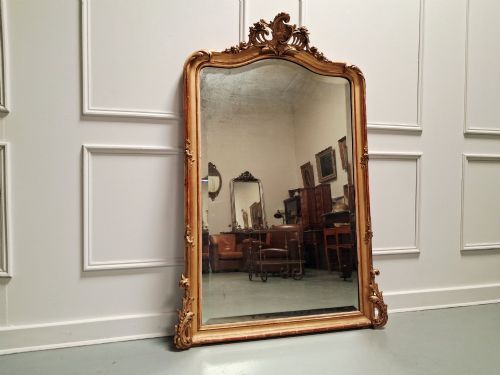
An ornate gilt floor mirror brings grand reflection and golden warmth to a room, catching the light across tall spans of glass.
Ornate Gilt Floor Mirror
An ornate gilt floor mirror provides a commanding architectural presence, designed to lean against a wall or stand independently as a full-length dressing glass. These substantial pieces stretch across periods from the mid nineteenth century into the early twentieth century, spanning English and continental workshops.
Forms include dedicated cheval mirrors on pivoting frames, traditional pier glasses, and large leaner mirrors designed to sit directly on the floor. Buyers look for these items to anchor a room with period character and reflected natural light.
Materials and construction methods
Craftsmen built the underlying carcass from timber, applying layers of plaster and gesso over carved wood to create high-relief ornamentation before gilding. This layered preparation allowed carvers to achieve deep, scrollwork motifs and crisp botanical details across the frame.
Finishing involved applying gold leaf, silver, or liquid metal leaf over the prepared gesso, sometimes combined with painted highlights on parcel gilded surfaces. The heavy mirror glass was then secured behind the ornate wooden rebate, supported by backing boards.
Listings feature pieces spanning from 1850 to 1910, incorporating materials such as gesso, gold leaf, and composition.
Distinguishing quality across examples
The depth and crispness of the hand-carved wooden ornament separate exceptional frames from standard moulded composition pieces. Superior examples display sharply defined scrolls and acanthus leaves rather than soft, repetitive plaster casts.
The integrity of the original gilding and the preservation of the early mirror glass dictate the visual success of the piece. Patina on the gold leaf and silvering indicates age, while intact gesso mouldings show how well the frame has survived decades of movement.
The Ornate Gilt Floor Mirror Glossary
- Giltwood
- Wood that has been coated with gold leaf or gold powder. This surface finish gives the frames their characteristic warm metallic lustre.
- Gesso
- A plaster mix applied to wood frames to create a smooth surface for carving and gilding. It holds intricate moulded details firmly in place.
- Cheval mirror
- A freestanding full-length mirror hung on a vertical frame with pivots. This allows the glass to tilt back and forth.
- Pier mirror
- A tall mirror designed specifically to hang on the wall between two windows. They frequently match the narrow proportions of the architectural space.
- Rococo Revival
- A nineteenth-century design style drawing on eighteenth-century asymmetrical curves, scrolls, and shell motifs. It dominates the ornamentation seen on these grand frames.
Ornate Gilt Floor Mirror: Frequently Asked Questions
How do I secure a floor mirror safely?
Large leaning mirrors require proper wall anchoring to prevent tipping, especially when placed on carpeted surfaces where movement can destabilise the heavy frame.
Most tall frames include discreet fixing points on the reverse to attach the structure securely to wall studs while maintaining the intended visual angle.
What is the difference between a leaner and a wall mirror?
Leaner mirrors are engineered with heavier, structurally reinforced lower frames designed to rest directly on the floor and lean against a vertical wall. Wall mirrors are fitted with hanging brackets intended to suspend the full weight from wall fixings at eye level or above a mantel.
While some large pieces cross between both uses, dedicated floor mirrors rely on gravity and balance to distribute their substantial weight safely.
How do I date a nineteenth-century gilt mirror?
Dating relies on examining the construction of the wooden backing boards, the composition of the gesso, and the style of the carved ornamentation. Mid-century pieces often display heavier Rococo Revival carving, while later Victorian and Edwardian examples shift toward alternative proportions and crisper machine-assisted moulding.
Inspect the backboards and screw types alongside the wear pattern on the gold leaf to understand the chronological span of the object.
Can these mirrors be used in bathrooms?
High humidity and fluctuating temperatures can damage historic gesso, crack original gilding, and cause silver degradation behind the antique glass. Placing these fragile antiques in damp environments risks accelerating the deterioration of the delicate plasterwork.
Dry reception rooms, bedrooms, and hallways remain the most suitable environments for preserving nineteenth-century gilt surfaces.