
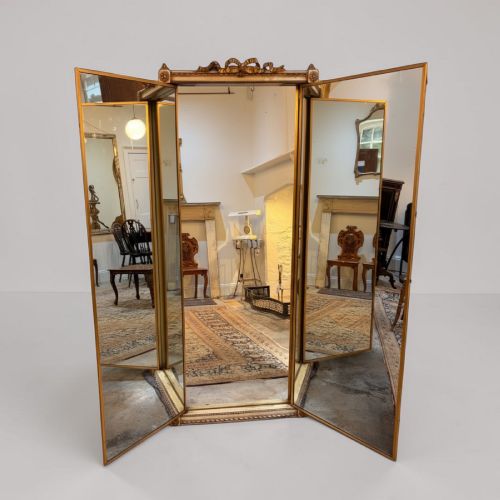
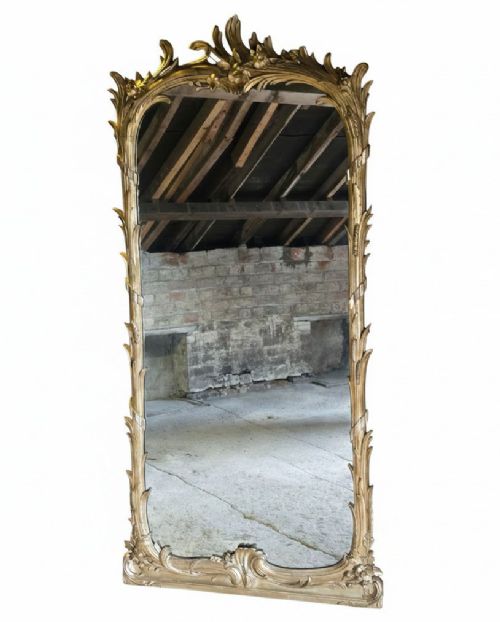
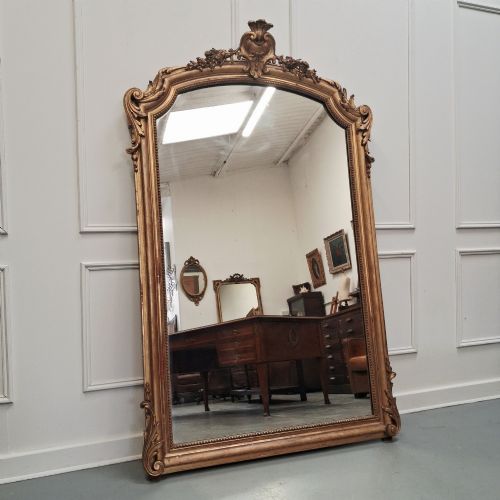
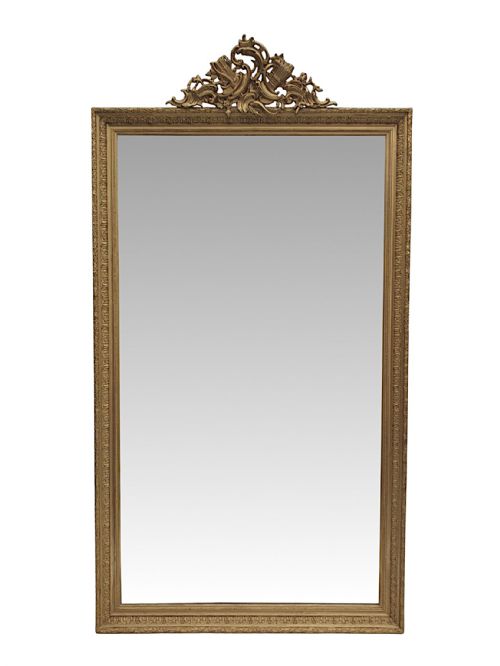



Gold Gilded Floor Mirror
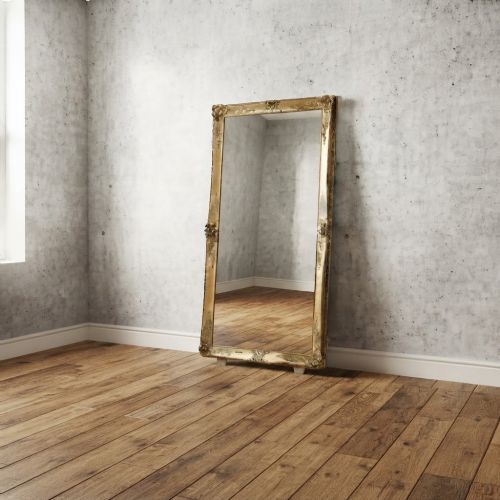
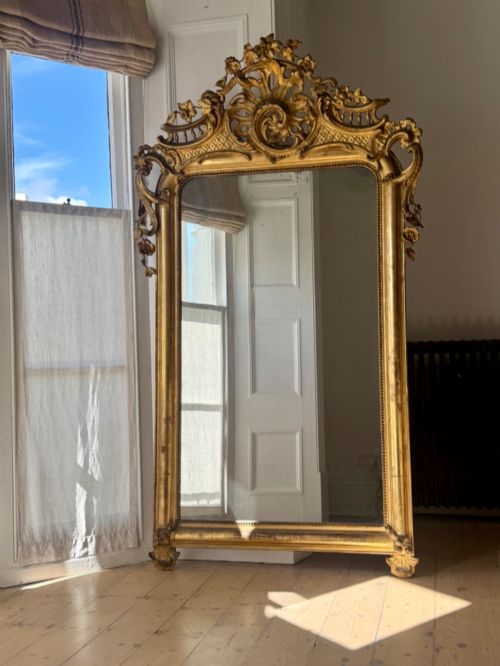
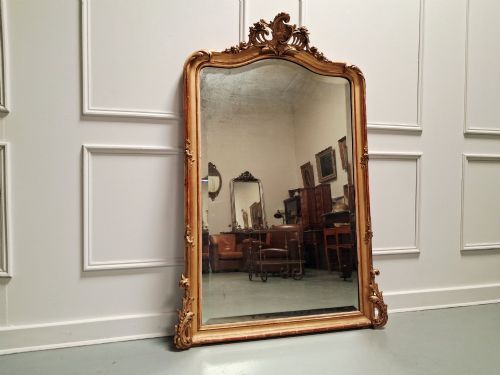
A gold gilded floor mirror brings light and grand scale into a room, fashioned from carved wood and gesso.
Gold Gilded Floor Mirror
A gold gilded floor mirror serves as a prominent vertical feature in a room, designed to reflect light and expand interior space. These large reflective pieces appear in formats such as leaner mirrors, cheval mirrors, and tall pier mirrors.
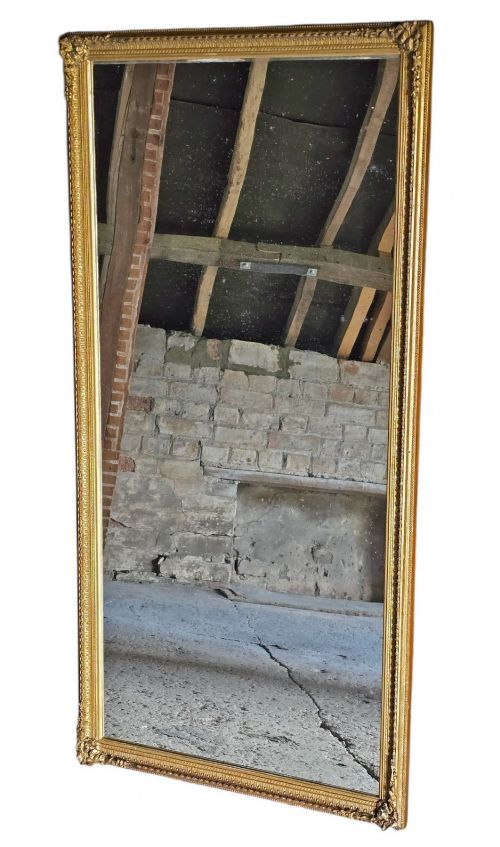
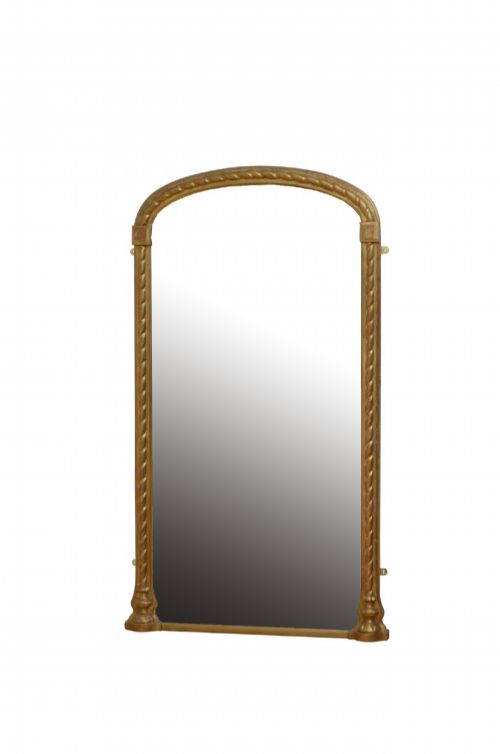
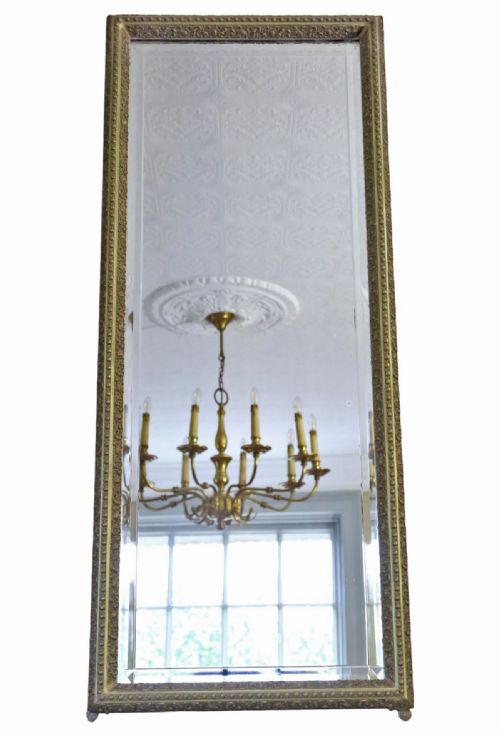
Most examples originate from the nineteenth century, encompassing French Chateau, Victorian, Neoclassical, and Louis Philippe styles. Makers often shaped these frames with arched tops, shaped crests, or rectangular proportions suited for standing directly on the floor.
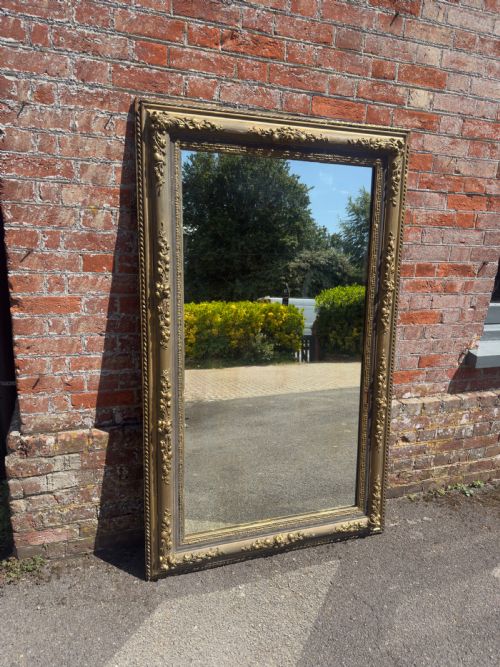
Buyers encounter variations ranging from simple painted frames to heavily carved ornamental designs. The overarching presence of gold leaf and giltwood unites these large-scale interior furnishings.
How they were made
Carpenters typically constructed the foundational structure using carved wood, often applying layers of gesso and composition to build up elaborate decorative mouldings and relief ornamentation.
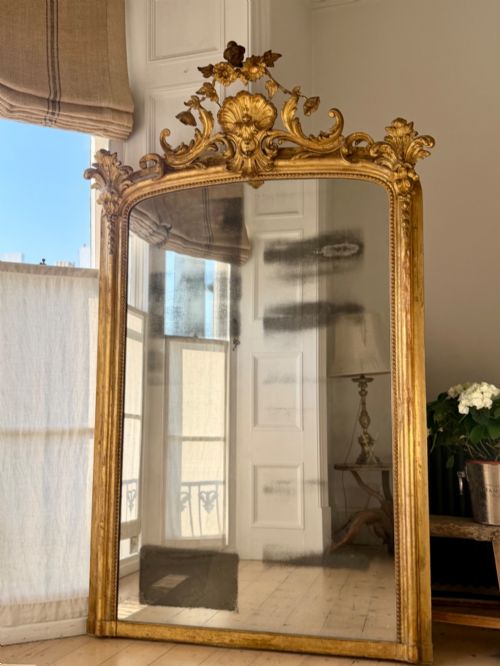
Artisans then applied gold leaf, silver gilding, or paint to the prepared surface to achieve the characteristic metallic finish. Many period frames incorporate mercury glass or foxed mirror glass held securely within the timber rebate.
Listings feature eighteenth-century, nineteenth-century, and early twentieth-century pieces, spanning French Chateau, Victorian, Neoclassical, and Louis Philippe styles.
What varies in quality
The depth and crispness of the hand-carved wood and gesso ornament distinguish finer frames from simpler moulded versions. Superior examples show intricate detailing along the shaped tops, corners, and rope carvings without loss of definition.
The integrity of the original gilding and the character of the mirror plate heavily influence the overall standard of the piece. Genuine period mercury glass with natural foxing carries a different visual depth compared to later replacement plates.
The Gold Gilded Floor Mirror Glossary
- Giltwood
- Wood that has been coated with gold leaf or gold paint. This material forms the primary structure of many antique decorative frames.
- Gesso
- A plaster-like mixture applied to wood frames to create a smooth surface for carving and gilding. Artisans mould this substance into intricate relief designs.
- Leaner mirror
- A tall mirror designed to stand upright against a wall without being hung from brackets. These pieces rely on their substantial weight and base to remain stable.
- Cheval mirror
- A freestanding full-length mirror supported by a frame with pivoting pivots. This allows the glass to tilt back and forth.
- Mercury glass
- A type of silvered glass produced by pouring a mercury amalgam between double-walled blown glass. Older variants often develop characteristic spotting known as foxing.
Gold Gilded Floor Mirror: Frequently Asked Questions
How do I secure a heavy floor mirror?
Heavy floor mirrors and leaner mirrors require proper anchoring to the wall to prevent accidental tipping. Using discreet security brackets attached to the upper frame ensures stability.
Positioning the base firmly on the floor while securing the top maintains safety in busy living spaces.
Can these mirrors stand unsupported?
Cheval mirrors feature built-in stands or legs that allow them to remain upright independently in the middle of a room. Leaner mirrors rely on leaning against a vertical wall for support.
Selecting the correct format depends on whether the piece needs floor clearance or wall backing.
How do I identify a nineteenth-century frame?
Nineteenth-century frames usually combine solid carved wood with gesso mouldings finished in gold leaf or gilt paint. Examining the joinery and the reverse of the wooden panel helps determine the manufacturing era.
Older mirror plates often display subtle imperfections or foxing that distinguish them from modern replacements.