

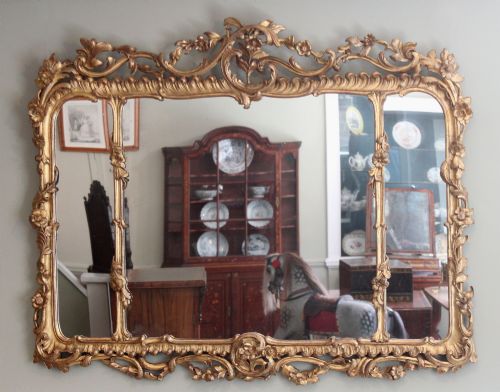


Ornate Carved Mantle Mirror
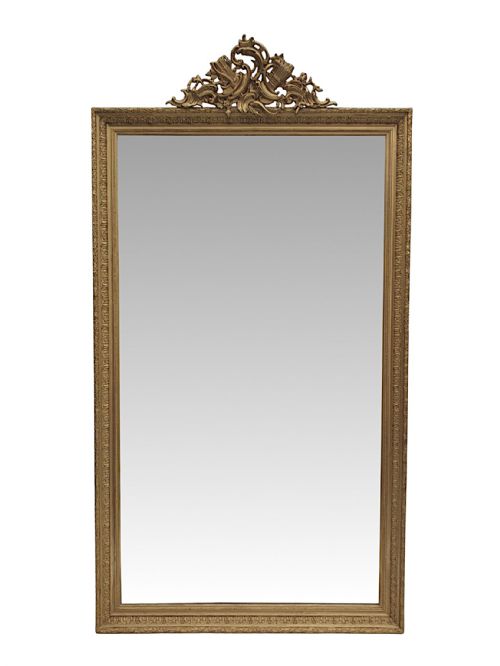
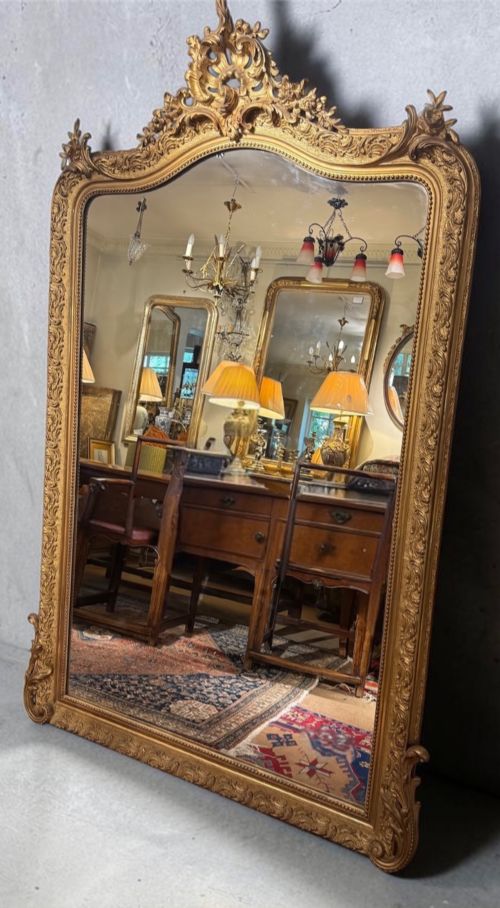
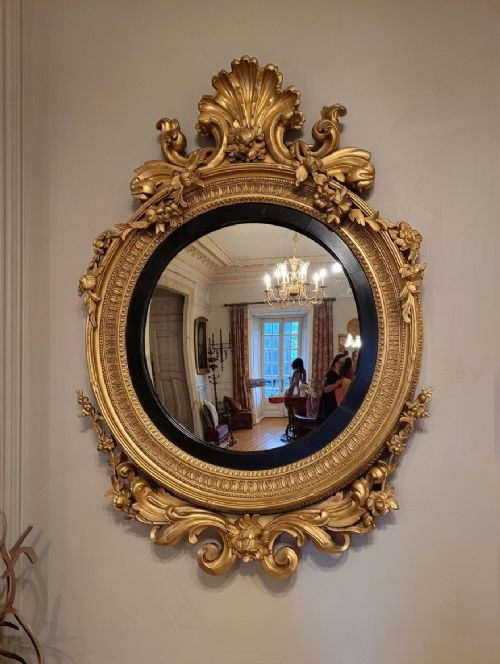
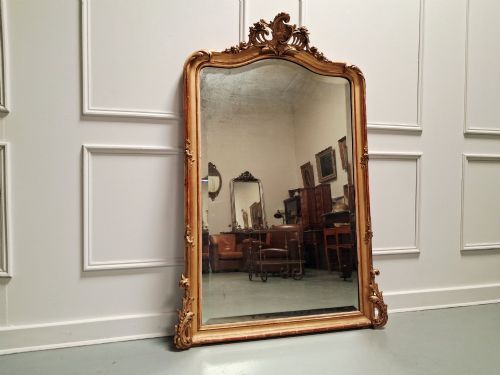
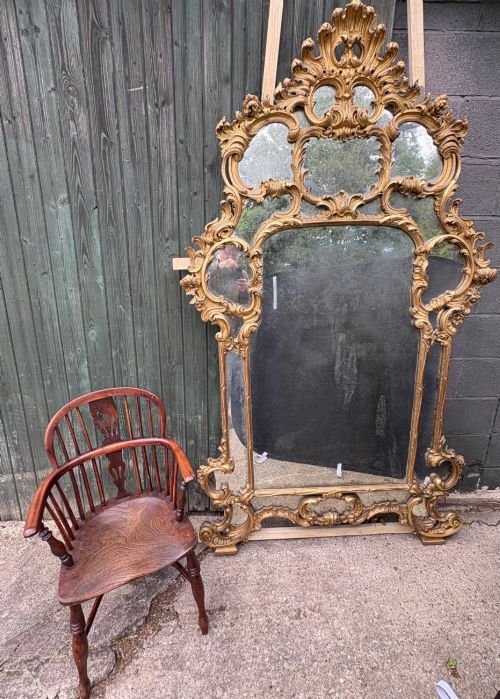
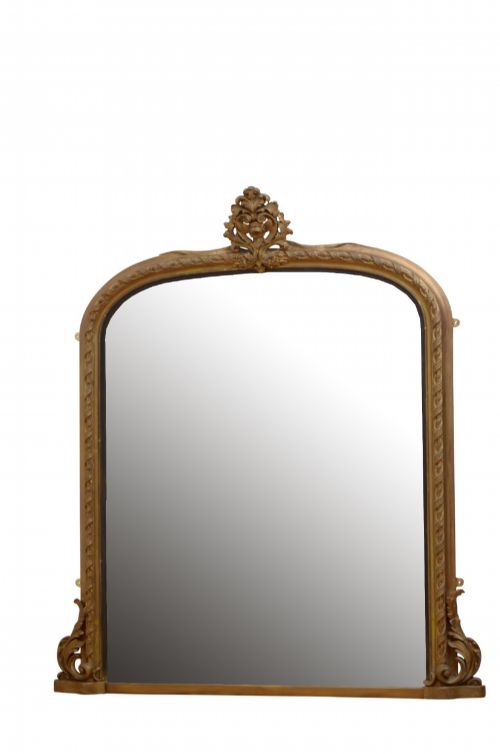
An ornate carved mantle mirror brings immense depth and reflective light to a room, drawing the eye with elaborate nineteenth-century gilt frames and sweeping decorative crests.
Ornate Carved Mantle Mirror
An ornate carved mantle mirror functions primarily as a grand decorative focus above a fireplace hearth, though many examples serve equally well as large wall or pier mirrors. When searching for an ornate carved mantle mirror, buyers encounter numerous nineteenth-century pieces alongside select eighteenth-century and early twentieth-century examples.
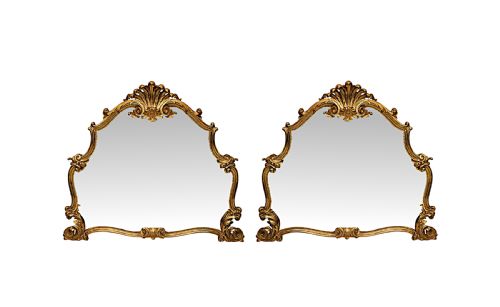
The prevailing formats on this page include substantial overmantel mirrors featuring arched, shaped, or rectangular frames designed to sit comfortably on a chimney breast. These heavy architectural pieces originate from various English and continental workshops, displaying distinct regional carving traditions.
Makers utilised resilient wooden frames overlaid with moulded ornament to achieve massive proportions without destabilising the wall fixings. Such mirrors range from restrained Georgian and Regency designs to exuberant Victorian and French Rococo revival styles.
Materials and construction methods
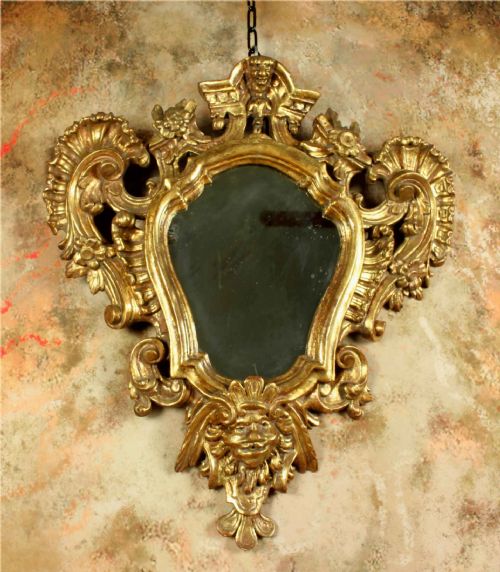
Carved wood provides the primary structural foundation for these large frames, often paired with composition ornament or gesso to build up complex relief details. Artisans sculpted intricate floral scrolls, C-scrolls, and asymmetrical motifs directly into the timber or modelled them onto the wooden carcass.
Gold leaf and silver leaf were meticulously applied over bole layers to create glowing metallic surfaces, while other frames received painted or gilded gesso finishes. Heavy plate glass forms the central reflective element, frequently secured behind wooden backing boards with traditional fixings.
Some towering overmantel mirrors reach heights approaching seventy-nine inches, requiring remarkably tall ceilings and sturdy historic walls to stay upright.
Distinctions in quality and execution
Depth of carving and clarity of detail separate standard production frames from exceptional pieces, as skilled carvers undercut wooden foliage to create true three-dimensional relief. The crispness of the moulded gesso and composition work dictates how sharply the decorative scrolls and acanthus leaves catch the light.
Original mercury or early silvered glass displays subtle foxing and age spots that indicate period authenticity, whereas later replacements present an entirely uniform reflection. The structural integrity of the heavy wooden joints and the original gilding state further determine the standing of each mirror.
The Ornate Carved Mantle Mirror Glossary
- Gesso
- A plaster-like mixture applied to wooden frames as a smooth base for gilding or painting. Artisans carved intricate decorative details directly into this hardened layer before applying gold leaf.
- Giltwood
- Timber that has been coated with thin sheets of gold leaf over a prepared ground. This traditional technique provides a warm, enduring metallic sheen.
- Overmantel mirror
- A large mirror specifically proportioned to hang on the wall directly above a fireplace mantelpiece. These pieces often incorporate horizontal formats or arched tops to match architectural chimney breasts.
- Composition
- A moulded mixture of whiting, resin, linseed oil and glue pressed into decorative ornaments. It allowed makers to produce complex repeating patterns quickly during the nineteenth century.
- Rococo Revival
- A nineteenth-century design movement inspired by eighteenth-century French style. It relies on asymmetrical C-scrolls, shell motifs, and naturalistic floral carvings.
Ornate Carved Mantle Mirror: Frequently Asked Questions
How do I hang a heavy overmantel mirror safely?
These substantial frames require secure fixing directly into masonry or reinforced wall studs using heavy-duty brackets suited to the weight of wood and glass. Professional installation ensures the wall structure bears the load safely without shifting.
Positioning the mirror at the correct height above the fireplace anchors the room scheme and prevents heat damage from active hearths below.
How do I distinguish nineteenth-century gesso from later resin copies?
Period gesso and composition material hardens significantly over decades, developing a fine network of age cracks under magnification. Modern synthetic resins remain slightly more flexible and lack the distinctive shrinkage patterns seen on antique frames.
Examining the depth and crispness of the undercutting around the carved elements also reveals the hand-worked nature of older pieces.
Can these mirrors be cleaned without damaging the gold leaf?
Gilt surfaces require gentle dusting with a soft, dry brush to remove particles without disturbing delicate metallic leaf or aged gesso. Liquid cleaners should remain far away from the frame to prevent moisture absorption into the wood.
Glass panels benefit from standard glass cleaner applied sparingly to a cloth rather than sprayed directly near the antique wooden rebate.
What defines a French Rococo Revival mirror?
French Rococo Revival pieces feature flowing, asymmetrical lines dominated by scrolling foliage, floral sprays, and shell work. The frames lack rigid symmetry, creating a sense of movement typical of mid-nineteenth-century continental taste.
Oak and pine carcases support deep gesso ornament that accentuates the theatricality of the design.