
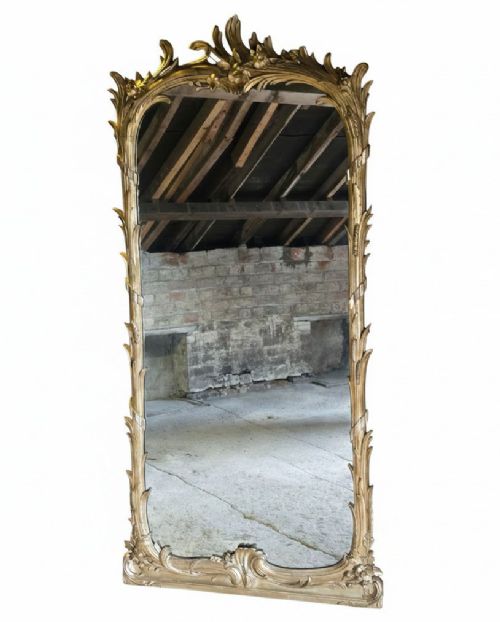
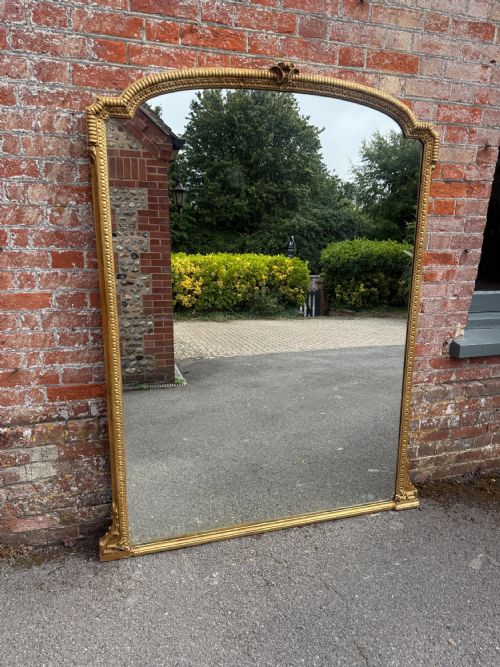
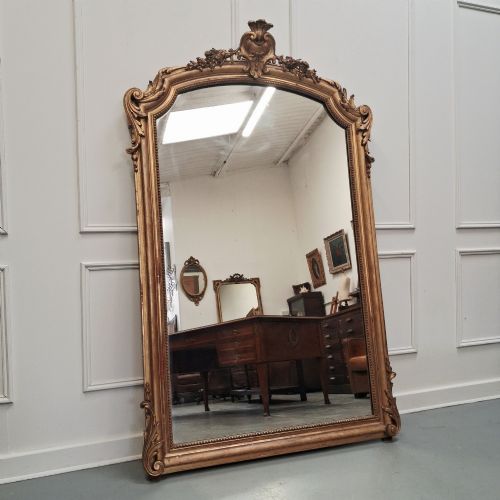
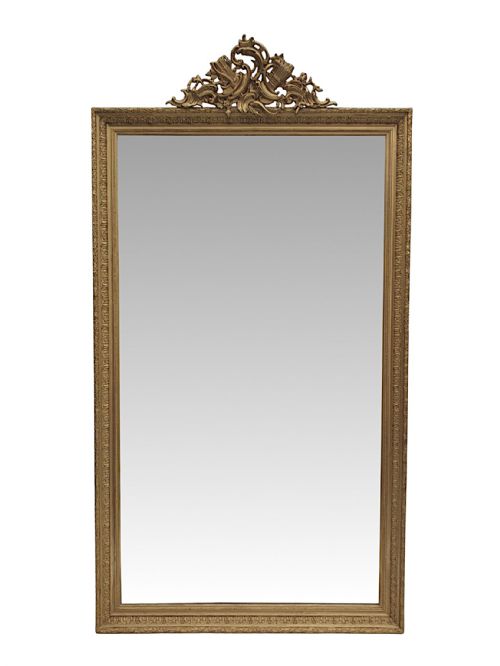
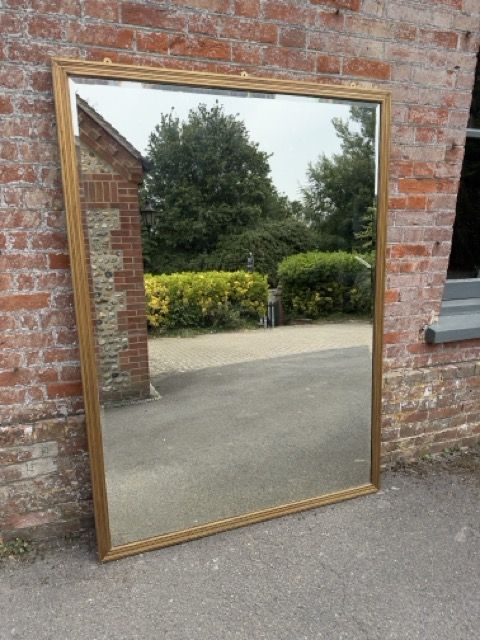
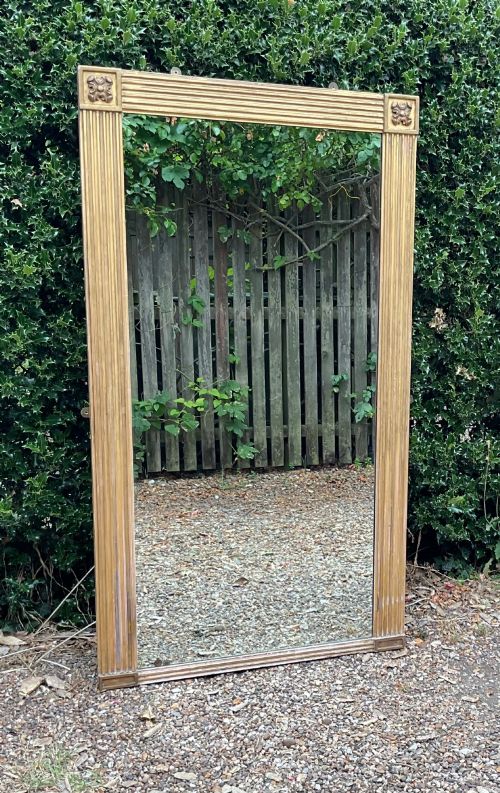
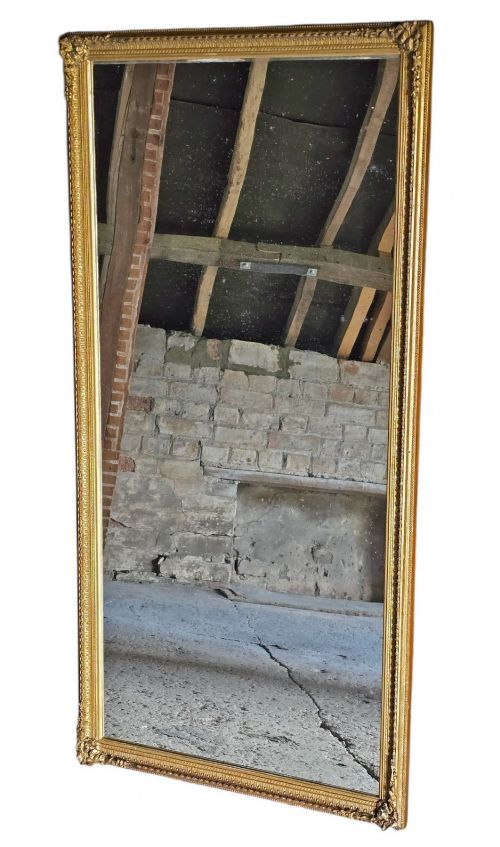
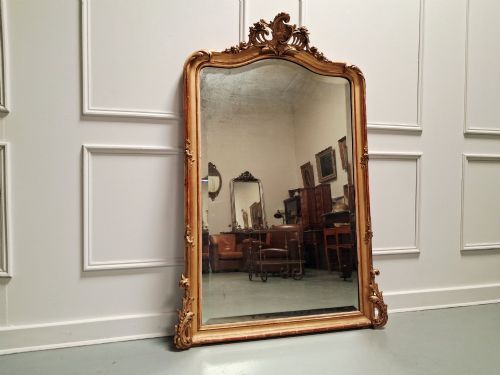

Large Gold Floor Mirror
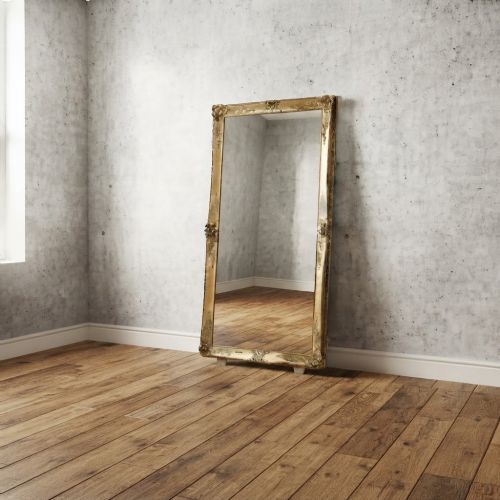
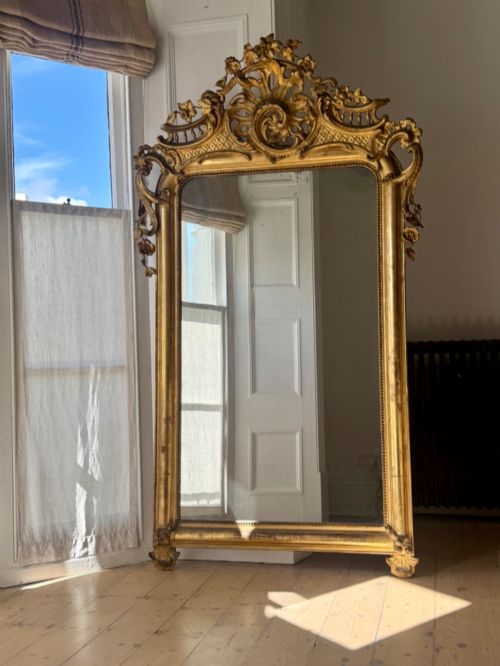
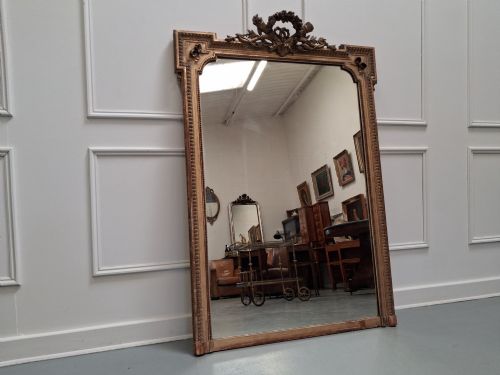
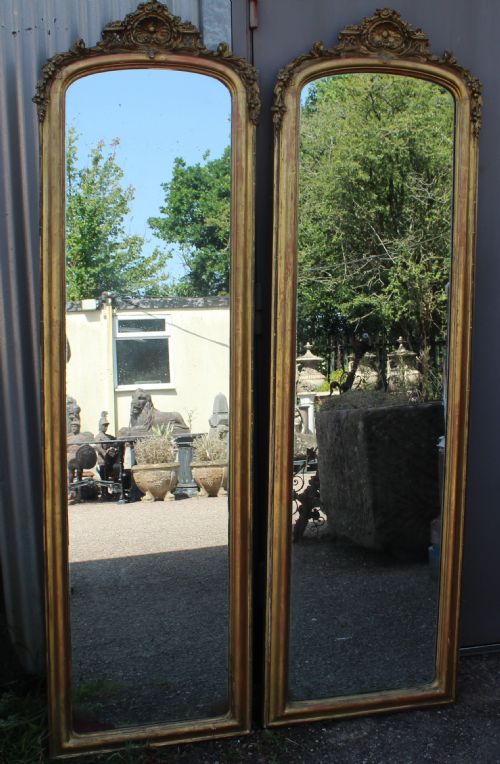
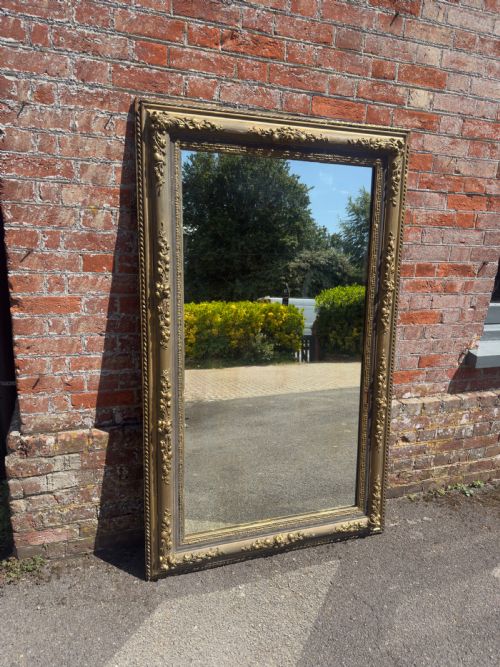
A large gold floor mirror brings scale and reflection to a room, drawing the eye along gilded frames that catch the light.

Large Gold Floor Mirror
When searching for a large gold floor mirror, buyers encounter grand proportions designed to lean against a wall or stand independently.
The pieces appearing on this page span the eighteenth, nineteenth, and early twentieth centuries, originating from English and French workshops.
How they were made
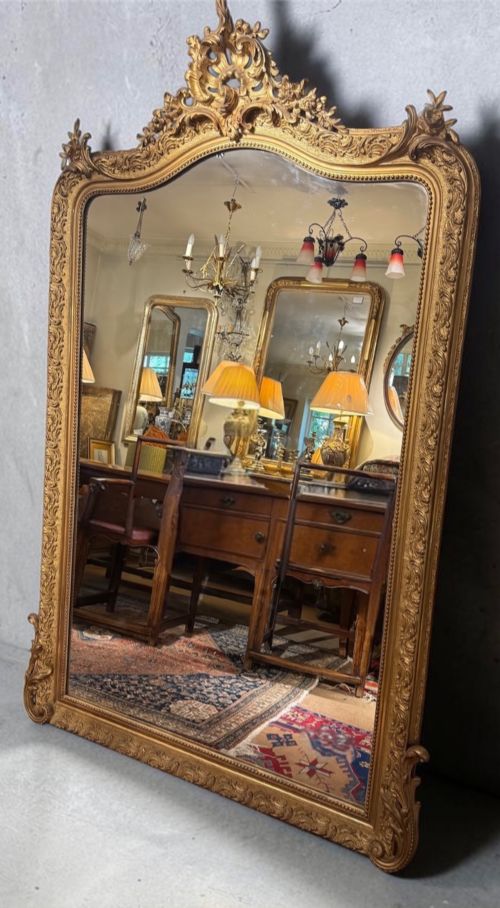
Carved wood frames provide the foundational structure, frequently enhanced with applied gesso to build up complex moulded details.
Surfaces receive gold leaf or gilt finishes, sometimes paired with silver gilding or painted highlights to create aged decorative effects.
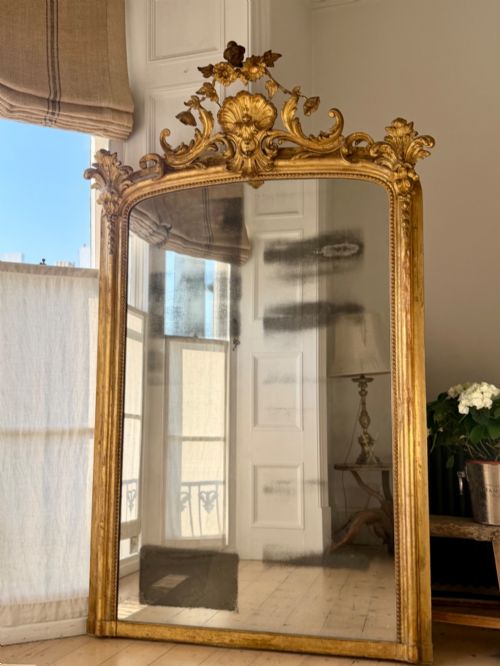
Glass panels include traditional mercury glass with foxed patination alongside clear mirror glass fitted into shaped rebates.
Several mirrors carry centuries of reflections within their foxed glass, having quietly watched generations adjust their cravats and bonnets.
What varies in quality
The depth and definition of the wood carving distinguish superior frames from simpler moulded versions, showing crisp lines in scrolls and foliage.
The application of gold leaf demonstrates artisan skill, where hand-gilded surfaces retain subtle texture compared to flat modern paint.
Original mirror plates carry age through foxing and silvering loss, adding depth that distinguishes period glass from replacement panels.
Charles Nosotti
The Large Gold Floor Mirror Glossary
- Giltwood
- Wood that has been coated with gold leaf or gold paint. This technique gives frames a warm metallic lustre.
- Gesso
- A plaster-like mixture applied to wood frames and carved. It allows artisans to shape intricate decorative relief patterns before gilding.
- Mercury glass
- A type of double-walled glass blown in the nineteenth century with a silvering solution inside. It creates a characteristic mottled reflection.
- Leaner mirror
- A tall mirror designed to rest directly against a wall rather than hang from brackets. These pieces rely on their substantial weight for stability.
- Pier glass
- A tall, narrow mirror traditionally hung on the wall space between windows. They often sit above matching console tables.
Large Gold Floor Mirror: Frequently Asked Questions
How do I secure a large floor mirror?
Large floor mirrors are heavy items that typically lean against a wall for support. Many period examples include integrated fixing points behind the frame to anchor them safely.
Securing the top of the frame to the wall prevents tipping, particularly in rooms with heavy footfall or children.
What is mercury glass?
Mercury glass is a historic double-walled glass material silvered on the interior. The chemical process creates characteristic dark spots and foxing.
Over time, air enters the cavity and alters the reflective surface, giving antique mirrors their distinct mottled appearance.
How do I identify a French Louis Philippe mirror?
Louis Philippe mirrors date from the nineteenth century and feature distinctive rounded top corners. The frames are generally simpler than ornate Rococo styles.
They often incorporate subtle beaded borders or gentle foliate carvings around the rectilinear glass.
Can these mirrors be used freestanding?
Certain forms like cheval mirrors are built with hinges and stands to remain freestanding. Most large floor mirrors are designed as leaner mirrors supported by the wall.
Checking the reverse of the frame reveals whether it requires wall anchors or includes a standing mechanism.