



Ornate Bronze Desk Clock
An ornate bronze desk clock brings architectural weight and precision to a room, cast in heavy gilt metal and driven by nineteenth-century mechanics.
Ornate Bronze Desk Clock
An ornate bronze desk clock sits at the meeting point of interior architecture and precise horology, capturing the decorative spirit of the Victorian era and the nineteenth century. These objects function simultaneously as timekeepers and heavy sculptural centerpieces for a desk, mantel or bracket.
The versions most commonly met on this page are French and English productions spanning the Regency period through to the late nineteenth century. Makers adopted styles that drew heavily on Rococo Revival, Louis XV, and Louis XVI motifs, translating historical excess into dense, cast-metal forms.
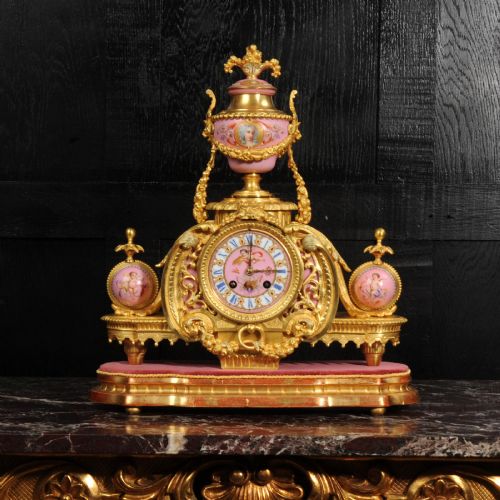
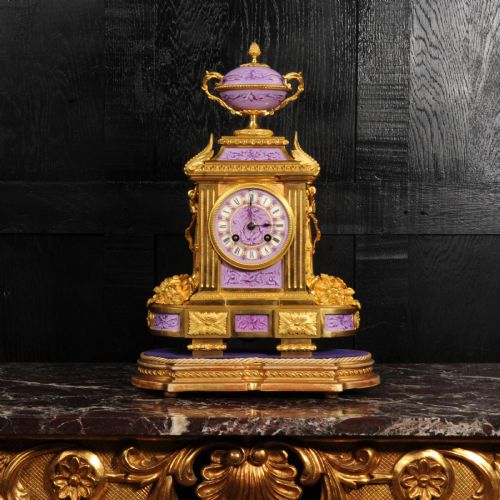
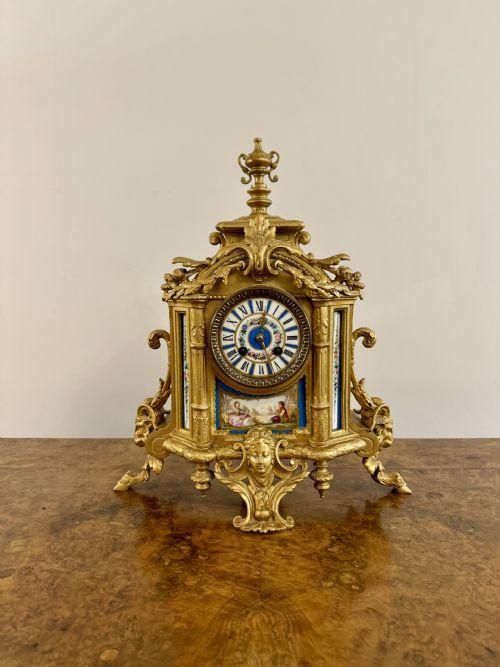
Many examples pair cast bronze or ormolu mounts with contrasting materials like Sèvres porcelain panels, white marble bases, or glass sides in crystal regulators. Buyers encounter everything from miniature bedside pieces to large, imposing mantel clocks housing complex striking movements.
Materials and Technique
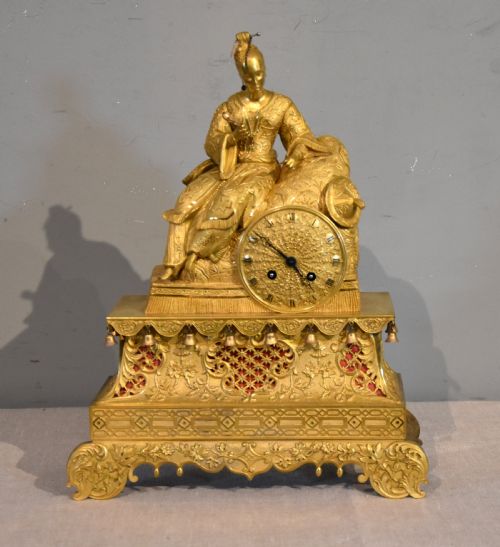
Foundries created the substantial frames of these clocks by casting bronze, brass, or white metal, subsequently applying mercury gilding or ormolu to achieve a lasting golden sheen. Artisans often combined these metal elements with hand-painted porcelain panels depicting floral scenes or romantic figures.
Clockmakers housed the brass gear trains within heavy housings, utilising platforms such as fusee movements or delicate escapements to regulate the beat. Dials commonly feature individual enamel cartouches with Roman numerals, protected behind bevelled glass panes fitted tightly into cast bezels.
Some nineteenth-century travellers carried miniature bedside clocks fitted into cast gilt travel cases just to wake up abroad in absolute luxury.
Distinctions in Quality
The refinement of the chasing separates standard production from exceptional work, revealing the hand of the artisan in the crispness of acanthus leaves, cherubs, and scrollwork. Softer, shallower cast details indicate mass production or worn moulds rather than the sharp definition found in pieces by named makers.
The integrity of the internal movement and the preservation of the original gilding dictate the overall standing of an example. Complete clock sets retaining matching garnitures and undamaged porcelain or enamel dials represent the upper tier of survivals from this period.
Achille Brocot·William Payne·Samuel Marti·Henri Jacot·Moser·James Moore·E.J. Dent·Paul Garnier
The Ornate Bronze Desk Clock Glossary
- Ormolu
- Gilded bronze produced through the application of a mercury-gold amalgam to a bronze base, creating a dull golden lustre that does not tarnish easily. This technique was widely employed on French decorative metalwork.
- Garniture
- A matching set of decorative objects, typically comprising a central clock flanked by matching vases, urns or candelabra designed to sit together on a mantelpiece.
- Fusee
- A conical pulley inside a clock movement designed to equalise the diminishing power of the mainspring as it unwinds. This mechanism ensures consistent torque and therefore more accurate timekeeping.
- Crystal Regulator
- A type of mantel clock encased in glass panels on four sides within a brass or gilt bronze frame, allowing light to pass through and expose the mechanical movement.
- Champlevé
- An enamelwork technique where troughs or cells are hollowed out of the metal surface and filled with vitreous enamel before firing. The resulting pattern displays coloured enamel flush with the surrounding metal lines.
Ornate Bronze Desk Clock: Frequently Asked Questions
How do I wind my clock?
Most nineteenth-century mechanical clocks require a specific winding key inserted into the dial holes to tension the mainsprings for time and strike trains.
Care must be taken not to over-wind the springs, stopping the moment resistance is felt to protect the historical gearing.
Where should I place it?
These heavy metal objects demand a stable, level surface such as a sturdy desk, heavy mantelpiece or dedicated wall bracket to prevent vibrations affecting the pendulum.
Keeping the clock away from direct sunlight and damp environments preserves both the fragile enamel dials and the original ormolu surface.
How do I date these clocks?
Stylistic indicators such as the heavy use of Rococo scrolls, Louis XVI symmetry, or late Victorian champlevé enamel provide a broad chronological window.
Signatures or stamp marks left by makers on the backplate of the brass movement offer a more precise manufacturing date.
Why does my clock stop?
Mechanical clocks are sensitive to minor shifts in level, which can easily cause the delicate balance wheel or pendulum to go out of beat.
Older movements also accumulate dust and dry oil over time, requiring professional cleaning to maintain a consistent rhythm.