

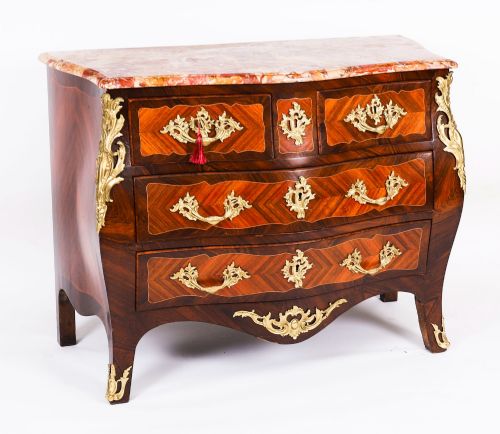
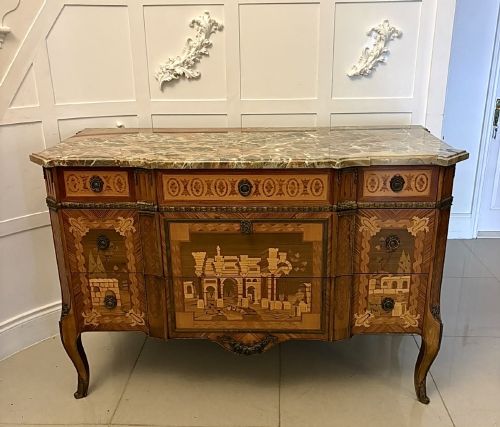
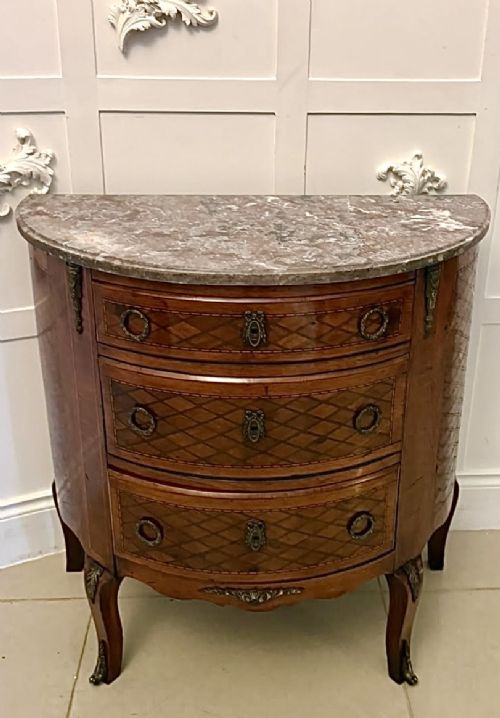
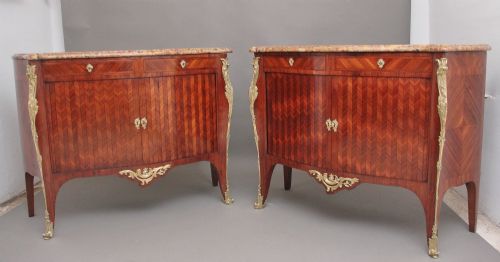
Ormolu Mounted Commode Chest
An ormolu mounted commode chest is a low storage unit defined by gilt metal mounts and wooden cabinetry, sought for formal French interior design schemes.
Ormolu Mounted Commode Chest
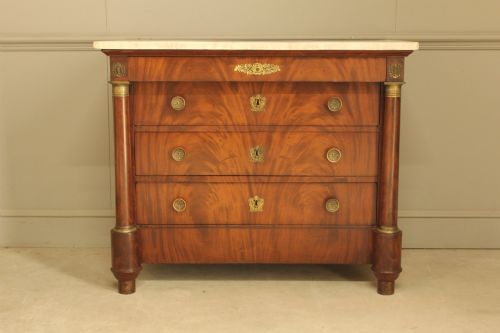
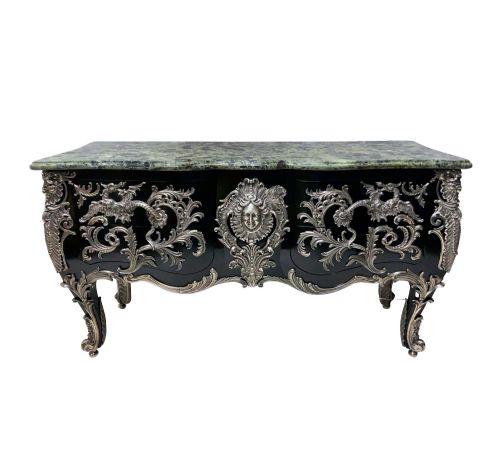
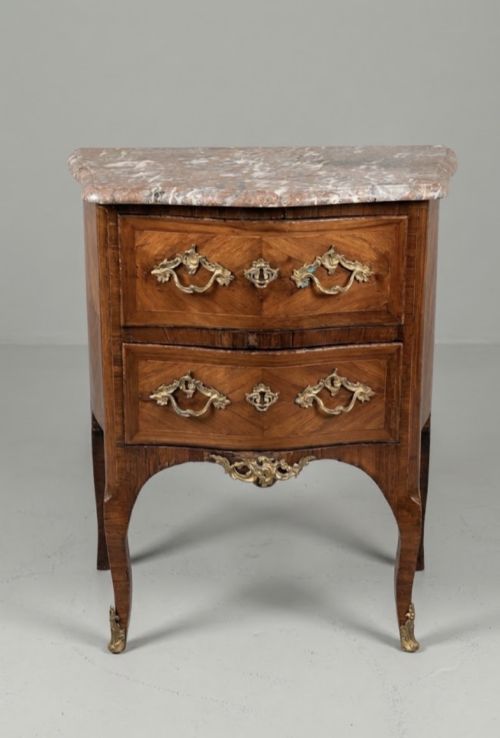
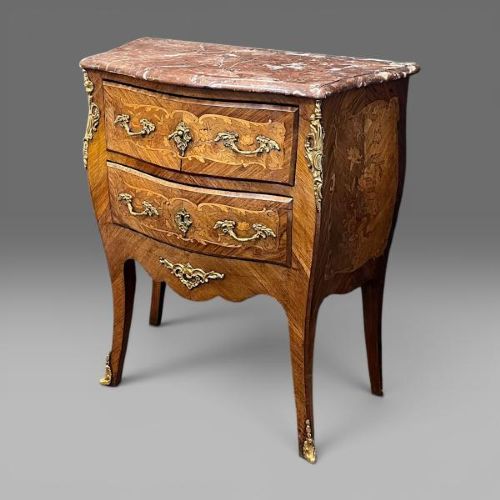
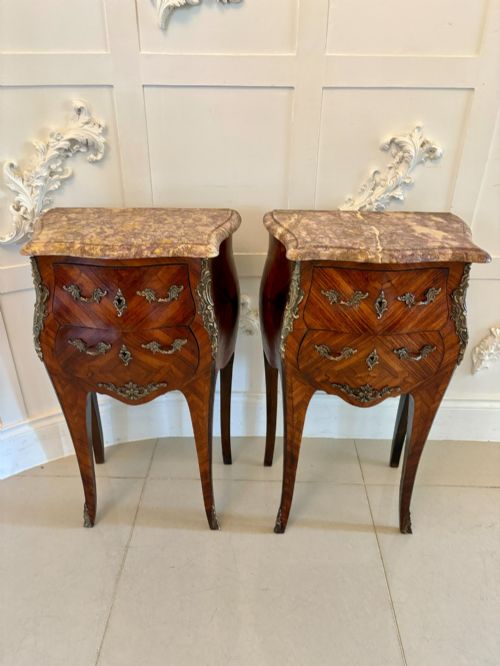
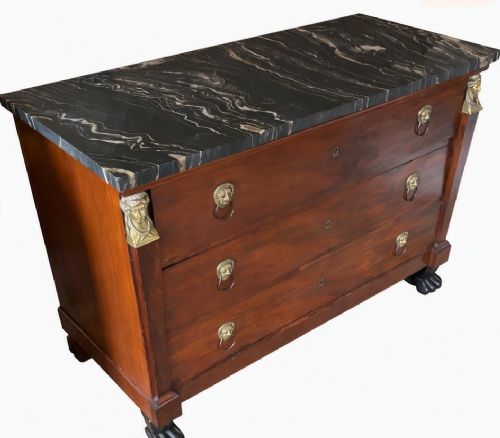
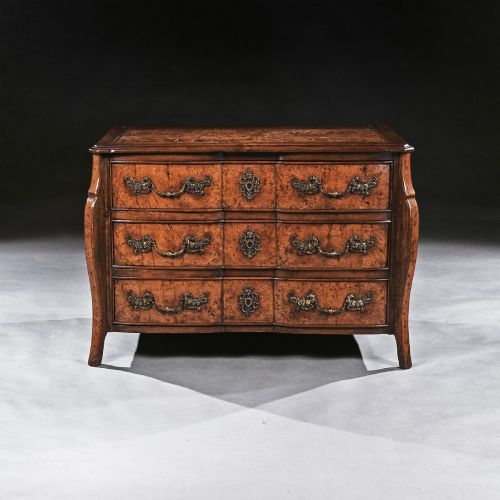
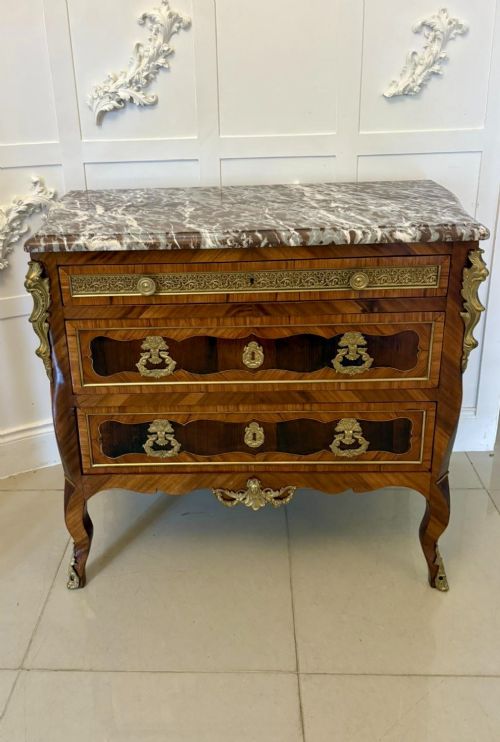
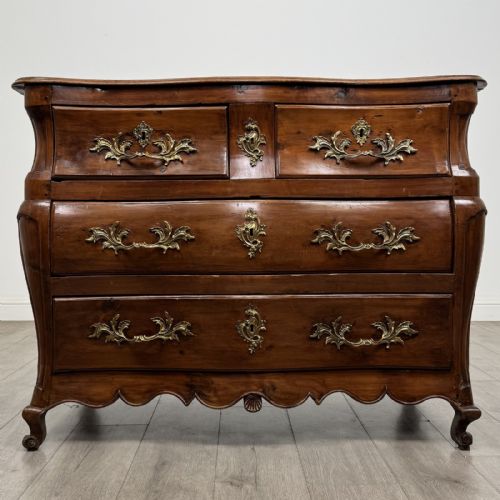
An ormolu mounted commode chest functions primarily as a decorative storage cabinet or chest of drawers, appearing in forms such as serpentine chests, bombe cabinets, and bedside tables. These pieces originate predominantly from French design traditions spanning the eighteenth, nineteenth, and early twentieth centuries.
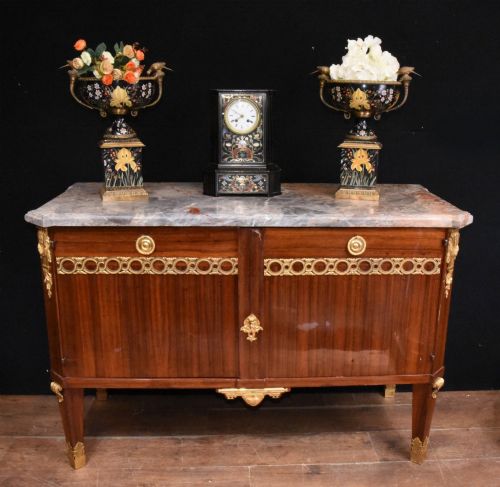
The inventory on this page centres on Revival styles like Louis XV and Louis XVI, alongside provincial and empire pieces. Buyers encounter variations ranging from full-sized salon commodes to smaller bedside cabinets and side cabinets.
The structural forms utilise traditional drawer configurations and cabinet doors, frequently capped with fitted marble slabs. These items serve both functional storage roles and prominent display functions within period reception rooms and bedrooms.
How they were made
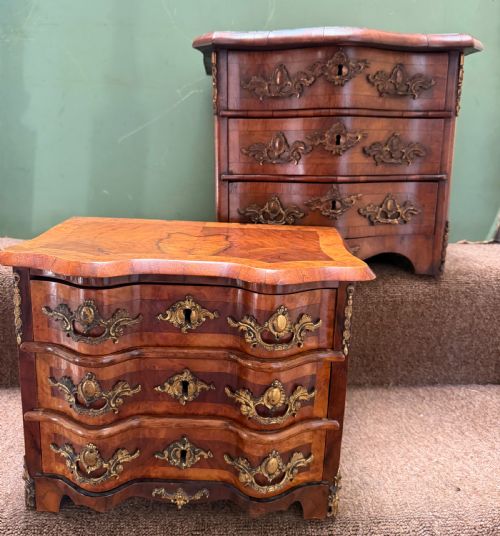
Cabinetmakers construct the carcases of these pieces using native and exotic timbers such as walnut, mahogany, kingwood, rosewood, burr elm, and tulipwood. Artisans apply these woods as veneers arranged in intricate marquetry and parquetry geometric patterns across the drawer fronts and sides.
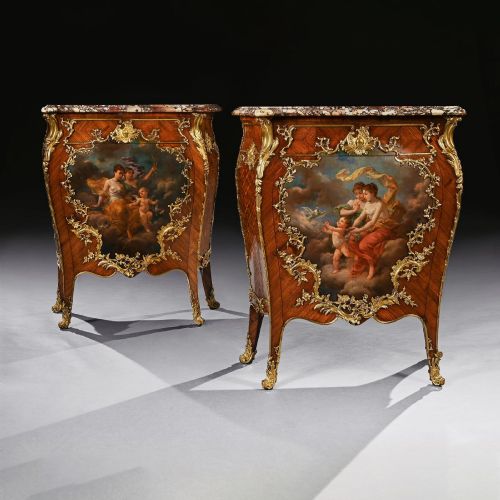
Gilt bronze and ormolu mounts are cast, chased, and secured to the corners, feet, and aprons of the cabinetry to accentuate the sculptural contours. Many examples incorporate heavy marble tops cut to follow the serpentine or demi-lune outlines of the wooden structure below.
Ormolu Mounted Commode Chest Retail Price Guide 2026
Typical asking prices for ormolu mounted commode chest among the pieces listed under this phrase on Sellingantiques today, from the lower quarter to the upper quarter. They describe what is for sale here now, not the wider market.
Listings feature marble, ormolu, and kingwood across pieces dated from the eighteenth to the twentieth century.
What varies in quality
The standard of an ormolu mounted commode chest depends heavily on the crispness of the bronze chasing and the precision of the timber veneers. Superior pieces display finely articulated mounts that integrate seamlessly with the carcase, whereas lesser examples rely on coarse castings with minimal hand-finishing.
The choice and execution of the wood marquetry further separate exceptional commissions from standard workshop production. Authentic period integration of the original marble top also distinguishes fine specimens from later replacements.
Jacques Bircklé·Grand Ducal Workshops·Henry Dasson·Gillows·Thomas Hache of Grenoble·Sormani
The Ormolu Mounted Commode Chest Glossary
- Ormolu
- Gilded bronze applied as decorative mounts to furniture. The technique involves coating metal with a finely ground mercury and gold amalgam before heating.
- Marquetry
- The art of applying decorative pieces of veneer to a structure to form intricate designs. Cabinetmakers utilise various tinted and textured woods to create pictorial scenes or floral motifs.
- Bombe
- A bulging, outward-curving swell on the front and sides of a cabinet or chest. This swollen contour requires advanced woodworking skill to maintain structural integrity.
- Parquetry
- Geometric patterns formed by veneer tiles fitted together on a surface. Squares, triangles, and lozenges create repeating optical arrangements across drawer fronts.
- Serpentine
- A wave-like curved line featuring a convex centre flanked by concave ends. This contour defines the facades of many formal storage chests.
Ormolu Mounted Commode Chest: Frequently Asked Questions
What is an ormolu mounted commode chest?
An ormolu mounted commode chest is a low cabinet or chest of drawers featuring gilded bronze ornamentation on the wooden carcase. These pieces originate primarily from French cabinetmaking traditions.
They combine practical storage with decorative presence, frequently topped with marble slabs and detailed veneer work.
How do I identify a Louis XV style commode?
Louis XV style pieces display asymmetrical curves, cabriole legs, and elaborate gilt bronze mounts shaped like foliage or scrolls. The overall silhouette avoids straight lines in favour of flowing contours.
Surfaces often feature floral marquetry and serpentine drawer fronts characteristic of the mid-eighteenth-century French aesthetic.
Where were these commode chests used?
Historically, these cabinets stood in formal drawing rooms, bedchambers, and reception halls of grand residences. They served as ornamental side storage for personal items and documents.
Today, buyers place them in living rooms and hallways as focal display furniture beneath mirrors or artwork.
What woods appear on these chests?
Cabinetmakers utilised a variety of dense hardwoods including kingwood, rosewood, walnut, and mahogany for the primary structure and surface veneers. Contrasting timbers allowed workshops to create geometric parquetry patterns.
Exotic woods were imported specifically for their rich grain and colour variations.