



Cabriole Leg Marble Commode
A cabriole leg marble commode brings sculptural curves and cold stone together, offering practical storage topped with a durable, decorative surface.
Cabriole Leg Marble Commode
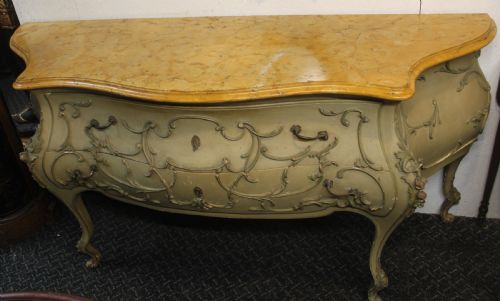
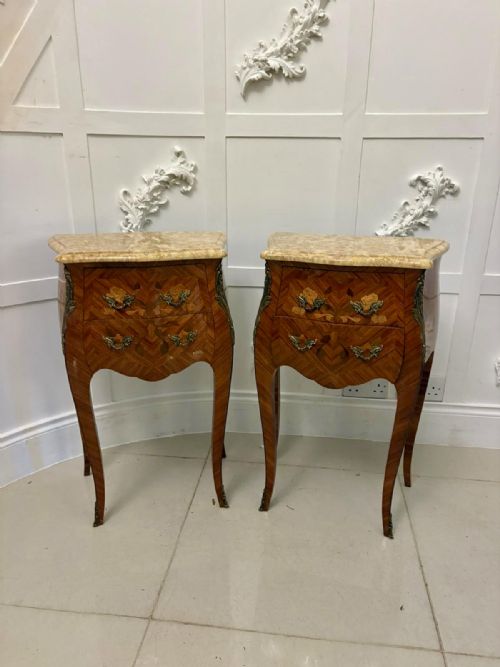
A cabriole leg marble commode is a low storage unit, typically taking the form of a chest of drawers, bedside table, or side cabinet raised on curved legs. These pieces combine substantial timber carcases with fitted stone tops, originating largely from French and Italian traditions.
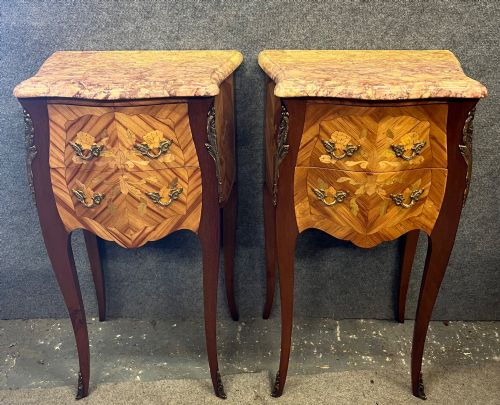
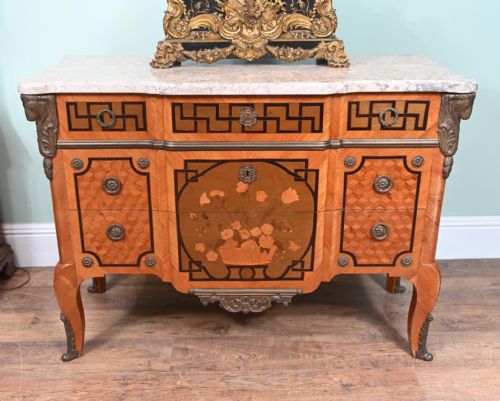
The versions met most frequently on this page belong to the Louis XV style and its later revivals, spanning from the eighteenth century through the nineteenth century and into the early twentieth century. They range from grand serpentine commodes in walnut and cherrywood to smaller inlaid bedside cabinets.
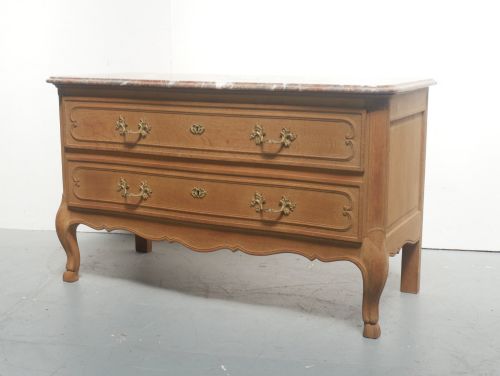
Makers and cabinetmakers drew on regional styles such as French provincial and transitional designs, incorporating brass and ormolu mounts. Buyers encounter both full-sized bedroom chests and neat bedside companions designed for domestic display.
How they were made
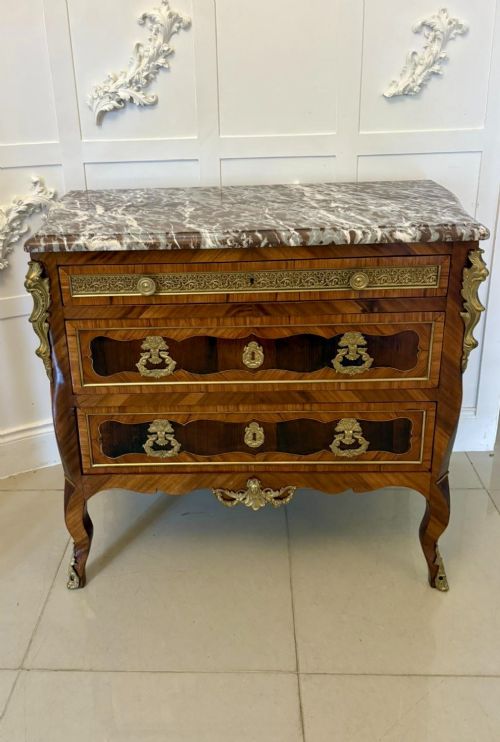
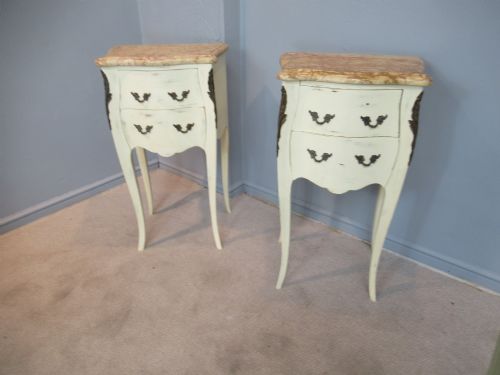
Carpenters constructed the carcases from woods such as walnut, kingwood, rosewood, oak, cherrywood, and fruitwood, often applying intricate marquetry and inlaid veneers across the surfaces. Some examples are finished in painted wood or specific tones like plummet grey.
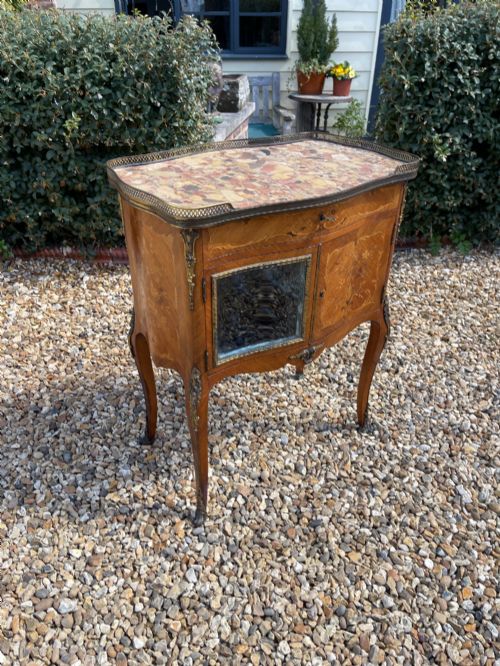
The distinctive legs curve outward and taper down to pad or scroll feet, characteristic of the cabriole form without straight structural bracing. Tops are fitted with heavy slabs of marble, breccia marble, or scagliola, cut to follow the straight or serpentine contours of the timber base.
Decorative detailing is completed with cast brass and ormolu mounts, handles, and escutcheons that accent the drawer fronts and corners. Joinery relies on traditional cabinetmaking techniques suited to housing heavy stone tops upon shaped wooden frames.
Cabriole Leg Marble Commode Retail Price Guide 2026
Typical asking prices for cabriole leg marble commode among the pieces listed under this phrase on Sellingantiques today, from the lower quarter to the upper quarter. They describe what is for sale here now, not the wider market.
Listings span from the eighteenth century to the 1930s, uniting walnut, kingwood, cherrywood, and painted wood beneath marble and scagliola tops.
What varies in quality
The ambition of the timber work and veneer layout sets finer examples apart, particularly where marquetry patterns flow uninterrupted across drawer fronts and sides. The choice of underlying wood, from humble fruitwood to rich kingwood and walnut, signals the original tier of production.
The execution of the stone top dictates much of the visual weight, with thick, contoured breccia or veined marble slabs demonstrating superior craftsmanship over plain or thin substitutes. The handling of the cabriole leg itself, balancing muscular curve with slender grace, reflects the maker's sculptural skill.
Hardware contributes significantly to the overall merit, as finely chased ormolu and heavy brass mounts elevate a piece beyond standard production items. The integration of doors and drawers within serpentine or bombe outlines requires precise carpentry that distinguishes master workshops from standard cabinet makers.
The Cabriole Leg Marble Commode Glossary
- Cabriole leg
- A furniture leg that curves outward at the knee and tapers inward toward the ankle, mimicking animal limbs. It is a defining feature of eighteenth-century furniture styles.
- Commode
- A low chest of drawers or cabinet designed for domestic storage. Originating in France, the form evolved from cupboards to multi-drawer chests.
- Marquetry
- The art of applying pieces of veneer to a structure to form decorative patterns and pictures. Craftsmen utilise various coloured woods to achieve tonal depth.
- Ormolu
- Gilded bronze used for decorative mounts and furniture hardware. It provides a bright metallic contrast against dark timber surfaces.
- Serpentine front
- A furniture front curving outward at the centre and inward at the ends. This undulating shape requires advanced woodworking skill to execute properly.
- Scagliola
- A composite material made from selenite, glue, and pigments, mimicking marble and other hard stones. It is laid and polished to achieve a smooth decorative surface.
Cabriole Leg Marble Commode: Frequently Asked Questions
What is a cabriole leg marble commode?
A cabriole leg marble commode is a low set of drawers or a cabinet elevated on curved legs and finished with a stone top. These pieces function as decorative storage units in bedrooms and living spaces.
They combine wooden carcases with stone surfaces, drawing heavily on French stylistic traditions from multiple centuries.
How were these commodes used originally?
These pieces served primarily for storage in private rooms, holding clothing, linens, or personal items. The smooth stone top provided a durable surface for washing equipment, lamps, or decorative objects.
Over time their role shifted toward formal display within domestic interiors, particularly as smaller bedside cabinets gained popularity.
How do I distinguish eighteenth-century pieces from later revivals?
Eighteenth-century examples display hand-cut joinery, period-specific timber ageing, and construction methods unique to early workshop practices. They often feature structural framing built entirely from native timbers suited to the region of origin.
Later nineteenth and twentieth-century revivals utilise machine assistance, standardised hardware fittings, and different secondary woods while closely copying historical outlines.
How do I care for the marble top?
Marble requires gentle cleaning with mild soap and water, avoiding acidic substances that can etch the polished surface. Regular dusting and prompt attention to spills keep the stone in good condition.
Using protective pads beneath objects helps prevent scratching and preserves the natural finish of the stone.
Where should I place a commode in my home?
These commodes fit well in bedrooms as bedside tables or larger chests of drawers for clothing storage. Their decorative fronts and stone tops also make them suitable for hallways, landings, or sitting rooms.
Because they feature finished backs or sit flush against walls, placement depends largely on the specific scale and whether the piece has doors or drawers.