

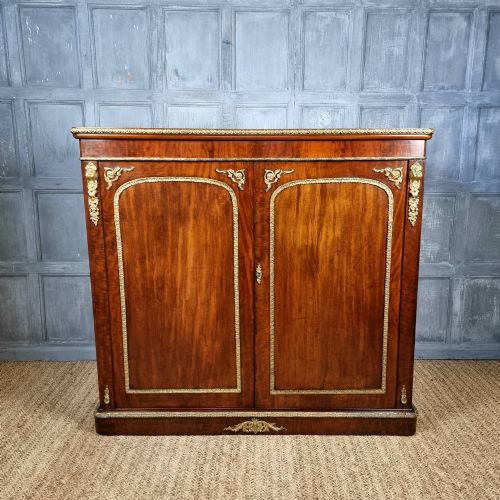
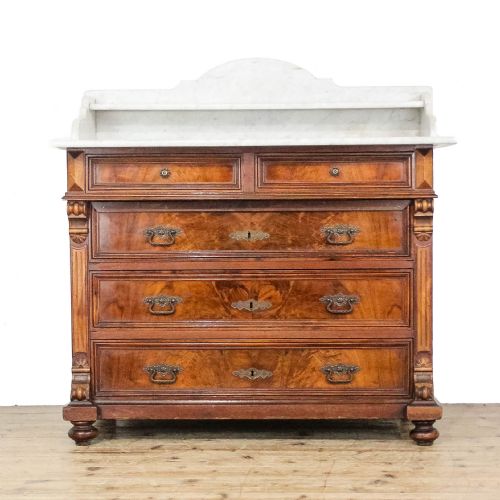
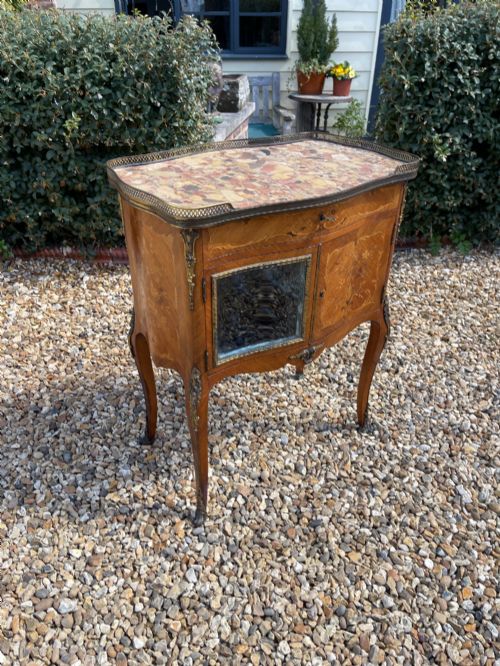


Victorian French Style Commode
A victorian french style commode brings heavy continental elegance and serpentine marble tops into nineteenth-century British interiors.
Victorian French Style Commode
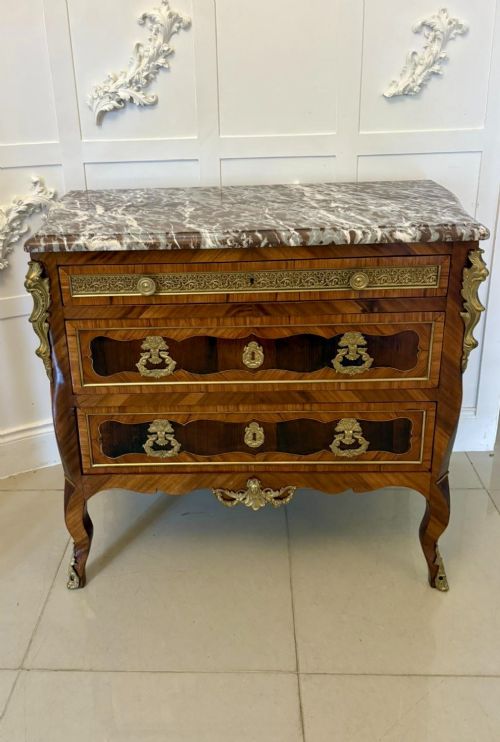
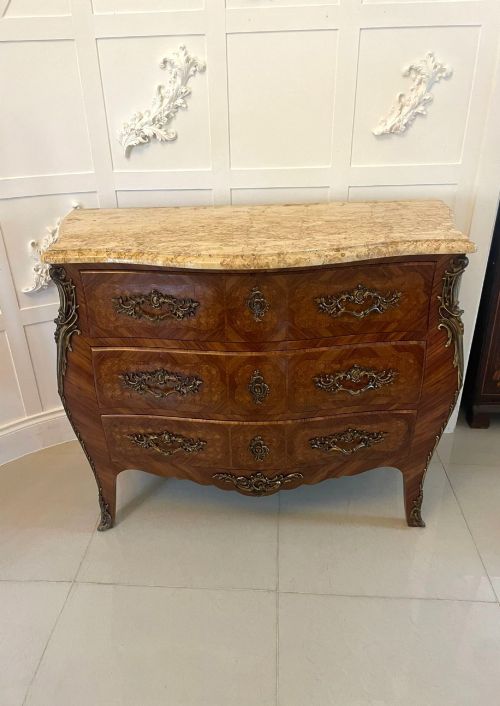
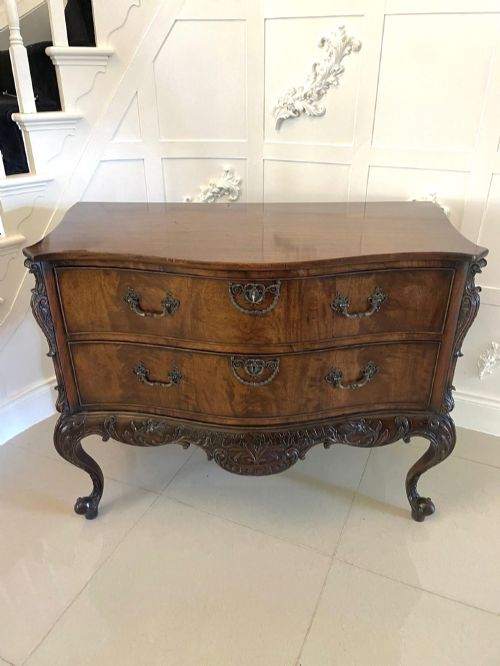
When you search for a victorian french style commode, you encounter substantial nineteenth-century storage pieces influenced by continental tastes. These items often function as low chests of drawers, side cabinets or bedside nightstands.
The versions most frequently met on this page span the Victorian era, specifically around eighteen-eighty and eighteen-sixty, alongside pieces labelled under French Louis XV Revival and French Rococo Revival.
Originating across the nineteenth century, these pieces combine British cabinet-making periods with French aesthetic forms. They serve primary functions as chests of drawers and storage cabinets in domestic settings.
How they were made
Cabinet-makers constructed these pieces using foundational timbers such as walnut, burr walnut, mahogany, and kingwood, often enhanced with parquetry and intricate inlay work.
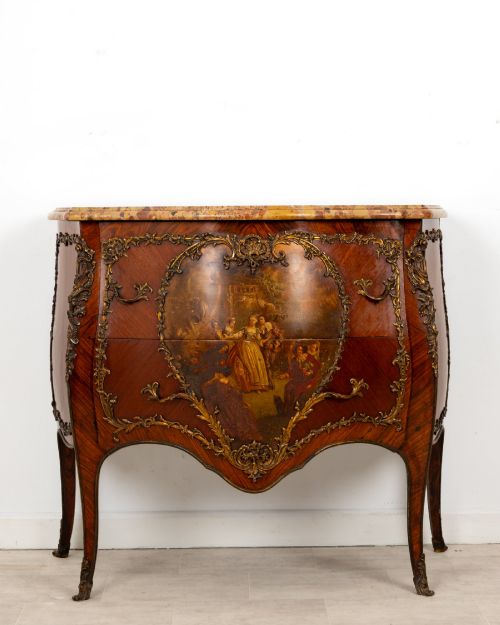
Surface decoration frequently incorporates heavy marble tops paired with cast or applied ormolu and gilt-bronze mounts, alongside glass components where mirrors are integrated.
Victorian French Style Commode Retail Price Guide 2026
Typical asking prices for victorian french style commode among the pieces listed under this phrase on Sellingantiques today, from the lower quarter to the upper quarter. They describe what is for sale here now, not the wider market.
Listings on this page span the nineteenth century, featuring walnut, mahogany, and kingwood paired with marble and ormolu.
What varies in quality
The standard of timber selection and decorative surface treatment creates the main division across these pieces. Fine examples utilise figured burr walnut, kingwood or detailed parquetry rather than simpler mahogany veneers.
The refinement of the cast metalwork also separates grades, with chased ormolu and gilt-bronze mounts showing greater sculptural depth than basic brass fittings. Heavy marble tops fitted precisely to serpentine shapes indicate higher workshop standards.
Gillows
The Victorian French Style Commode Glossary
- Ormolu
- Gilt bronze mounted on furniture pieces. This technique provides decorative metallic highlights, particularly associated with French revival designs.
- Parquetry
- Geometric wood inlay patterns forming decorative surfaces. Cabinet-makers used contrasting timbers to create crisp mosaic effects across drawer fronts and tops.
- Serpentine
- A gently curved shape curving inward then outward. This undulating contour defines the fronts of finer chests and commodes.
- Vernis Martin
- A type of decorative lacquer finish developed in France. It imitates Asian lacquerwork with painted scenes under clear varnish coats.
Victorian French Style Commode: Frequently Asked Questions
What is a victorian french style commode?
A victorian french style commode is a nineteenth-century storage chest influenced by continental design tastes. These pieces typically feature decorative wood veneers and heavy stone surfaces.
Cabinet-makers built them to function as ornamental chests of drawers or side cabinets within domestic rooms.
Where were these commodes placed?
These pieces functioned primarily as principal storage furniture in bedrooms and formal reception rooms. Their decorative fronts and marble surfaces suited prominent wall placements.
They provided surface display space alongside enclosed drawer storage for clothing or household linens.
How do I identify a revival style?
Revival pieces incorporate specific ornamental vocabulary from earlier French royal periods, such as Louis XV or Rococo forms. Look for curved serpentine outlines and cast metal mounts.
These stylistic markers distinguish continental-inspired designs from standard British Victorian furniture.
How do I care for marble tops?
Marble surfaces require gentle cleaning with mild soap and warm water to avoid damaging the stone polish. Acidic substances can etch the polished surface over time.
Use coasters and protective pads beneath objects placed on the stone top to prevent scratching.
What timbers were used?
Workshops utilised a range of decorative hardwoods including walnut, burr walnut, mahogany, and kingwood. These timbers were often selected for striking grain patterns.
Inlayers added contrasting woods to create geometric parquetry patterns across the cabinet surfaces.