
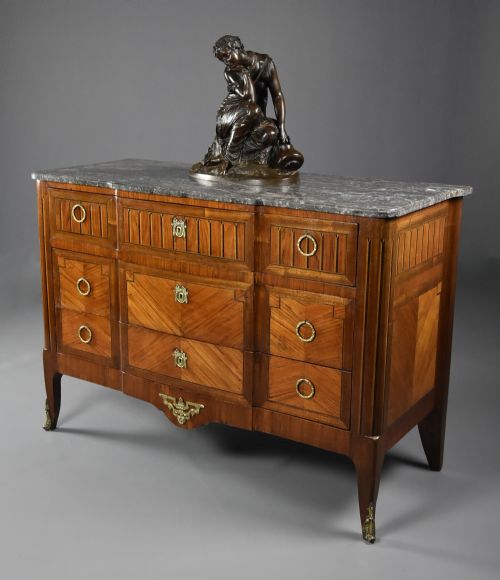

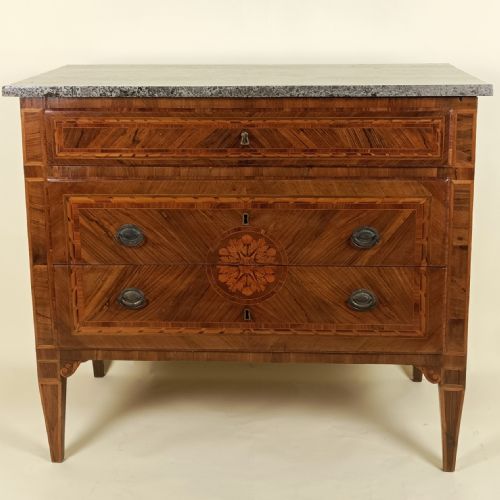


Brown Marble Top Commode
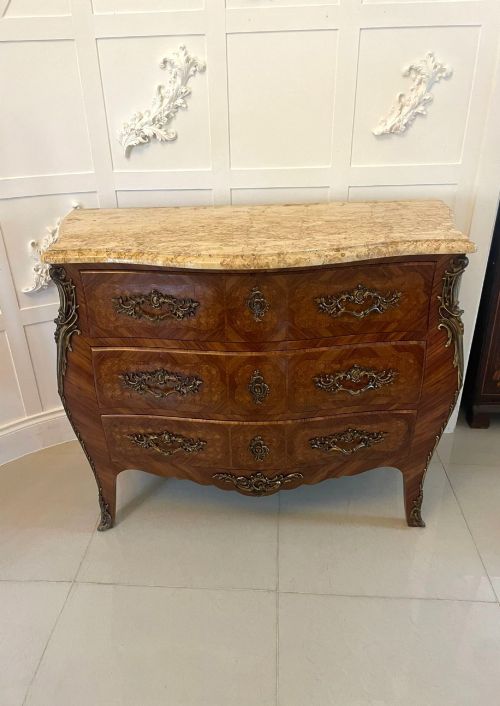
A brown marble top commode offers a solid stone surface set over deep timber drawers, bringing continental weight to a bedroom or reception room.
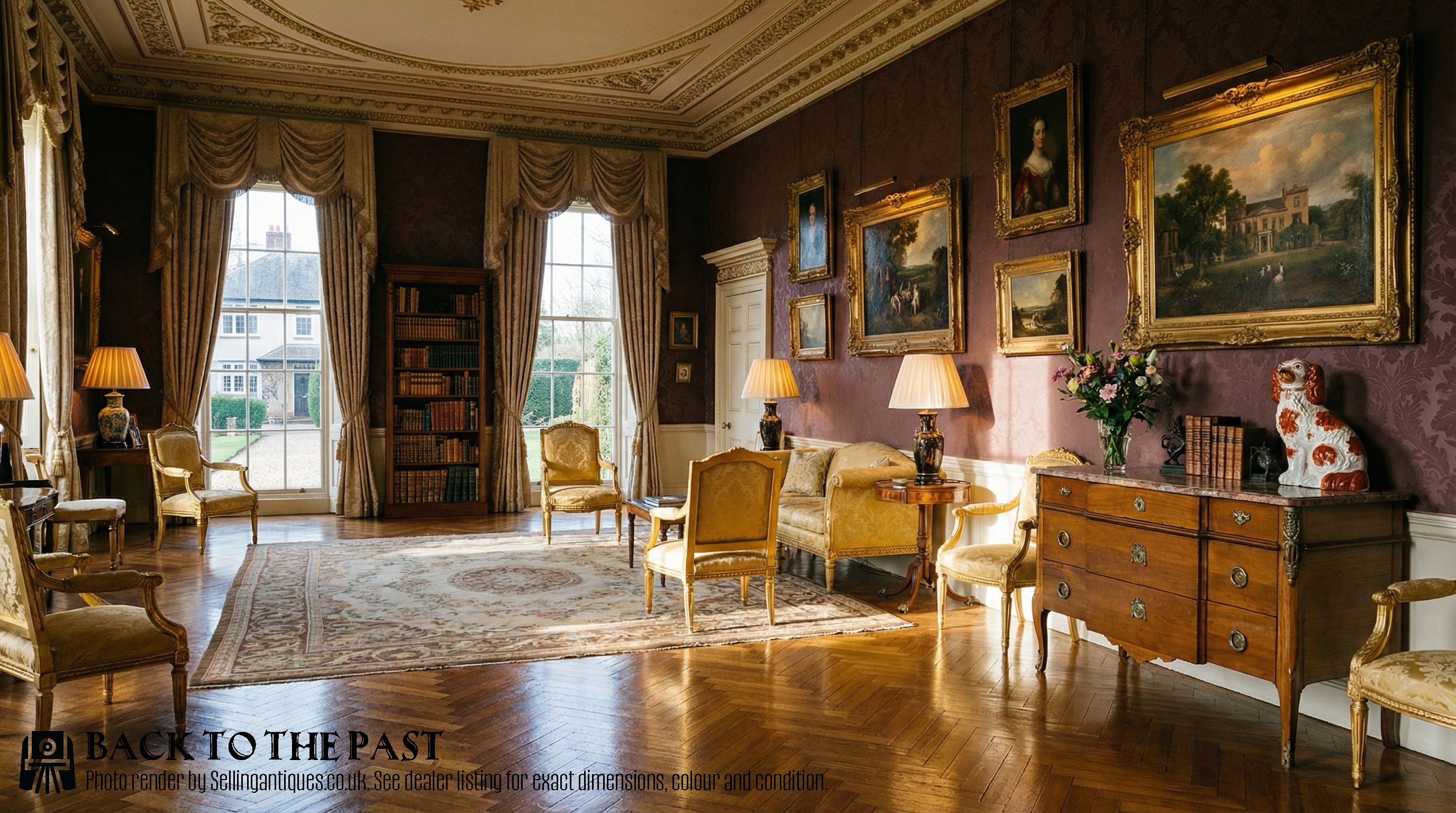
Brown Marble Top Commode
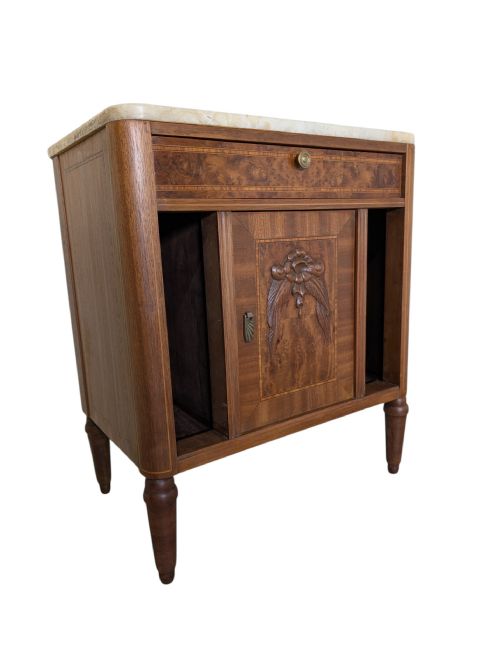
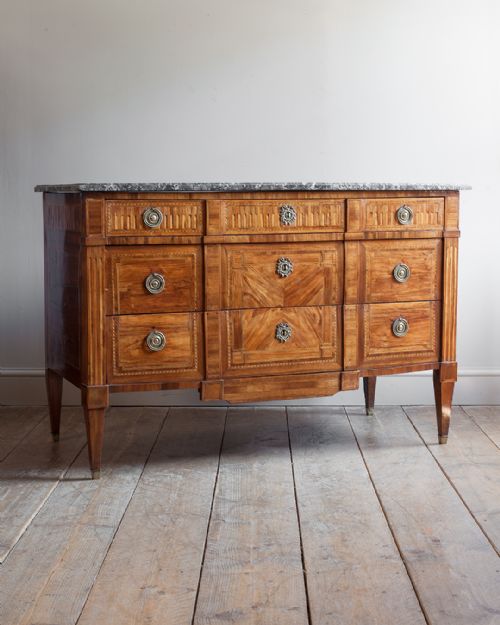
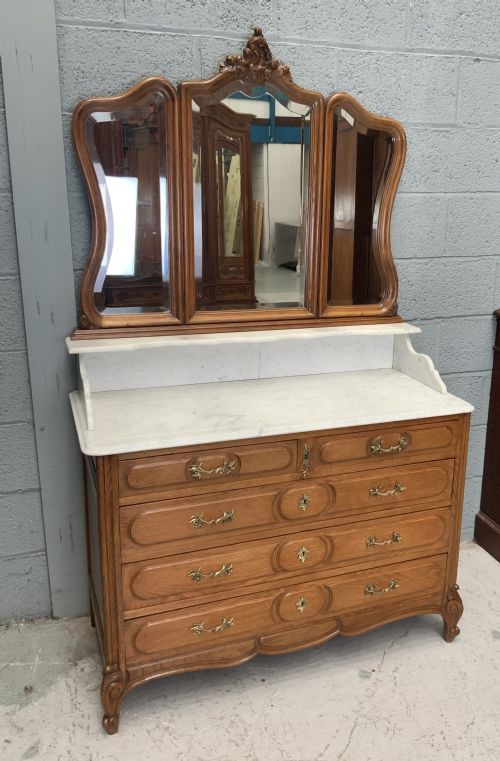
A brown marble top commode is a low storage chest designed with stone surfaces, appearing predominantly in French and Italian regional furniture from the eighteenth, nineteenth and early twentieth centuries. These pieces function as heavy bedroom chests, bedside cabinets, and washstands featuring marble slabs in brown and varied tones.
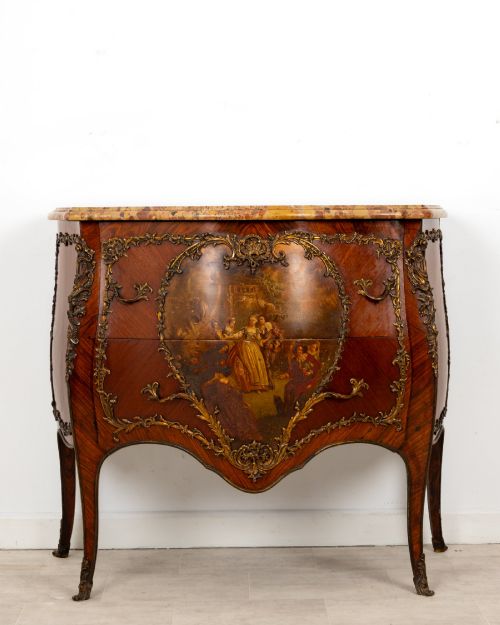
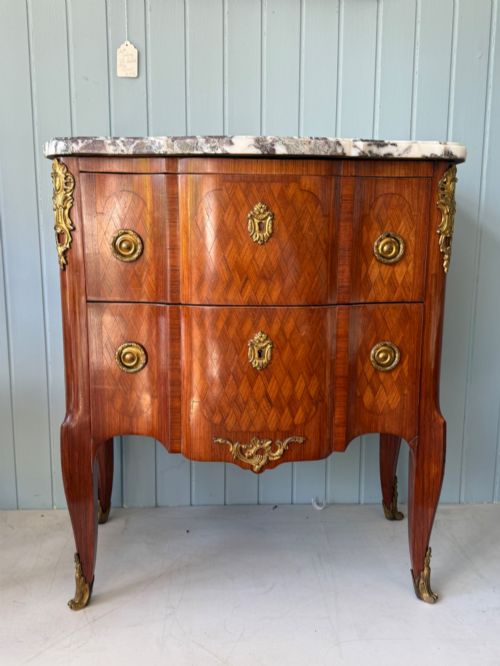
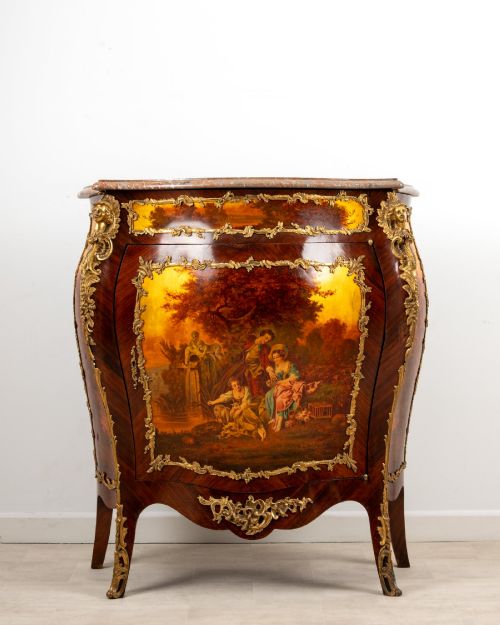
Buyers meet forms ranging from serpentine fronts and bombe profiles to rectilinear bedside cabinets and tall chests of drawers. The selection spans standard commodes, pairs of bedside tables, and washstands spanning Victorian iterations to earlier continental revivals.
Origins trace largely to French cabinet-making workshops alongside Italian examples from Lombardy, utilising local hardwoods beneath the characteristic stone tops.
How They Were Made
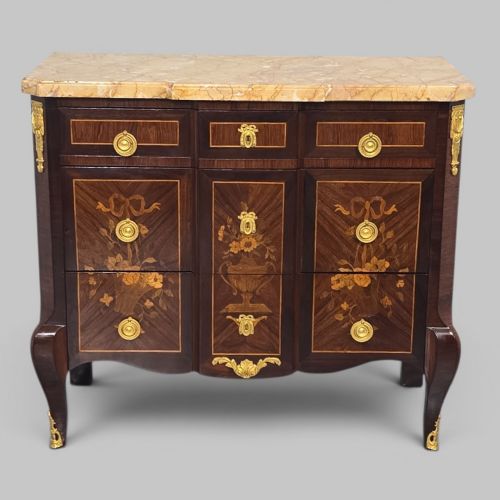
Cabinet-makers constructed carcass frames from solid timbers such as oak, walnut, cherrywood, and mahogany, applying decorative veneers of kingwood, tulipwood, palisander, and burr walnut in marquetry or parquetry patterns. Surface decoration often incorporated painted panels in the manner of Vernis Martin alongside cast or gilt bronze and ormolu mounts.
Heavy marble slabs were cut and polished to fit the upper contours of each chest, resting directly upon the timber framework or recessed into breakfront and serpentine mouldings. Brass hardware secured the drawers, while specialised joints and framing supported the combined weight of stone and wood.
Listings feature timbers including walnut, kingwood, oak, and mahogany, paired with marble surfaces across multiple periods.
What Varies in Quality
The standard of a commode rests on the crispness of its marquetry inlays and the weight of its cast ormolu and gilt-bronze mounts. Finer examples display meticulous matching of wood grains across serpentine and bombe fronts, alongside thick, well-figured marble tops that sit flush with the timber frame.
Secondary elements reveal construction depth, from hand-dovetailed drawer boxes to the integration of secondary woods like oak and walnut. Pieces retaining their original stone tops and substantial bronze hardware command higher distinction than later assembled variants.
The Brown Marble Top Commode Glossary
- Ormolu
- Gilded bronze mounts applied to furniture corners, feet, and drawer fronts. This technique defined high-end continental cabinet-making.
- Bombé
- A swelling, outward-curving chest profile characteristic of mid-eighteenth-century design. The wood bends in multiple planes to create soft, rounded corners.
- Marquetry
- Inlaid wood veneers assembled to form pictorial or geometric patterns across drawer fronts and tops. Artisans cut contrasting timbers to fit tightly within the primary ground.
- Parquetry
- Geometric wood inlay patterns arranged in repeating tiled designs such as cubes or chequers. This technique decorates flat surfaces on continental chests.
- Vernis Martin
- A European imitation of East Asian lacquerwork used on eighteenth-century and revival panels. The polished finish added glossy pictorial depth to cabinet doors.
Brown Marble Top Commode: Frequently Asked Questions
What rooms suit a brown marble top commode?
These chests function well in bedrooms as primary storage or bedside tables, where the stone surface resists water and wear.
They also sit comfortably in hallways or living spaces to provide display space alongside deep drawer storage.
How do I identify a revival piece?
Revival items adopt eighteenth-century styles like Louis XV and Louis XVI but utilise nineteenth or early twentieth-century construction methods and standard machinery-cut dovetails.
Examine the secondary woods inside the drawers and the consistency of the patination to read the true era of manufacture.
Are the marble tops always original?
Most pieces retain their fitted stone surfaces, though heavy use over centuries occasionally resulted in replacement marble slabs.
Look for edge profiles and thickness that match the period style of the underlying timber carcass.
What is the difference between a commode and a chest of drawers?
While both provide tiered storage drawers, a commode specifically denotes continental European low cabinetry, often featuring decorative veneers and shaped fronts.
English chests tend toward rectilinear profiles, whereas continental commodes embrace serpentine and breakfront contours.