



Ormolu Mahogany Chairs
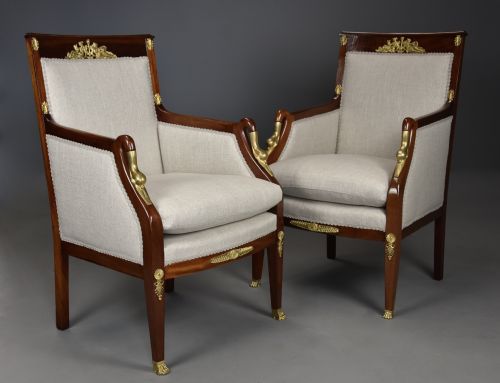
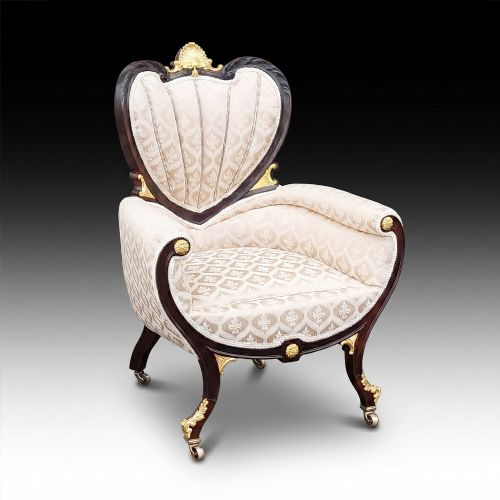
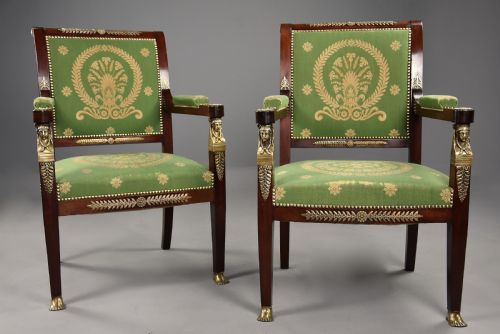
These ormolu mahogany chairs combine rich timbers with brilliant gilt mounts, offering striking classical presence for any grand interior.
Ormolu Mahogany Chairs
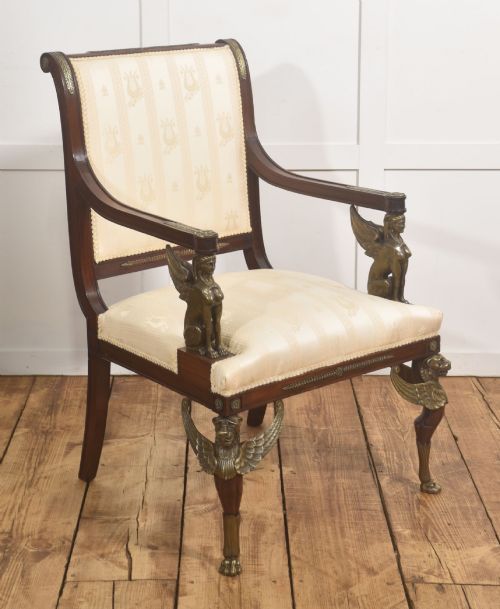
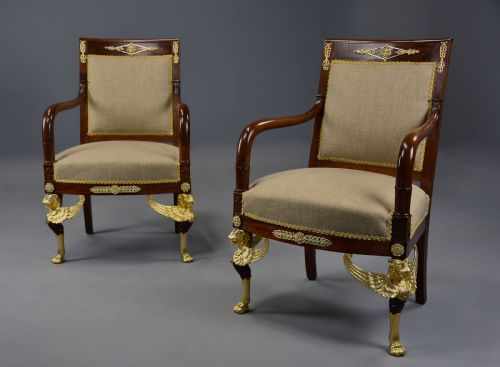
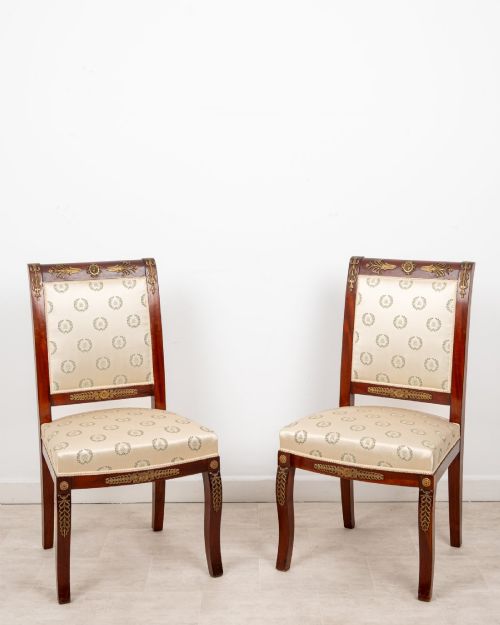
When you search for ormolu mahogany chairs, you encounter seating built from rich timbers and embellished with gilt metal highlights. The pieces seen here span open armchairs, side chairs, and lounge suites.
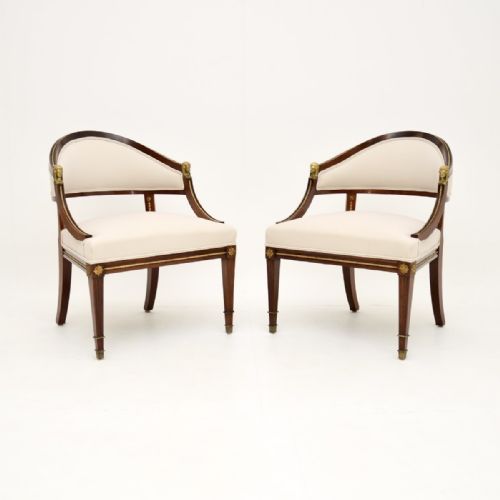
French examples dominate the selection, particularly in the Empire and French Empire Revival styles alongside Swedish Neoclassical and Regency pieces. These forms range from single open armchairs to matched pairs and three-piece suites.
Most items date from the nineteenth century, including specific decades from 1870 through to 1900, alongside early twentieth-century interpretations. The focus remains heavily upon classical revival aesthetics derived from earlier royal court furniture.
How they were made
Makers constructed the primary frames using solid mahogany, selected for its deep grain and stable working properties. This timber forms the structural skeleton of each armchair and side chair.
Workshops applied cast ormolu and gilt bronze mounts directly onto the wooden frames to accent structural lines. Brass elements also appear alongside textile components including fabric, linen, leather, and upholstered coverings.
Ormolu Mahogany Chairs Retail Price Guide 2026
Typical asking prices for ormolu mahogany chairs among the pieces listed under this phrase on Sellingantiques today, from the lower quarter to the upper quarter. They describe what is for sale here now, not the wider market.
One Swedish suite comes ready to lounge, proving that even neoclassical emperors appreciated a matching set.
What varies in quality
The refinement of the cast metal mounts separates standard examples from superior pieces. Crisp detailing and deep fire-gilding on the ormolu distinguish the finest workshops from simpler commercial production.
Timber selection and frame carving likewise determine the calibre of a chair. Tighter grain patterns and crisper execution in the neoclassical motifs indicate higher standards of period craftsmanship.
The Ormolu Mahogany Chairs Glossary
- Ormolu
- Gilded bronze applied as a decorative mount to furniture frames. This technique involves coating metal with a mercury and gold amalgam and heating it.
- Fauteuil
- An open-framed upholstered armchair with wooden armrests, typically originating from French design traditions. The style emphasises exposed timber and refined carving.
- Empire
- A neoclassical design style inspired by ancient Roman and Greek forms during the rule of Napoleon. It relies on symmetrical geometry and classical military motifs.
- Neoclassical
- An artistic movement reviving classical antiquity in architecture and decorative arts. It prioritises restraint, straight lines, and orderly proportions.
Ormolu Mahogany Chairs: Frequently Asked Questions
Are these chairs comfortable to sit in?
Many of these pieces function primarily as formal reception seating rather than deep lounging chairs. Their supportive upholstered backs and padded seats suit occasional sitting.
Original padding may feel firmer than modern upholstery. Buyers often retain or restore internal stuffing to maintain historical integrity while ensuring usability.
How do I clean ormolu mounts?
Gentle dusting with a soft, dry brush removes surface particles without scratching the gilt finish. Avoid abrasive commercial cleaners that strip away the historical gilding.
Professional conservation advice is recommended for tarnished or fragile metalwork. Preserving the original surface layer maintains the integrity of the piece.
Can I mix these with modern furniture?
Strong classical lines allow these pieces to anchor contemporary rooms as statement seating. Placing a single armchair against minimalist backdrops highlights the rich mahogany and gilt.
Pairing them with neutral textures prevents visual crowding. The dark timber tones complement both stark modern palettes and traditional interiors.
How do I date an Empire revival chair?
Revival pieces from the late nineteenth century often employ machine-sawn timber elements alongside hand-chiselled ormolu mounts. Construction joints and screw types provide clues to the manufacturing decade.
Stylistic cues also separate original Napoleonic era pieces from later nineteenth-century revivals. Examining the underside and joinery reveals the technological methods of the period.