




French Mahogany Fauteuils
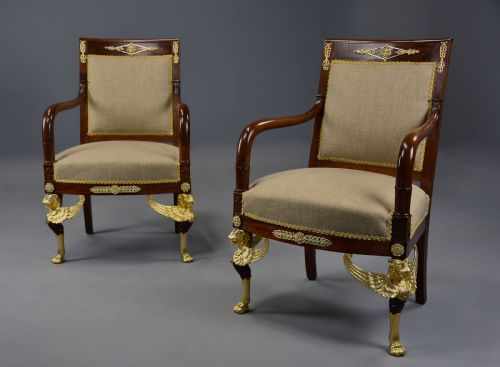
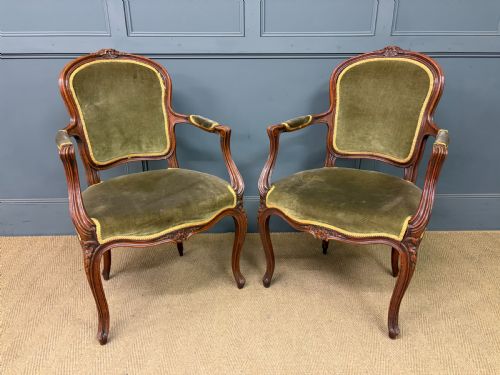
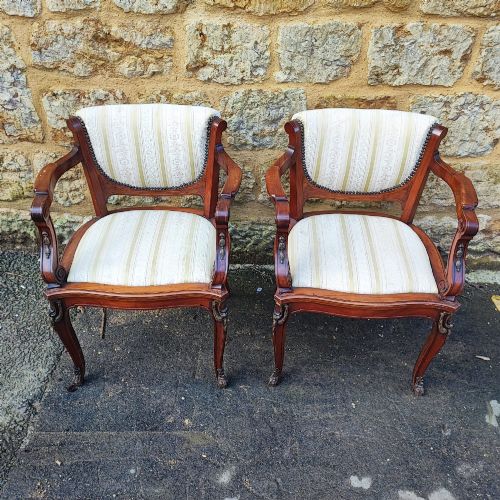
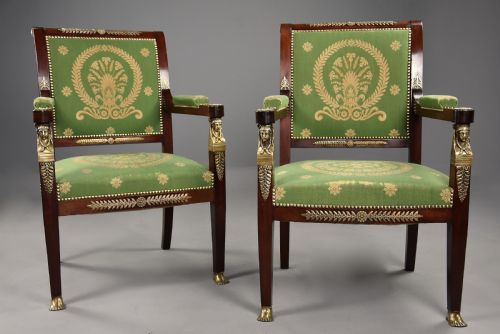
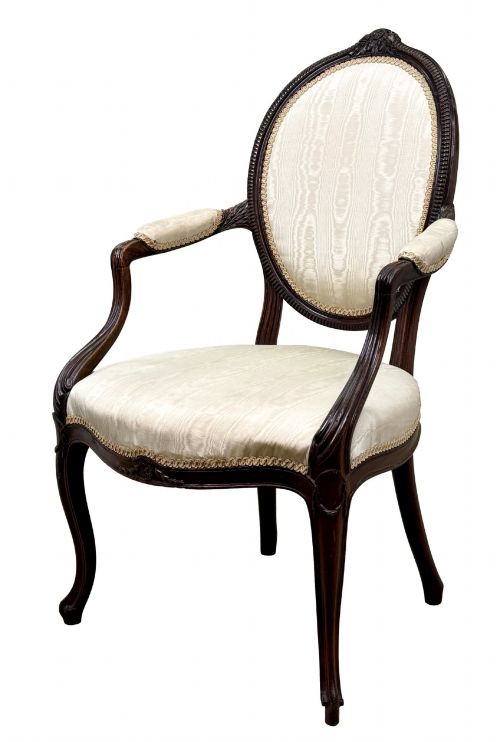
French mahogany fauteuils are open armchairs defined by substantial timber frames, upright backs and padded armrests, offering formal seating suited to libraries and salons.
French Mahogany Fauteuils
French mahogany fauteuils are open armchairs that appear primarily in pairs, designed with padded armrests and upright backs for formal reception rooms. When you search for french mahogany fauteuils, you encounter nineteenth-century interpretations alongside earlier eighteenth-century examples and later revivals.
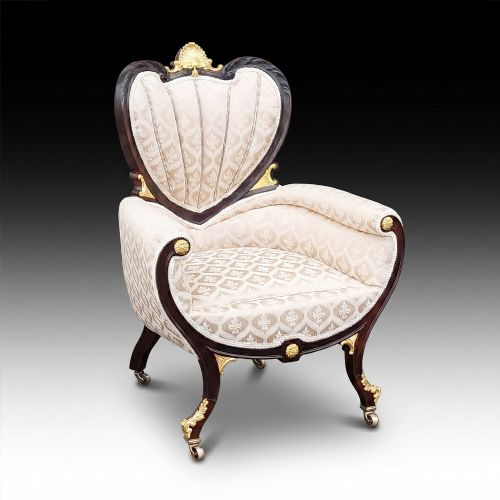
The inventory on this page spans the nineteenth century up to the early twentieth century, featuring styles such as French Empire, Louis XV Revival, and Directoire. Forms range from library armchairs and desk chairs to a seven-piece salon suite, reflecting the varied domestic uses of these seating types.
Makers and workshops constructed these chairs to function both as individual accent pieces and as matched sets for grand interiors. The recurring presence of Empire and revival designs demonstrates a sustained nineteenth-century demand for classical continental seating forms.
What varies in quality
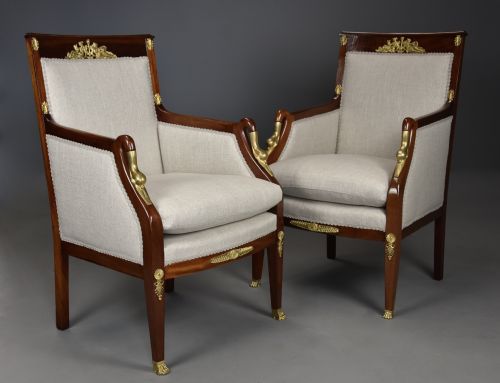
The refinement of the carved mahogany work and the crispness of any applied ormolu mounts distinguish more ambitious pieces from standard workshop output. Heavier casting on bronze mounts and deeply defined woodwork indicate greater investment of artisan time.
The structural integrity of the frame and the retention of period-appropriate upholstery materials, such as leather or silk velvet, influence the standing of an armchair. Matched pairs and complete salon suites carry distinct advantages over single chairs due to the difficulty of assembling harmonious groups.
Several armchairs arrive in matched pairs, proving that even eighteenth-century furniture preferred not to travel alone.
The French Mahogany Fauteuils Glossary
- Fauteuil
- An open-armed upholstered armchair originating in France, typically featuring exposed wood framing around the back and seat. These chairs were designed for formal sitting rooms rather than private lounging.
- Ormolu
- Gilded bronze applied as decorative mounts to furniture frames. The technique involves treating bronze with an amalgam of mercury and gold.
- Directoire
- A transitional French design style bridging Louis XVI and the Empire period, characterised by a move toward classical antiquity and restrained ornamentation. Pieces from this era often show simpler geometric lines.
- Salon suite
- A matching set of seating furniture intended for a formal reception room, commonly comprising a sofa and several armchairs. Such suites maintain uniform wood types and decorative motifs across every component.
French Mahogany Fauteuils: Frequently Asked Questions
What distinguishes a fauteuil from a standard armchair?
A fauteuil is specifically a French open-armed armchair with upholstered back and seat panels framed by exposed wood. The armrests typically feature padded elbow rests supported by curved or straight uprights.
This open construction allowed eighteenth and nineteenth-century sitters to wear voluminous garments without restriction, differentiating them from enclosed wingback or fully upholstered club chairs.
Where were these chairs placed in a historic home?
These armchairs served primarily in formal reception rooms, salons, libraries, and private studies. Desk chairs were tailored for writing tables, while pairs of salon chairs flanked fireplaces or console tables.
Their decorative mahogany frames and gilded mounts ensured they contributed to the visual symmetry of formal interior schemes rather than serving purely utilitarian seating functions.
How do I identify the Empire style on these chairs?
Empire style chairs display classical architectural motifs derived from ancient Rome and Greece, executed in dark mahogany with contrasting ormolu mounts. Common elements include scroll-over armrests, saber legs, and symmetrical geometric profiles.
Nineteenth-century revival pieces often reproduce these exact classical vocabularies, sometimes incorporating heavier brass mounts or simpler carved details.
Are these chairs comfortable for daily modern seating?
These armchairs were built for upright, formal posture rather than relaxed lounging, possessing firm padding and rigid backrests. The seating angle reflects nineteenth-century standards of social etiquette.
Living with them involves appreciating their structural design and historical upholstery materials, though contemporary users frequently add subtle hidden support if employing them for regular desk work.