

Pair of French Fauteuils
A pair of french fauteuils brings symmetry and classic open-arm seating to a room, offering historic character through carved woodwork and period textiles.
Pair of French Fauteuils
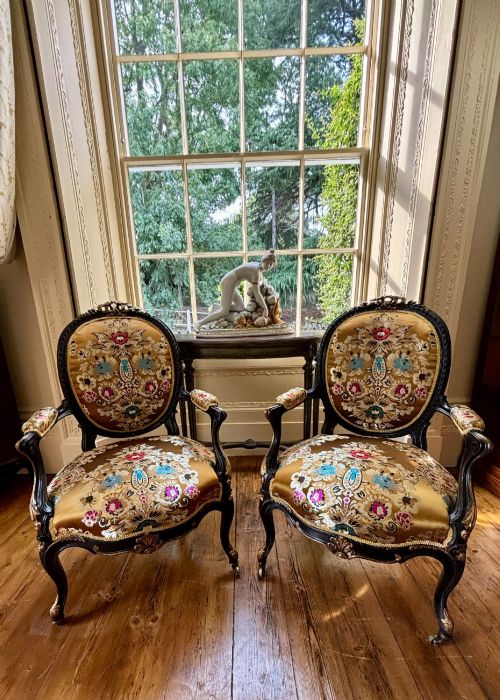
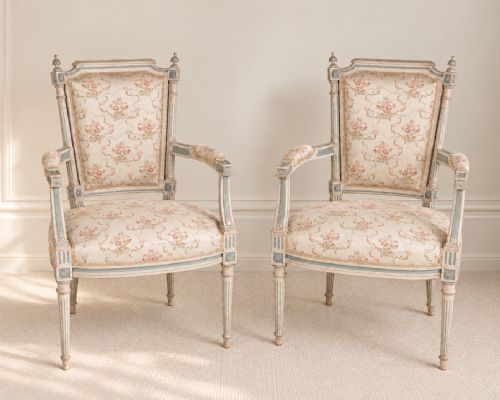
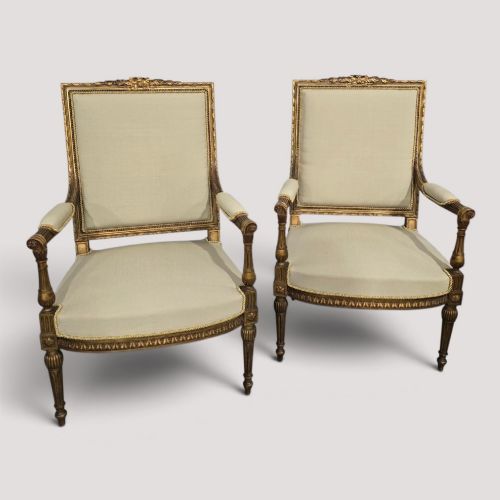
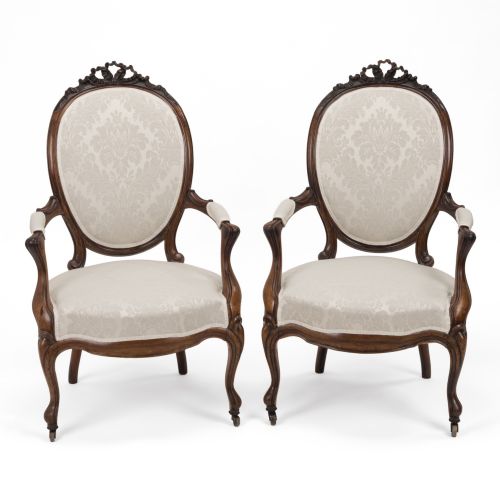
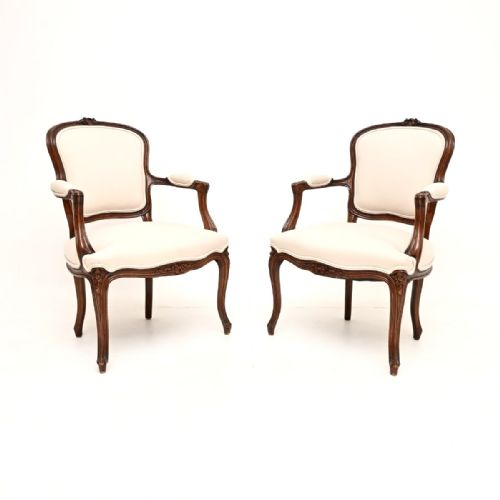
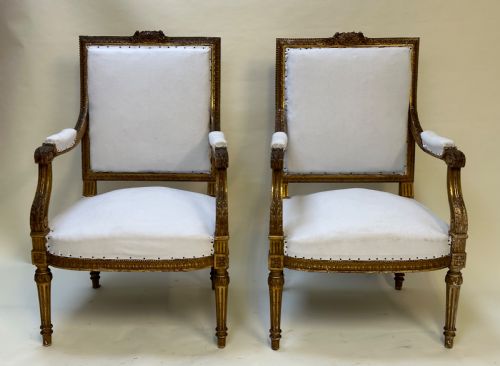
A pair of french fauteuils consists of matched open-arm chairs designed in continental workshops from the eighteenth century onwards. These seating options typically feature exposed timber frames, padded armrests and upholstered seats tailored for formal salons and drawing rooms.
Most examples encountered here date from the nineteenth century, reflecting revivals of earlier Louis XV and Louis XVI aesthetics alongside Empire and Baroque interpretations. Buyers select these matched pairs to anchor a seating arrangement or frame a fireplace with historical continuity.
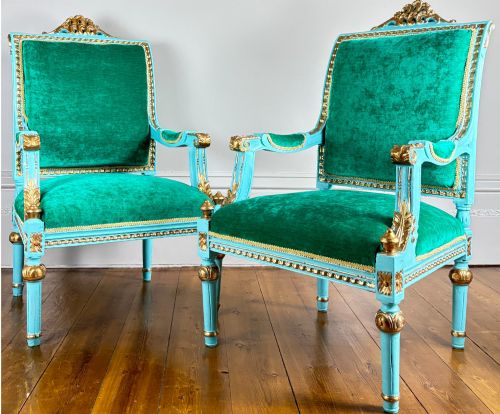
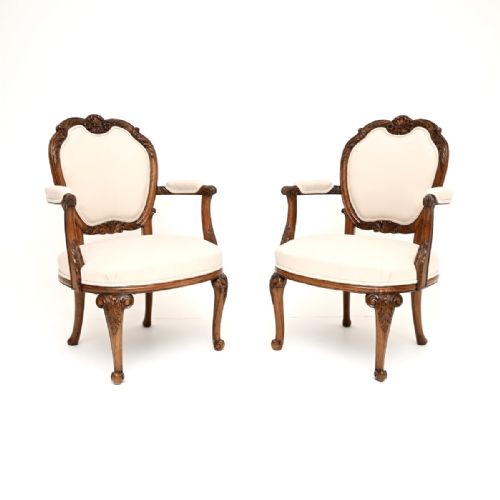
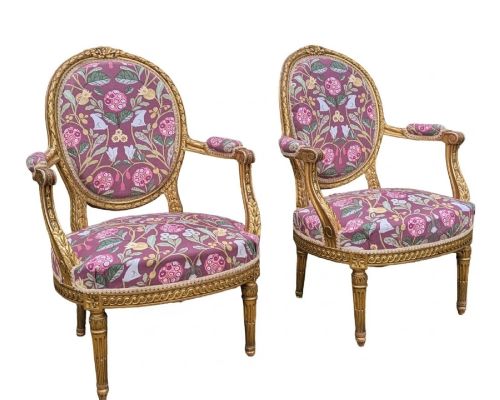
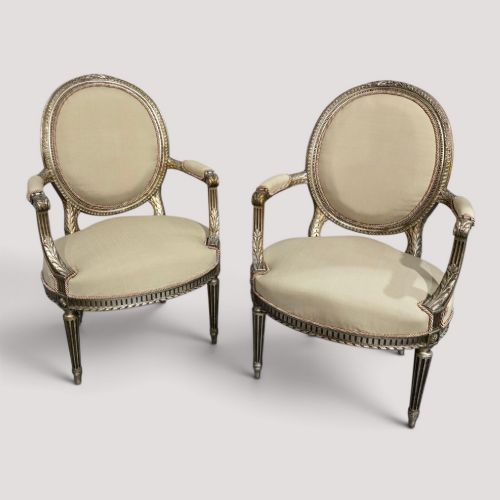
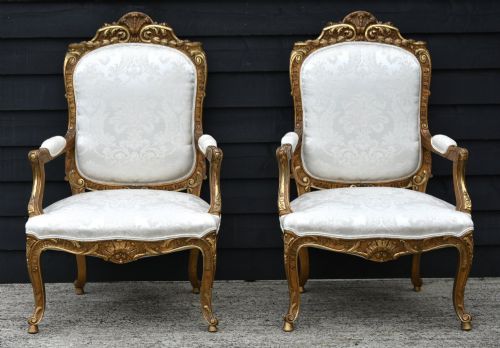
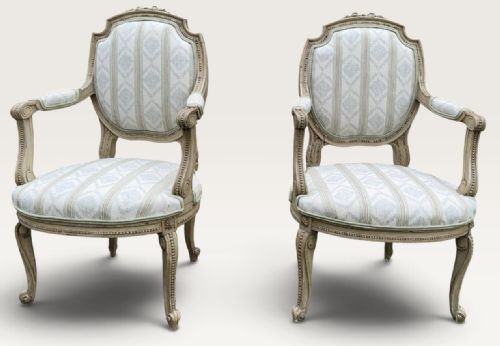
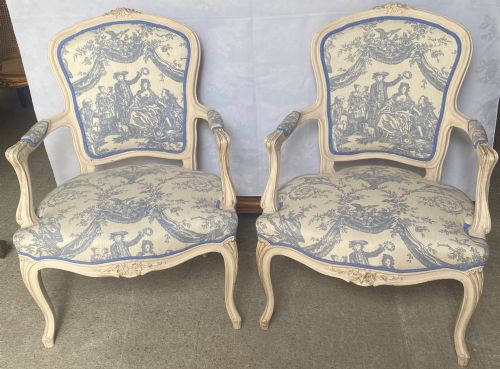
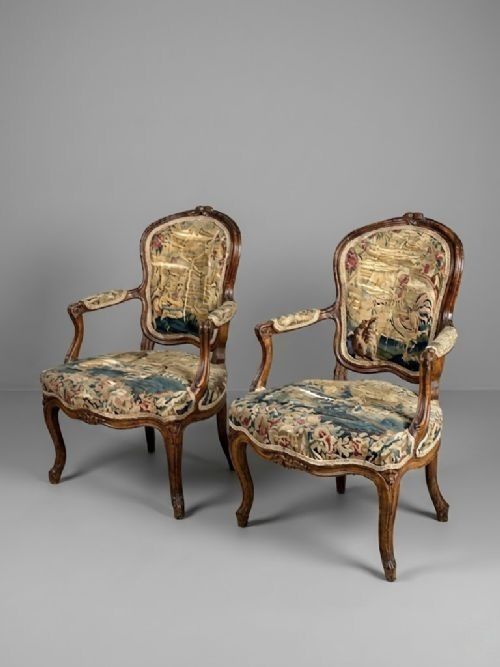
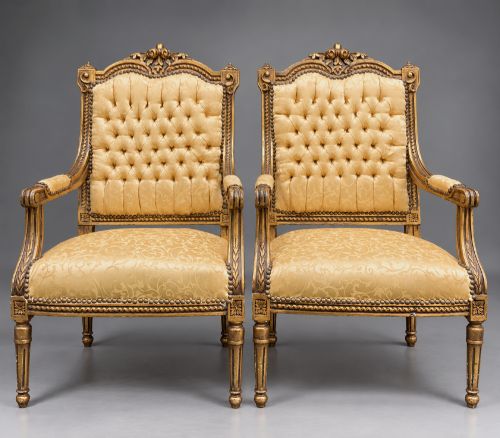
The inventory ranges from restrained walnut frames to grand giltwood and painted finishes, often retaining period tapestry, silk, or needlework. Surviving specimens demonstrate the enduring demand for balanced seating designed for social interaction rather than deep lounging.
How they were made
Frame construction relies on sturdy hardwoods such as beech, walnut, mahogany and oak, shaped with hand-carved details along the crest rails, cabriole legs or fluted columns. Joinery techniques like mortise and tenon ensure structural integrity across centuries of use.
Surface finishes vary from traditional gesso and gold leaf to layered paint, ebonising and polished timber grains. Upholstery methods incorporate horsehair stuffing, webbing and traditional stitching beneath top coverings of velvet, silk, needlepoint or Aubusson tapestry.
Pair of French Fauteuils Retail Price Guide 2026
Typical asking prices for pair of french fauteuils among the pieces listed under this phrase on Sellingantiques today, from the lower quarter to the upper quarter. They describe what is for sale here now, not the wider market.
Some nineteenth-century makers snuck secret signatures under the upholstery webbing, leaving hidden greetings for future upholsterers to find.
What varies in quality
The crispness and depth of hand-carved ornament distinguish superior frames from simpler production pieces, particularly where floral motifs, acanthus leaves or fluting meet the rails. Crisp edge work and harmonious proportions indicate a maker working at a high level of craftsmanship.
Originality of surface finish and the retention of early gilding or period paint layer preservation heavily influence stature. Examples retaining untouched patination alongside period upholstery textiles command greater appreciation than heavily altered or stripped frames.
Jacob Desmalter·Holland And Sons
The Pair of French Fauteuils Glossary
- Fauteuil
- An open-framed upholstered armchair originating in France, characterised by exposed wooden arms and padded elbow rests. This seating form evolved through various royal reigns to reflect changing decorative tastes.
- Giltwood
- Timber coated with a thin layer of gold leaf applied over a prepared gesso ground. This luxurious finish reflects candlelight in formal eighteenth and nineteenth-century interiors.
- Cabriole leg
- A furniture leg that curves outward in a convex arc and tapers inward in a concave arc, mimicking an animal limb. It forms a defining feature of Louis XV style seating.
- Aubusson
- Hand-woven tapestry produced in the French town of the same name, frequently utilised for period upholstery. These pictorial textiles depict floral designs, pastoral scenes or geometric patterns.
- Parcel gilt
- A decorative technique where specific carved details of a painted or stained wooden surface are highlighted with gold leaf. This method provides contrast without fully gilding the entire frame.
Pair of French Fauteuils: Frequently Asked Questions
Where should I place a pair of fauteuils?
These open-arm chairs suit placement flanking a fireplace, positioned opposite a sofa or arranged around a central salon table. Their open sides maintain visual space in smaller rooms while providing formal symmetry.
Buyers often utilise them in bedrooms, libraries or drawing rooms where matched seating creates a deliberate focal point.
Are these chairs comfortable for daily use?
Fauteuils were originally designed for upright social conversation rather than reclining, featuring firm support and open armrests. Their ergonomics reflect the fashion of past centuries when formal posture dictated seating design.
Contemporary users often add subtle lumbar support or choose pieces with deeper proportions if intending extended periods of relaxation.
Should I preserve original upholstery?
Original needlepoint, silk or tapestry fabric adds historical value when condition permits, telling the narrative of the chair's survival. Fragile textiles require careful preservation and limited physical contact.
When fabric degrades beyond repair, professional reupholstery in period-appropriate silk, velvet or cotton velvet secures the frame for future generations.