

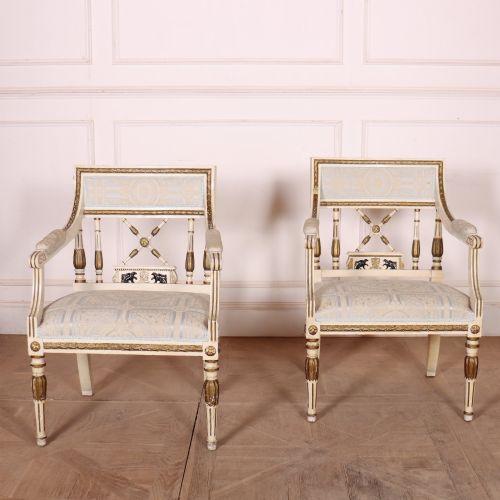
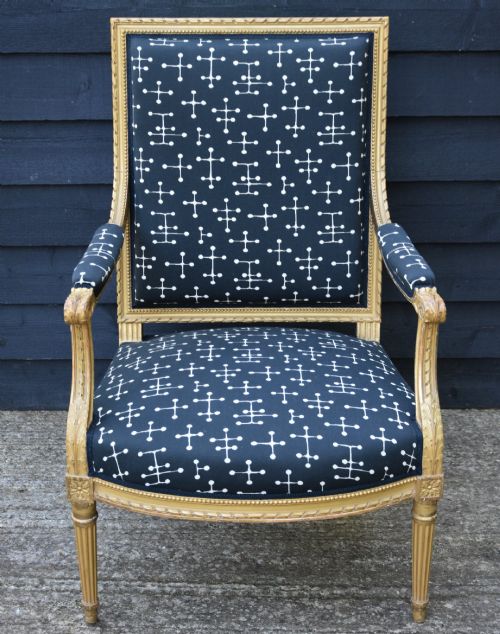
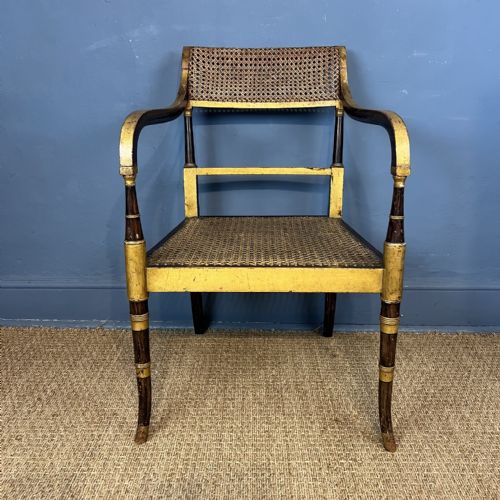
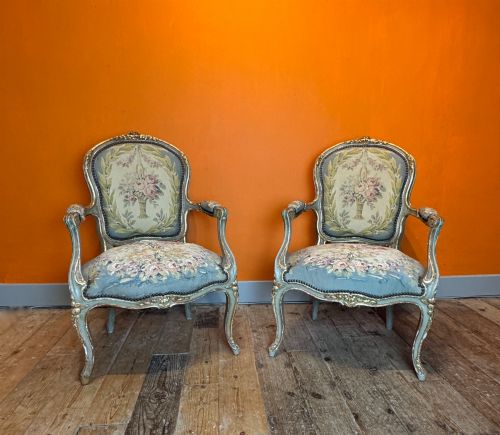
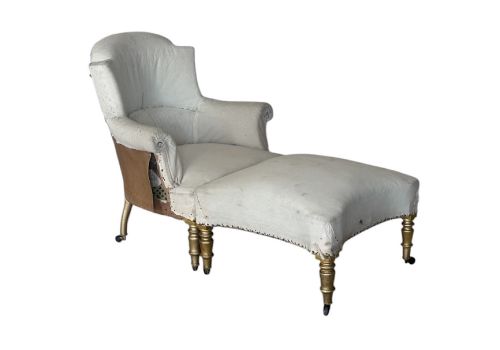
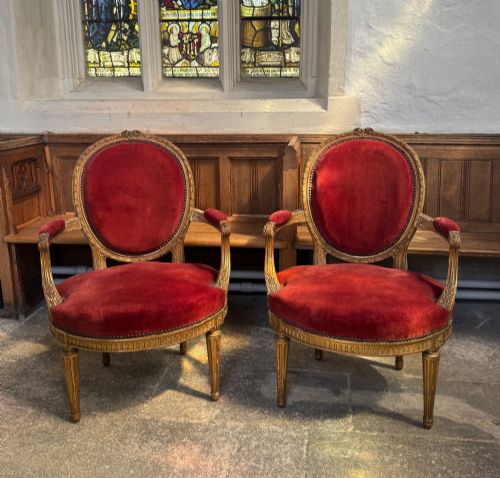
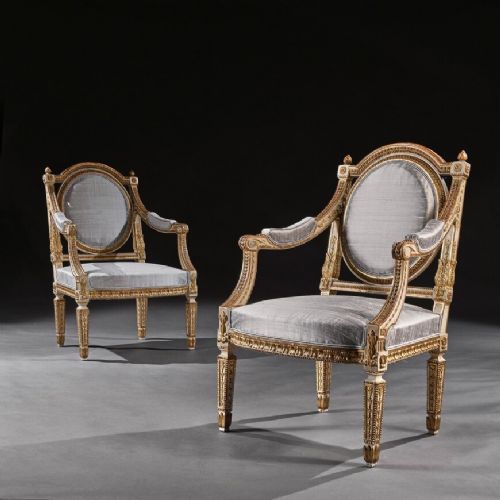
Antique Gilt Armchairs
Antique gilt armchairs bring formal seating into modern rooms with carved frames and gilded surfaces.
Antique Gilt Armchairs
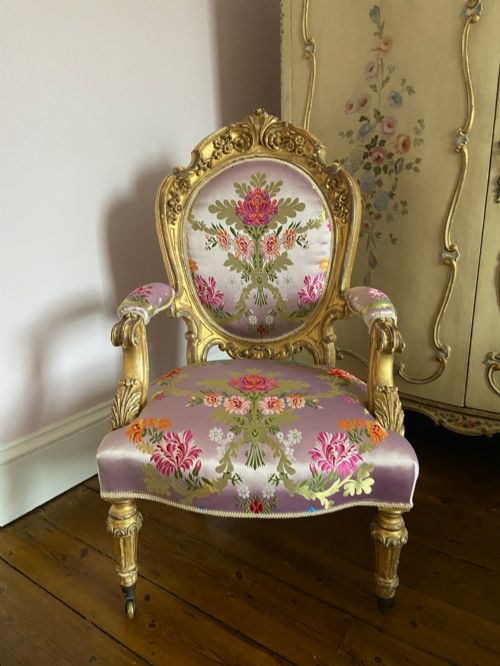
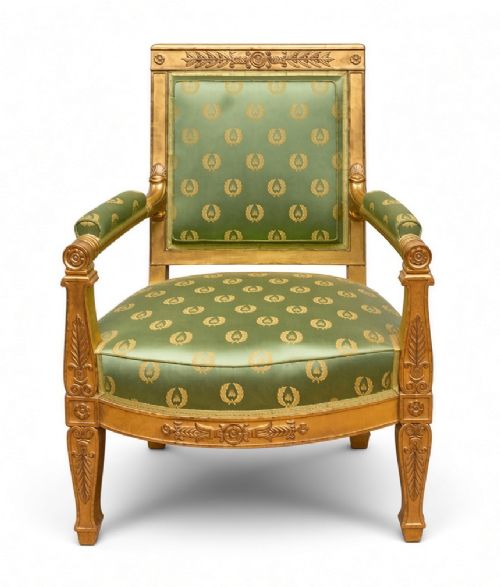
Antique gilt armchairs combine carved wooden frames with applied gold leaf, parcel-gilt finishes, or painted metallic surfaces, originating primarily from French, English, and Italian workshops across the eighteenth and nineteenth centuries.
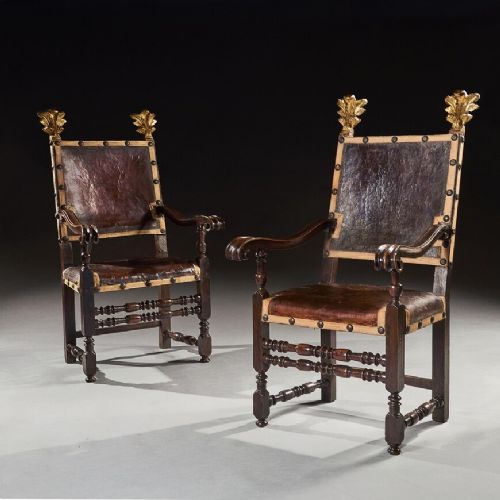
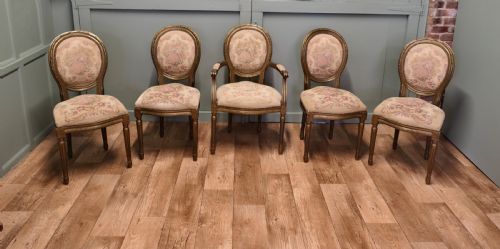
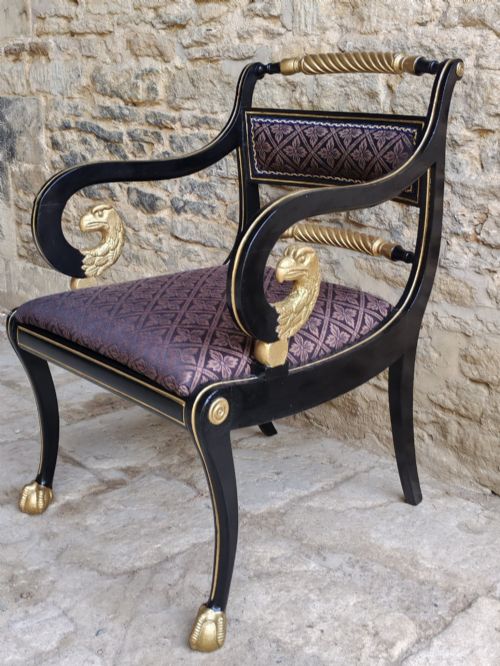
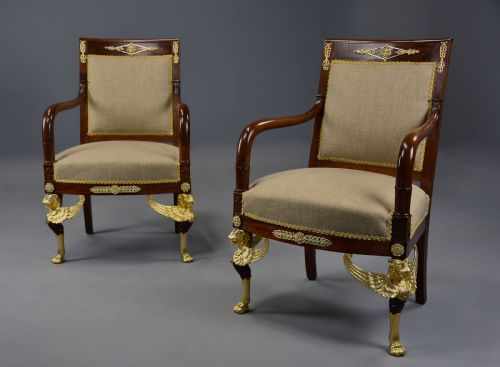
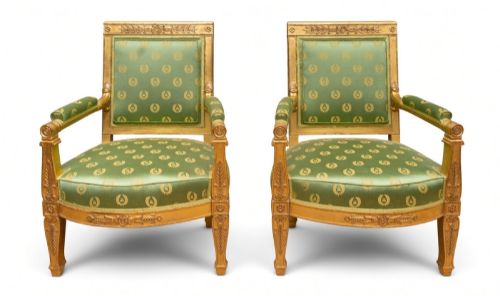
Buyers browsing this selection encounter numerous Louis XVI, Louis XV, and Empire style salon chairs, alongside Regency designs, Victorian fireside seating, and Italian Baroque throne chairs upholstered in silk, velvet, tapestry, and leather.
The selection spans grand pairs intended for formal reception rooms down to single library chairs, desk chairs, and bergères built for domestic comfort.
Materials and construction
Makers shaped the structural frames from beech, walnut, mahogany, and oak, carving foliage, ribbons, and fluting directly into the timber before applying preparation layers of gesso.
Gilders laid fine gold leaf over the bole or painted metallic finishes onto the primed wood, frequently burnishing raised portions to create contrast against matte recessed areas.
Upholsters webbed and stuffed seats using traditional materials like horsehair and wool before securing final coverings of silk velvet, brocade, or stamped leather with decorative brass tacks.
Listings feature beech and mahogany frames finished with genuine gold leaf alongside painted parcel-gilt surfaces.
Assessing quality and execution
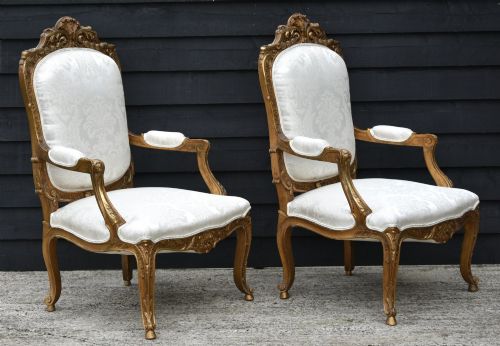
Quality rests in the crispness of the wood carving, where superior examples display deep, undercut relief work and cleanly defined motifs rather than soft, mechanical rounding.
The integrity of the original gilt surface dictates value, with hand-applied gold leaf showing subtle tonal variation that contrasts against uniform, modern metallic paints.
Structural rigidity relies on traditional joinery, ensuring frames remain tight at the joints without excessive movement in the arms and legs during daily use.
Jacob Desmalter·Gillows
The Antique Gilt Armchairs Glossary
- Giltwood
- Timber covered with a thin layer of gold leaf. This finish defines the reflective surfaces seen on formal European seating.
- Fauteuil
- An open-framed armchair with upholstered back and armrests, typically featuring exposed wooden sides. This French form dominated salon seating.
- Bergère
- An enclosed upholstered armchair with solid sides filled with upholstery or cane. These pieces provide a deeper, more enclosed seat than standard open armchairs.
- Parcel-gilt
- A decorative treatment where only specific carved details receive gilding while the remaining wood shows a polished or painted finish. This technique highlights particular ornamental elements.
- Gesso
- A plaster mixture applied to wood frames to provide a smooth base for gold leaf. Craftsmen built up these layers before final gilding and burnishing.
Antique Gilt Armchairs: Frequently Asked Questions
Can I use these chairs daily?
These seating options withstand normal domestic use provided guests sit down carefully and avoid leaning heavily on the carved wooden arms.
Frames reinforced with period joinery remain sturdy, though fragile antique textiles benefit from protective throws if placed in busy rooms.
How do I distinguish Louis XV from Louis XVI styles?
Louis XV chairs feature undulating serpentine lines, cabriole legs, and asymmetric floral carvings that embody Rococo fluidity.
Louis XVI pieces introduce strict geometric symmetry, straight fluted legs, and neoclassical motifs like ribbons, acanthus leaves, and oval backs.
Are original upholstery fabrics essential?
Original coverings rarely survive intact on centuries-old seating, so many pieces feature period-appropriate replacements in silk, velvet, or tapestry.
Historical accuracy depends primarily on the timber frame and gilt surface, while replacement upholstery allows buyers to match modern interiors.